5901 Botham Jean Blvd, Dallas, TX 75215
Spectrometer Magnet Disposal: Safety, Federal Compliance, and Rare Earth Recovery
December 4, 2025Powerful rare earth magnets have become essential components in countless devices around us. From the spectrometers in research laboratories to the hard drives in our computers, these strong magnets enable precise measurements and data storage that modern science depends on.
Spectrometer magnet disposal presents unique challenges that extend far beyond typical electronic waste management. These magnets contain neodymium, samarium-cobalt, and other critical rare earth materials that carry both significant value and potential environmental risks. Their extreme magnetic strength can pose serious safety hazards during handling and transportation, while improper disposal wastes valuable resources that took considerable energy and environmental impact to extract.
What Are the Key Safety Procedures for Magnet Handling and Disposal?
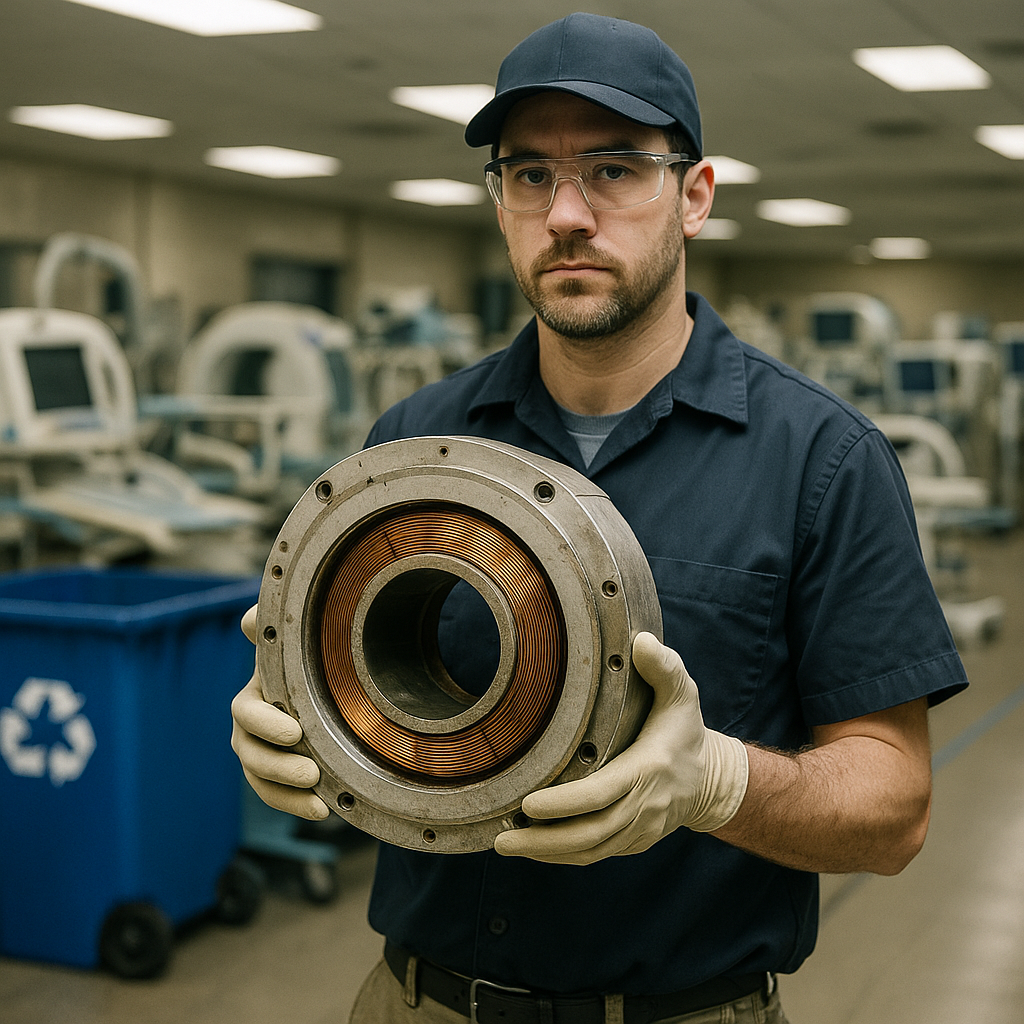
Spectrometer magnet disposal requires systematic safety protocols to prevent serious injury or death. These powerful superconducting electromagnets maintain magnetic fields ranging from 9.39 to 18.8 Tesla, creating significant hazards that persist even when equipment appears inactive.
Understanding Magnetic Field Hazards
Strong static magnetic fields remain active at all times in NMR spectrometers. The 5 Gauss safety perimeter marked around each magnet defines the minimum safe distance for most activities. Within this zone, magnetic forces increase exponentially as distance to the magnet decreases.
Personnel with medical implants face the greatest risk. Pacemakers, cochlear implants, insulin pumps, and other electronic devices can malfunction or cause fatal complications when exposed to these fields. Any individual who cannot undergo MRI procedures must remain outside all marked safety zones.
Ferromagnetic objects pose immediate projectile dangers. Tools, gas cylinders, steel furniture, and even small items like keys can accelerate rapidly toward magnets. Large objects create crushing hazards while smaller items may lodge permanently inside the magnet bore, requiring expensive extraction procedures.
Cryogenic Safety Protocols
NMR magnets contain substantial quantities of liquid helium and nitrogen for superconducting operation. Normal evaporation rates pose minimal risk, but magnet quench events create life-threatening conditions within seconds.
During a quench, superconducting wire rapidly transitions to resistive operation. This cascading failure converts stored magnetic energy to heat, instantly vaporizing cryogens. One liter of liquid helium expands to 757 liters of gas, while liquid nitrogen expands at a 670:1 ratio.
The resulting gas release displaces oxygen and creates inert gas asphyxiation conditions. Personnel must evacuate immediately when quench alarms activate or gas venting occurs. Recovery teams require specialized breathing equipment and training to enter affected areas safely.
Professional Disposal Requirements
Safe magnet disposal demands licensed waste management specialists with NMR-specific expertise. These professionals coordinate controlled quench procedures, cryogen recovery, and structural dismantling using appropriate safety equipment.
Disposal teams must verify complete magnetic field elimination before standard demolition can proceed. Residual magnetism in structural components requires specialized demagnetization procedures. Environmental compliance includes proper cryogen handling and disposal of superconducting materials containing hazardous substances.
Emergency response planning forms a critical component of disposal operations. Facility managers must establish evacuation procedures, coordinate with local emergency services, and ensure adequate ventilation systems remain operational throughout the decommissioning process.
What Are the Official Guidelines for Disposing of Strong Magnets?
Official disposal must comply with all federal, state, and local regulations. The federal government mandates that strong permanent magnets undergo thermal demagnetization before disposal. This requirement ensures safety during waste handling and prevents potential equipment damage at recycling facilities.
Large, powerful magnets require **demagnetization** using high temperatures to prevent handling injury during the disposal process. For neodymium magnets, this involves heating them to their Curie point, which begins at approximately 176°F. This thermal treatment effectively neutralizes the magnetic field and eliminates safety risks for waste management personnel.
All strong permanent magnets must be placed in a **steel container** prior to disposal. This containment prevents the magnets from attracting waste disposal equipment or refuse containers during collection and transport. Steel containers provide effective magnetic shielding and ensure safe handling throughout the disposal chain.
Safety protocols strictly prohibit cutting or smashing magnets during disposal preparation. These actions can create dangerous sparks that may ignite in flammable atmospheres. Instead, intact magnets should be properly contained and processed by licensed professional waste disposal services equipped to handle magnetic materials safely.
Waste disposal regulations vary by jurisdiction, requiring careful compliance verification before disposal. Many municipalities operate specialized recycling centers designed to handle rare earth magnet materials. These facilities follow strict protocols for magnetic material processing and ensure proper environmental stewardship.
Licensed professional waste disposal services offer the most reliable disposal option for strong magnets. These companies maintain proper demagnetization equipment and understand regulatory requirements across different jurisdictions. They also provide documentation proving compliant disposal for regulatory audits.
Why is Recycling the Preferred Method for Magnet Disposal?

Recycling represents the most environmentally responsible approach to magnet disposal due to the severe environmental consequences of rare earth mining operations. Traditional extraction processes for rare earth metals create substantial ecological damage, including deforestation, soil contamination, and radioactive waste generation. Mining operations for rare earth elements typically disturb several tonnes of ore for each tonne of usable material, leaving behind contaminated landscapes that require decades of remediation.
The resource conservation benefits of magnet recycling address critical supply limitations that make continued mining unsustainable. Rare earth metals represent finite, non-renewable resources concentrated in limited geographic regions. Current global recycling rates remain below 1% according to industry assessments, meaning vast quantities of valuable NdFeB magnets end up in landfills rather than being recovered for reuse. This waste of strategic materials becomes increasingly problematic as demand accelerates across electric vehicle production, wind energy systems, and advanced electronics.
Supply chain security considerations make recycling essential for reducing dependency on volatile international markets. China currently controls approximately 70% of global rare earth element production and over 85% of downstream processing capacity. This concentration creates strategic vulnerabilities for industries dependent on these materials. Domestic recycling operations provide alternative supply sources that enhance resilience against geopolitical disruptions and trade restrictions.
Energy efficiency advantages of recycling demonstrate clear environmental superiority over primary production methods. Advanced recycling technologies achieve energy savings of up to 88% compared to mining and processing virgin materials. Recycling processes typically generate only 12% of the carbon emissions associated with primary rare earth production. These efficiency gains stem from avoiding energy-intensive ore extraction, beneficiation, and initial chemical processing steps required for newly mined materials.
The circular economy benefits of magnet recycling support sustainable resource management by keeping valuable materials in productive use. Rather than extracting additional rare earth elements from environmental sensitive locations, recycling recovers existing materials from end-of-life products. This approach reduces overall material consumption while maintaining supply availability for critical applications. Resource conservation through recycling helps preserve finite rare earth deposits for future generations while meeting current technological demands.
National security implications make domestic recycling capabilities strategically important for maintaining technological independence. Defense applications require reliable access to high-performance magnets for guidance systems, radar equipment, and precision instruments. Recycling operations within national borders provide strategic flexibility during supply disruptions while reducing dependence on potentially unstable international sources. This domestic capacity strengthens industrial competitiveness across multiple sectors dependent on rare earth materials.
What Are the Main Technologies and Challenges in Recycling Rare Earth Magnets?
Closed Loop Hydrometallurgy
Closed loop hydrometallurgy represents the most established approach to rare earth magnet recycling. This process works like a sophisticated chemical extraction system. First, spent NdFeB magnets undergo acid leaching using hydrochloric acid to dissolve rare earth elements like neodymium, praseodymium, and dysprosium into a liquid solution.
The process continues with selective precipitation using oxalic acid to separate valuable rare earth elements from unwanted materials. The hydrochloric acid used during leaching gets regenerated and reused, reducing waste and cutting operational costs. Finally, recovered rare earth elements transform into oxide feedstock suitable for manufacturing new magnets.
This method offers significant advantages for materials recovery facilities. The process achieves high recovery rates exceeding 95% for rare earth elements. It works effectively with contaminated or oxidized magnet waste that other methods cannot handle. The technology integrates well with existing hydrometallurgical infrastructure used in the mining industry.
Hydrogen Processing of Magnet Scrap
Hydrogen Processing of Magnet Scrap exploits a metallurgical phenomenon called hydrogen embrittlement. When hydrogen gas contacts NdFeB alloy at room temperature and atmospheric pressure, it causes the magnet structure to become brittle and crumble into powder. This process demagnetizes the material automatically.
The HPMS process begins with hydrogen exposure, where end-of-life magnets react with hydrogen gas in controlled reactors. The resulting powder separates easily from protective coatings like nickel, which peel away during the embrittlement process. The clean NdFeB alloy powder can then undergo reprocessing through sintering or melting to create new permanent magnets.
This approach offers distinct benefits for recycling operations. HPMS requires no chemical solvents or high-temperature processing, making it environmentally cleaner than hydrometallurgy. The process preserves the original alloy composition, enabling direct reuse in magnet manufacturing. Energy consumption remains relatively low compared to traditional recycling methods.
Economic and Technical Challenges
Despite technological advances, rare earth magnet recycling faces substantial economic barriers. The cost of processing often exceeds the value of recovered materials, particularly when rare earth prices remain low. Market volatility creates additional uncertainty for recycling investments, as global rare earth prices fluctuate significantly based on supply chain disruptions and geopolitical factors.
Technical challenges compound these economic issues. Extracting rare earth magnets from e-waste requires sophisticated dismantling processes, as magnets often measure just 300 milligrams in devices like smartphones. The magnets stick to ferromagnetic materials during conventional shredding, making separation extremely difficult. Current collection rates remain below 1% globally due to these extraction difficulties.
Infrastructure and Scale Limitations
Recycling infrastructure development lags behind the growing volume of end-of-life magnet-containing products. Most recycling facilities operate at pilot or demonstration scale rather than commercial volumes. The technology exists, but scaling to industrial levels requires significant capital investment and guaranteed feedstock supplies.
Processing capacity bottlenecks create additional constraints. Critical steps like alloy production and rare earth separation depend on limited European suppliers, creating supply chain vulnerabilities. Without consistent volumes of end-of-life magnets and robust processing networks, recycling operations struggle to achieve economic viability.
Quality control presents another hurdle for recycling programs. Recycled rare earth materials must meet strict specifications for magnet manufacturing. Contamination from coatings, adhesives, or other electronic components can reduce the purity and performance of recycled feedstock. Establishing quality standards and testing protocols requires ongoing research and development investment.
Conclusion: A Sustainable Future for Magnet Disposal

Proper spectrometer magnet disposal is a multi-faceted process that prioritizes safety, regulatory compliance, and sustainability. Instead of treating old magnets as waste, recycling offers a path to recover valuable rare earth elements, reduce environmental impact, and strengthen supply chains. The circular economy approach transforms end-of-life magnets into valuable resources, supporting both environmental responsibility and economic efficiency through advanced waste management practices.
For any disposal needs, consulting a licensed, professional waste service is the critical final step to ensure it is handled correctly and safely. Contact Okon Recycling at 214-717-4083 for expert guidance on sustainable magnet disposal and resource recovery solutions.
Send Us a Message
Questions about what we do? Interested in commercial services? Let us know below and a member of our team will get back to you.