5901 Botham Jean Blvd, Dallas, TX 75215
Why Is Solar Panel Recycling in Arlington, TX an Important Consideration?
January 26, 2026Texas has officially surpassed California as the leader in utility-scale solar energy capacity. This achievement positions the Lone Star State at the forefront of the renewable energy sector. Arlington, located in the heart of the North Texas solar market, benefits directly from this sustainable surge, which powers everything from local residential neighborhoods to major commercial facilities.
Solar panels installed during the early 2000s are now reaching the end of their 20- to 30-year lifespan across the state. These end-of-life panels present a critical challenge for Arlington and its neighboring communities. Without proper management, these aging systems contribute to the troubling national trend where nearly 90 percent of decommissioned solar panels currently end up in landfills. This represents a massive loss of industrial-grade raw materials and an unnecessary strain on municipal waste systems.
Solar panel recycling provides Arlington with an environmentally friendly solution to this growing e-waste issue. The process recovers valuable materials, including glass, aluminum, and silicon, that would otherwise be wasted.
How Are Solar Panels Typically Recycled in Texas?
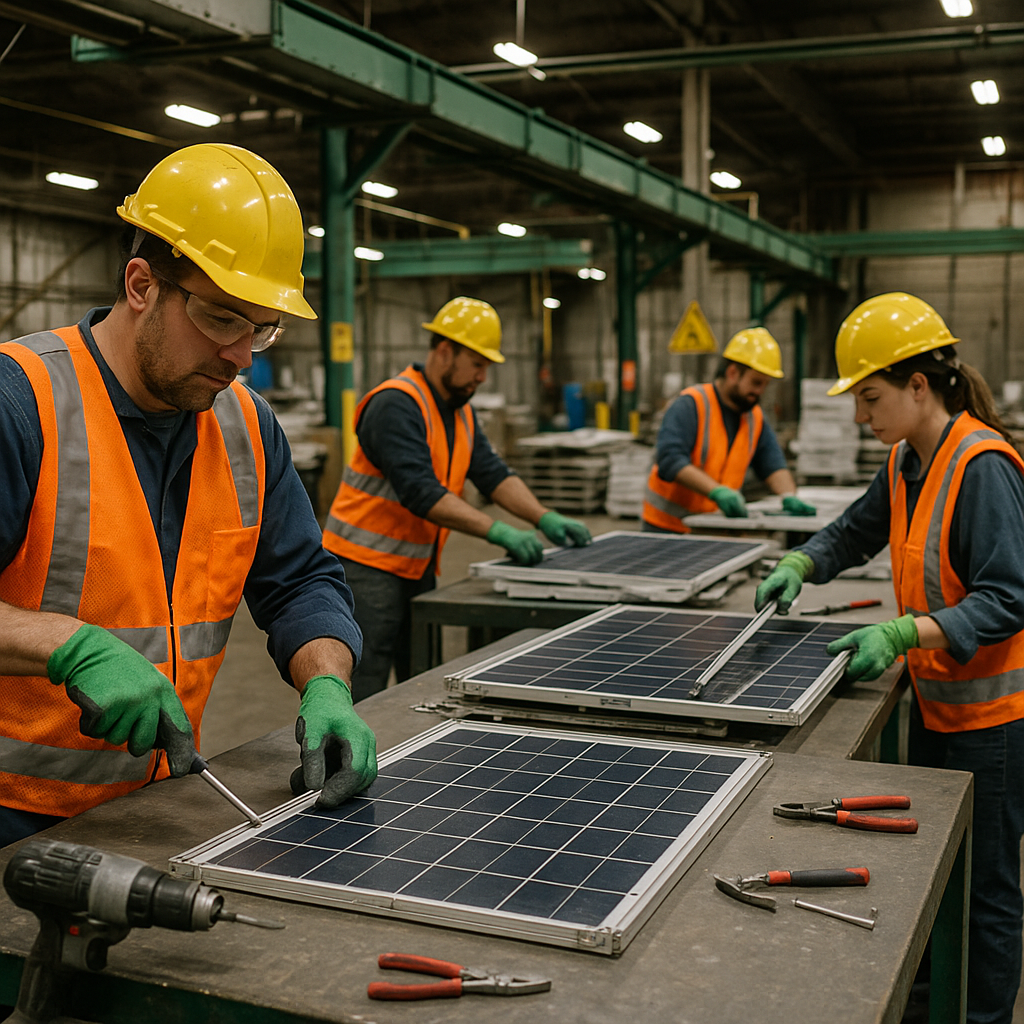
The solar panel recycling process in Texas follows a systematic approach designed to maximize material recovery while ensuring environmental safety. Industrial facilities utilize specialized equipment and trained technicians who understand the complex chemical and structural composition of photovoltaic modules to manage this high-precision process.
Initial disassembly and preparation
The recycling process begins with the careful removal of aluminum frames and junction boxes. Technicians dismantle these exterior components first because they contain high-purity metals that can be easily separated and processed. Copper cable wiring is also harvested during this initial phase to prevent contamination in later processing steps. The junction boxes are often sent for specialized e-waste processing to recover silver and other precious metals found in the circuitry.
Glass removal is a critical step in the sequence. The tempered glass layer typically comprises about 75 percent of a solar panel’s total weight. This layer requires specialized handling to prevent breakage that could lead to contamination of the silicon cells beneath. Once properly cleaned and sorted, this high-grade glass can be processed into new glass containers, fiberglass insulation, or reused in the manufacturing of new photovoltaic modules.
Thermal processing and cell extraction
Industrial facilities in Texas use thermal processing techniques to separate the silicon cells from the polymer encapsulant (typically ethylene-vinyl acetate). Panels are heated in controlled environments to specific temperatures that break down the adhesive agents without damaging the valuable semiconductor components. This process enables the clean extraction of silicon wafers and other embedded materials that are the “engine” of the solar panel.
Removing the polymer encapsulant is the most technically challenging step in semiconductor processing. This material must be fully separated to access the high-purity silicon cells. Advanced thermal techniques ensure that the silicon remains intact while safely capturing and neutralizing any gases released during the heating process, meeting strict Texas air quality standards.
Material recovery and value extraction
The final phase focuses on recovering and purifying materials for reintegration into the manufacturing supply chain. Silicon, silver, aluminum, and glass undergo final sorting. Silver recovery is particularly vital from an economic standpoint, as this precious metal represents a significant portion of a panel’s material value despite its small volume. High-purity silicon recovered from panels can often be refined and used to create new solar cells or electronic components.
Professional recycling facilities in Texas can recover up to 95 percent of a solar panel’s material value through these advanced processes. According to the EPA, these recovered materials reduce the need for virgin mining resources. The International Renewable Energy Agency estimates that by 2030, the global value of these recovered materials could yield up to $450 million, providing enough raw material to produce approximately 60 million new panels without extracting more ore from the earth.
What Is the Economic Benefit of Asset Recovery for Arlington Businesses?
For Arlington property owners and commercial facility managers, solar panel recycling is more than just an environmental obligation; it is a financial strategy. Treating end-of-life solar assets as “urban mines” allows organizations to recoup value while lowering their total cost of ownership (TCO) for renewable energy systems.
Recouping value from decommissioned hardware
Decommissioning a large-scale commercial solar array involves significant labor and logistics costs. However, by partnering with a specialized industrial recycler, Arlington businesses can offset these costs through the sale of high-value scrap. The aluminum frames recovered from a 100-kilowatt system represent tons of high-grade non-ferrous metal that commands a premium in the Texas scrap market. Furthermore, the recovery of copper wiring and silver-bearing components adds a secondary revenue stream that can turn a disposal expense into a material recovery gain.
ESG compliance and tax incentives
In the current industrial landscape, Environmental, Social, and Governance (ESG) reporting has become a standard requirement for major corporations and municipal contractors. Arlington firms that can provide a “Certificate of Recycling” for their decommissioned solar panels demonstrate a commitment to the circular economy. This documentation is increasingly valuable for securing green building certifications, qualifying for federal tax credits under current energy laws, and maintaining a positive brand reputation in an environmentally conscious market. Professional recycling partners provide the auditable trail necessary to prove that 100 percent of the solar waste was diverted from the landfill.
Safety and Compliance: Navigating Texas Solar Disposal Laws
Handling and transporting large volumes of solar panels requires strict adherence to safety protocols and environmental regulations. As Arlington continues to modernize its infrastructure, understanding the legal framework of solar disposal is vital for every project manager.
Managing “Universal Waste” regulations
Photovoltaic modules are increasingly classified as “universal waste” in Texas. This classification is designed to encourage recycling by streamlining the paperwork and storage requirements compared to hazardous waste. However, Arlington businesses must still ensure that panels are stored in a way that prevents breakage. If a panel is crushed and its internal components—such as lead or cadmium—are exposed to the elements, it may be reclassified as hazardous waste, leading to much higher disposal fees and potential TCEQ fines. Using a certified recycler who provides specialized pallets and protective transport ensures that your business remains compliant from the job site to the processing facility.
Physical safety during the decommissioning phase
Solar panels can still generate high voltages even when disconnected from the grid, particularly during the sunny Texas afternoons. Decommissioning crews in Arlington must be trained in specialized electrical safety to prevent shocks or arc flashes. Additionally, the sheer weight and size of commercial panels make them a physical hazard if not handled with proper lifting equipment. Professional recycling services often provide on-site technicians who manage the disconnection and palletizing of panels, reducing the liability and safety risk for the property owner.
Where Can You Find Solar Panel Recyclers in the Arlington Area?

Arlington property owners seeking solar panel recycling services have access to a sophisticated network of providers within the broader North Texas region. While local directories may list general contractors for installation, dedicated industrial recycling facilities operate throughout the Dallas-Fort Worth metropolitan area to handle the technical end-of-life processing.
The North Texas region hosts multiple certified recycling facilities specializing in photovoltaic module processing. These facilities serve cities like Arlington, Carrollton, and McKinney, providing a local destination for electronic waste and renewable energy infrastructure. By utilizing regional hubs, Arlington businesses can minimize the carbon footprint associated with transporting heavy panels over long distances.
Dallas is a major hub for renewable energy recycling in the region. Local facilities handle solar panel materials recovery alongside other complex scrap metal processing. According to Environment America, these facilities utilize established industrial processes from the glass, metals, and electronics sectors to accommodate solar power system components at scale.
Solar providers typically maintain relationships with certified industrial recyclers and can guide customers to appropriate decommissioning strategies. Homeowners and commercial facility managers should consult with their original installation partners or a certified Texas recycler as panels approach their 20-year milestone. These partnerships ensure proper handling and 100 percent materials recovery from end-of-life photovoltaic systems.
The Texas Commission on Environmental Quality oversees electronic equipment recycling regulations, including solar panels. This regulatory framework ensures recycling processes meet environmental standards while maximizing materials recovery. Local services continue expanding as the solar industry grows throughout the Dallas-Fort Worth region, ensuring that Arlington remains at the cutting edge of sustainable energy management.
Conclusion: Advancing a Sustainable Solar Future in Texas
Solar panel recycling is a crucial aspect of Texas’s sustainable energy future. As the state leads the nation in utility-scale solar capacity, responsible recycling is the key to supporting a true circular economy. By reclaiming valuable materials like silver, aluminum, and silicon from end-of-life panels, Texas can prevent the waste of resources valued at hundreds of millions of dollars while showcasing thorough environmental stewardship throughout the renewable energy lifecycle.
Texas already has the industrial infrastructure to become a global leader in sustainable solar lifecycle management. With proper investment in recycling capabilities and a sustained focus on responsible disposal practices, the state can transform its renewable energy sector into a model of environmental responsibility.
For comprehensive solar panel recycling solutions that maximize your material value and align with your sustainability goals, contact Okon Recycling at 214-717-4083.
Send Us a Message
Questions about what we do? Interested in commercial services? Let us know below and a member of our team will get back to you.