5901 Botham Jean Blvd, Dallas, TX 75215

A Quick Guide to Solar Farm Substation Decommissioning in Texas
December 15, 2025Solar farms across Texas are at a pivotal point. After 20-25 years of converting sunlight into electricity, these renewable energy installations face the end of their operational life, making comprehensive decommissioning necessary.
Solar farm and substation decommissioning in Texas involves the regulated dismantling and removal of solar energy facilities, including substations, transformers, and associated equipment, once they reach the end of their operational life. Chapter 302 of the Texas Utilities Code outlines specific requirements for this procedure, ensuring that sites are restored to their previous condition and protecting landowners and the environment from abandoned renewable energy infrastructure.
This regulatory framework covers the entire lifecycle of solar installations, from removing individual solar panels and mounting structures to dismantling substations and extracting buried cables three feet underground. The Texas Legislature recognized that responsible end-of-life management for solar infrastructure demands the same level of detail as initial construction, with required financial assurance and site restoration obligations that cannot be waived by contract.
Key Legal Requirements Under Texas Utilities Code
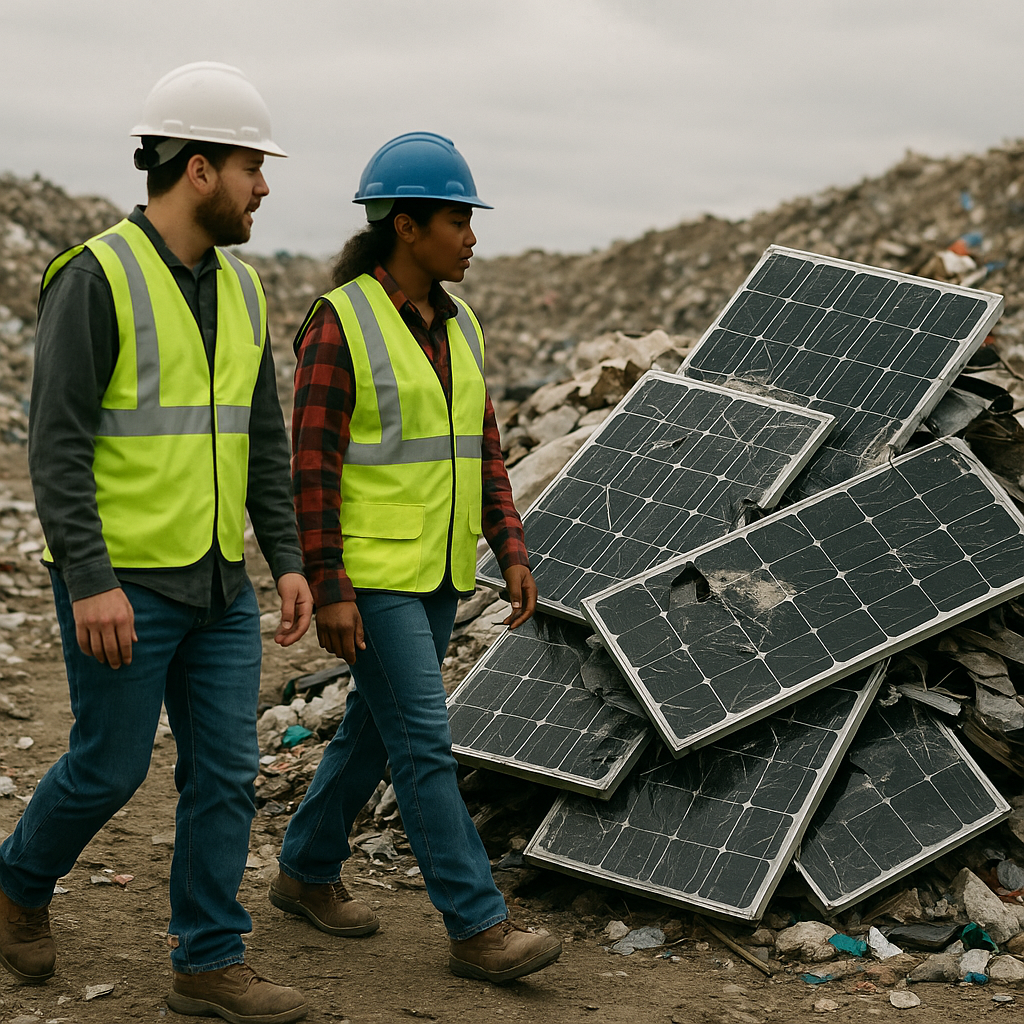
Texas Utilities Code Chapter 302 establishes comprehensive decommissioning requirements for solar power facilities, effective from Sept. 1, 2021. The statute applies specifically to private solar installations where a grantee leases property from a landowner to operate solar generation assets. These legal mandates are not waivable and must be incorporated into all qualifying solar power facility agreements.
The law mandates the complete removal of infrastructure from leased properties. Solar energy devices, transformers, substations, and all associated equipment must be cleared from the site. This includes underground infrastructure such as buried cables, power lines, fiber-optic systems, and communications equipment. The grantee is fully responsible for dismantling and removing these installations.
All foundations and buried infrastructure must be extracted to a minimum depth of three feet below the surface grade. This depth ensures thorough site restoration and prevents future land use complications. After removal, the grantee must fill any resulting holes or cavities with soil matching the predominant soil type found on the property. This restoration process maintains the land’s agricultural or development potential.
Recent amendments through HB 3228, effective Sept. 1, 2025, significantly expanded recycling obligations. Grantees must collect, reuse, recycle, or ship for recycling all components of the solar power facility that are practicably capable of being reused or recycled. This includes photovoltaic modules and other recoverable materials. Components that cannot be recycled must be disposed of at facilities authorized under state and federal law, with hazardous materials requiring specialized disposal at appropriate hazardous substance facilities.
Financial assurance requirements are a critical component of Chapter 302 compliance. The grantee must provide evidence of financial security covering the estimated cost of facility removal, recycling, disposal, and site restoration. This assurance must exceed the salvage value of the solar facilities, minus any portion pledged to secure outstanding debt. An independent, third-party professional engineer licensed in Texas must determine these cost estimates, with updates required every five years after the commercial operations date.
The financial assurance must be delivered by the earlier of two dates: when the solar power facility agreement terminates or the 20th anniversary of the commercial operations date. Acceptable forms include parent company guarantees with investment grade credit ratings, letters of credit, bonds, or other forms reasonably acceptable to the landowner. The Texas Utilities Code Section 302.0004 specifies that this financial security cannot be canceled until decommissioning obligations are fully completed.
Financial Assurance Developers Must Provide
Financial assurance serves as a critical safety net, ensuring proper cleanup and restoration when a solar project ends its operational life. Texas law mandates these protections to prevent landowners and communities from bearing decommissioning costs. This requirement supports sustainable energy practices by ensuring lifecycle responsibility.
Solar project lessees must provide acceptable financial assurance to landowners before certain deadlines. The assurance must be delivered either by the lease termination date or the 20th anniversary of the project’s commercial operations date. This timeline ensures adequate protection throughout the project’s productive years.
Acceptable Forms of Financial Assurance
Texas regulations recognize several forms of financial protection for decommissioning obligations. A parent company guarantee is one option, requiring the parent company to maintain a minimum investment-grade credit rating from a major domestic credit rating agency. This approach leverages corporate creditworthiness to secure cleanup commitments.
Letters of credit offer another widely used financial assurance mechanism. These banking instruments guarantee payment for decommissioning activities regardless of the project owner’s financial condition at the time of closure. Bonds provide similar protection through insurance companies or surety providers.
Project developers may also propose alternative forms of financial assurance that landowners find acceptable. This flexibility allows for innovative approaches while maintaining the core protection principle. All forms must demonstrate enough reliability to cover potential decommissioning costs over decades.
Calculating Required Assurance Amounts
The financial assurance amount must cover the full estimated cost of facility removal, component recycling and disposal, and land restoration. This approach reflects the modern understanding of sustainable energy project closure. The calculation then subtracts the salvage value of recoverable equipment and materials.
Any portion of the facility’s value pledged to secure outstanding debt must also be deducted from salvage value calculations. This prevents double-counting of assets already committed to other financial obligations. An independent, Texas-licensed professional engineer must determine these cost estimates and salvage valuations.
The recycling and disposal component has gained prominence as part of understanding end-of-life material flows. Proper handling of photovoltaic modules, mounting systems, and electrical equipment requires specialized processes and certified facilities. These requirements align with recent Texas legislation that emphasizes comprehensive recycling obligations.
Timing and Update Requirements
Developers must provide an initial cost estimate by the 10th anniversary of commercial operations. This timing allows real-world operational data to inform realistic decommissioning cost projections. The estimate establishes the baseline for financial assurance calculations.
Updated estimates are required every five years thereafter throughout the project’s life. These regular updates account for changing recycling technologies, labor costs, and material values. The updates ensure financial assurance remains adequate as conditions evolve.
This systematic approach to financial planning supports the circular economy principles that drive sustainable energy development. By requiring regular reassessment, the regulations ensure sufficient resources for proper material recovery and site restoration when projects reach their planned retirement.
Site Restoration and Removal Process
Site Assessment and Pre-Restoration Planning
Site assessment forms the foundation of every solar facility decommissioning project. Engineers conduct comprehensive evaluations to document existing conditions and identify potential restoration challenges. This process includes soil sampling to determine contamination levels and structural assessments of all equipment and foundations.
Environmental specialists review historical operational data to assess the facility’s impact on soil quality and drainage patterns. They map areas requiring specialized treatment, such as locations with soil compaction or altered topography. These findings inform detailed restoration plans that outline timelines, resource requirements, and safety protocols.
The assessment phase also involves coordination with landowners to establish specific restoration goals. Some agreements require returning agricultural land to a tillable state, while others focus on restoring natural habitats. Clear documentation of pre-construction conditions helps ensure restoration efforts meet contractual and regulatory requirements.
Systematic Equipment Dismantling
Equipment dismantling begins with the complete shutdown of electrical systems and their disconnection from the grid. Workers follow established lockout-tagout procedures to eliminate all power-related hazards. These safety measures protect personnel throughout the removal process and prevent accidental energization of equipment.
Solar panels are carefully disconnected and removed from mounting structures to prevent damage. Intact panels retain value for resale or recycling, making careful handling essential. Workers systematically disassemble racking systems and remove support posts using specialized equipment like backhoes and excavators.
Foundation removal requires heavy machinery to break concrete structures and extract materials to specified depths. Most jurisdictions require removal of foundations to three feet below final grade. Steel racking components and electrical equipment are sorted and prepared for transport to appropriate facilities.
Access road removal occurs when landowner agreements specify complete site restoration. Crews excavate road surfaces, remove aggregate materials, and restore natural drainage patterns. Any rocks over 12 inches in diameter that were moved during original construction must be relocated according to restoration specifications.
Comprehensive Material Management
Material management during decommissioning requires careful categorization of all materials removed from the site. Solar panels, metal components, and electrical equipment are evaluated for recycling potential or resale value. Materials like aluminum frames and copper wiring often have significant salvage value that can offset decommissioning costs.
| Material Category | Management Approach |
|---|---|
| Low-Level Waste (LLW) | Suitable for engineered near-surface disposal, requires containment for up to a few hundred years. |
| Intermediate-Level Waste (ILW) | Stored tens to hundreds of meters underground, requires more robust containment than LLW. |
| High-Level Waste (HLW) | Requires deep geological disposal due to significant heat generation or large amounts of long-lived isotopes. |
| Cleared or Exempt Waste | Once proven safe, can exit the radioactive waste stream entirely. |
Hazardous materials receive special handling according to environmental regulations. Some older solar panels contain lead or cadmium that requires testing to determine proper disposal methods. Batteries from energy storage systems are classified as universal waste and must be recycled through approved facilities.
Concrete foundations are often crushed on-site and used as backfill material in excavated areas. This approach reduces transportation costs and provides suitable material for site restoration. All materials must be processed according to local environmental protection requirements and waste management regulations.
Soil Restoration and Decompaction
Soil decompaction addresses compaction caused by heavy equipment traffic during the facility’s operational life. Crews use specialized equipment to break up compacted soil layers without causing excessive surface disturbance. The process must balance soil loosening with erosion control to prevent wind and water damage.
Excavated areas from foundation removal are backfilled with native soils of similar composition and permeability. Proper soil layering ensures adequate drainage and supports future vegetation growth. Compaction levels are carefully controlled to provide stability while allowing root penetration.
Soil testing confirms that restored areas meet agricultural or environmental standards for intended future use. Contaminated soils require removal and replacement with clean material. pH levels and nutrient content may need adjustment to support the planned vegetation or agricultural use.
Topography Restoration and Land Grading
Land grading restores natural surface contours and drainage patterns disrupted during facility construction. Heavy equipment operators work to recreate original slopes and water flow directions. This process requires careful attention to surrounding topography to ensure seamless integration with undisturbed areas.
Drainage restoration involves removing or modifying any berms, channels, or retention structures created for the solar facility. Natural water flow patterns must be reestablished to prevent erosion and flooding. Crews may need to install temporary erosion control measures during the restoration process.
Final grading creates suitable conditions for establishing vegetation. Surface preparation includes breaking up any remaining compacted areas and creating appropriate seedbed conditions. The restored surface should match the surrounding landscape’s natural appearance and function.
Native Vegetation Establishment
Native vegetation reestablishment requires seed collection from local plant communities or purchasing certified native seed mixes. Species selection depends on the site’s location, soil conditions, and intended future use. Agricultural sites may receive grass seed mixes suitable for farming, while natural areas require native wildflower and shrub species.
Seeding occurs during optimal growing seasons to maximize establishment success. Most regions require fall seeding to take advantage of winter precipitation. Proper seed placement depth and coverage methods ensure adequate germination rates and protect seeds from wind and water erosion.
Post-seeding monitoring tracks vegetation establishment progress and identifies areas requiring additional treatment. Successful restoration typically requires multiple growing seasons to achieve target plant coverage and species diversity. Ongoing weed control may be necessary to prevent invasive species from dominating restored areas.
Conclusion: Ensuring Responsible Solar End-of-Life in Texas

Texas has implemented a comprehensive framework for solar farm and substation decommissioning, ensuring developers are accountable for their projects’ entire lifecycle. With HB 3228 and related legislation, the state mandates specific removal standards, recycling requirements, and financial assurances for responsible project closure. These policies require operators to recycle all practicably recyclable components, properly dispose of hazardous materials, and restore the land to its original condition. The legislation positions Texas as a leader in sustainable energy development by ensuring renewable energy growth respects landowner rights and environmental standards.
As Texas leads in solar capacity expansion, proper end-of-life management is crucial for maintaining public support and environmental integrity. The state’s proactive approach to renewable energy lifecycle management sets a model for responsible development that other states might follow. Developers and operators navigating these new regulations can partner with experienced specialists to ensure compliance and sustainability. Contact Okon Recycling at 214-717-4083 for comprehensive solar decommissioning and recycling solutions that meet Texas regulatory standards.
Send Us a Message
Questions about what we do? Interested in commercial services? Let us know below and a member of our team will get back to you.