5901 Botham Jean Blvd, Dallas, TX 75215
Why Recycling Hail Damaged Solar Panels in Texas is a Growing Concern
December 10, 2025Baseball-sized hail destroyed thousands of solar panels at the Fighting Jays Solar Farm in March 2024. The storm crippled the 350-megawatt facility, which spans 3,000 acres just outside Houston. This catastrophic damage highlights a significant challenge for Texas’s renewable energy sector.
Texas leads the nation in utility-scale solar capacity, having surpassed California in recent years. The state’s aggressive expansion into solar energy coincides with its location in a hail-prone region. Severe weather events regularly threaten these massive installations, creating substantial volumes of damaged panels that need proper disposal.
The recycling challenge extends beyond storm damage. Solar panels contain metals like lead and cadmium, posing environmental risks if disposed of improperly. Currently, nearly 90% of decommissioned panels end up in landfills rather than at recycling facilities. As Texas continues building solar infrastructure in weather-vulnerable areas, developing robust recycling systems is critical for maintaining the state’s clean energy leadership while protecting communities and recovering valuable resources.
How are Hail-damaged Solar Panels Typically Recycled?
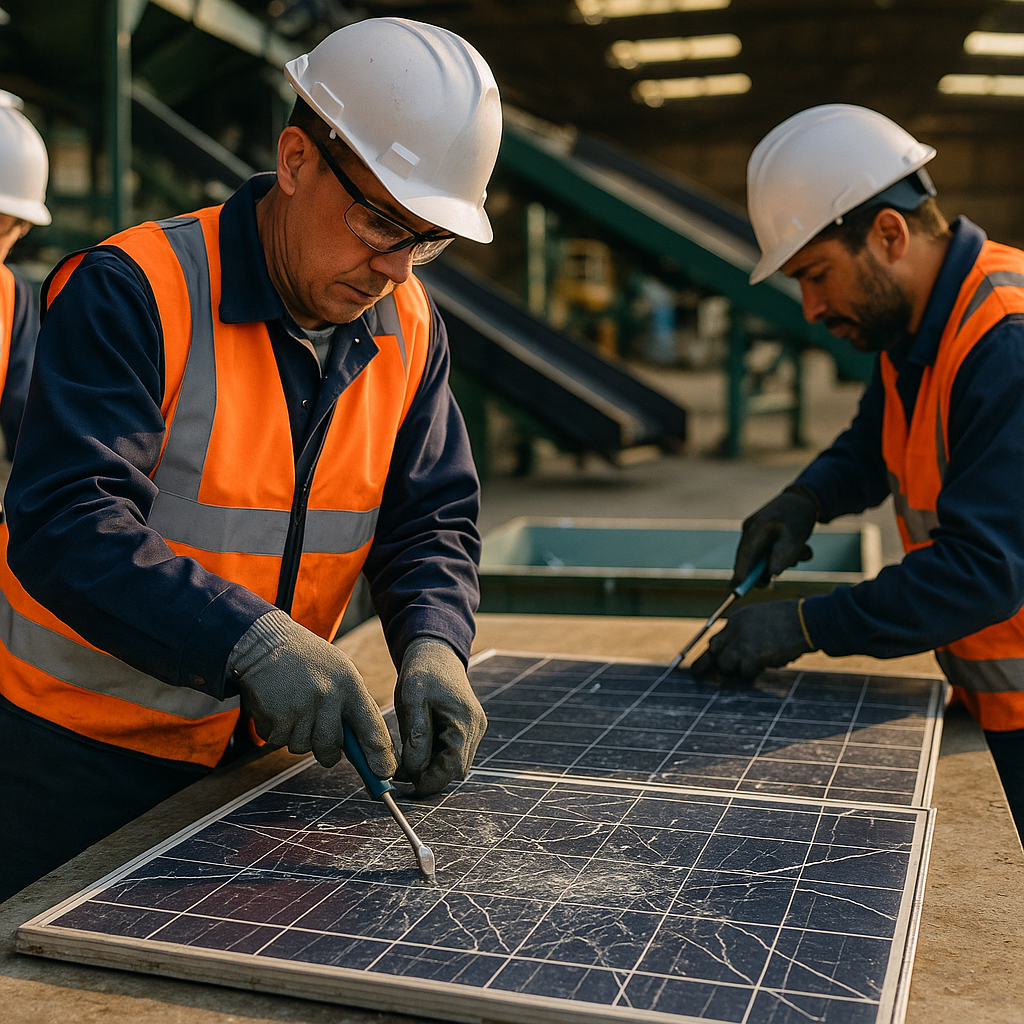
The recycling process transforms damaged panels into valuable raw materials by systematically separating components. Modern facilities use specialized equipment to safely dismantle each layer, maximizing material recovery while ensuring environmental compliance.
Professional recyclers start by evaluating panels for damage type and material composition. Silicon-based crystalline panels follow different processing routes than thin-film technologies, requiring specific handling protocols due to their varying compositions.
Step 1: Initial Dismantling and Component Removal
Recycling technicians first disconnect all electrical connections and remove external hardware. The aluminum frame is separated using mechanical tools designed for this purpose. Junction boxes and copper cables are carefully extracted to preserve valuable wiring materials.
This initial separation allows access to the laminated panel core, preventing contamination in later processing steps. The aluminum frame and copper cables retain high scrap value for metal recyclers.
Step 2: Glass Layer Separation
The glass layer represents approximately 75% of a solar panel’s total weight. Thermal processing helps loosen the polymer encapsulant that bonds the glass to silicon wafers. Some facilities use mechanical crushing methods to separate these materials.
Glass recovery rates can exceed 95% when proper techniques are applied. The recovered glass meets quality standards for manufacturing new products. According to the EPA, glass recycling from solar panels adheres to established industry processes used in electronics recycling.
Step 3: Encapsulant and Backsheet Processing
Polymer encapsulant materials require specialized handling due to their adhesive properties. Heat treatment breaks down these materials for easier separation, converting solid polymers into manageable fragments.
Mechanical sorting separates lighter polymer materials from heavier glass and metal components through density-based separation, achieving high-purity levels for downstream processing. Advanced facilities grind materials to uniform sizes for better separation efficiency.
Step 4: Silicon Wafer and Metal Recovery
Silicon wafers contain the photovoltaic cells that convert sunlight into electricity. Chemical and electrical techniques extract these valuable semiconductor materials. Temperature and chemical controls are essential to maintain material integrity.
Precious metals like silver, present in small quantities, hold significant value in each panel. Specialized processes concentrate these materials for refining. Lead and cadmium, due to their hazardous classification, require separate handling streams.
Step 5: Hazardous Material Management
Older solar panels may contain lead solder in electrical connections. Cadmium appears in certain thin-film panel types as cadmium telluride. These materials follow strict EPA protocols for collection, transport, and processing.
Licensed hazardous waste handlers manage these materials throughout the recycling process. Proper documentation tracks each hazardous component from collection to final disposal, ensuring compliance with federal and state environmental regulations.
The complete recycling process typically recovers 85-95% of materials by weight. Recovered materials enter established supply chains for manufacturing new products, reducing the need for virgin raw materials in solar panel production.
What are the Key Benefits of Recycling These Panels?
Recycling damaged solar panels offers substantial environmental and economic advantages, extending beyond simple waste management. This process transforms potential environmental hazards into valuable resources, supporting sustainable manufacturing practices. Consequently, solar panel recycling is essential for responsible renewable energy infrastructure.
Environmental Protection and Resource Conservation
Solar panel recycling prevents hazardous materials like lead and cadmium from contaminating soil and groundwater systems. Without proper recycling, these toxic substances can leach into the environment, creating long-term pollution problems that undermine the benefits of solar energy. This protective measure supports zero landfill goals by diverting electronic waste from disposal sites.
The process significantly reduces the environmental impact of raw material extraction. Mining operations for silicon, silver, and copper require energy-intensive processes that contribute to habitat destruction and carbon emissions. By recovering these materials through recycling, we minimize the need for new mining activities and preserve natural resources for future generations.
Modern recycling technologies can reclaim up to 95% of silicon and 90% of glass from decommissioned panels. This high recovery rate demonstrates the effectiveness of current recycling processes in maintaining material quality for reuse, meeting industry standards for manufacturing new solar panels and other electronic products.
Economic Value and Job Creation
The economic potential of solar panel recycling grows as more panels reach end-of-life status. According to the International Renewable Energy Agency, the cumulative value of recoverable raw materials from end-of-life panels globally will reach approximately $450 million by 2030. This value equates to the raw materials needed to produce around 60 million new panels.
Solar panel recycling creates employment opportunities across multiple sectors, requiring skilled workers for collection, transportation, dismantling, and material recovery. These green jobs contribute to local economic growth and support the transition to sustainable energy systems.
Material recovery through recycling helps stabilize supply chains and reduce production costs for manufacturers. Recovered silicon, silver, and copper provide alternatives to newly extracted materials, which are subject to market volatility and supply disruptions. This stability benefits both recycling operations and solar panel manufacturers who incorporate recycled materials into new products.
Supporting Circular Economy Principles
Solar panel recycling exemplifies circular economy practices by keeping valuable materials in continuous use. Rather than following a linear take-make-dispose model, recycling creates closed-loop systems where materials cycle through multiple product lifecycles, maximizing resource efficiency and minimizing waste throughout the solar energy supply chain.
The process reduces dependence on virgin material extraction while maintaining the quality standards necessary for solar panel manufacturing. Recycled materials often require less energy to process compared to newly extracted resources, further reducing the carbon footprint of solar panel production, enhancing the overall sustainability of renewable energy systems.
Companies that implement comprehensive recycling programs strengthen their environmental, social, and governance commitments. These sustainability practices attract environmentally conscious investors and customers who prioritize responsible business operations. The integration of recycling into standard industry practices positions solar energy as a truly renewable resource in both energy generation and material usage.
Which Types of Solar Panels can be Processed for Recycling?
Most solar panels currently in use can be successfully recycled through specialized processing methods. The recycling approach depends on the panel’s construction materials and internal components. Understanding these differences helps waste management facilities select appropriate recovery techniques and equipment for optimal material extraction.
The solar panel market consists of two primary categories that require distinct recycling protocols. Each type presents unique opportunities and challenges for material recovery operations.
Crystalline Silicon Panels
Crystalline silicon panels represent the majority of installations worldwide and offer a straightforward recycling process. These panels primarily contain glass, aluminum framing, and silicon wafers that can be efficiently separated using established industrial methods.
Monocrystalline panels feature single-crystal silicon cells that provide high-efficiency ratings. The recycling process achieves excellent recovery rates, with approximately 95% of the glass recovered for reuse and 85% of the silicon material successfully reclaimed. The aluminum frame components are completely recoverable through standard metal recycling processes.
Polycrystalline panels use silicon crystals that are melted together during manufacturing. Despite this difference, these panels follow the same recycling pathway as monocrystalline units. The thermal processing at 500°C effectively separates the encapsulating materials, allowing for clean recovery of the underlying silicon cells.
Thin-Film Solar Panels
Thin-film panels require more sophisticated recycling equipment due to their diverse material compositions and the presence of potentially hazardous substances. These panels undergo mechanical shredding followed by chemical separation processes to safely recover valuable materials.
Cadmium Telluride (CdTe) Panels
CdTe panels contain semiconductor materials that demand careful handling during recycling operations. The process involves crushing panels into small particles, typically 4-5mm in size, followed by separation of solid and liquid components. Recovery rates reach 95% for semiconductor materials and 90% for glass components. The cadmium and tellurium elements require specialized chemical processing to ensure safe recovery and reuse.
Copper Indium Gallium Selenide (CIGS) Panels
CIGS panels incorporate multiple metallic elements critical for future solar manufacturing. The recycling process focuses on recovering copper, indium, and gallium through chemical separation techniques. These materials are particularly valuable due to their limited global supply and essential role in advanced photovoltaic technologies.
Amorphous Silicon Panels
Amorphous silicon panels use a different form of silicon requiring modified processing approaches. While less common in current markets, they can be processed using adapted versions of crystalline silicon recycling methods. The silicon recovery rates are typically lower than those of crystalline panels but remain economically viable.
Processing capabilities for these panel types continue to improve as recycling facilities invest in specialized equipment and develop more efficient separation techniques. The choice of recycling method depends on the specific panel composition and the facility’s technical capabilities for safely handling hazardous materials.
Conclusion: Advancing a Sustainable Solar Future in Texas

As Texas continues expanding its solar capacity, establishing a robust recycling infrastructure is crucial for long-term sustainability. Recycling hail-damaged and end-of-life solar panels prevents waste, protects the environment from hazardous materials, and supports a circular economy by returning valuable resources to the supply chain. By partnering with certified recycling facilities, Texas can set a global example for responsible lifecycle management in the renewable energy sector.
The Lone Star State’s leadership in renewable energy extends beyond generation to comprehensive environmental stewardship through advanced resource recovery and industry innovation. As Texas leads the way toward a sustainable solar future, municipalities and businesses looking for responsible end-of-life solar panel management should contact Okon Recycling at 214-717-4083 for their recycling needs.
Send Us a Message
Questions about what we do? Interested in commercial services? Let us know below and a member of our team will get back to you.