5901 Botham Jean Blvd, Dallas, TX 75215
Recycling Cadmium From Thin Film Solar Panels: Semiconductor Recovery and Environmental Mitigation
December 14, 2025By 2050, the global volume of solar panel waste will reach at least 5 million metric tons annually. This enormous amount of photovoltaic waste presents both a significant environmental challenge and a unique opportunity for materials recovery. The scale of this waste stream demands immediate attention to end-of-life management strategies.
Cadmium Telluride (CdTe) modules represent a vital segment of this waste challenge. These thin film solar panels account for 21% of the U.S. photovoltaic market and utilize rare materials such as cadmium and tellurium as core components. Unlike traditional silicon panels, CdTe technology depends on elements that are byproducts of copper and zinc mining operations.
Recycling cadmium from these modules serves multiple strategic purposes within a circular economy framework. The process recovers valuable semiconductor materials and prevents toxic substances from entering landfills. According to the U.S. Environmental Protection Agency, dedicated recycling facilities can recover approximately 95% of semiconductor materials from thin film panels. This level of raw materials recovery turns waste into economic opportunity while supporting environmental stewardship.
What Is the Recycling Process for CdTe Thin-film Modules?
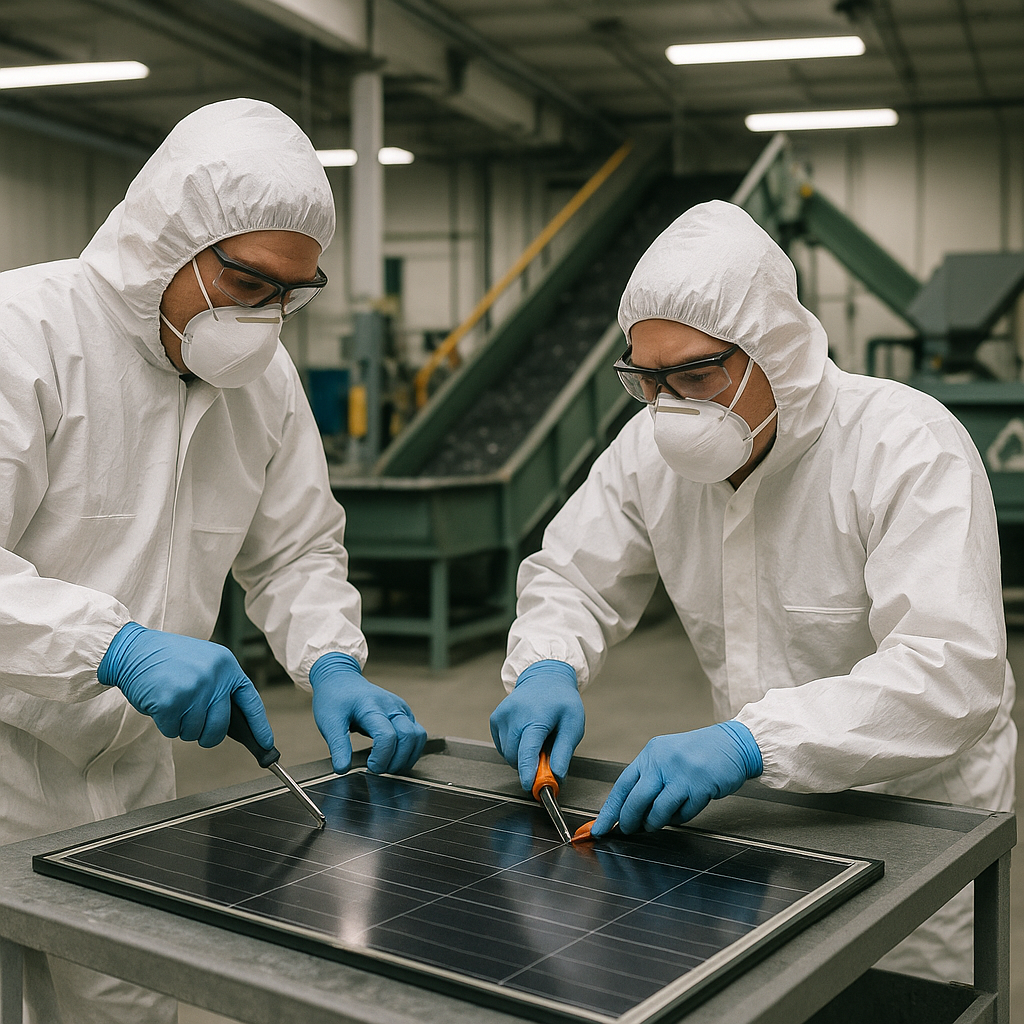
CdTe thin-film module recycling represents a sophisticated approach to material recovery, distinct from silicon-based solar panel processing. The process combines mechanical breakdown with hydrometallurgical techniques to extract valuable semiconductor materials. This specialized recycling operation maximizes material recovery while ensuring the proper handling of cadmium and tellurium compounds.
The entire recycling workflow consists of five distinct phases that progressively separate and purify different material streams. Each stage builds on the previous step to achieve optimal recovery rates. Modern CdTe recycling facilities can recover approximately 90% of glass materials and 95% of semiconductor content for reuse in new solar modules.
Initial Mechanical Processing
The recycling process begins with shredding collected CdTe modules into large fragments using industrial shredders. These fragments then undergo hammer milling to achieve the desired particle size of approximately 4-5 millimeters. This mechanical breakdown serves a critical purpose beyond size reduction.
The milling operation specifically targets the lamination bonds that hold the module layers together, exposing the cadmium telluride semiconductor layers for subsequent chemical extraction. The screen size in the milling equipment allows initial separation of bulk glass materials from laminate components during this mechanical stage.
Chemical Film Removal and Extraction
Film removal occurs in specialized rotating leach drums where the semiconductor materials undergo chemical dissolution. The process utilizes sulfuric acid as the primary extraction agent. Hydrogen peroxide addition throughout the leach cycle converts tellurium compounds into tellurous acid, facilitating complete extraction.
This extraction phase typically requires 4-6 hours to achieve complete removal of the semiconductor layers from the glass substrate. The chemical process specifically targets the CdTe and CdSeTe materials, while leaving glass and metal components largely intact. Temperature and pH control during extraction ensures optimal dissolution rates and material recovery.
Solid-liquid Separation Operations
Following chemical extraction, solid-liquid separation becomes critical for isolating different material streams. Spiral classifiers equipped with Archimedean screws perform the primary separation function, effectively separating glass pieces from the extraction liquor containing dissolved semiconductor materials.
The separation process removes residual laminate materials from glass cullet through vibrating screens. Clean glass pieces undergo washing to remove any remaining chemical residues. The extraction liquor containing cadmium and tellurium compounds proceeds to the precipitation stage for metal recovery.
Precipitation and Metal Recovery
The metal recovery phase employs a three-stage precipitation process with controlled pH adjustment using sodium hydroxide. Each precipitation stage targets specific pH ranges where cadmium and tellurium compounds exhibit minimal solubility, maximizing metal recovery while minimizing impurities in the final product.
Thickening operations concentrate the precipitated solids, creating a slurry with increased metal content. Filtration equipment processes this thickened slurry to produce a semiconductor-enriched filter cake containing concentrated cadmium and tellurium compounds suitable for processing into new solar module materials.
| Process Step | Method | Materials Recovered | Recovery Rate |
|---|---|---|---|
| Mechanical Processing | Shredding and hammer milling to 4-5mm particles | Initial glass separation from laminates | N/A |
| Chemical Extraction | Sulfuric acid leaching with H2O2 for 4-6 hours | CdTe and CdSeTe semiconductor layers | 95% |
| Solid-Liquid Separation | Spiral classifiers and vibrating screens | Clean glass cullet | 90% |
| Precipitation | Three-stage pH-controlled precipitation | Cadmium and tellurium compounds | 95% |
| Final Processing | Thickening, filtration, wastewater treatment | Semiconductor-grade filter cake, metals | 90%+ |
The liquid solution remaining after filtration requires wastewater treatment before disposal to ensure compliance with environmental regulations regarding heavy metal discharge. The comprehensive approach to CdTe recycling demonstrates the industry’s commitment to circular economy principles and sustainable materials management.
Third-party processors typically handle the filter cake to produce semiconductor-grade materials for new CdTe module production. This closed-loop approach reduces reliance on virgin materials while providing an additional supply source for critical tellurium and cadmium compounds. The process effectively addresses both waste management concerns and resource conservation objectives for CdTe module lifecycle management.
What Materials Are Recovered and at What Rate?
Current recycling processes for thin-film PV modules achieve outstanding material recovery rates. Modern CdTe recycling operations recover over 90% of materials from decommissioned modules. This impressive recovery rate highlights the effectiveness of established recycling technologies in materials recovery facilities.
Semiconductors are the most valuable components recovered during processing. Cadmium and tellurium, comprising the core photovoltaic material in thin-film modules, are successfully extracted and purified for reuse. These recovered materials can be reprocessed into new solar panels, maintaining their essential role in the circular economy.
Glass cullet constitutes the largest portion of recovered materials by weight, making up about 75% of a typical panel’s total weight. The recovered glass meets quality standards for reuse in new solar module production, glass manufacturing, and rubber products.
Metal components also achieve high recovery rates through current methods. Copper wiring and aluminum frames are effectively separated and recovered during recycling. These materials re-enter the metal markets, supporting the manufacturing of new solar installations and other industrial applications.
The filter cake, containing concentrated semiconductor materials, exhibits particularly high recovery efficiency. Processing facilities recover approximately 95% of the original cadmium and tellurium content from incoming modules. This concentrated material provides a reliable secondary source of critical elements for thin-film solar manufacturing.
What Are the Environmental Benefits of This Recycling?
Recycling CdTe solar modules has significantly lower environmental impacts than extracting and processing virgin materials. Studies consistently show that recovering materials through recycling requires less energy and generates fewer emissions than mining for the same components.
A Life Cycle Assessment reveals the true environmental advantage of CdTe module recycling. This comprehensive method evaluates all environmental impacts throughout a product’s entire lifecycle. Research published in Resources, Conservation and Recycling demonstrates that the environmental impact of recycling recovered products is lower than that of mining and refining the same components from original sources.
The recycling process delivers substantial energy savings across multiple impact categories. Primary energy demand drops significantly when recycled materials replace virgin resources. This reduction results from bypassing the energy-intensive processes required for mining, transportation, and initial processing of raw materials.
Emission reductions are another major environmental benefit. The recycling process generates fewer greenhouse gas emissions compared to primary material production. Glass cullet recycling alone contributes to substantial CO2 emission reductions by eliminating the need to heat and process limestone, dolomite, and other carbonate materials used in virgin glass production.
Resource conservation extends beyond energy and emissions to include land and water resources. Mining operations typically require large land areas and significant water consumption. Recycling CdTe modules preserves these natural resources while providing the same materials for new applications.
Glass recovery offers the most significant environmental benefits in CdTe module recycling. Glass comprises over 90% of a CdTe module’s weight, and recycling this material avoids the environmental impacts associated with silica mining and glass manufacturing. The recovered glass cullet melts at lower temperatures than virgin materials, reducing energy consumption in subsequent glass production processes.
Copper recovery from junction boxes and wiring systems provides additional environmental advantages. Copper recycling requires substantially less energy than primary copper production from ore. This process also eliminates the environmental impacts associated with copper mining operations, including habitat disruption and water pollution risks.
The cumulative environmental benefits create a smaller environmental footprint for the entire module lifecycle. When considering material recovery credits, CdTe module recycling can achieve net negative environmental impacts in several categories. This means the environmental benefits from avoiding virgin material production exceed the impacts of the recycling process itself.
Conclusion: The Future of Thin Film Solar Recycling
The recycling of cadmium from thin film solar panels is a proven and efficient process, forming a cornerstone of sustainable energy infrastructure. With recovery rates exceeding 90% for semiconductor materials and clear environmental advantages over sourcing new materials, this technology offers an environmentally superior solution that supports the circular economy. These commercial scale recycling processes demonstrate how CdTe PV modules can be transformed from waste streams into valuable resources.
As the solar industry rapidly expands, scaling these recycling efforts is essential for managing end-of-life panels responsibly while recovering critical materials for future manufacturing. The combination of high-efficiency recovery rates and environmental stewardship positions thin film solar recycling as a vital component of sustainable energy’s future. For organizations seeking comprehensive recycling solutions for their solar installations, contact Okon Recycling at 214-717-4083.
Send Us a Message
Questions about what we do? Interested in commercial services? Let us know below and a member of our team will get back to you.