5901 Botham Jean Blvd, Dallas, TX 75215
Can You Get Money for Old Solar Panels?
February 6, 2026You can earn money from old solar panels through several viable methods. Solar panels retain value even after their primary use ends, providing both financial returns and long-term environmental benefits. In 2026, the secondary market for photovoltaic (PV) modules has matured into a robust industry, offering homeowners and businesses profitable alternatives to disposal.
There are two main ways to monetize old solar panels. Direct resale works best for panels that are still functional and have a sufficient remaining lifespan. Recycling, on the other hand, allows for value recovery from panels that have truly reached the end of their life, extracting valuable materials like silicon, aluminum, silver, and copper to re-enter manufacturing supply chains.
The decision between selling and recycling depends on the panel’s condition, age, and performance degradation rates. Solar system upgrades often result in panels suitable for resale, while damaged or severely degraded panels generally provide more value through recycling processes. Both options contribute to the circular economy by extending resource lifecycles and reducing waste that would otherwise impact municipal disposal systems.
How Can You Sell Your Used Solar System for Cash?
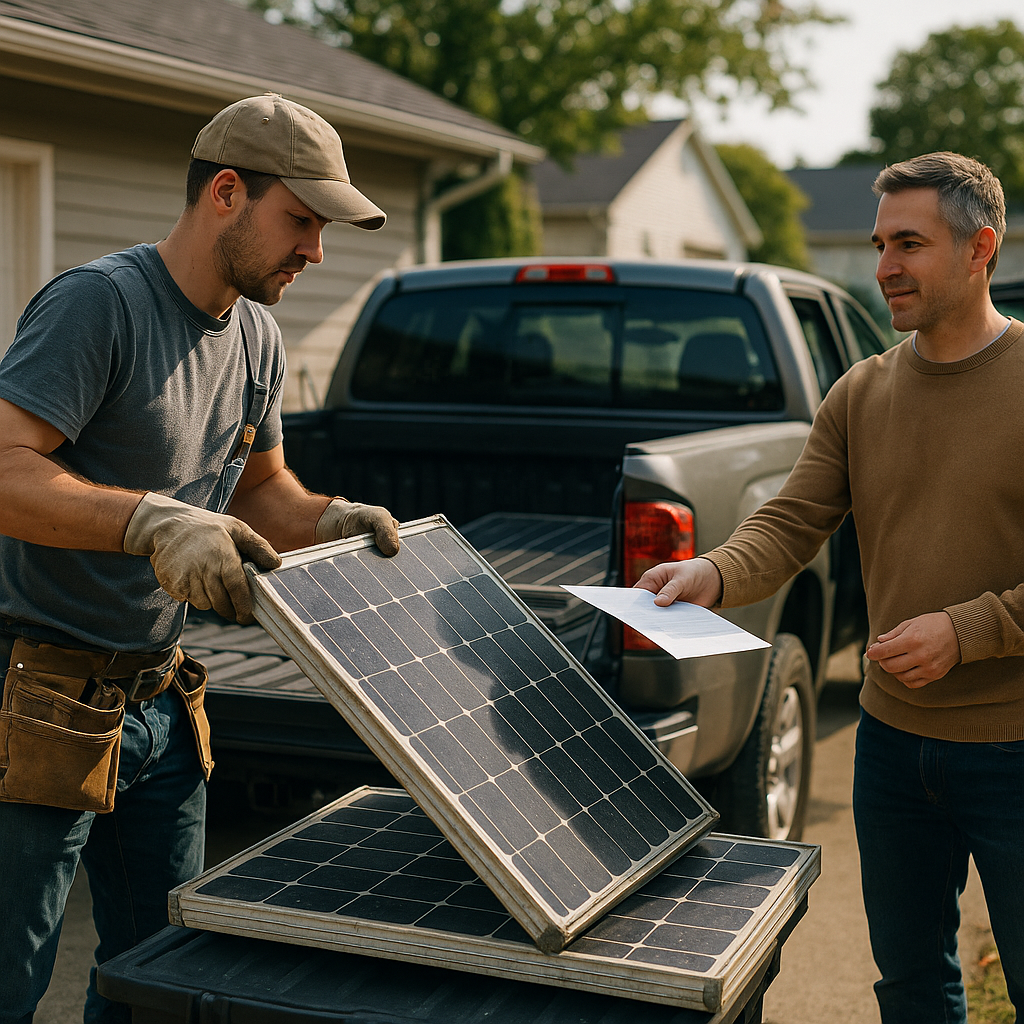
Specialized asset recovery companies now purchase used solar equipment directly from system owners, creating a streamlined cash conversion process. These buyers focus on pre-owned solar panels, inverters, and lithium batteries that still retain functional capacity. This process eliminates the complexity of finding individual buyers or navigating online marketplaces, offering a turnkey solution for liquidating energy assets.
Direct purchase process
Selling begins with contacting a solar equipment buyer who specializes in refurbishment services. A qualified technician schedules an on-site inspection to assess your system’s condition and operational capacity. This evaluation typically includes panel functionality, inverter performance, and battery health if applicable. For large commercial arrays, this audit is critical in establishing the fair market value of the system.
During the inspection, the technician documents serial numbers, model specifications, and operational history. They test key performance metrics such as open circuit voltage (Voc), short circuit current (Isc), and overall power output. This comprehensive assessment determines the immediate cash value of your equipment, ensuring that pricing reflects the actual remaining kilowatt-hour potential of the hardware.
Immediate offer and payment
Following the technical evaluation, buyers provide an immediate cash offer based on current market rates for used solar equipment. Professional asset recovery firms typically offer same-day Electronic Funds Transfer payments upon acceptance. This rapid turnaround eliminates the waiting periods associated with traditional sales methods and provides immediate capital that can be reinvested into newer, higher-efficiency technology.
Payment rates for used solar panels generally range significantly per watt, depending on age, condition, and remaining warranty. Systems with more than ten years of productive life expectancy command higher prices. Inverters and lithium batteries receive separate valuations based on their specific condition and market demand, often adding substantial value to the total buyout package.
System removal and transportation
Professional buyers manage the complete decommissioning process, including safe panel removal and electrical disconnection. They arrange transportation and assume liability for proper handling during removal. This service removes safety concerns and technical challenges for system owners, as handling high-voltage DC equipment requires specialized training.
The removal process follows industry safety protocols to prevent damage to roofing or electrical systems. Buyers usually complete removal within one to two business days after the purchase agreement. This efficiency makes the cash conversion process especially appealing for system upgrades or property transitions where speed is essential.
How to Determine If Your Panels Are Resalable or Scrap
Before contacting a buyer, it is helpful to understand the criteria that separate a valuable asset from a recycling candidate. Not all used panels are created equal; physical defects and electrical degradation play a massive role in determining their next life. A panel that looks fine to the naked eye may have internal failures that render it unsafe for reuse.
Visual inspection guidelines
The first step in grading a solar panel is a detailed visual inspection. “Snail trails”—discolorations that look like small, dark lines on the face of the cell—are often indicators of microcracks in the silicon wafer. These cracks can lead to significant power loss and potential hot spots. Additionally, the integrity of the backsheet (the polymer layer on the rear of the panel) is crucial. If the backsheet is peeling, cracked, or chalking, the panel is no longer watertight and poses a severe electrical shock hazard. Panels with compromised backsheets are almost always designated for recycling rather than resale.
Electrical performance testing
For a panel to be sold on the secondary market, it must produce power within a specific range of its original nameplate rating. Professional testing involves using a multimeter to measure Open Circuit Voltage (Voc) and Short Circuit Current (Isc). If a panel rated for 40 volts is only producing 30 volts in full sun, it likely has a failed internal bypass diode or a string of dead cells. Thermal imaging is also used during this phase; a functioning panel should have a uniform temperature. Bright “hot spots” on a thermal camera indicate resistance points that can eventually burn through the backsheet and cause a fire.
Wattage and form factor demand
Market demand heavily influences resale value. In 2026, the standard for residential panels has shifted toward higher wattages (400W+). Older panels rated at 200W or 250W have limited resale value for residential grid-tied applications because they occupy too much roof space for the power they generate. However, these lower-wattage panels often find a second life in off-grid applications, such as RVs, agricultural pumps, or small cabins. Understanding the “form factor” of your panels helps set realistic expectations for their resale price versus their scrap value.
What Is the Financial Value in Recycling Solar Panels?
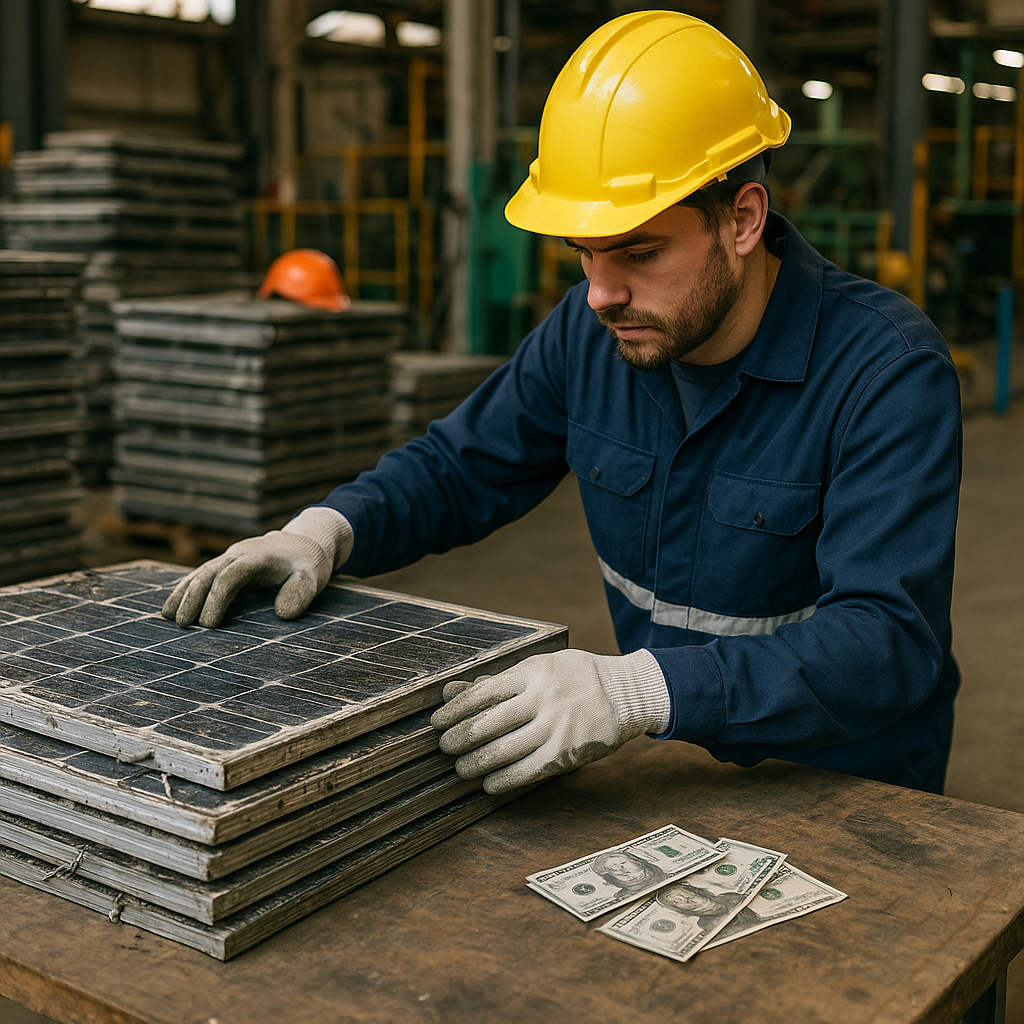
Advanced recycling technology can extract significant financial value from end-of-life solar panels. Modern facilities recover up to 95 percent of a panel’s material value by processing valuable components like glass, silicon, silver, copper, and aluminum. This high recovery rate turns potential waste into profitable raw materials ready for reintegration into manufacturing supply chains.
The global value of recoverable materials from solar panel recycling presents major economic opportunities. According to the International Renewable Energy Agency, the worldwide value of materials recovered through solar panel recycling could reach $450 million by 2030. This figure is expected to skyrocket to over $15 billion by 2050, representing raw materials sufficient to produce two billion new panels.
The breakdown of material recovery explains why solar panel recycling generates significant returns. Silver accounts for about 14 percent of a panel’s total material value, despite making up only 0.05 percent of its weight. Glass comprises the largest volume of recoverable material, while aluminum, copper, and silicon offer additional revenue streams through established secondary markets.
Current market projections show the solar panel recycling industry growing substantially over the next decade. This growth is driven by increasing numbers of panels reaching end-of-life. The circular solar economy benefits from recovered materials potentially supplying a significant percentage of the polysilicon, aluminum, copper, and silver needed for new panel production by 2035.
Material recovery facilities demonstrate the practical application of these economic projections. Advanced processing systems precisely separate valuable materials, ensuring maximum value extraction from each panel. The recovered materials then enter established commodity markets, where silver, copper, and aluminum command premium prices due to their purity levels. The financial case for solar panel recycling grows stronger as material supply constraints emerge, making recycled content progressively more valuable for manufacturers seeking cost-effective raw materials.
The Environmental and Legal Risks of Improper Disposal
While the financial incentives for recycling are clear, the risks associated with improper disposal are equally significant. Solar panels are not inert trash; they are complex electronic devices that contain regulated materials. Simply throwing them in a dumpster is not only environmentally negligent but increasingly illegal in many jurisdictions.
Toxicity and heavy metal leaching
Solar panels, particularly older models and thin-film varieties, may contain hazardous substances. Cadmium telluride (CdTe) panels contain cadmium, a heavy metal that is toxic to human health. Even standard silicon panels utilize lead-based solder for electrical connections. When these panels are crushed in a standard landfill, the protective glass barrier is broken, allowing rainwater to wash over the internal components. This process, known as leaching, can transport lead and cadmium into the groundwater, contaminating local water supplies. The EPA uses the Toxicity Characteristic Leaching Procedure (TCLP) to determine if waste is hazardous; panels that fail this test are subject to strict hazardous waste disposal regulations.
Landfill bans and liability
Recognizing these risks, many states are moving to ban solar panels from municipal solid waste landfills entirely. For business owners, the “cradle-to-grave” liability standard means you are responsible for your waste forever. If panels you disposed of improperly are found to be contaminating a site years later, your company could be held liable for the cleanup costs. Professional recycling provides a “Certificate of Recycling” or destruction, transferring this liability and proving that the waste was handled according to federal and state laws.
The global impact of e-waste export
Another critical reason to choose a certified domestic recycler is to prevent the export of e-waste to developing nations. Unscrupulous operators sometimes ship old panels overseas under the guise of “reuse,” where they are eventually stripped for copper in unsafe conditions that harm workers and the local environment. By working with a reputable US-based recycler, you ensure that your end-of-life panels are processed safely within a regulated framework, supporting domestic jobs and environmental justice.
Are There Programs and Regulations for End-of-Life Panels?
The end-of-life management of solar products operates within a well-established framework of industry programs and government regulations. The Solar Energy Industries Association (SEIA) leads industry efforts through its National PV Recycling Program. Federal and state regulations provide a legal foundation for responsible disposal and recycling practices.
SEIA’s National PV Recycling Program
SEIA established the National PV Recycling Program to create a comprehensive network for end-of-life solar equipment management. The program connects solar installers, project owners, developers, and distributors with certified recycling partners across the United States. These partners provide repair, refurbishment, resale, and recycling services for photovoltaic modules, inverters, and related equipment.
The program has processed millions of pounds of photovoltaic modules and equipment since its launch. Current recycling partners include companies with expertise in glass, aluminum, electronics, and specialty metal recovery. The network continues expanding to serve areas with growing solar installations. SEIA members receive specific benefits when using preferred recycling partners, but the services remain available to all industry participants.
Federal regulatory framework
The Federal Resource Conservation and Recovery Act (RCRA) provides the primary regulatory structure for solar panel disposal. When panels reach end-of-life, they become solid waste regulated under RCRA Subtitle D. This classification requires proper handling through approved waste management facilities.
Some panels may qualify as hazardous waste if they contain materials exceeding federal toxicity thresholds. These panels must follow more stringent RCRA Subtitle C regulations. The classification depends on TCLP test results, which measure potential heavy metal leaching in landfill conditions. The EPA has also proposed modifying universal waste regulations to include solar panels, streamlining end-of-life management while maintaining environmental protections.
State-level policies and variations
State governments have developed diverse approaches to solar panel end-of-life management beyond federal requirements. California designates end-of-life solar panels as universal waste, requiring specialized handling and annual reporting for large-volume handlers. Washington established a manufacturer-funded stewardship program requiring takeback plans for panels sold after implementation. Most states require decommissioning plans and financial assurance for utility-scale solar projects, detailing panel removal, transportation, and disposal methods.
Compliance requirements for system owners
System owners must determine proper disposal methods based on panel composition and applicable regulations. Testing or manufacturer documentation helps establish whether panels qualify as hazardous waste. Consulting state environmental agencies for specific local requirements that may exceed federal standards is advisable. Proper documentation becomes essential for regulatory compliance and liability protection. Waste manifests, transportation records, and facility certifications provide audit trails for responsible disposal.
Conclusion: Maximizing the Value of Your Old Solar Panels

Your old solar panels still hold value that can be unlocked by selling or recycling them. Selling used panels, inverters, and batteries to reputable asset recovery firms provides immediate cash and gives functional equipment a second life. Alternatively, recycling supports a sustainable economy by recovering valuable materials for new products, ensuring that silver, silicon, and high-purity glass are not lost to the landfill.
Responsible decisions about end-of-life solar equipment benefit both your finances and the environment. Whether selling functional panels for quick returns or recycling to recover materials worth significant value per unit, you support sustainable energy practices and maximize your investment. For expert guidance on recycling options for your solar equipment, contact Okon Recycling at 214-717-4083.
Send Us a Message
Questions about what we do? Interested in commercial services? Let us know below and a member of our team will get back to you.