5901 Botham Jean Blvd, Dallas, TX 75215
Why Is End-of-Life Solar Management in Haskell County a Critical Issue?
January 6, 2026Haskell County is a leading renewable energy hub in Texas, featuring the impressive Azure Sky solar and storage project with 700,000 photovoltaic panels spanning 284 megawatts of solar capacity. This massive installation is a significant clean energy investment in the region, highlighting the county’s dedication to sustainable energy solutions.
Solar panels generally operate effectively for 25 to 30 years, according to industry research. Consequently, Haskell County will encounter large volumes of end-of-life equipment starting in the 2040s and beyond. The circular economy principles that guide responsible decommissioning require careful planning well before panels reach their operational limits.
Proactive end-of-life solar management ensures these substantial renewable energy investments continue to provide value through proper recycling and materials recovery. Without strategic planning, the county could face environmental challenges and missed opportunities to reclaim valuable materials like silver, silicon and aluminum. Sustaining Haskell County’s reputation as an environmentally responsible leader involves addressing sustainability concerns throughout the entire photovoltaic panel lifecycle.
When Does a Solar Project Require Decommissioning and What Are the Risks?
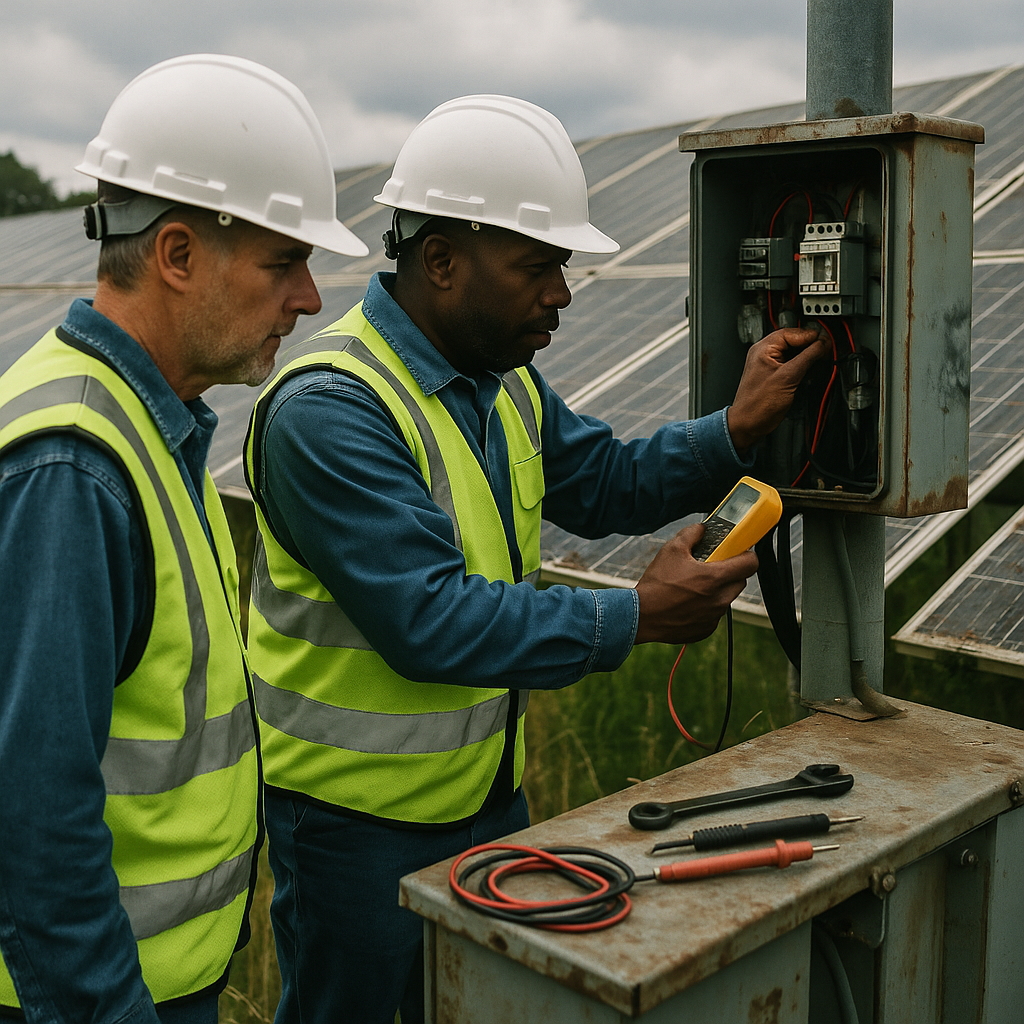
Solar projects typically reach the end of their operational life after 25 to 35 years. Panel degradation results in approximately a 0.5% efficiency loss per year, meaning a 20-year-old panel produces about 90% of its initial electricity output. When efficiency drops below economically viable levels, continuing operations becomes impractical, even if the infrastructure is physically intact.
The decision to decommission often coincides with the expiration of leases or power purchase agreements. At this point, project owners must choose between equipment upgrades, lease extensions or complete facility removal. Early decommissioning may also occur due to equipment failure, changes in land use agreements or regulatory requirements.
Environmental Contamination Risks
Improper solar project decommissioning can create serious environmental hazards. While most modern silicon panels qualify as universal waste under EPA guidelines, older panels and certain thin-film technologies contain hazardous materials. Lead is found in solder connections and some panel components, while cadmium is present in specific thin-film panel types.
These toxic substances pose contamination risks when panels break down or are improperly disposed of. Lead and cadmium can leach into soil and groundwater systems, causing long-term environmental damage. Contamination spreads beyond project boundaries, affecting local water supplies and agricultural land. The cleanup process for contaminated sites often exceeds the original decommissioning costs significantly.
Legal Penalties and Regulatory Compliance
The Resource Conservation and Recovery Act (RCRA) governs hazardous waste management for solar panel disposal. Facilities that fail to properly test and classify panel waste face significant penalties. RCRA violations can result in fines exceeding $70,000 per day for continued non-compliance, along with potential criminal charges for willful violations.
A Toxicity Characteristic Leaching Procedure (TCLP) test determines whether panels qualify as hazardous waste. Results vary significantly, even among panels from the same manufacturer. This variability creates compliance challenges and legal exposure for project owners.
The 2025 Texas Regulatory Landscape: SB 3229 and HB 3228
As we move through the 2025-2026 period, Texas has implemented some of the most stringent renewable energy decommissioning laws in the nation. For Haskell County solar operators, understanding these state-level mandates is essential for avoiding massive financial liabilities.
Mandatory Recycling and Financial Assurance
Under Senate Bill 3229, solar facilities in Texas are now required to provide financial assurance to the state or the landowner to ensure that the site can be safely decommissioned and the materials recycled. This often takes the form of a performance bond or a letter of credit. This law ensures that if a solar operator goes bankrupt, the community isn’t left with thousands of tons of orphaned glass and metal. HB 3228 further mandates that any “practicable” materials—specifically steel and aluminum racking—must be diverted to a legitimate recycling entity.
Landowner Protection and Property Rights
Texas law now requires that solar leases include specific language detailing the grantee’s obligation to remove all equipment, including foundations, to a depth of at least three feet. Furthermore, the land must be restored to a state comparable to its original condition. Professional recycling partners like Okon Recycling help developers document the volume of materials diverted from landfills, which is critical for satisfying these lease obligations and providing the final “Certificate of Recycling” required by landowners.
What Does the Solar Panel Decommissioning Process Involve?
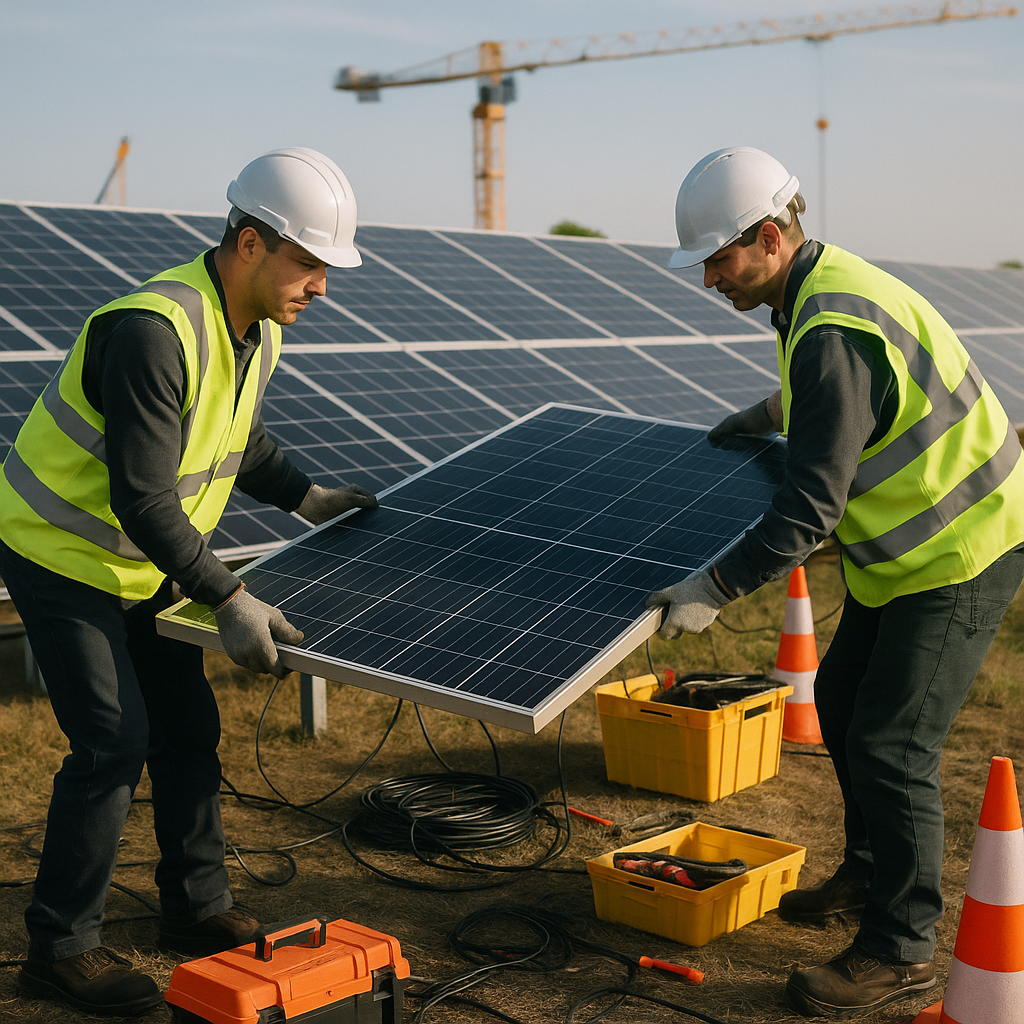
Solar panel decommissioning follows a structured methodology that ensures worker safety and environmental protection throughout the entire process. This systematic approach begins with comprehensive planning and concludes with complete site restoration.
Initial Site Assessment and Planning
The decommissioning process starts with a detailed site assessment to evaluate the condition of panels, inverters and structural components. This critical phase helps determine which materials can be reused or recycled while identifying potential environmental risks like wiring contamination or foundation issues. Engineers document the facility’s layout and any hazardous materials present.
Safety Protocols and De-Energizing
Safety measures are paramount. Teams first disconnect all electrical systems to eliminate power-related hazards before physical dismantling begins. Workers implement comprehensive safety measures that include personal protective equipment and hazard communication procedures. Environmental considerations involve the removal and proper disposal of hazardous materials like batteries or electronic components.
Component Removal and Material Segregation
The physical dismantling phase involves the systematic removal of equipment and structures. Each component receives proper labeling and tracking to ensure materials move through the waste management process correctly. Material segregation occurs during removal to maximize recovery potential. Teams sort materials into categories: high-value scrap (aluminum, copper), glass for recovery and specialized waste requiring hazardous disposal.
| Phase | Key Activity | Industrial Goal |
|---|---|---|
| Assessment | TCLP Testing & Site Audit | Identify hazardous vs. non-hazardous waste |
| De-Energization | Electrical System Cut-off | Worker safety and high-voltage mitigation |
| Dismantling | Panel and Rack Removal | Preserve material integrity for recycling |
| Segregation | Metals vs. Glass vs. Silicates | Maximize revenue from aluminum and copper |
| Restoration | Soil De-Compaction & Grading | Return land to agricultural readiness |
Advanced Metallurgy: Reclaiming Value from Solar Scrap
One of the most overlooked aspects of solar decommissioning is the intense metallurgical value stored within a utility-scale farm. In Haskell County, a project the size of Azure Sky contains thousands of tons of high-grade non-ferrous and precious metals.
The Copper and Aluminum “Gold Mine”
The racking systems are typically made of high-strength galvanized steel or extruded aluminum. Aluminum, in particular, is an “infinite” material, meaning it can be recycled endlessly with no loss of quality. Furthermore, the miles of collection cabling and transformer windings contain high-purity copper. By segregating these materials on-site, developers can often generate enough scrap revenue to offset a significant portion of the labor costs associated with the decommissioning itself.
Precious Metals in Photovoltaic Cells
While a solar panel is primarily glass and aluminum, the internal “fingers” of the solar cells contain silver. In modern industrial recycling facilities, advanced chemical and thermal processes are used to recover this silver at 99.9% purity. Although the amount of silver per panel is small, at the scale of 700,000 panels, the recovered precious metal value is substantial. This “urban mining” reduces the need for environmentally invasive mining operations and supports a domestic supply of critical minerals.
How Haskell County Is Implementing Sustainable Solar Management
Haskell County demonstrates comprehensive sustainable solar management through the Azure Sky project. This facility integrates circular economy principles from initial design to eventual decommissioning. The approach encompasses both the 700,000 photovoltaic panels and the 95-megawatt battery storage system.
Agrivoltaics and Regenerative Agriculture
The facility employs innovative agrivoltaics by integrating agriculture with solar power generation. Native and pollinator-friendly seed mixtures establish habitats benefiting monarch butterflies and honeybees. Sheep grazing manages vegetation across parts of the 1,800-acre site, eliminating the need for emission-producing mowers and chemical herbicides. The sheep convert vegetation into natural fertilizer, improving soil health and supporting biodiversity.
Battery Storage and Critical Mineral Recovery
Battery energy storage systems require specialized end-of-life planning due to their critical mineral content. The Azure Sky project addresses recovery strategies for lithium, nickel and cobalt from the design phase. This ensures these valuable materials remain in productive use cycles. Critical mineral recovery planning prevents valuable resources from entering waste streams and supports the domestic battery supply chain.
Conclusion: Securing a Sustainable Solar Future in Haskell County
Haskell County’s proactive approach to end-of-life solar management positions it as a leader in responsible green energy. By combining comprehensive decommissioning planning with circular economy principles and sustainable practices like agrivoltaics, the region ensures its renewable energy investments remain environmentally sound throughout their lifecycle. Projects like Azure Sky demonstrate how effective material recovery planning can foster enduring environmental stewardship while supporting grid stability and community economic growth.
This forward-thinking strategy not only protects the community but also sets a benchmark for sustainable energy infrastructure nationwide. As solar installations continue to expand across Texas, Haskell County’s integration of regenerative agriculture with renewable energy development illustrates that environmental responsibility and energy innovation can progress together. For municipalities and organizations planning their own sustainable solar projects and end-of-life management strategies, contact Okon Recycling at 214-717-4083 to discuss comprehensive recycling solutions that support your sustainability goals.
Send Us a Message
Questions about what we do? Interested in commercial services? Let us know below and a member of our team will get back to you.