5901 Botham Jean Blvd, Dallas, TX 75215
What Are the Best Practices for the Disposal of Cracked PV Modules?
December 16, 2025Damaged or decommissioned solar panels can be disposed of in municipal landfills under federal regulations, but only after meeting specific testing requirements.
The panels must first pass the Toxicity Characteristic Leaching Procedure (TCLP) or be determined non-hazardous through process knowledge. This regulatory framework ensures that potentially harmful materials do not contaminate groundwater or soil.
EPA Regulations and Landfill Standards for Solar Panel Disposal
The TCLP test simulates landfill conditions to assess whether toxic substances could leach from waste materials. In this procedure, crushed panel samples are exposed to acidic solutions replicating the chemical environment found in municipal landfills. If heavy metals like lead or cadmium leach at concentrations exceeding regulatory limits, the panels fail and must be managed as hazardous waste.
Federal regulations under the Resource Conservation and Recovery Act (RCRA) govern this disposal process through a two-tier system. Once solar panels reach end-of-life, they become solid waste regulated under RCRA Subtitle D. If TCLP testing reveals hazardous characteristics, the panels fall under more stringent RCRA Subtitle C regulations. This classification requires specialized handling, transportation, and disposal at permitted hazardous waste facilities rather than standard municipal landfills.
The material composition of solar panels significantly influences their disposal classification. Crystalline silicon panels, which comprise over 95% of the market, typically contain small amounts of lead in solder connections and silver in electrical contacts. Thin-film panels using cadmium telluride technology pose higher risks due to cadmium content, making them more likely to fail TCLP testing and require hazardous waste management.
Testing results vary considerably, even among panels from identical manufacturers and model lines. Some panels pass toxicity tests, while others fail, creating practical challenges for waste generators trying to determine proper disposal methods. This inconsistency arises from manufacturing variations, age differences, and varying exposure to environmental conditions during their operational life.
State regulations may impose additional restrictions beyond federal requirements, possibly prohibiting solar panel disposal in municipal landfills regardless of TCLP results. California classifies end-of-life solar panels as Universal Waste, while Washington requires manufacturer-funded takeback programs. It is advisable to consult local environmental agencies for specific state and local disposal requirements before landfilling solar panel materials.
Recovering Materials From Damaged PV Modules
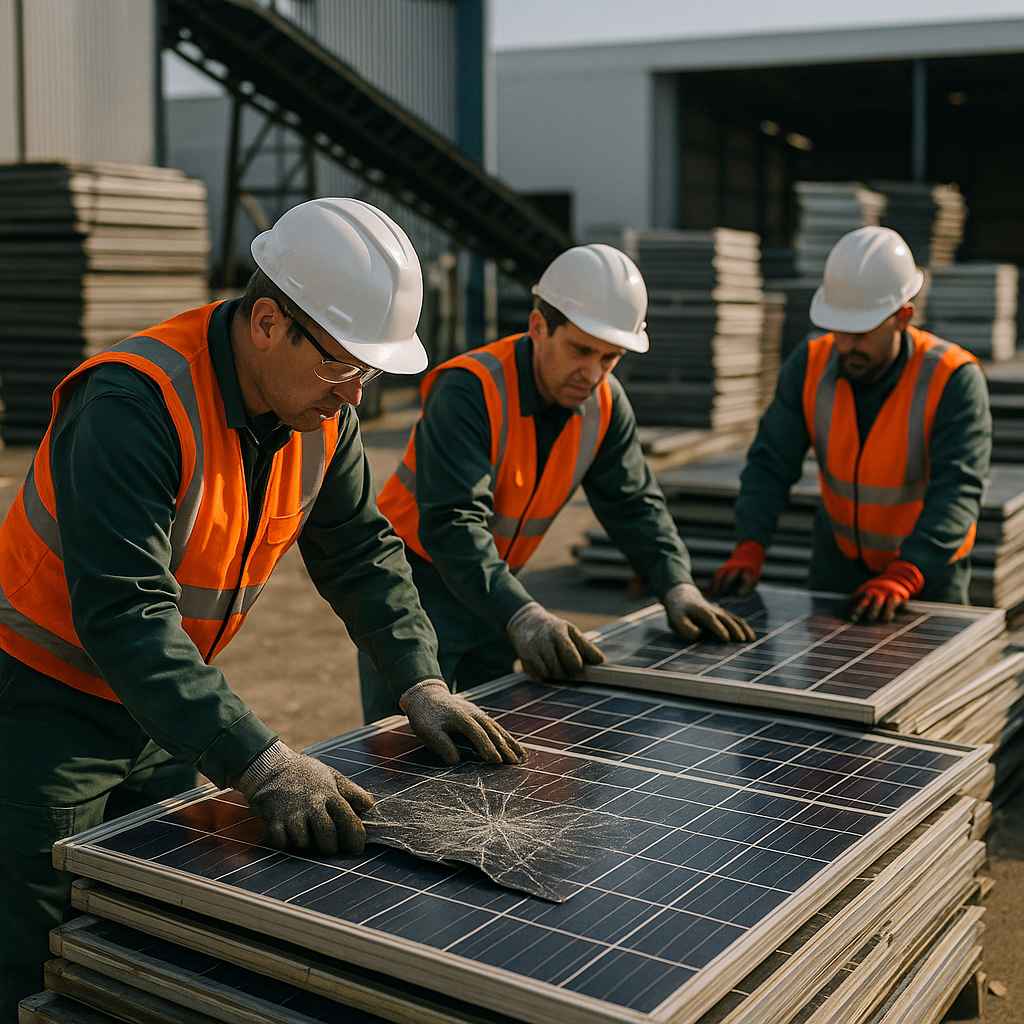
The recovery process for damaged photovoltaic modules is a sophisticated method of material reclamation, maximizing resource extraction while minimizing environmental impact. Advanced recovery facilities can reclaim up to 95% of a solar panel’s materials by weight, turning potential waste into valuable inputs for new manufacturing processes.
Modern PV module recovery combines several processing methods to achieve optimal material reclamation. Solar panels are composed of approximately 76% glass, 10% polymer materials, 8% aluminum, 5% silicon, and 1% specialty metals, including silver and copper.
Step 1: Frame and Junction Box Removal
The initial phase involves the manual disassembly of easily separable components. Technicians remove aluminum frames and plastic junction boxes using standard tools. These materials require no specialized processing and flow directly into conventional recycling streams.
Aluminum frames, making up about 8% of a panel’s total weight, have significant recovery value. The separation process is straightforward since manufacturers design these components for easy field replacement and maintenance. Junction boxes, mainly composed of plastic and copper wiring, integrate seamlessly into existing electronics recovery infrastructure.
Step 2: Glass and Silicon Separation
Separating glass from silicon wafers requires specialized processing techniques that vary based on panel construction and encapsulant materials. According to the EPA, this process involves thermal, mechanical, or chemical methods, depending on the panel type and desired recovery rates.
Thermal processing heats panels to temperatures over 500°C to soften the ethylene-vinyl acetate encapsulants that bind silicon cells to glass. This method allows clean separation while preserving the integrity of both glass and silicon for further reprocessing. Mechanical separation involves controlled crushing and screening to sort materials by size and density.
Step 3: Silicon and Specialty Metal Purification
The final processing stage focuses on extracting high-value materials using advanced separation techniques. Silicon cells undergo chemical etching to remove coatings and impurities, resulting in semiconductor-grade material suitable for new panel production.
Specialty metal recovery targets silver from electrical contacts, copper from interconnects, and lead from soldering materials. Although these metals account for a small percentage of panel weight, they significantly impact recovery economics. Advanced hydrometallurgical processes can achieve 98% silver recovery rates through controlled dissolution and electrochemical precipitation.
Regulations Governing Disposal of Cracked PV Modules
The disposal of end-of-life solar panels is governed by a complex framework of federal and state regulations. At the federal level, the Resource Conservation and Recovery Act (RCRA) provides the primary regulatory structure. When solar panels reach the end of their usable life or become damaged, they are classified as solid waste under RCRA Subtitle D.
Federal Hazardous Waste Classification
The EPA regulates solar panel disposal through existing hazardous waste frameworks. Solar panels may be classified as hazardous waste if they contain sufficient levels of toxic metals like lead and cadmium. This classification depends on results from the TCLP test.
This test simulates leaching conditions in landfill environments. If metals leach at concentrations exceeding regulatory limits, the panels must be managed as hazardous waste. Testing shows variation in results even among panels from the same manufacturer and model.
Emerging Federal Universal Waste Regulations
The EPA announced plans to propose new regulations adding solar panels to universal waste categories. Management as universal waste will improve management of all solar panel waste whether hazardous or not. The agency expects to finalize these streamlined end-of-life management requirements to increase solar panel recovery while maintaining appropriate environmental protections.
State-Level Regulatory Variations
States have developed diverse approaches to solar panel end-of-life management. Washington established a Photovoltaic Module Stewardship and Takeback Program, requiring manufacturers to finance and implement takeback programs. While implementation was delayed to 2031 to allow for advisory committee recommendations, it remains a landmark policy for extended producer responsibility.
California classifies end-of-life solar panels as universal waste. This designation allows panels with hazardous characteristics to be managed under less stringent requirements, although specific annual reporting is required for handlers who accept more than 200 pounds of modules.
| State | Regulatory Approach | Key Compliance Requirements |
|---|---|---|
| California | Universal Waste | Mandatory recycling; reporting for handlers >200 lbs; disposal in trash prohibited. |
| Washington | Stewardship Program | Manufacturer-funded takeback (Effective 2031); 85% recovery goal for stewardship plans. |
| North Carolina | Utility-Scale Registry | Utility-scale owners must register with DEQ by Nov 1, 2025; decommissioning plans required. |
| New York | Solar Panel Collection Act | Proposed bill (S2215) to require manufacturer collection programs and prohibit landfill disposal. |
Compliance Requirements for Waste Generators
Waste generators must determine whether their solar panels qualify as hazardous waste under existing RCRA regulations. This determination can be made through testing or generator knowledge of material composition. Panels that fail TCLP tests must follow hazardous waste management protocols unless they qualify for specific recycling exclusions.
Generators should consult with state and local environmental agencies for specific disposal guidelines. Regulatory requirements continue evolving as solar installations mature nationwide.
Conclusion: Building a Sustainable Future With Solar Recovery
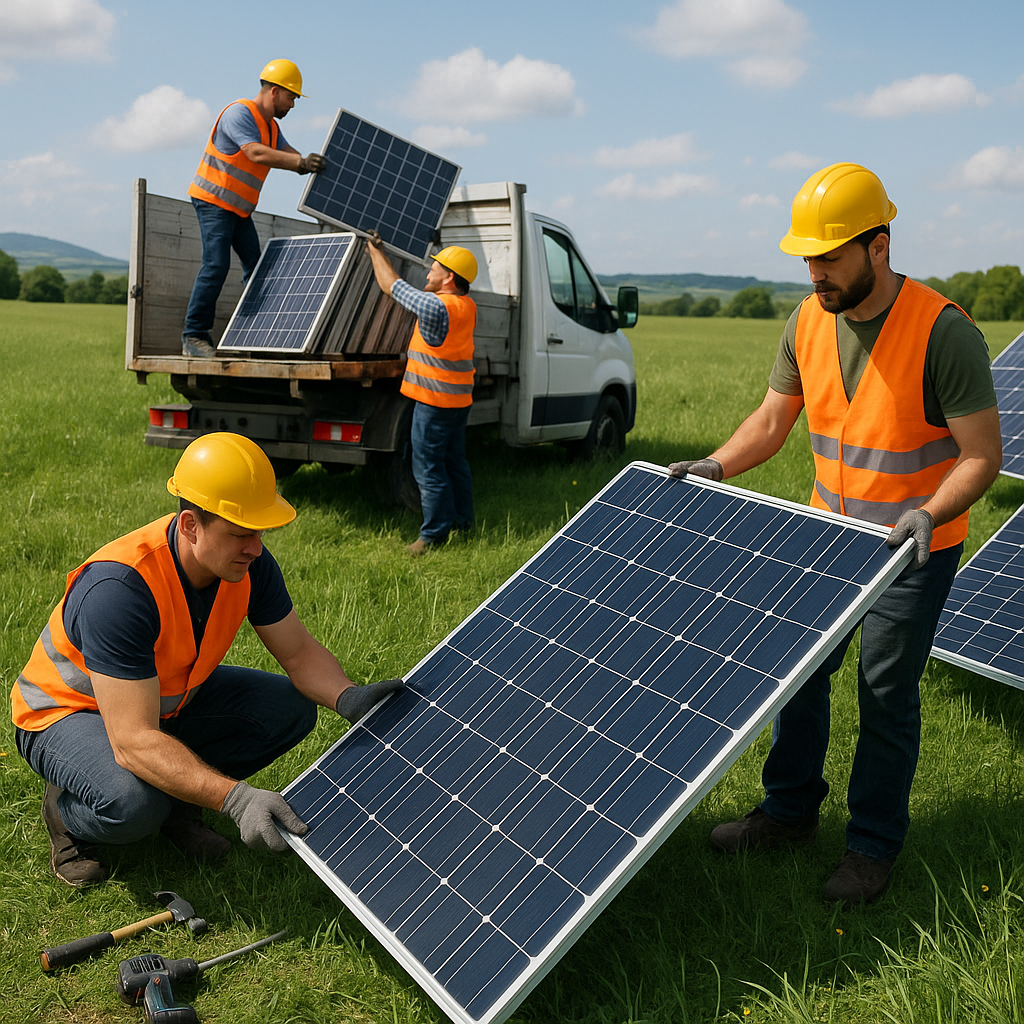
Solar panel recovery is essential for achieving sustainability in renewable energy. Modern recovery technologies can reclaim up to 95% of semiconductor materials and 90% of glass from end-of-life panels, turning potential waste into valuable resources. This process reduces environmental impact by minimizing landfill waste, decreasing the need for raw material extraction, and preventing soil and water contamination. The economic benefits are equally compelling, with global recoverable materials value projected to reach billions by 2050. As the solar industry rapidly expands, establishing a robust recovery infrastructure creates jobs, supports the circular economy, and ensures clean energy remains sustainable throughout its lifecycle.
The future of solar energy relies on responsible end-of-life management practices that maximize resource recovery. For expert guidance on sustainable solar panel recovery solutions, contact Okon Recycling at 214-717-4083 to discuss your needs and contribute to a cleaner, more sustainable energy future.
Send Us a Message
Questions about what we do? Interested in commercial services? Let us know below and a member of our team will get back to you.