5901 Botham Jean Blvd, Dallas, TX 75215
What Challenges Does Childress County’s Solar Energy Growth Present for Recycling?
December 19, 2025Childress County has become one of Texas’s key renewable energy centers, hosting over 1 GW of solar capacity through major utility-scale projects. These developments have established Childress County as a clean energy leader within the ERCOT West Hub.
This impressive growth in solar infrastructure presents a challenge that few anticipated during the initial development phase. Solar panels typically function for 25 to 30 years before needing replacement or decommissioning. The panels installed in Childress County today will eventually reach their end-of-life stage, generating substantial volumes of solar waste that require specialized recycling solutions.
The scale of this emerging challenge is evident when considering global projections. Experts estimate that approximately 8 million metric tons of solar panel waste will accumulate worldwide by 2030, increasing to 80 million metric tons by 2050 according to International Renewable Energy Agency data. Childress County’s concentrated solar development means the region will face a significant portion of this waste stream, necessitating proactive planning for sustainable infrastructure management and end-of-life panel processing.
Solar Development Impact in Childress County
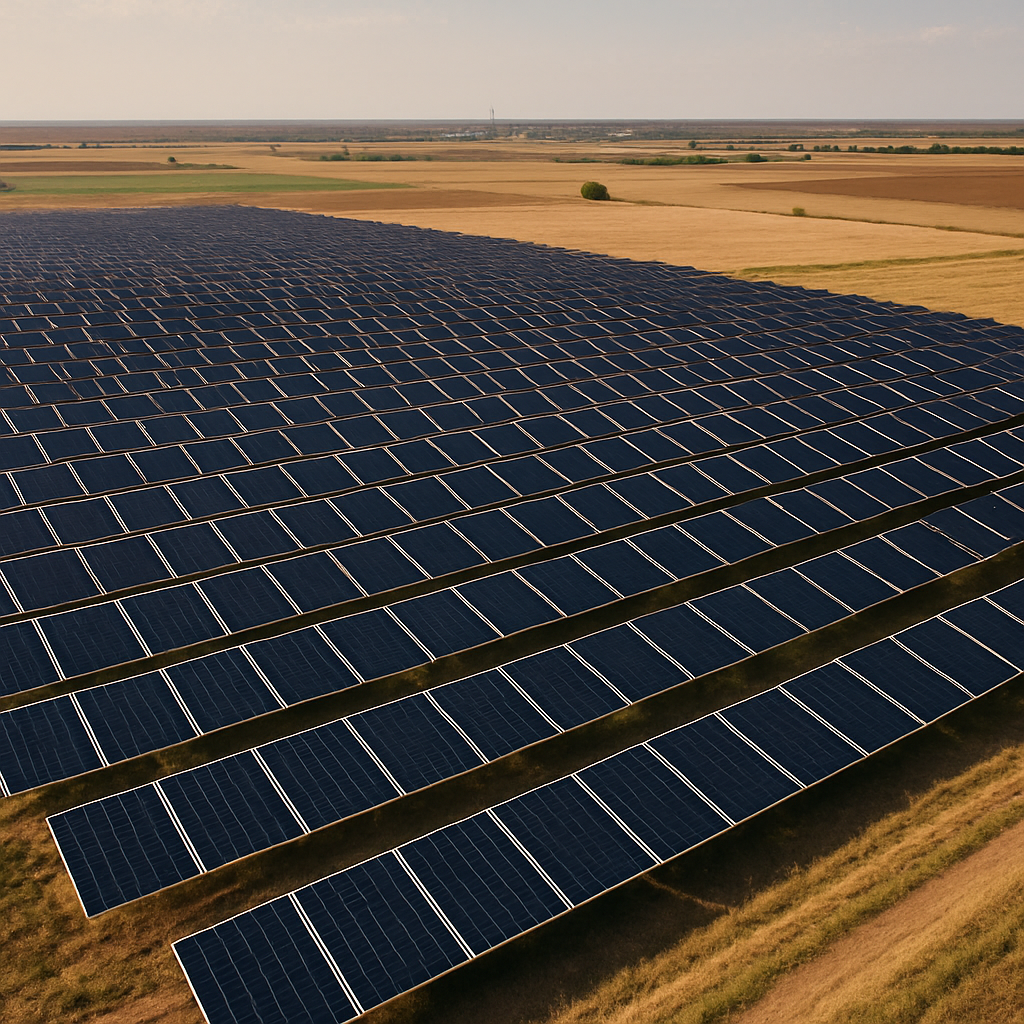
Childress County has emerged as a pivotal renewable energy hub in the United States. The region hosts two massive solar installations collectively generating over 1 GW of clean energy. This transition marks a significant shift toward sustainable energy in rural Texas.
The Childress Solar Park operates at a 324 MWdc capacity. This facility became operational in 2019, laying the foundation for the county’s renewable energy leadership. The project demonstrated the feasibility of utility-scale solar development in the ERCOT West Hub.
The larger Misae Solar Park II delivers 692 MWdc of generating capacity across 3,970 acres. Completed in 2025, the facility produces nearly 1.4 GWh annually while preventing 826,000 tons of CO2 emissions each year.
Strategic Infrastructure Advantages
Both solar installations benefit from their proximity to regional substation infrastructure, providing direct access to high-voltage transmission lines within the ERCOT grid system. The existing electrical infrastructure negates the need for extensive transmission upgrades that typically delay renewable energy projects. The 345 KV transmission lines efficiently transport the generated clean energy to population centers across Texas.
Economic and Environmental Impact
The solar development generates significant economic benefits for Childress County, with local officials projecting millions in revenue over ten years from these facilities. Construction created over 400 temporary jobs, and once operational, each facility employs full-time workers in maintenance and monitoring positions.
The environmental benefits extend beyond reducing carbon emissions. The solar installations align with circular economy principles by minimizing waste throughout the energy supply chain. These projects supply clean energy to approximately 129,000 homes across Texas, reducing dependence on traditional power plants.
Essential Nature of Professional Solar Panel Recycling
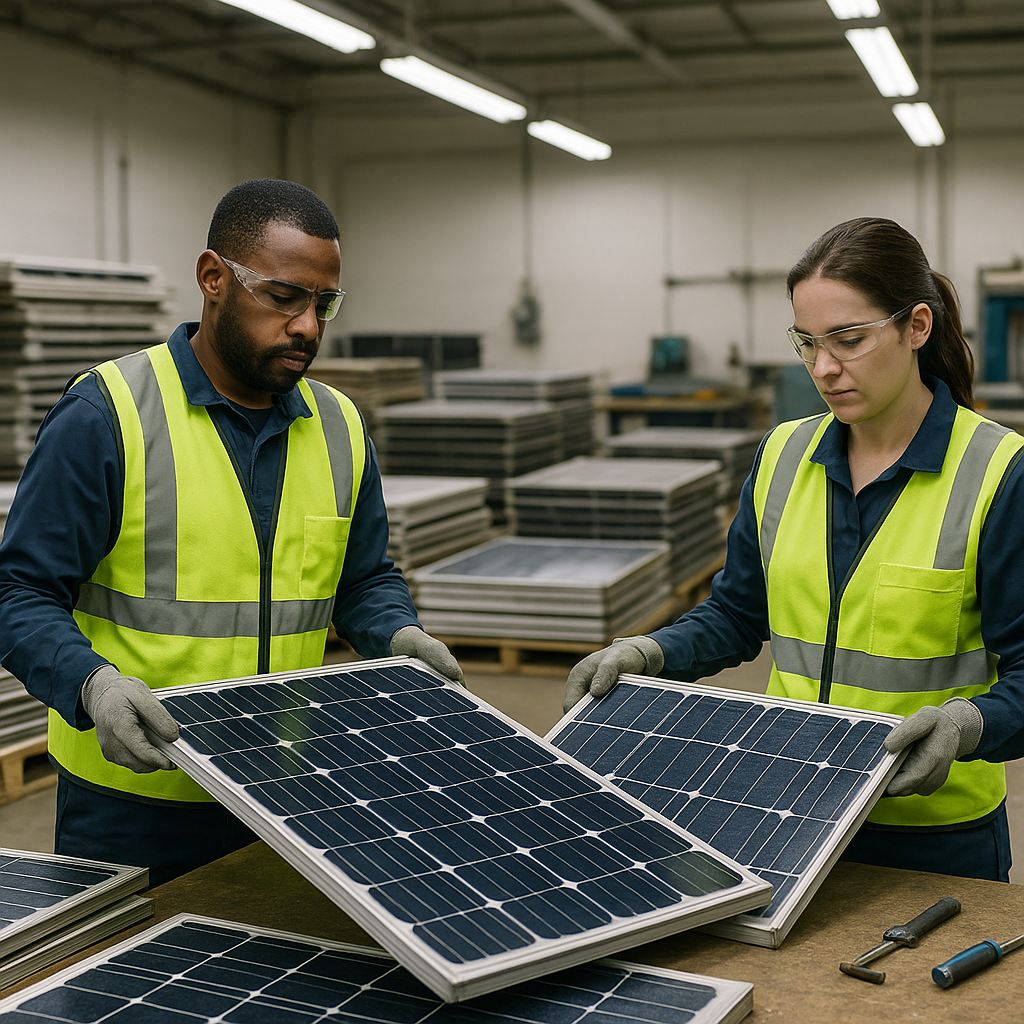
Solar panels contain hazardous materials that pose serious environmental risks if not disposed of properly. Lead, cadmium, and arsenic, commonly found in photovoltaic modules, can leach into soil and groundwater when panels are sent to landfills. Professional recycling prevents these toxic substances from contaminating the environment while recovering valuable materials for future use.
The Environmental Protection Agency mandates testing of decommissioned panels to determine if they qualify as hazardous waste. This classification entails strict disposal protocols that only certified recycling facilities can manage correctly. Without professional management, companies risk significant fines and reputational damage for non-compliance.
Advanced Material Recovery and Circular Value
Professional recycling processes can extract up to 95% of the value from solar panels using sophisticated separation techniques. Silicon-based panels undergo thermal processing at 500°C to separate encapsulating plastics from valuable silicon cells. This method recovers 85% of silicon materials, which can be refined and reused in new panel manufacturing.
Glass recovery accounts for the largest volume of recycled materials. Professional facilities can reclaim up to 90% of the glass content, which makes up approximately 75% of a panel’s total weight. This recovered glass has multiple applications, from manufacturing new solar panels to producing various industrial glass products.
Metal extraction yields the highest economic value. Silver content alone can represent nearly half of the total recoverable material value, despite being less than 1% of the panel’s mass. Copper, aluminum, and other metals are systematically separated and purified for reuse in electronics and manufacturing industries.
Environmental Protection and EPA Compliance
Professional recycling facilities implement zero-landfill policies. Each professionally recycled panel prevents approximately 97 pounds of carbon dioxide emissions compared to manufacturing new panels from raw materials. Professional recycling also conserves natural resources by reducing the need for raw material extraction.
Professional recycling ensures full EPA compliance with hazardous waste regulations under the Resource Conservation and Recovery Act. State-level regulations vary significantly; for example, California classifies solar panels as universal waste to streamline recycling. Professional facilities maintain all necessary permits to handle both silicon and thin-film panels safely, providing chain-of-custody records that protect businesses from liability.
The Solar Panel Recycling Process
Solar panel recycling requires specialized processes tailored to different photovoltaic technologies. The approach varies between silicon-based panels and thin-film modules, each demanding distinct separation techniques.
The initial step involves identifying the panel type. Crystalline silicon panels represent most installations and rely on thermal processing, while thin-film technologies require mechanical breakdown.
Preparation and Disassembly
Processing begins with the systematic removal of components. External aluminum frames are separated, achieving high reusability. Junction boxes, cables, and mounting hardware are extracted individually. Silicon-based modules then proceed to thermal treatment at temperatures reaching 500°C to break down ethylene-vinyl acetate adhesives, allowing clean separation between glass and silicon cells.
Material Separation and Recovery
Advanced separation technologies maximize recovery rates. Silicon panels achieve 95% glass recovery through automated sorting systems. Silicon wafer processing involves acid etching to remove cellular structures, reaching 85% purity for remelting into ingots. Metal recovery systems target copper wiring and silver contacts, achieving 90% recovery rates for these precious metals.
Final Distribution
Recovered materials undergo quality verification before entering supply chains. Glass fractions serve multiple industries, including fiberglass insulation and construction materials. Aluminum components integrate into existing metal streams, supporting circular economy principles and providing one of the most valuable components in end-of-life panels.
Conclusion: Sustainability in Childress County

Childress County’s status as a leader in solar energy production carries the responsibility of managing its assets sustainably. The county’s extensive solar infrastructure represents one of Texas’s largest renewable energy concentrations. Adopting circular economy principles is essential for planning end-of-life solutions that prioritize material recovery and minimize waste.
By integrating solar leadership with advanced recycling practices, Childress County can become a benchmark for responsible energy asset management. For comprehensive end-of-life solutions for your solar assets, contact Okon Recycling at 214-717-4083.
Would you like me to help you create a customized recycling plan for your specific solar installation?
Send Us a Message
Questions about what we do? Interested in commercial services? Let us know below and a member of our team will get back to you.