5901 Botham Jean Blvd, Dallas, TX 75215
Home » Blog » Renewables Recycling »
Why Recycling Turbine Components Like Blades and Discs Is a Growing Challenge
December 3, 2025The wind energy sector has achieved impressive recyclability rates. Between 85% and 94% of a wind turbine’s total mass can be processed through conventional recycling methods. This achievement reflects decades of materials engineering focused on end-of-life management. Components like generators, gearboxes, and electrical systems contain valuable metals that recycling facilities readily accept.
However, rotor blades present a different story entirely. These massive structures are crafted from composite materials including fiberglass and carbon fiber bound with thermoset resins. The same engineering that makes blades durable enough to withstand decades of harsh weather conditions also makes them extraordinarily difficult to separate and process. As the renewable energy industry embraces circular economy principles, these composite components have become the primary obstacle to achieving complete wind turbine recyclability.
What are the Primary Methods for Recycling Wind Turbine Blades?
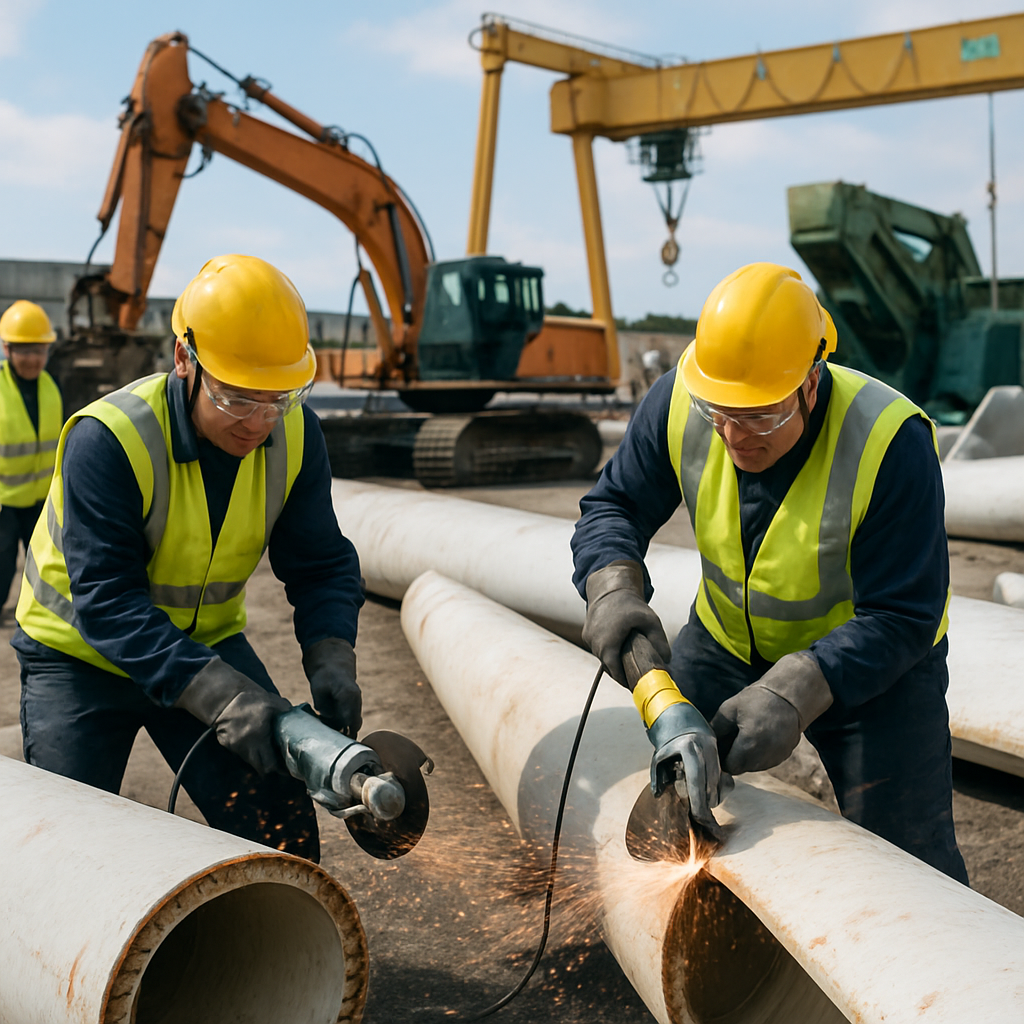
Wind turbine blade recycling currently relies on two primary approaches that address the complex composite materials in decommissioned blades. These methods transform challenging waste streams into valuable resources for various industries.
Mechanical Recycling Process
Mechanical recycling involves shredding wind turbine blades into raw fiberglass material through crushing and grinding operations. The process breaks down composite structures into fine and coarse particulates that serve multiple applications. These fragments can be mixed with rock, plastic, or other fillers to create thermoplastic fiberglass pellets.
The resulting materials find use in manufacturing decking boards, warehouse pallets, parking bollards, and manhole covers.
This approach offers low-cost processing with minimal carbon footprint. However, mechanical recycling typically results in downcycling, where recovered materials have lower quality and functionality than original components. The process produces materials suitable for construction reinforcement but cannot match the high-performance requirements of new blade manufacturing.
Cement Co-Processing Method
Cement co-processing represents the most cost-effective and scalable blade recycling option currently available. This method involves mechanical shredding of blades followed by feeding shredded pieces into cement kilns. The resin and core components provide energy for chemical reactions, significantly reducing coal consumption in traditional cement production.
Major industry partnerships drive this recycling approach. GE Renewable Energy, Veolia, and Holcim collaborate on cement co-processing initiatives that originated in Germany. The fiberglass ash contributes silica content while calcium oxide serves as a key component in Portland cement production.
Environmental benefits make cement co-processing particularly attractive. A single seven-ton blade can replace five tons of coal, 2.7 tons of silica, and 1.9 tons of limestone in cement manufacturing. This substitution reduces CO2 emissions by approximately 27% compared to traditional cement production processes and decreases water consumption by 13%.
Current infrastructure limitations affect both recycling methods. Transportation costs from remote wind farm locations to processing facilities represent significant expense factors. Only a few cement kilns in the United States accept composite waste materials, constraining the scalability of co-processing operations. Geographic distribution of shredding facilities and compatible cement kilns requires strategic development to support growing blade waste volumes.
What Makes Landfilling and Repurposing Blades Complex?
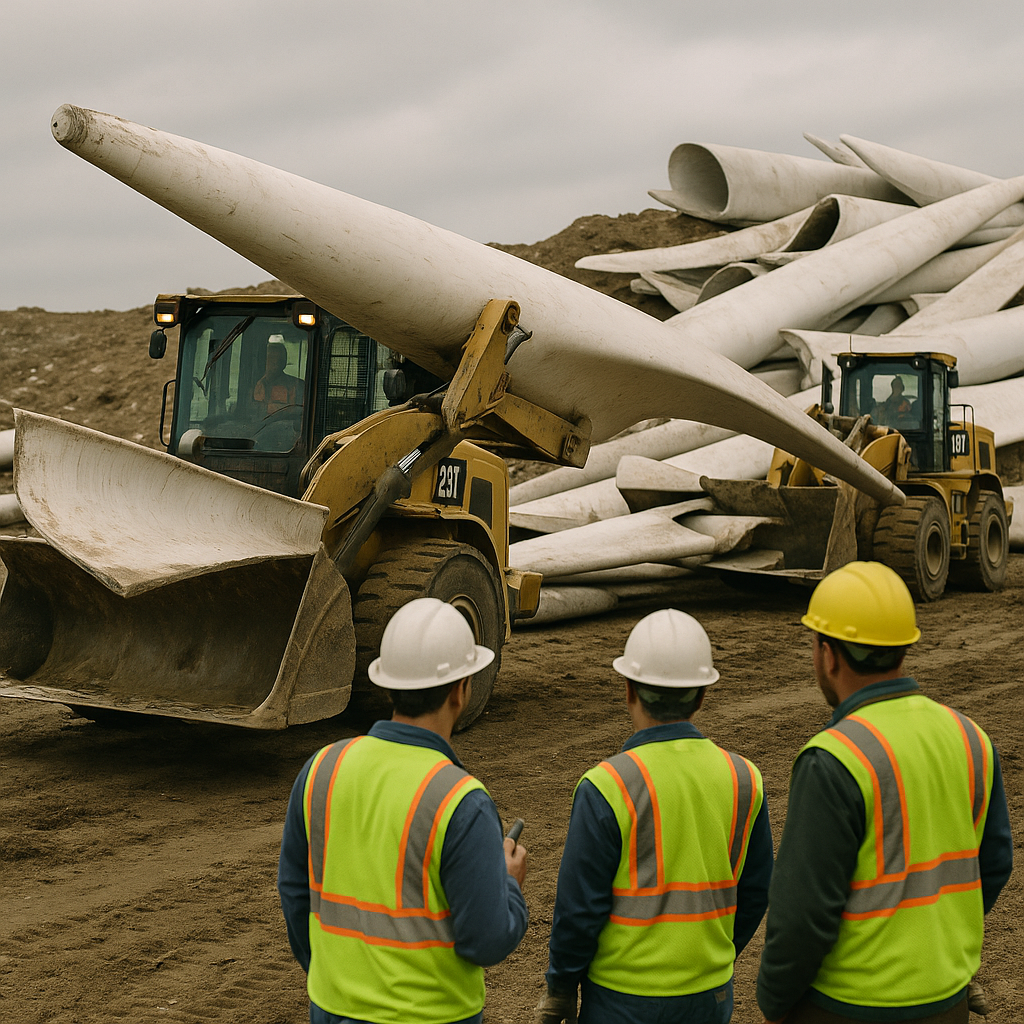
Wind turbine blades present unique disposal challenges that extend far beyond typical waste management operations. These massive structures average over 50 meters in length and weigh several tons each. Their composite construction of fiberglass, carbon fiber, and thermoset resins creates materials designed to withstand decades of harsh weather conditions.
The sheer size of modern blades creates immediate logistical problems for landfill operators. Standard waste processing equipment cannot handle their dimensions. Cutting these structures requires specialized machinery and significant labor investment. Even after sectioning, the blade segments resist traditional compaction methods that maximize landfill airspace efficiency.
Transportation Creates the Biggest Barrier
Moving decommissioned blades represents the most significant cost driver in any end-of-life strategy. Many facilities must transport blades over 1,600 miles to reach appropriate disposal or processing locations. Road restrictions limit transport routes due to the blades’ exceptional length and width. Bridge clearances and turning radii further constrain movement options.
The geographic distribution of suitable facilities compounds these transportation challenges. While 96 cement kilns operate across the United States, only a handful accept composite waste materials. This limited infrastructure forces longer hauls and higher emissions for each disposal operation. Mobile shredding services can reduce some transportation costs by processing blades on-site before transport.
Minimal Environmental Impact from Landfilling
Despite public concerns, blade waste represents an exceptionally small portion of municipal solid waste streams. Current projections indicate that blade waste will account for approximately 0.05% of total landfill volume by 2050. The materials themselves are non-toxic and completely safe for landfill disposal. Unlike electronic waste or industrial chemicals, composite blade materials pose no leachate risks to groundwater systems.
The wind industry generates far less problematic waste compared to other sectors. Municipal solid waste streams contain 24% food waste, 18% plastics, and 12% paper products. Blade materials will remain a marginal component even as decommissioning volumes increase through 2040. However, their persistence in landfill environments and space consumption still drive industry interest in alternative solutions.
Repurposing Faces Scale and Design Constraints
Converting decommissioned blades into functional infrastructure requires extensive planning and specialized engineering. Modern offshore blades can exceed 120 meters in length and weigh up to 32 tons. These dimensions create significant constraints for repurposing applications. Most projects require sectioning blades into smaller, manageable pieces for transportation and installation.
Successful repurposing projects demonstrate creative solutions to these constraints. BladeBridge in Ireland transforms 14-meter blade sections into pedestrian bridges capable of supporting emergency vehicles up to 10 tons. The Netherlands-based Blade-Made converts blade segments into playground equipment, urban furniture, and bus stops with integrated bicycle parking.
Market demand limitations restrict the scalability of repurposing solutions. While individual projects generate positive community impact, the volume of decommissioned blades will far exceed current repurposing capacity. Industry estimates suggest thousands of blades will require processing annually by 2040. Repurposing can address only a small fraction of this volume without significant market expansion.
Economic factors further complicate repurposing efforts. Custom design and engineering requirements increase project costs compared to standard construction materials. Each application requires structural analysis to ensure safety compliance. These additional steps make repurposed blade products more expensive than conventional alternatives in many markets.
What Innovations Are Paving the Way for a Waste-free Future?
The industry is actively developing solutions for full recyclability. Researchers at the National Renewable Energy Laboratory (NREL) have created new materials, such as thermoplastic resins and biomass-derived composites, designed for easy breakdown and reuse.
Companies like Siemens Gamesa are already producing a RecyclableBlade for commercial use, and major manufacturers are pledging to produce zero-waste blades within the next decade. NREL’s breakthrough PECAN resin can chemically break down prototype blades in just six hours, while Siemens Gamesa’s reversible thermoset technology is already powering offshore wind projects in Germany.
This represents a fundamental shift from a disposal mindset to one of innovation and sustainability. The convergence of advanced materials science, circular manufacturing principles, and industry-wide commitments is creating an ecosystem where waste becomes a resource.
For businesses seeking comprehensive recycling solutions that align with these industry innovations, contact Okon Recycling at 214-717-4083.
Send Us a Message
Questions about what we do? Interested in commercial services? Let us know below and a member of our team will get back to you.