5901 Botham Jean Blvd, Dallas, TX 75215

Recycling Overband Magnets for Conveyors: A Technical Guide to Type, Flow, and Protection
December 7, 2025Ferrous metals make up approximately 75% of all recyclable metals processed in facilities worldwide. Managing this massive volume efficiently while protecting expensive processing equipment requires specialized separation technology that can operate continuously at high speeds.
Recycling overband magnets, also known as crossbelt magnets, are powerful, self-cleaning magnetic separators used extensively in the recycling and waste management industry. These devices are strategically positioned above conveyor systems to automatically attract, lift, and remove ferrous contaminants like iron and steel from mixed material streams. The magnetic separators use either permanent magnets or electromagnetic coils to generate strong magnetic fields that pull ferrous materials upward against gravity.
How Do Overband Magnets Work?

Overband magnets are installed above conveyor belts or vibrating conveyor troughs. The magnetic field extends downward from the suspended unit. As mixed materials pass underneath on the conveyor belt, ferrous metals within the material flow are magnetized by this field.
The magnetic field pulls ferrous materials upward out of the material stream. Items like steel bolts, iron fragments, and other ferrous contaminants are attracted to the magnet. These metals lift away from non-magnetic materials like plastic, wood, or aluminum.
A self-cleaning belt wraps around the magnetic assembly. This belt continuously moves in a loop around the magnet unit. When ferrous metals are attracted to the magnet, they also stick to this moving belt.
The belt carries the captured metals away from the magnetic field. As the belt moves to the discharge point, the metals are no longer held by the magnetic force. The ferrous materials then drop off into a separate collection area or chute.
This process operates continuously without stopping the main conveyor belt. The material flow continues uninterrupted while ferrous metals are removed. The non-contact separation process maintains plant throughput while protecting downstream equipment from metal contamination.
The effectiveness depends on several factors. Belt speed affects the exposure time to the magnetic field. Slower speeds allow more time for magnetization, while faster speeds require stronger magnetic fields. The working distance between the magnet and material also influences performance.
Magnetic field strength determines what size and type of ferrous metals can be captured. Stronger magnets can lift heavier items and reach deeper into material piles. The magnet width must cover the entire conveyor belt width to ensure complete material coverage.
What Are The Different Types of Overband Magnets?
Overband magnets come in two primary configurations that serve different operational needs in waste management and materials recovery facilities. Understanding these distinctions helps facility managers select the right magnetic separation technology for their specific applications and throughput requirements.
Permanent Overband Magnets
Permanent overband magnets generate their magnetic field through magnetized materials rather than electrical power. These systems typically use ferrite magnets, rare earth magnets, or other permanently magnetized materials to create consistent magnetic attraction. The magnetic field strength remains constant throughout operation without requiring external energy input.
These magnets excel in mobile applications and lightweight recovery operations where power availability may be limited. Facilities processing mixed waste streams often prefer permanent magnets for their reliability and reduced operational complexity. The absence of electrical components also means fewer maintenance requirements and lower long-term operating costs.
Permanent magnets work particularly well for tramp metal separation in applications with consistent material flow and predictable ferrous contamination levels. Their fixed magnetic strength suits operations where consistent separation performance is more important than adjustability.
Electromagnetic Overband Magnets
Electromagnetic overband magnets use magnetic coils energized by electrical current to generate their magnetic field. This design allows operators to adjust magnetic strength based on material characteristics and separation requirements. The electromagnetic system can also be completely turned off when separation is not needed.
These systems offer deeper magnetic field penetration, making them effective for heavy-duty applications with thick material layers or large ferrous items. The adjustable nature allows optimization for different waste streams throughout operational shifts.
Electromagnetic systems come in two cooling configurations. Air-cooled design uses ambient air circulation to manage heat generated by the electrical coils. Oil-cooled design employs oil circulation systems for more efficient heat dissipation in demanding applications.
Oil-cooled electromagnetic magnets handle higher power loads and extended operation cycles. These systems suit high-volume facilities processing dense materials or operating continuously. Air-cooled models work well for standard applications with moderate duty cycles and normal ambient temperatures.
The choice between permanent and electromagnetic overband magnets depends on specific operational requirements, power availability, and separation performance goals. Facilities must consider material characteristics, processing volume, and maintenance capabilities when selecting magnetic separation technology. Electromagnets offer flexibility and control while permanent magnets provide reliability and efficiency for long-term applications.
How are Overband Magnets Installed on Conveyors?
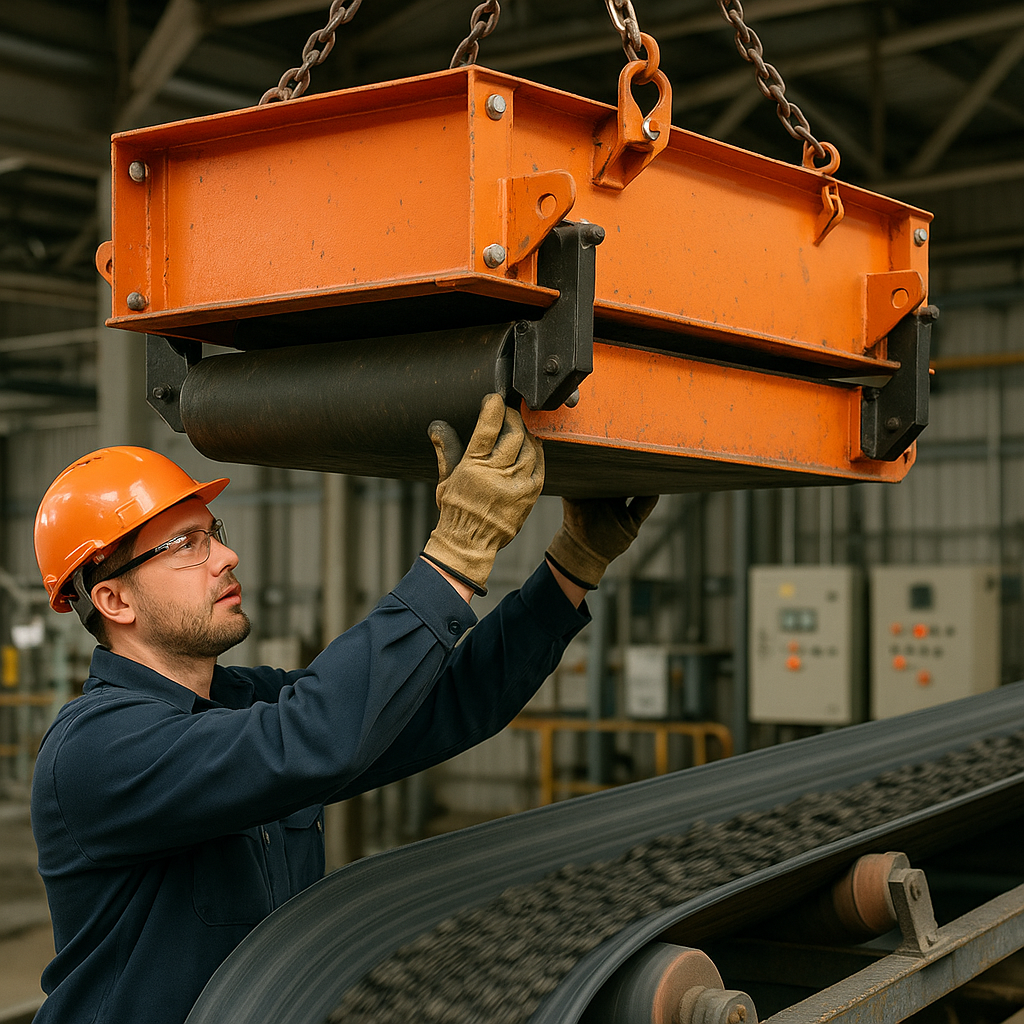
Installing overband magnets requires careful consideration of material flow, conveyor speed, and operational requirements. The positioning method directly affects separation efficiency and maintenance accessibility. We recommend evaluating these factors before selecting an installation approach.
Transverse Installation
Transverse placement positions the magnet across the main conveyor belt. This cross-belt configuration represents the most common installation method in waste processing facilities. The setup proves easier to integrate into existing conveyor systems without major modifications.
The primary advantage involves side discharge of captured ferrous materials. This lateral ejection pattern simplifies material handling logistics since collected metals discharge away from the main product flow. Operators can position collection containers or secondary conveyors alongside the main system.
Cross-belt installation works best when conveyor speeds remain below 350 feet per minute. The magnet should maintain close proximity to conveyed materials while allowing sufficient clearance for the cleaning belt to remove accumulated metals.
In-line Installation
In-line positioning places the magnet over the head pulley at the conveyor’s discharge end. This configuration often delivers superior separation performance compared to transverse mounting. The material “breaks open” as it travels over the head roller, creating momentary suspension in mid-air.
During this brief suspension period, individual particles separate from bulk material masses. The magnetic field can more effectively attract ferrous contaminants when they are not embedded within dense material layers. This exposure typically lasts several milliseconds but proves sufficient for enhanced extraction.
In-line installation becomes preferred when conveyor speeds exceed 350 feet per minute. The material should pass approximately two inches from the magnet face for optimal performance. Non-ferrous head pulleys are essential to prevent magnetic interference.
Installation Considerations
Both installation methods require careful attention to suspension height and magnetic configuration. The distance between magnet and conveyor belt must be minimized since magnetic force decreases exponentially with increased separation. However, adequate clearance remains necessary for cleaning belt operation.
The area beneath the magnet requires non-magnetic construction materials. Steel components within the magnetic field become magnetized and can interfere with separation performance. Frame sections, bearing rollers, and structural supports should use stainless steel or aluminum alternatives within 18 to 24 inches of the magnet.
Turnbuckle mounting systems allow height and angle adjustments after installation. This flexibility eliminates the need for heavy equipment during fine-tuning operations. The magnet face should remain parallel to the product flow for consistent performance across the belt width.
What Factors Determine the Right Overband Magnet for an Application?
Conveyor specifications form the foundation of overband magnet selection. The width of the conveyor belt directly determines the minimum magnet width required for effective coverage. Material burden depth on the conveyor affects the magnetic field strength needed to attract ferrous metals from within the material stream. Engineers must measure both dimensions accurately to ensure the selected magnet can reach and extract tramp metal effectively.
The characteristics of ferrous metal contaminants significantly influence magnet selection. Large, flat pieces of metal require different magnetic approaches than small, thin objects like nails or wire fragments. The shape and size of expected tramp metal determines whether standard magnetic fields will suffice or if specialized designs like tri-polar magnets are necessary. Material density and the frequency of ferrous contamination also affect the required magnetic strength and processing capacity.
Separation objectives play a crucial role in determining the appropriate overband magnet configuration. Applications focused on recovering valuable ferrous metals for recycling often require different specifications than those designed primarily for equipment protection. Recovery operations typically need gentler handling to preserve material quality, while protection applications prioritize removing all ferrous objects regardless of condition. The intended use of separated materials directly impacts magnet strength, suspension height, and discharge mechanisms.
The choice between permanent and electromagnetic overband magnets depends on specific operational requirements. Permanent magnets offer consistent performance without power consumption, making them ideal for continuous operations and mobile applications where space and power availability are limited. Electromagnetic systems provide adjustable magnetic strength and can be switched on or off as needed, making them suitable for applications requiring variable magnetic force or temporary demagnetization during material handling.
Suspension height requirements and installation constraints significantly influence magnet selection. Different magnet models operate effectively at varying distances from the conveyor belt, with some designs capable of working at heights up to 400mm while others perform optimally at closer ranges. Available space for installation, maintenance accessibility, and the need for quick belt changes in difficult locations all factor into the final selection. Engineering teams evaluate these practical considerations alongside technical specifications to ensure optimal performance.
Environmental conditions and operational factors complete the selection criteria assessment. Temperature ranges, dust levels, and exposure to corrosive materials affect magnet durability and performance. Continuous operation requirements versus intermittent use influence the choice between permanent and electromagnetic systems. Processing volume, material flow rates, and integration with existing conveyor systems all contribute to determining the most suitable overband magnet configuration for each specific application.
Conclusion: Optimizing Recycling with the Right Magnet

Overband magnets are essential tools for automating ferrous metal separation in the recycling industry, enhancing both efficiency and equipment longevity. Whether using a permanent or electromagnetic system, the key to success lies in choosing a model and installation setup tailored to your specific operational needs, including conveyor size, material type, and separation goals. Proper selection ensures seamless material flow and maximum recovery of valuable metals.
Making an informed decision when selecting an overband magnet directly impacts your facility’s ferrous recovery rates, plant design efficiency, and magnetic separation performance. The right system protects processing equipment from damage while optimizing recycling efficiency through automated separation processes. For expert guidance on selecting the optimal overband magnet for your recycling operation, contact Okon Recycling at 214-717-4083.
Send Us a Message
Questions about what we do? Interested in commercial services? Let us know below and a member of our team will get back to you.