5901 Botham Jean Blvd, Dallas, TX 75215
Recycle MRI Machines in Texas: Helium Recovery and HIPAA Compliance
December 23, 2025MRI machines create magnetic fields thousands of times stronger than Earth’s. These powerful forces can turn ordinary metal objects into dangerous projectiles, necessitating extreme caution during disposal. Furthermore, the superconducting magnets within these systems require liquid helium cooling at -269°C, posing significant hazardous material handling challenges that standard scrap yards are not equipped to manage.
Professional disposal protects healthcare facilities from severe regulatory penalties and safety risks. Under current guidelines, EPA violations can result in fines up to $70,117 per day for improper hazardous waste handling. HIPAA compliance adds another layer of complexity, requiring the secure, certified destruction of patient data stored within the system’s internal computers and hard drives.
MRI Recycling and Decommissioning Services in Texas
Texas healthcare facilities have access to specialized industrial partners who handle the intricate aspects of MRI machine retirement. These services range from the recovery of rare earth elements to complete turnkey decommissioning operations. Each project is tailored to the specific recycling needs of the hospital or imaging center to ensure maximum value is extracted from the retired asset.
Specialized recovery processes in the state can achieve up to 99.8% efficiency for valuable materials like neodymium and dysprosium. These elements are extracted from NdFeB magnets found in MRI systems using low-temperature extraction methods that minimize waste. This creates a sustainable revenue stream from what would otherwise be a costly disposal project.
For comprehensive decommissioning, professional teams in the Dallas and Houston areas provide complete MRI retirement solutions. These services cover every phase of the project, from initial system shutdown and cryogen extraction to final transport and regulatory documentation. By utilizing specialized knowledge of superconducting magnet discharge and heavy component rigging, these providers protect both the facility’s infrastructure and the safety of its personnel.
What Does the MRI Decommissioning Process Entail?
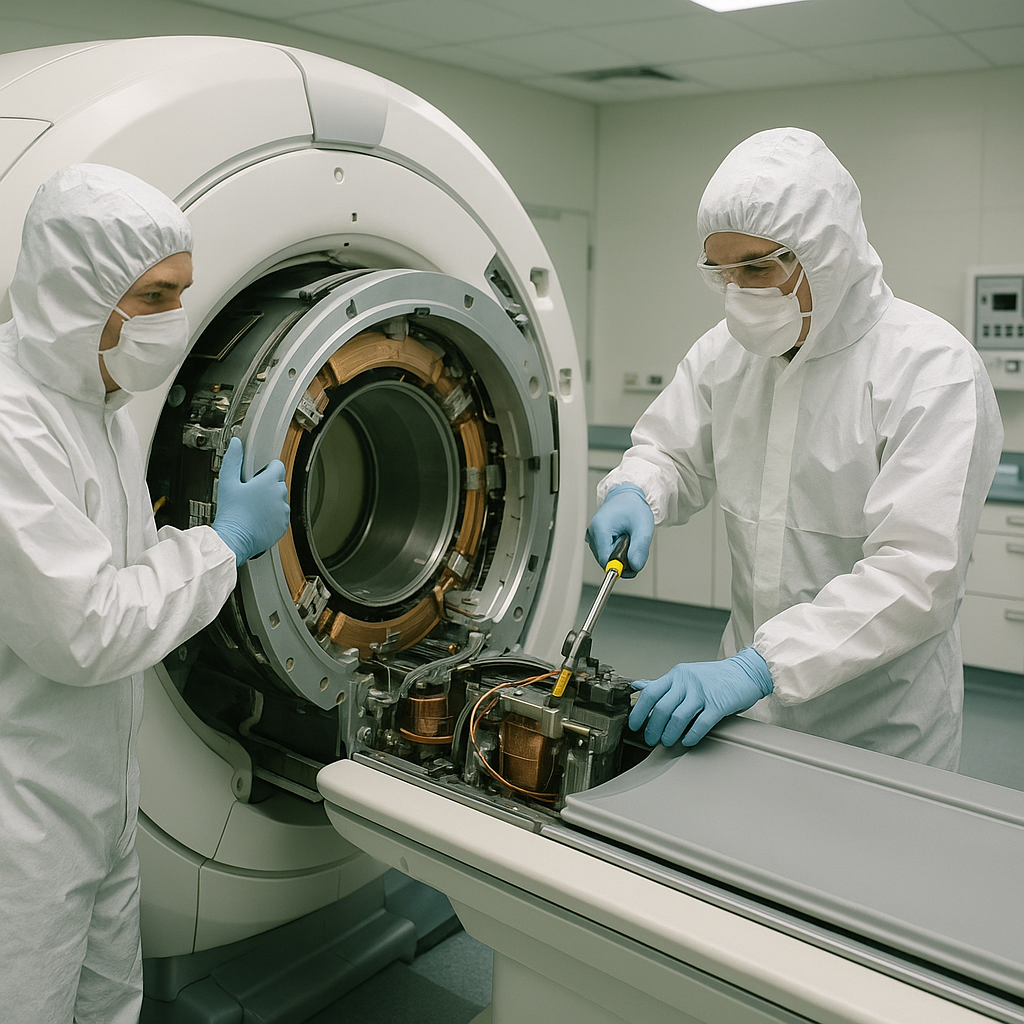
Professional MRI decommissioning follows a systematic approach to address the unique challenges of superconducting systems. Specialized teams work in coordination to safely manage powerful magnetic fields, hazardous materials, and heavy components. Each phase requires specific expertise and equipment to ensure worker safety and regulatory compliance.
Essential Steps in MRI Decommissioning
1. Initial Site Assessment and Inventory: Engineers perform comprehensive on-site inspections to evaluate the MRI system and document all components. This inventory identifies valuable materials such as niobium-titanium alloy wires embedded within the superconducting magnets. The assessment establishes removal priorities based on material value, safety considerations, and regulatory requirements.
2. System Powering Down: Technicians follow manufacturer-specific protocols to safely disconnect the MRI from all power sources. For superconducting systems, this critical step involves controlled magnetic field ramping to gradually reduce the powerful magnetic field. Proper shutdown procedures prevent equipment damage and eliminate safety hazards during subsequent removal phases.
3. Hazardous Material Removal: Specialized teams extract liquid helium and other cryogenic materials using containment systems designed for extreme temperatures. This step prevents rapid expansion and dangerous pressure buildup, avoiding hazardous conditions during transport. Teams handle these materials according to strict environmental regulations to prevent atmospheric release.
4. Route Planning and Facility Preparation: Teams conduct detailed evaluations of exit routes, measuring doorways, windows, and corridors to determine the optimal removal path. Site planning includes assessing structural capacities for heavy lifting and identifying potential obstacles. Teams prepare knockout panels when necessary and lay protective materials over flooring to prevent facility damage.
5. Component Disassembly: Professional crews systematically break down the MRI into transportable sections using specialized tools. They carefully separate the gantry, patient table, and electronics cabinets while preserving valuable components. The disassembly requires precision to avoid damage to sensitive electronics and maintain the integrity of recyclable materials.
6. Rigging and Heavy Lifting: Certified rigging specialists deploy cranes and specialized lifting equipment to move components weighing several tons. These operations demand precise coordination between crane operators and ground crews. Teams use custom restraints and protective equipment to prevent damage to the building during handling and transport.
7. Professional Packing and Documentation: Components receive protective wrapping and custom packaging for transport. High-value materials are segregated and documented for tracking. Teams maintain detailed records from removal through final disposition to support regulatory compliance and material recovery objectives.
Maximizing Value Through Material Recovery
An MRI machine is essentially a concentrated source of high-value industrial metals. Understanding the composition of these machines allows facilities to better negotiate the scrap value of their retired assets. Beyond the magnet itself, several subsystems contain significant quantities of recyclable materials.
Superconducting Magnets and Precious Alloys
The heart of the MRI is the superconducting magnet, which is wound with miles of niobium-titanium (NbTi) wire. This wire is typically embedded in a high-purity copper matrix. Because of the specialized nature of NbTi, it commands a price far higher than standard copper or steel scrap. Professional recyclers use mechanical shearing and chemical processes to separate these metals, ensuring that the copper is returned to the clean metal stream and the titanium-niobium is preserved for specialty manufacturing.
Non-Ferrous Metals: Copper and Aluminum
MRI systems contain substantial amounts of copper in the gradient coils, RF coils, and massive power cables. Additionally, the cryostat—the vessel that holds the liquid helium—is often constructed using high-grade aluminum and non-magnetic stainless steel. These non-ferrous metals are 100% recyclable and retain a high percentage of their original market value. Properly segregating these metals during the disassembly phase is key to achieving a cost-neutral decommissioning project.
Electronic Waste and Rare Earth Elements
The control cabinets and computer systems associated with an MRI contain printed circuit boards (PCBs) rich in gold, silver, and palladium. Furthermore, modern permanent-magnet MRI systems (often used in “open” MRI designs) contain large quantities of rare earth elements like neodymium. These materials are critical for the green energy transition and are recycled with high efficiency to support the production of electric vehicle motors and wind turbines.
Environmental and Safety Regulatory Compliance
The disposal of medical imaging equipment is governed by a strict framework of federal and state laws. Failure to adhere to these standards can result in more than just fines; it can cause lasting damage to a healthcare provider’s reputation.
HIPAA and Data Security
Every MRI system is integrated with a computer that stores patient names, IDs, and detailed medical imagery. HIPAA mandates that this “Protected Health Information” (PHI) be permanently destroyed before the equipment leaves the facility. Professional decommissioning services provide a Certificate of Data Destruction, documenting that the hard drives were either shredded or wiped using Department of Defense (DoD) level sanitization protocols. This certificate is a vital document for hospital compliance audits.
EPA and Hazardous Waste Management
The Environmental Protection Agency (EPA) monitors the disposal of hazardous materials found in older MRI models, such as lead shielding, mercury switches, and oil-filled transformers. These materials must be manifested and transported by licensed hazardous waste haulers. Furthermore, the venting of liquid helium is regulated; while helium is not toxic, a rapid “quench” or release in an enclosed space can displace oxygen, creating a suffocation hazard. Certified teams ensure that cryogens are recovered or vented safely according to EPA and OSHA standards.
The Circular Economy in Healthcare
By choosing a certified recycling partner, Texas hospitals contribute to the “circular economy.” Instead of ending up in a landfill, the materials from a single MRI machine can be repurposed to build new medical devices, construction materials, and electronic components. This reduces the need for environmentally damaging mining operations and lowers the overall carbon footprint of the healthcare industry.
Conclusion: Partnering with Professionals for MRI Recycling
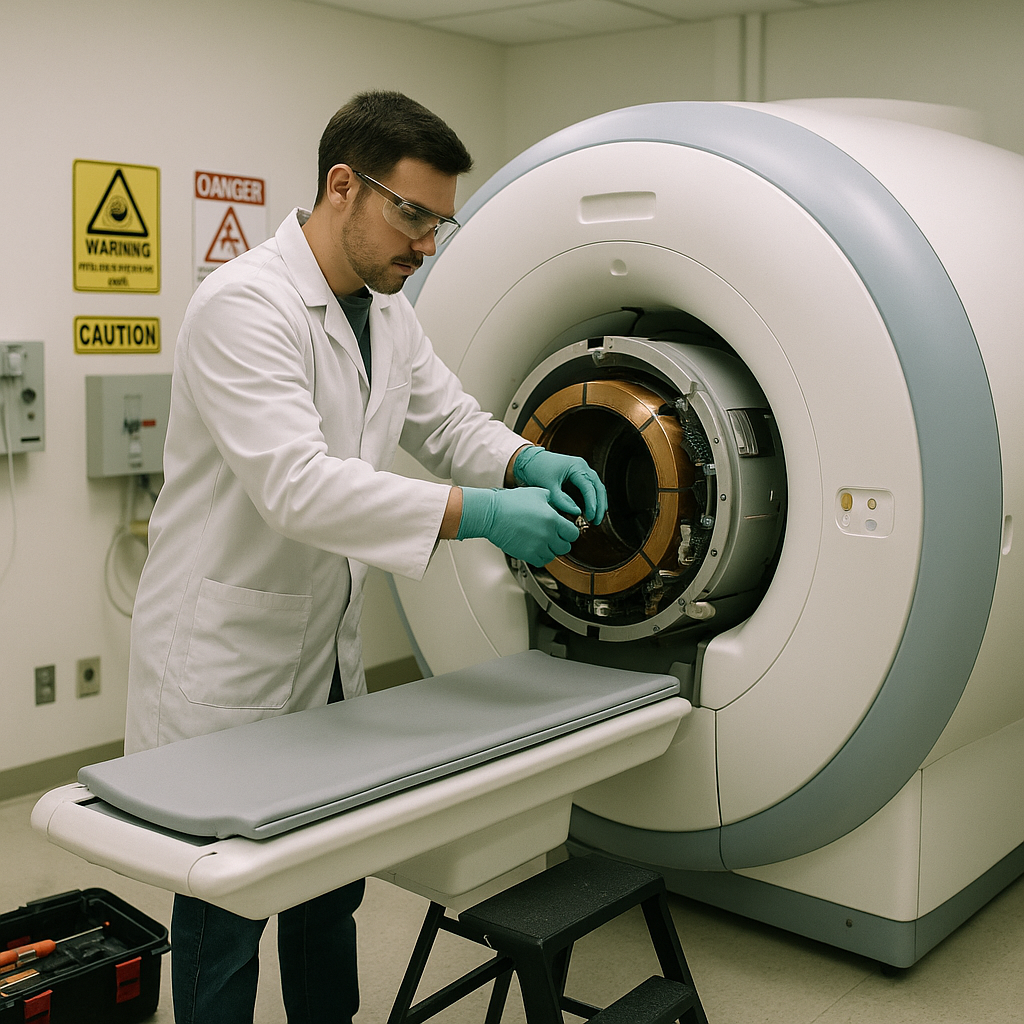
A technician carefully dismantling an MRI machine in a hospital room, highlighting the importance of safety protocols in medical equipment maintenance.
Retiring an MRI machine involves significant safety, regulatory, and technical challenges. From managing powerful magnetic fields to ensuring data security and EPA compliance, the process requires expert oversight. Collaborating with certified industrial professionals guarantees that the decommissioning is handled safely while optimizing the recovery of valuable metals like copper and niobium-titanium.
The complexity of MRI decommissioning necessitates specialized knowledge of superconducting magnets, cryogen handling, and regulatory frameworks. Professional services offer the expertise required to navigate these challenges while promoting environmental responsibility. To ensure your MRI machine is retired safely and responsibly, contact Okon Recycling at 214-717-4083.
Send Us a Message
Questions about what we do? Interested in commercial services? Let us know below and a member of our team will get back to you.