5901 Botham Jean Blvd, Dallas, TX 75215
Why Professional Handling Is Required for the Disposal of MRI Gradient Coils
December 10, 2025MRI machines are far more than just oversized medical electronics. These sophisticated imaging devices contain intricate networks of superconducting magnets, cryogenic cooling systems, and specialized electronics that require expert-level decommissioning. Without proper handling, these powerful systems can pose serious environmental and safety risks to healthcare facilities and nearby communities.
The disposal of MRI gradient coils and other components is complex due to the machine’s intricate design. These systems need expert handling to ensure environmental safety, maintain regulatory compliance, and manage potentially hazardous materials such as liquid helium, mercury, and beryllium. The Environmental Protection Agency has established strict guidelines for managing medical equipment waste, especially for devices containing hazardous substances.
Professional handling is critical because MRI machines contain powerful superconducting magnets that can turn ordinary metal objects into dangerous projectiles if not properly decommissioned.
What Valuable and Hazardous Materials are Found in MRI Components?
MRI machines contain valuable materials, making proper recycling financially beneficial for healthcare facilities. The most significant components are rare earth magnets, particularly those made from neodymium and samarium-cobalt alloys. These permanent magnets are essential for producing the strong, stable magnetic fields required for high-resolution imaging. A single decommissioned MRI system can contain rare earth materials worth tens of thousands of dollars, making their recovery a priority in medical equipment recycling.
The superconducting coil windings are another major source of valuable materials. These coils contain niobium-titanium alloy wires embedded in copper matrices, with the alloy alone commanding prices between $10 and $15 per pound. The copper surrounding these superconducting wires adds substantial value, as copper recycling remains consistently profitable. Significant quantities of aluminum are also found throughout MRI systems, from structural components to shielding materials.
However, MRI machines contain hazardous materials that require careful handling during dismantling and disposal. Liquid helium poses an immediate safety concern, as these systems typically contain 1,500 to 2,000 liters of this cryogenic coolant. Improper release of liquid helium can displace oxygen in enclosed spaces, creating asphyxiation hazards. Mercury components, found in certain older switch mechanisms and measurement devices, risk contaminating soil and groundwater if not properly contained. Beryllium parts, used in some electronic components and X-ray windows, require specialized handling due to their carcinogenic properties when disturbed.
Separating valuable materials from hazardous ones requires specialized recycling facilities with proper metallurgical processing capabilities. According to industry experts, rare earth magnets are embedded in complex assemblies with copper, steel, insulation materials, and cryogenic vessels, making separation technically challenging. This dual nature of MRI components means we must balance the economic incentives of material recovery with the environmental responsibilities of hazardous waste management, ensuring that valuable resources are reclaimed while preventing contamination of ecosystems.
What is the Step-by-step Process For MRI Equipment Disposal?
The disposal of MRI machines requires a systematic approach that prioritizes safety while maximizing material recovery. This process involves multiple specialized steps that trained technicians must follow to handle these complex medical imaging systems properly.
Initial Assessment and Documentation
The first phase involves thoroughly evaluating the MRI system’s condition and creating detailed documentation. Technicians assess the machine’s operational status, identify all components, and catalog any stored patient data that requires secure destruction. This assessment determines whether components can be refurbished, recycled, or require specialized disposal methods.
Documentation includes recording serial numbers, model information, and component specifications. This information is essential for tracking materials throughout the recycling process and ensuring regulatory compliance.
System Decommissioning
Proper decommissioning begins with safely powering down the entire MRI system following manufacturer protocols. This step involves shutting down the console computers, gradient amplifiers, and related electronic systems in sequence. Technicians must ensure all electrical systems are completely de-energized before proceeding with physical disassembly.
The magnetic field presents unique challenges during decommissioning. Unlike other medical equipment, MRI magnets maintain their magnetic field even when powered down, requiring specialized procedures to safely manage this persistent force.
Cryogen Recovery and Hazardous Material Removal
Cryogen recovery is one of the most critical steps in MRI disposal. Most systems use liquid helium for cooling superconducting magnets, which must be safely extracted to prevent environmental harm and recover valuable resources. Trained technicians use specialized equipment to capture and contain these cryogenic materials.
In addition to cryogens, technicians identify and remove other hazardous materials such as mercury, beryllium, and other toxic metals present in various components. This step requires strict adherence to environmental regulations and proper containment procedures.
Systematic Disassembly
The disassembly process follows a methodical approach, starting with easily removable exterior components. Technicians remove the outer casing and structural elements, typically made of steel or other common metals that can be processed through standard recycling channels.
As disassembly progresses, technicians carefully separate the complex internal components. This includes gradient coils, RF systems, patient tables, and the superconducting magnet assembly. Each component requires specific handling due to weight, size, and material composition.
Advanced Material Separation
Once disassembled, components undergo sophisticated material separation processes. Specialized recycling technologies, including eddy current separation, effectively isolate non-ferrous metals like aluminum and copper from other materials. This technology ensures maximum material recovery while maintaining separation quality.
High-Value Component Extraction
The superconducting magnet requires special attention due to its valuable materials. These magnets contain niobium-titanium alloy wires embedded in copper matrices. The niobium-titanium alloy commands premium prices, often selling for $10 to $15 per pound, making careful extraction economically important.
Technicians use advanced techniques to safely remove and preserve these high-value elements. The extraction process requires specialized tools and expertise to avoid damaging the valuable alloys during removal.
Material Refinement and Processing
Recovered materials undergo refinement processes to prepare them for reuse. Copper and aluminum, two of the most abundant metals in MRI systems, are melted down and purified for integration into new products. Rare earth elements from the magnets go through specialized extraction processes to prepare them for reintegration into high-tech devices.
This refinement stage transforms recovered materials into raw materials suitable for manufacturing new equipment, significantly reducing the environmental impact compared to extracting and processing virgin materials.
Final Waste Management and Disposal
Components that cannot be recycled or refurbished require disposal through authorized waste management facilities. These facilities specialize in handling electronic waste and ensure that non-recyclable materials are disposed of according to environmental regulations.
Throughout this final stage, detailed documentation tracks all materials to their final destination. This documentation provides healthcare facilities with certificates of destruction and recycling, confirming that their equipment was handled responsibly and in compliance with all applicable regulations.
What are the Main Benefits of Responsible MRI Component Recycling?
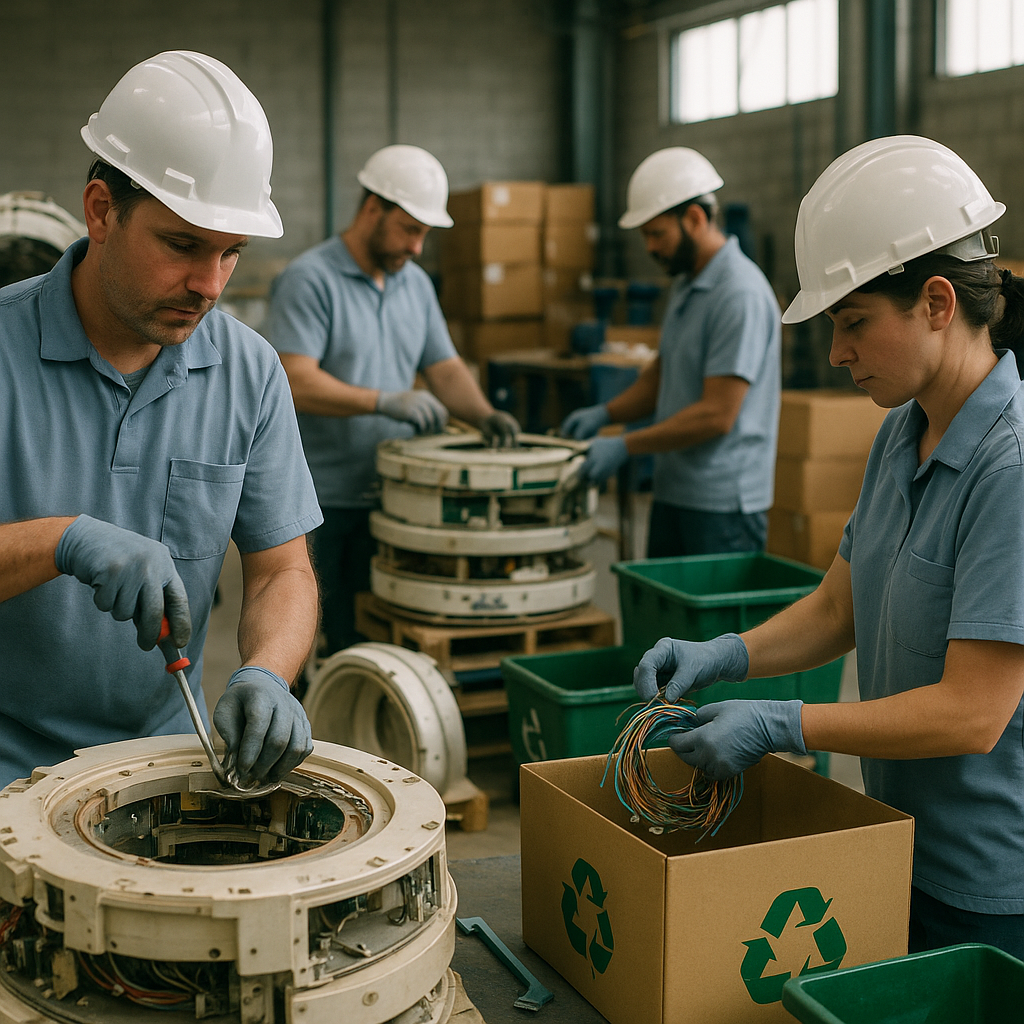
Responsible MRI component recycling offers significant environmental and economic benefits that go beyond mere waste reduction. Healthcare facilities that adopt proper recycling practices promote sustainable healthcare and capture considerable financial value from decommissioned equipment.
Environmental Benefits
MRI recycling conserves essential natural resources by decreasing the need for mining operations that harm the environment. Research indicates that circular economy solutions for MRI devices substantially cut environmental impacts compared to conventional disposal methods.
Conserving resources involves reusing valuable components. Studies show that up to 95% of MRI machine components can be reused or refurbished. This high reusability rate reduces electronic waste and prevents valuable materials from ending up in landfills.
Recycling minimizes healthcare operations’ ecological footprint by eliminating the need for new material extraction. Mining for copper, aluminum, and rare earth elements causes water contamination, habitat destruction, and soil degradation. Responsible recycling interrupts this cycle.
Pollution prevention is another key environmental advantage. Proper handling of hazardous materials like liquid helium, mercury-containing switches, and beryllium components prevents soil and groundwater contamination. This safeguards surrounding communities and ecosystems.
Economic Benefits
Material recovery generates substantial revenue streams that offset decommissioning costs. Niobium-titanium alloy wires in superconducting magnets are valued at $10-15 per pound, presenting worthwhile recovery opportunities.
Cost savings arise from reduced disposal fees and landfill costs. Healthcare facilities often incur high expenses for hazardous waste disposal. Recycling turns these costs into revenue through material buyback programs.
Copper and aluminum recovery provide further economic value. MRI systems contain significant quantities of these metals. Current market conditions make metal recovery financially appealing for healthcare organizations looking to maximize returns on decommissioned equipment.
The circular economy model leads to long-term cost benefits by reducing the demand for new components. This approach supports sustainable healthcare practices while delivering tangible financial returns. Healthcare facilities that embrace comprehensive recycling strategies often find that recovered material values exceed initial decommissioning costs.
Conclusion: Adopting Sustainable MRI Disposal Practices
Proper disposal of MRI gradient coils and systems is crucial in modern healthcare, going beyond regulatory compliance to reflect a commitment to environmental stewardship. By partnering with certified experts for decommissioning and recycling, healthcare facilities can safely manage hazardous materials, recover valuable resources, and support a sustainable circular economy. This responsible approach safeguards both the environment and patient data while promoting financial sustainability.
The healthcare sector has an opportunity to lead in environmental stewardship through sustainable MRI disposal practices. Healthcare facilities can significantly lower their ecological footprint while ensuring regulatory compliance and recovering valuable materials like rare earth magnets and copper components.
To implement these crucial sustainable practices for your facility’s MRI disposal needs, contact Okon Recycling at 214-717-4083.
Send Us a Message
Questions about what we do? Interested in commercial services? Let us know below and a member of our team will get back to you.