5901 Botham Jean Blvd, Dallas, TX 75215

Why Does It Cost So Much to Turn Off an MRI Machine?
February 5, 2026Turning off an MRI machine isn’t like flipping a light switch. While most medical equipment simply powers down when disconnected, MRI scanners require a complex and costly shutdown process, often costing healthcare facilities thousands of dollars. This is due to the sophisticated technology that makes these diagnostic tools possible. In 2026, the financial and environmental stakes of managing these high-field magnets are higher than ever.
MRI machines rely on superconducting magnets operating at temperatures near absolute zero. These magnets need continuous cooling with liquid helium via specialized cryogen circulation systems. When facilities need to power down an MRI scanner, the magnetic field cannot simply be turned off. Instead, technicians must carefully ramp down the system through a controlled process, safely dissipating the powerful magnetic field without damaging sensitive components.
The expenses tied to turning off an MRI machine include specialized power supplies, potential equipment repairs, and significant downtime.
What Happens When an MRI Magnet Is Turned Off?
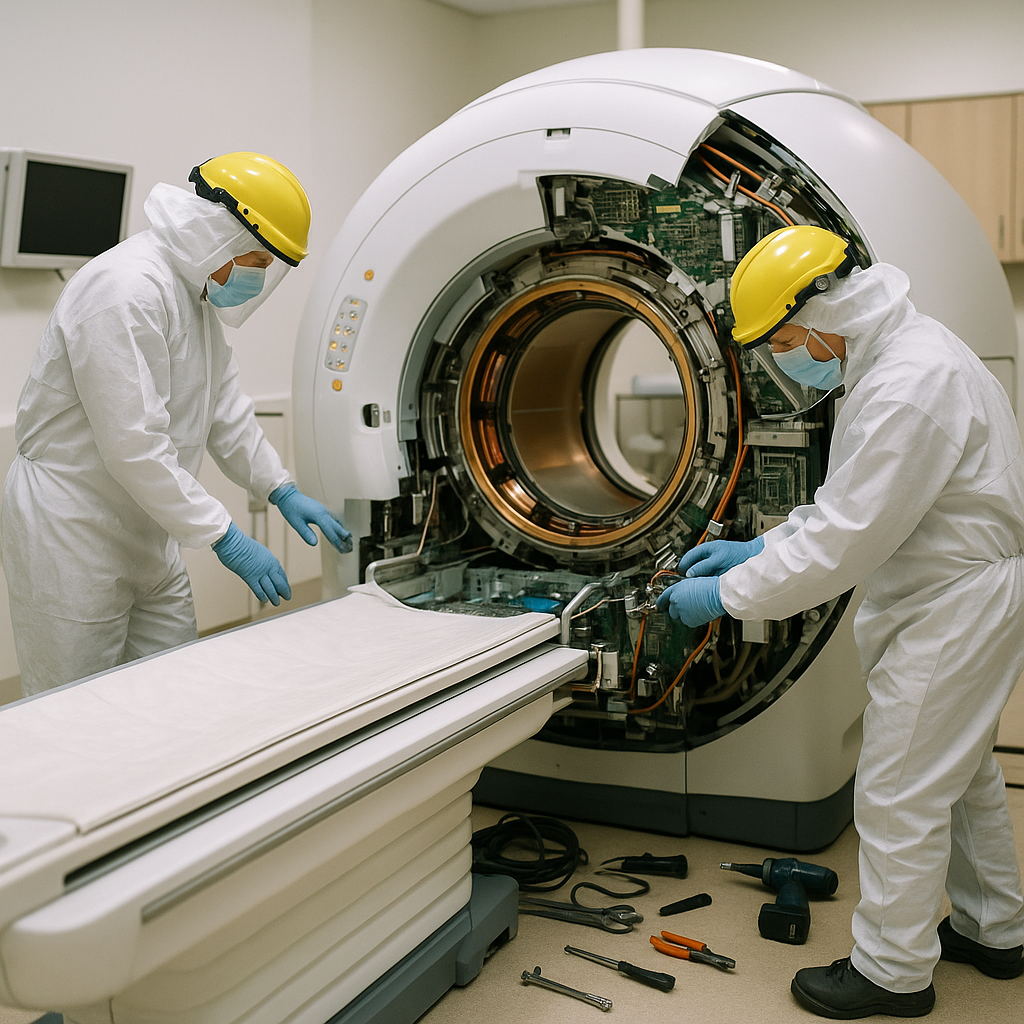
Turning off an MRI magnet involves two distinct processes with vastly different environmental and economic implications. Understanding these processes helps us better manage the lifecycle of medical imaging equipment and responsibly recover valuable materials.
A controlled shutdown, called a “ramp down,” requires specialized equipment known as a magnet power supply. This specialized system methodically removes the electrical current flowing through the magnet coils, preserving the liquid helium that maintains superconductivity at negative 452.2 degrees Fahrenheit. During a ramp down, technicians slowly reduce the electrical current over several hours or days. This gradual process maintains the delicate balance of superconductivity, with the magnet coils retaining their zero-resistance state throughout most of the operation.
The physics of an uncontrolled quench
An uncontrolled shutdown presents a dramatically different scenario. Known as a “quench,” this event triggers a destructive chain reaction affecting both equipment viability and material recovery efforts. When superconductivity fails during a quench, the magnet coils suddenly develop electrical resistance. The circulating current, which can reach several dozen amperes, now encounters this resistance, generating substantial heat within the coil windings.
This heat production creates a cascading effect throughout the system. Rising temperatures cause more sections of the magnet coils to lose superconductivity, with each affected section adding additional resistance and heat generation. Liquid helium cannot withstand this rapid temperature increase; the cryogenic coolant begins boiling violently as temperatures rise above the superconductivity threshold. This explosive boil-off transforms hundreds or thousands of liters of liquid helium into gas in seconds.
The expanding helium gas creates dangerous pressure levels within the magnet assembly. Emergency quench pipes vent this gas safely outside the building to prevent asphyxiation risks. However, this venting represents a complete loss of the expensive helium coolant. From our perspective in equipment lifecycle management, quenches create significant challenges for material recovery. The sudden temperature changes can damage sensitive magnet components, with coil windings potentially suffering permanent damage from thermal stress.
The 2026 Helium Crisis: Why Every Liter Counts
In 2026, the global helium market is facing unprecedented volatility. Helium is a finite resource extracted from natural gas fields, and geopolitical instability has severely restricted supply. This scarcity has driven the price of liquid helium to record highs, fundamentally changing the economics of MRI management.
Financial impact of helium loss
A standard 1.5 Tesla MRI scanner holds approximately 1,500 to 2,000 liters of liquid helium. In today’s market, refilling a quenched magnet can cost upwards of $30,000 to $40,000—if the supply is even available. Hospitals are now facing “allocation limits” from gas suppliers, meaning that a quenched magnet might sit idle for weeks simply because there is no helium to fill it. This reality makes the “controlled ramp down” not just a best practice, but a critical financial necessity.
Helium recovery technologies
To combat this, modern decommissioning teams now utilize helium recovery systems during a planned shutdown. Instead of venting the gas, cryo-compressors capture the boil-off and store it in high-pressure cylinders. This recovered helium can be purified and reused, offsetting the cost of the project. In 2026, a facility manager who fails to plan for helium recovery is essentially venting tens of thousands of dollars into the atmosphere.
Navigating New 2026 Sustainability Mandates
The healthcare sector is under increasing pressure to reduce its carbon footprint. New environmental regulations are targeting the high energy consumption of medical imaging equipment, forcing hospitals to rethink their operational strategies.
Scope 2 emissions and MRI energy use
An MRI machine is one of the largest energy consumers in a hospital, often running 24/7 even when not scanning patients. This continuous energy draw contributes significantly to a facility’s “Scope 2” greenhouse gas emissions. In 2026, many states have introduced carbon taxes or caps that penalize excessive energy use. Idling an MRI overnight without utilizing power-save modes is no longer just an operational expense; it is a regulatory liability that impacts the hospital’s sustainability rating.
The “Right to Repair” and circular economy
Recent legislation supporting the “Right to Repair” in medical technology encourages the refurbishment of high-value components rather than scrapping them. A controlled ramp down preserves the integrity of the superconducting coil, allowing it to be re-cooled and reused in a new chassis. This circular approach prevents tons of medical waste from entering landfills and reduces the need for mining new rare earth elements, aligning healthcare operations with broader global sustainability goals.
How Much Does an Accidental MRI Shutdown (Quench) Cost?
The immediate repair costs from an unplanned MRI quench impose a substantial financial burden on healthcare facilities. A single quench incident requires at least $80,000 in direct repair expenses, according to ECRI research on MRI malfunctions. This amount covers the technical work needed to restore the superconducting magnet system and replace components damaged during the abrupt loss of the magnetic field.
Daily revenue losses significantly compound this financial impact. Hospitals incur additional costs of $10,000 to $15,000 per day in lost revenue while the MRI system remains offline. These losses occur due to canceled appointments, rescheduled procedures, and patients potentially seeking imaging services at competing facilities. For a busy imaging center performing numerous scans daily, this revenue loss quickly accumulates into hundreds of thousands of dollars.
Repair timeframes extend financial damage over weeks or months. The restoration process generally takes one to two months to complete, during which the facility cannot generate income from that MRI scanner. Additional expenses further escalate the total financial impact. Healthcare facilities must also account for staff redeployment costs, patient transfer expenses, and potential liability issues. The cumulative effect often pushes the total cost of an unplanned quench beyond $1 million when considering all direct and indirect financial consequences.
Why Do Facilities Idle MRIs Instead of Turning Them Off?

Radiology departments often choose to keep MRI units in idle mode instead of shutting them down completely due to significant operational reasons. The primary consideration is the lengthy startup and shutdown times, which can range from 7 to 22 minutes depending on the system. These delays can interfere with emergency procedures or disrupt scheduled patient care.
Additionally, the technical complexity of shutting down MRIs makes frequent power cycling impractical. Rebooting some MRI systems involves multiple manual steps, and any errors can cause operational problems. Consequently, many facilities restrict these procedures to lead technologists, who may not be available every evening to perform shutdown protocols consistently. Another reason for idling MRIs is to support necessary maintenance activities, such as software updates scheduled during overnight hours.
The energy cost of these decisions is notable. Idle MRI units consume between 9.5 and 14.5 kilowatts continuously. Research from the University of California San Francisco indicates that switching from idle to off mode for 12 hours overnight can reduce power usage by 25 to 33 percent, resulting in possible annual savings of up to $2,943 per scanner. Even when powered down, MRI systems consume substantial energy for cryogen circulation needed to cool superconducting magnets. This continuous energy requirement accounts for roughly one-third of total MRI energy consumption in off mode.
Are There More Cost-Effective Alternatives to a Full Shutdown?
Power-save mode is the most cost-effective alternative to traditional shutdown practices for MRI systems. This advanced mode cycles the cold head compressor instead of running it continuously, providing superior energy efficiency compared to both idle and standard off modes.
The cold head compressor typically operates at constant power levels to maintain superconducting magnet temperatures. Power-save mode manages this component by cycling its operations during non-productive periods. Switching from idle to off mode overnight reduces power consumption by 25 to 33 percent. Power-save mode extends these savings by an additional 22 to 28 percent beyond standard off mode performance. Combined, these operational changes can cut overall energy consumption by up to 51 percent.
Annual energy savings per MRI scanner range from 12.3 to 21.0 megawatt-hours when switching from idle to off mode for 12 overnight hours. Power-save mode adds another 8.8 to 11.4 megawatt-hours in annual savings compared to off mode. Nationwide adoption of power-save mode across U.S. outpatient MRI units could generate $8.2 to $10.7 million in annual healthcare cost savings. Research shows that power-save mode maintains system functionality while providing consistent energy performance, making it a practical solution for healthcare organizations.
Conclusion: The High Cost of Cooling Down
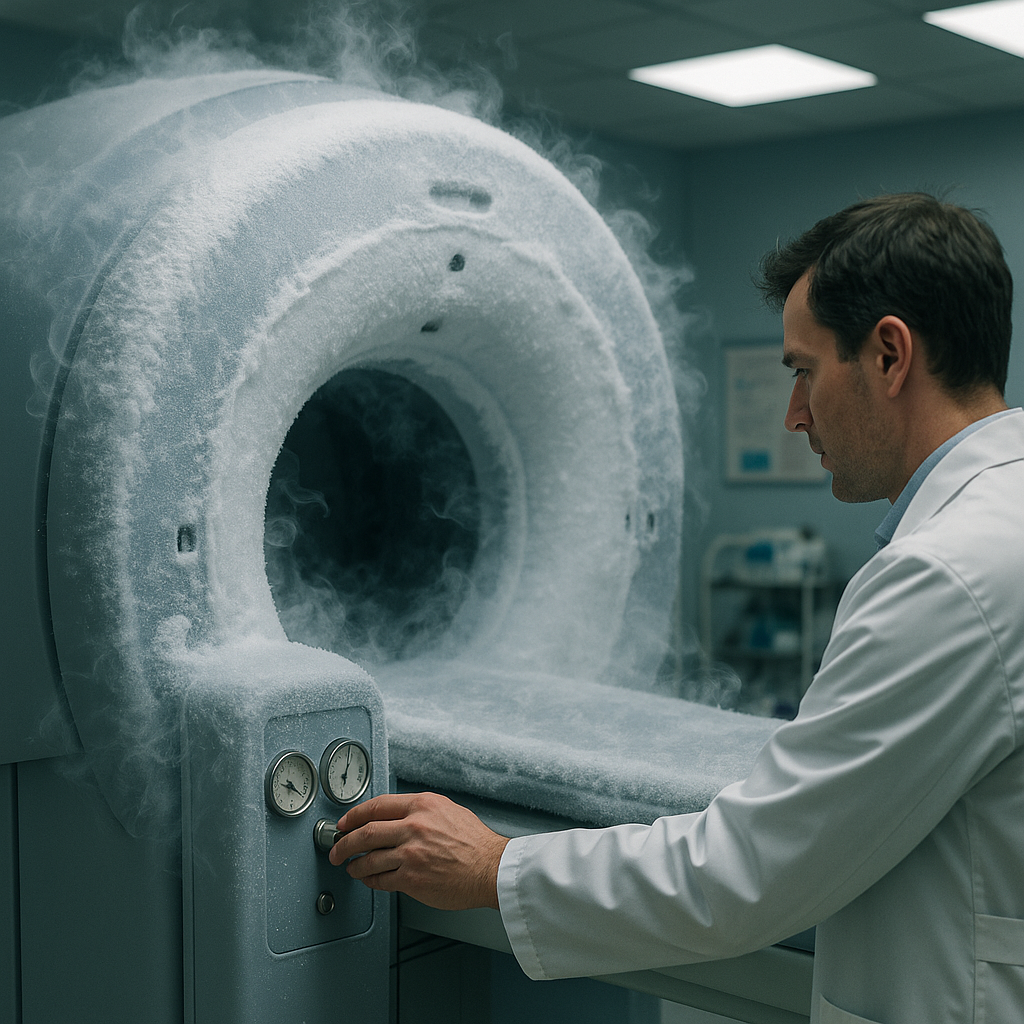
The high cost of turning off an MRI machine is primarily due to the requirement of keeping its superconducting magnets at near-absolute zero temperatures. A full shutdown introduces complex operational challenges and significant financial risks. An accidental quench can cost facilities at least $80,000 in repairs and up to $15,000 per day in lost revenue due to extended downtime. These costs illustrate why many healthcare facilities choose to keep machines running continuously instead of risking costly shutdowns.
Power-save modes offer a practical solution for reducing MRI operational costs without compromising equipment safety. These systems can reduce energy consumption by 46 to 51 percent compared to standard idle modes, avoiding the risks of complete shutdowns. As healthcare facilities increasingly focus on operational efficiency and sustainability, adopting energy-efficient strategies becomes vital for long-term cost management. For comprehensive waste management solutions that support your facility’s sustainability goals, contact Okon Recycling at 214-717-4083.
Send Us a Message
Questions about what we do? Interested in commercial services? Let us know below and a member of our team will get back to you.