5901 Botham Jean Blvd, Dallas, TX 75215
Laboratory Cryomagnet Recycling: Solving the Rare Earth Supply Chain Challenge
December 4, 2025Less than 1% of rare earth magnets reach recycling facilities despite containing some of the world’s most valuable and strategically important materials. Laboratory cryomagnets used in Magnetic Resonance Imaging (MRI) systems and other scientific equipment represent a massive untapped resource sitting in medical facilities, research institutions, and equipment graveyards across the country. These powerful permanent magnets contain concentrated amounts of neodymium, dysprosium, and other rare earth elements that could supply domestic manufacturing needs for decades.
The current disposal approach creates a dangerous dependency on foreign supply chains. China controls approximately 70% of global rare earth element production and over 85% of downstream processing capacity, leaving critical industries vulnerable to supply disruptions and price manipulation. Laboratory equipment contains high-grade neodymium-iron-boron (Nd-Fe-B) magnets that often exceed the purity levels found in consumer electronics, making them ideal candidates for materials recovery programs.
What Makes Recycling Rare Earth Magnets So Challenging?
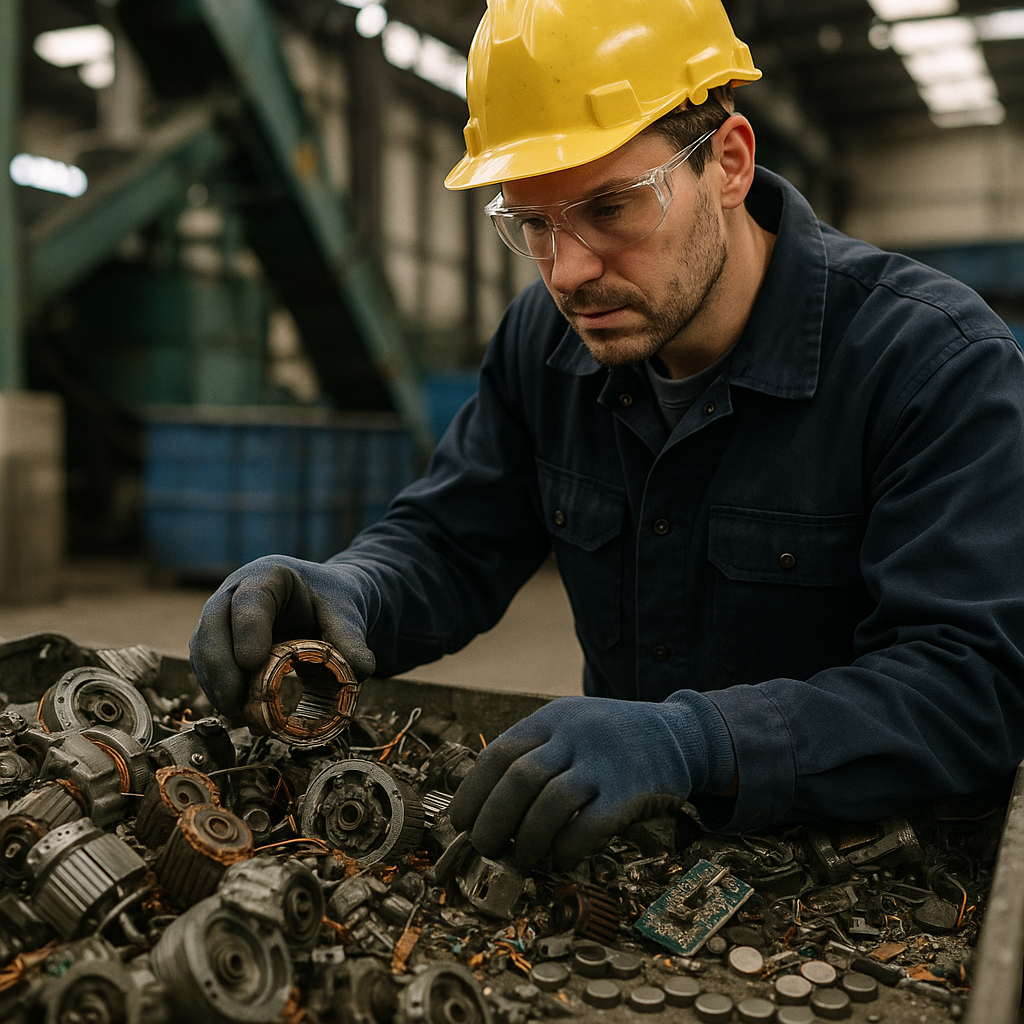
Recycling rare earth magnet components faces a fundamental design challenge. These magnets are engineered to last for decades, which makes them excellent for their intended applications but creates significant problems during end-of-life processing. When devices containing these magnets are discarded and processed through conventional e-waste shredding systems, the magnets break down into fine powder particles.
This magnet powder creates a major separation problem. The fine particles cling tenaciously to any ferromagnetic material present in the waste stream, making it nearly impossible to isolate and recover the valuable rare earth elements. Current separation technologies struggle with this adhesion issue, requiring energy-intensive processes and large volumes of chemicals to attempt extraction.
The concentration challenge compounds the difficulty. Rare earth elements exist in extremely low concentrations within end-of-life devices, often as trace impurities bound closely with other similar elements. Current recycling methods are often inefficient, with limited facilities capable of handling the complexity of processing rare earth materials. This scarcity means that massive amounts of e-waste must be processed to yield even small quantities of recoverable materials.
Economic factors create additional barriers to effective recycling. The cost of recycling rare earth elements frequently exceeds the cost of mining and refining new materials from primary sources. This economic imbalance discourages investment in recycling technologies and facilities, perpetuating the cycle of waste rather than recovery.
Technical infrastructure limitations further hamper recycling efforts. The global infrastructure for rare earth magnet recycling remains underdeveloped, with most existing facilities designed for processing higher-concentration materials rather than the dispersed rare earths found in consumer electronics. Many products containing these magnets were not designed with recyclability in mind, featuring components that are glued or encased in ways that make disassembly difficult without damaging the surrounding materials.
What are the Emerging Methods for Recycling Rare Earth Magnets?
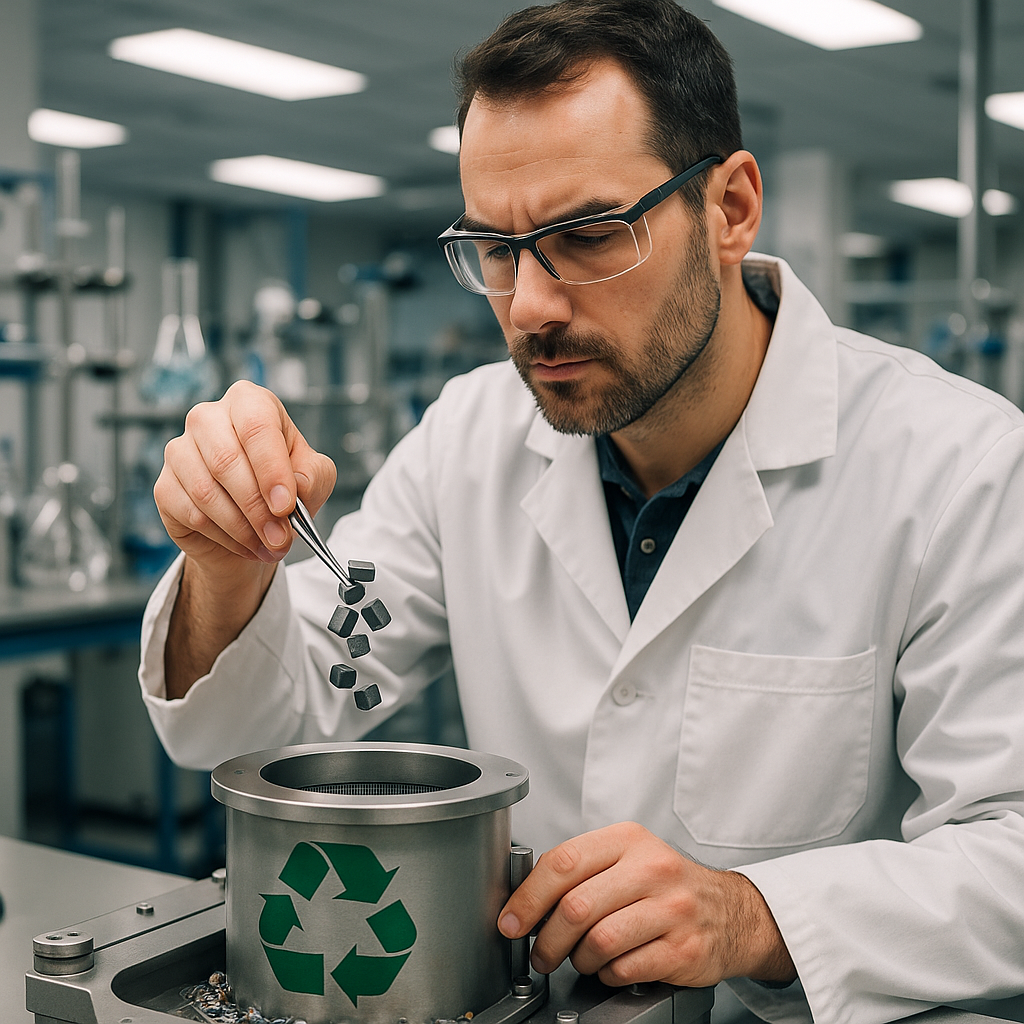
The rare earth magnet recycling industry has developed several sophisticated methods to recover critical elements from end-of-life magnetic materials. These emerging technologies focus on extracting valuable rare earth elements (REEs) like neodymium (Nd), praseodymium (Pr), and dysprosium (Dy) from discarded magnets found in electric vehicles, wind turbines, and electronic devices.
Closed Loop Hydrometallurgy
Closed Loop Hydrometallurgy represents one of the most promising approaches for large-scale rare earth recovery. This method involves dissolving REE magnet waste in acid solutions through a carefully controlled process. The technique begins with acid leaching, where acids dissolve REEs like Nd, Pr, and Dy into liquid solutions. Following this, selective precipitation uses oxalic acid to extract REEs from the solution while separating them from unwanted elements like iron.
What makes this process particularly sustainable is its closed-loop design. The hydrochloric acid used in leaching gets regenerated during precipitation and reused, significantly reducing waste and operational costs. The recovered REEs are then converted into oxide feedstock for new magnet manufacturing, while iron-rich byproducts find applications elsewhere in industrial processes.
Hydrogen Processing of Magnet Scrap (HPMS)
Hydrogen Processing of Magnet Scrap (HPMS) offers a remarkably different approach that exploits the phenomenon of hydrogen embrittlement. When end-of-life magnets are exposed to hydrogen gas at approximately 3 bar pressure, the sintered NdFeB magnets break down into a friable, demagnetized powder. This process creates an interstitial hydride containing particles of Nd2Fe14BHX and smaller particles from the grain-boundary phase NdH2.7.
The HPMS method eliminates the need for mechanical shredding, which often makes magnet recovery difficult due to powder scattering and magnetic attraction to ferromagnetic materials. Instead, nickel coatings naturally separate during hydrogen treatment and can be mechanically removed. The resulting powder maintains the pure NdFeB alloy composition, making it suitable for direct reprocessing into sintered, polymer bonded, or metal-injection molded magnets.
Advanced Pyrometallurgy
Pyrometallurgy traditionally faced criticism due to high energy consumption and emissions. However, recent innovations are transforming this high-temperature method into a more competitive option. Modern pyrometallurgical processes now incorporate selective chlorination techniques that form volatile REE chlorides at lower temperatures than conventional methods.
These temperature reductions make pyrometallurgy more energy-efficient while maintaining effective rare earth recovery rates. The method proves particularly valuable for processing complex magnet compositions that contain multiple rare earth elements and various coating materials that might complicate other recycling approaches.
Comparing Methods and Future Outlook
Each recycling method offers distinct advantages depending on the source material and desired output specifications. Closed loop hydrometallurgy excels in producing high-purity separated oxides suitable for various applications. HPMS delivers exceptional results for direct magnet-to-magnet recycling with minimal energy input. Meanwhile, advanced pyrometallurgy provides robust processing capabilities for diverse feedstock compositions.
These emerging methods collectively address the critical challenge of rare earth supply security. Current recycling rates remain below 1% of total rare earth magnet production, presenting enormous opportunities for growth. As these technologies mature and scale, we expect to see significant increases in recycled rare earth content within new magnet production, supporting both environmental sustainability and supply chain resilience in critical technology sectors.
Conclusion: The Future of Cryomagnet Recycling
The convergence of technological innovation, policy support, and industry collaboration positions magnet recycling as a cornerstone of sustainable metallurgy and domestic resource security. As recycling infrastructure matures and processing capabilities expand, we anticipate that recycled materials could meet 25-40% of domestic rare earth magnet demand within the next decade. This transformation will fundamentally reshape supply chain dynamics while enhancing industrial competitiveness in critical technology sectors.
For organizations managing cryomagnet waste or planning end-of-life strategies for laboratory equipment, partnering with specialized recycling providers ensures both environmental responsibility and resource recovery.
Contact Okon Recycling at 214-717-4083 to explore how our advanced processing capabilities can support your sustainability goals while contributing to a more secure and circular materials economy.
Send Us a Message
Questions about what we do? Interested in commercial services? Let us know below and a member of our team will get back to you.