5901 Botham Jean Blvd, Dallas, TX 75215
What to Know When Selling Scrap Lifting Magnets
January 14, 2026The global scrap metal industry is a cornerstone of the circular economy, diverting millions of tons of material from landfills each year. To manage this massive volume, industrial facilities rely on specialized technology to sort and move material with speed and precision. Among the most critical tools in this sector are lifting electromagnets.
In a professional recycling environment, manual handling is often impossible due to the sheer weight and jagged nature of ferrous debris. Industrial magnets provide a non-contact solution that enhances safety while maximizing throughput.
By integrating electromagnetic systems into cranes and excavators, recycling centers can process mixed scrap loads in a fraction of the time required by traditional mechanical grapples.
Applications of Electromagnets in Scrap Metal Recycling
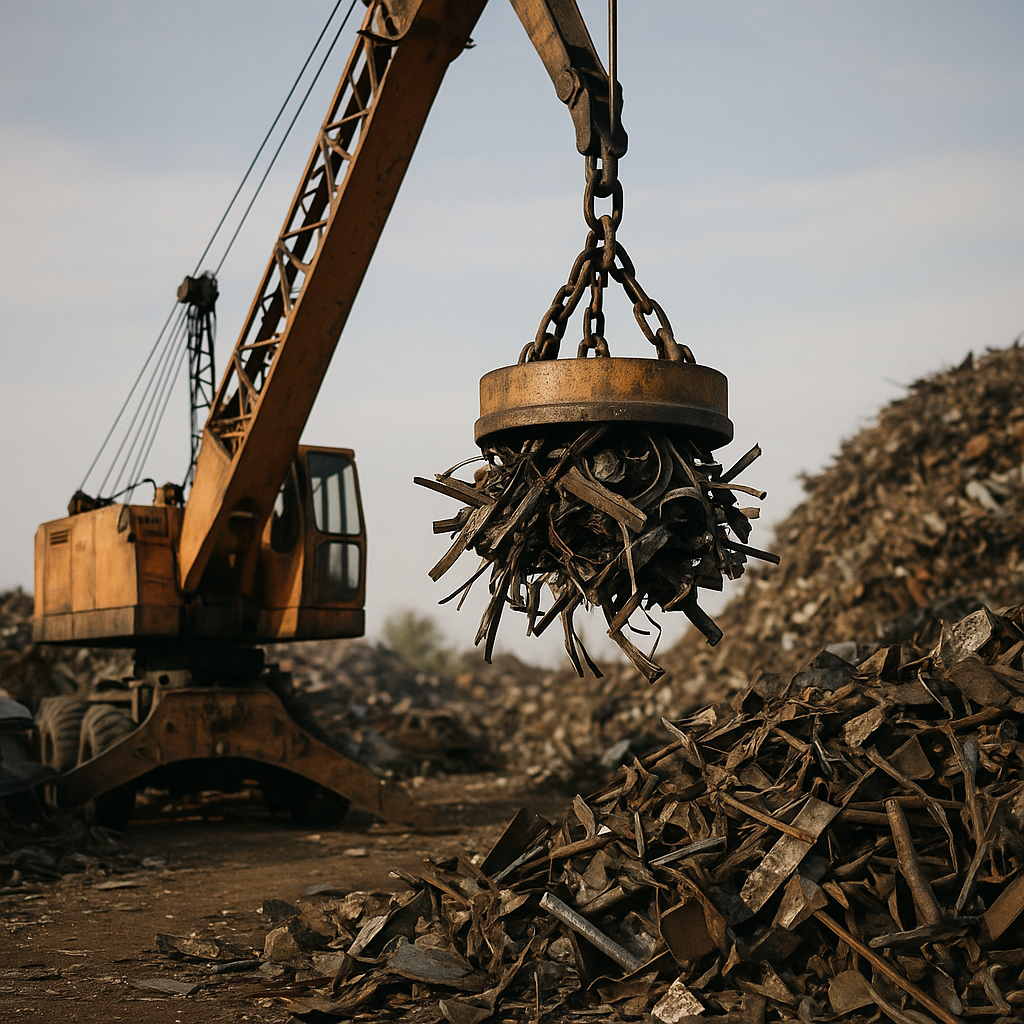
Industrial magnets are used throughout the lifecycle of metal recovery, from the initial intake of raw scrap to the final charging of furnaces at steel mills. Their primary advantage lies in their ability to selectively attract ferrous materials (iron and steel) while leaving non-ferrous contaminants behind.
Scrap Processing and Intake Operations
Scrap processing facilities rely extensively on lifting electromagnets for efficient material handling. These powerful systems manage irregularly shaped scrap metal pieces that are challenging to move with conventional hydraulic equipment. Circular electromagnets are particularly effective at handling shredded metal, loose tin and heavy castings in high-traffic recycling environments.
The deep magnetic field design allows these units to penetrate tangled scrap piles and efficiently extract buried ferrous materials. In a typical recycling yard, an electromagnet can lift several tons of mixed metal debris in one operation. This transforms labor-intensive sorting tasks into streamlined mechanical processes, allowing facilities to maintain a higher volume of material recovery.
Steel Mill and Secondary Production
Steel mills use lifting magnets at various stages of secondary production. Reliable equipment is required to manage heavy steel products throughout the melting and forming process. Rectangular electromagnets are the preferred choice for lifting flat steel plates, structural beams and bundled rebar due to their uniform magnetic field distribution across a larger surface area.
Slab handling is a critical application where precision and power are paramount. Steel slabs, often weighing several tons, require careful positioning during transport. The controlled magnetic force allows operators to move these massive products without risking surface damage or equipment fatigue. Similarly, billet handling operations showcase the versatility of these systems, with field strength adjusting to accommodate different ingot sizes and weights.
Rail Car and Logistics Management
Loading and unloading rail cars demands robust equipment capable of handling large material volumes. Electromagnets eliminate the manual sorting of heavy steel products, allowing a single operator to transfer tons of material between rail cars and processing zones in minutes. This rapid cycle time significantly reduces rail car turnaround periods, improving logistics efficiency and reducing overall transportation costs for the facility.
The Role of Magnetic Separation in Material Purity
One of the most important aspects of recycling is achieving high material purity. Smelters and foundries have strict requirements regarding the percentage of non-ferrous contamination in their feedstock. Electromagnets serve as the first line of defense in ensuring that iron-based scrap is clean and ready for the furnace.
Improving Non-Ferrous Recovery Rates
In a mixed-waste stream, valuable non-ferrous metals like aluminum, copper and brass are often hidden beneath layers of heavy steel. By using a lifting magnet, a recycling operator can quickly strip away the ferrous material, exposing the high-value non-ferrous metals underneath for manual or automated sorting. This “pre-sorting” phase is essential for maximizing the economic return of a recycling program.
Protection of Downstream Processing Equipment
Large-scale shredders and granulators are sensitive to uncrushable ferrous items. A stray piece of heavy steel plate can cause catastrophic damage to the knives of an industrial shredder. Many recycling lines incorporate overhead “cross-belt” magnets or magnetic head pulleys to automatically extract ferrous contaminants before they reach the shredding chamber. This predictive maintenance strategy extends the life of expensive recycling machinery and prevents unplanned downtime.
Purification of Shredder Residue
After a vehicle or large appliance is shredded, the resulting material is a mixture of metals and “auto-shredder residue” (ASR). Fine-particle magnetic drums are used to pull small ferrous fragments out of this residue. This ensures that the final recycled product is of the highest possible grade, commanding a premium price in the global commodity market.
What Services and Accessories Are Offered With Lifting Magnets?
Comprehensive service packages are a crucial investment for any facility focused on material recovery. Professional design, repair and rewinding services extend equipment lifecycles and ensure that magnets maintain the high field strength required for heavy-duty scrap handling. These services help reduce costly downtime that can stall the entire recycling chain.
Repair services typically include field troubleshooting, component replacement and emergency response. Rebuilding involves completely disassembling and restoring magnets to their original specifications, while rewinding services replace damaged coils. These options are often more cost-effective than full equipment replacement while maintaining the performance standards required for modern recycling operations.
Control Systems and Power Infrastructure
Modern lifting operations require advanced control systems. AC and DC magnet generators form the power foundation, with rectifiers converting standard facility power to meet the specific requirements of the magnet. Magnet controllers offer precise functionality; push-button systems provide simple on-off control, while advanced units offer adjustable power settings to handle different scrap densities. Remote control capabilities allow operators to maintain a safe distance during hazardous lifts.
Essential Components for Recycling Facilities
Cable systems are critical infrastructure often overlooked. Magnet crane cables must withstand continuous flexing, environmental exposure and extreme electrical demands. Type W cables are a standard in the industry, offering oil resistance and high-temperature tolerance. Furthermore, twist-lock connectors prevent accidental disconnection, and safety disconnect switches provide emergency stop capabilities.
Maintenance and Training Protocols
Predictive maintenance identify potential failures before they disrupt the material stream. Services like vibration analysis and thermal imaging are essential for keeping large electromagnets in peak condition. Additionally, operator training ensures that staff understands how to avoid equipment misuse, which extends the service life of the magnet and ensures the safety of everyone on the facility floor.
Advanced Technology in 2026: The Future of Magnetic Lifting
As we move through 2026, the technology behind magnetic material handling has evolved to meet stricter environmental and efficiency standards. Automation and smart diagnostics are now being integrated into the newest generations of recycling equipment.
Smart Diagnostic Magnet Controllers
The newest magnet controllers are equipped with IoT (Internet of Things) capabilities. These “smart” systems monitor internal temperature, coil resistance and voltage levels in real-time. If a magnet begins to overheat or shows signs of electrical leakage, the system automatically alerts the maintenance team before a failure occurs. In a high-volume recycling plant, this level of predictive data prevents the catastrophic drops and equipment fires that were common in the past.
Energy-Efficient Pulsed DC Technology
Traditional electromagnets consume a massive amount of electricity. New pulsed-power systems reduce energy consumption by up to 30 percent. These systems deliver a burst of power to initiate the lift and then reduce the current to the minimum level required to hold the material. This not only lowers the operational cost for the recycling facility but also reduces the carbon footprint of the metal recovery process, supporting global sustainability initiatives.
Hydraulic Integrated Magnets for Mobile Recycling
Mobile recycling units, such as those used in demolition sites, are increasingly utilizing hydraulic-integrated magnets. These units do not require a separate generator or a complex electrical tether. Instead, they utilize the excavator’s own hydraulic circuit to power an onboard generator. This increases the mobility of the recycling operation, allowing for on-site metal recovery in remote locations without the need for additional power infrastructure.
Conclusion: Optimizing Your Recycling Infrastructure
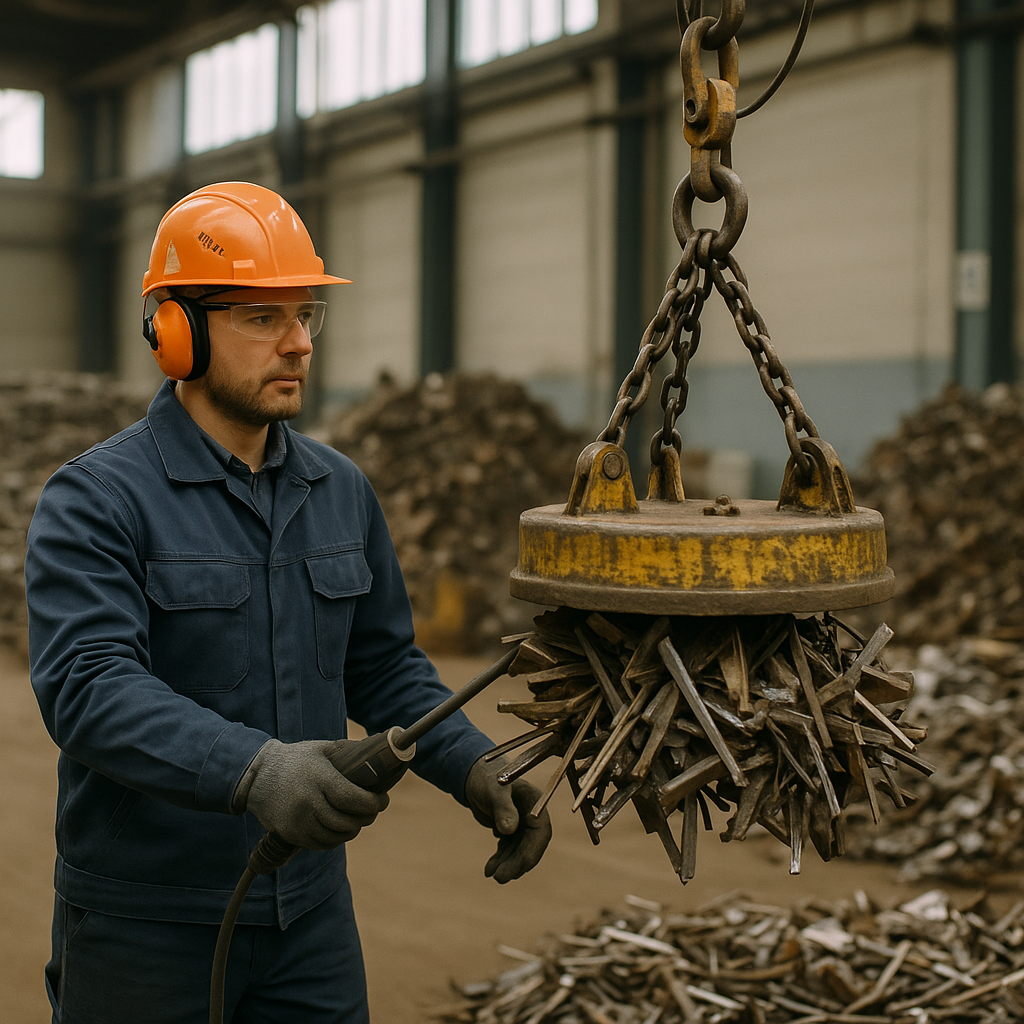
Whether you are managing a high-volume scrap yard, a steel mill or a specialized rail logistics center, the right magnetic lifting solution is essential. From heavy-duty DC magnets to modern hydraulic units, understanding the features and maintenance requirements of this equipment is the first step toward a more efficient operation. Industrial electromagnets are a significant investment, but their ability to move tons of material safely and selectively makes them the cornerstone of successful metal recycling.
Choosing a partner that understands the nuances of magnetic material handling—and provides the necessary repair and support services—ensures long-term performance. In an industry where efficiency directly impacts the bottom line, reliability is paramount.
For comprehensive lifting magnet solutions and expert guidance on optimizing your materials recovery program, contact Okon Recycling at 214-717-4083.
Send Us a Message
Questions about what we do? Interested in commercial services? Let us know below and a member of our team will get back to you.