5901 Botham Jean Blvd, Dallas, TX 75215
Recycling Magnetic Lifting Chucks: Guide to Throughput Increase and Safety Compliance
December 14, 2025Imagine a massive electromagnet suspended from a crane, effortlessly lifting twisted car frames and steel beams from towering piles of scrap metal. This is the everyday scenario at recycling facilities worldwide, where magnetic lifting chucks are essential to efficient material processing. These powerful tools have transformed how ferrous scrap metal is handled in modern waste management operations.
Recycling magnetic lifting chucks, also called scrap lifting magnets, are specialized electromagnets used to lift, sort, and transport large volumes of ferrous materials. Unlike permanent magnets, these devices can be switched on and off as needed, giving operators precise control over material handling. They attach to cranes, excavators, and other heavy equipment to create powerful magnetic fields that attract iron, steel, and other ferrous metals while leaving non-ferrous materials untouched.
The primary role of these magnetic systems is to streamline material flow across scrapyards, demolition sites, and recycling facilities. By generating strong electromagnetic fields, they enable rapid separation of valuable ferrous metals from mixed waste streams. This magnetic separation capability significantly reduces processing time and improves the purity of recovered materials, making recycling operations more efficient and economically viable.
How Do Scrap Magnets Improve Operational Efficiency and Safety?
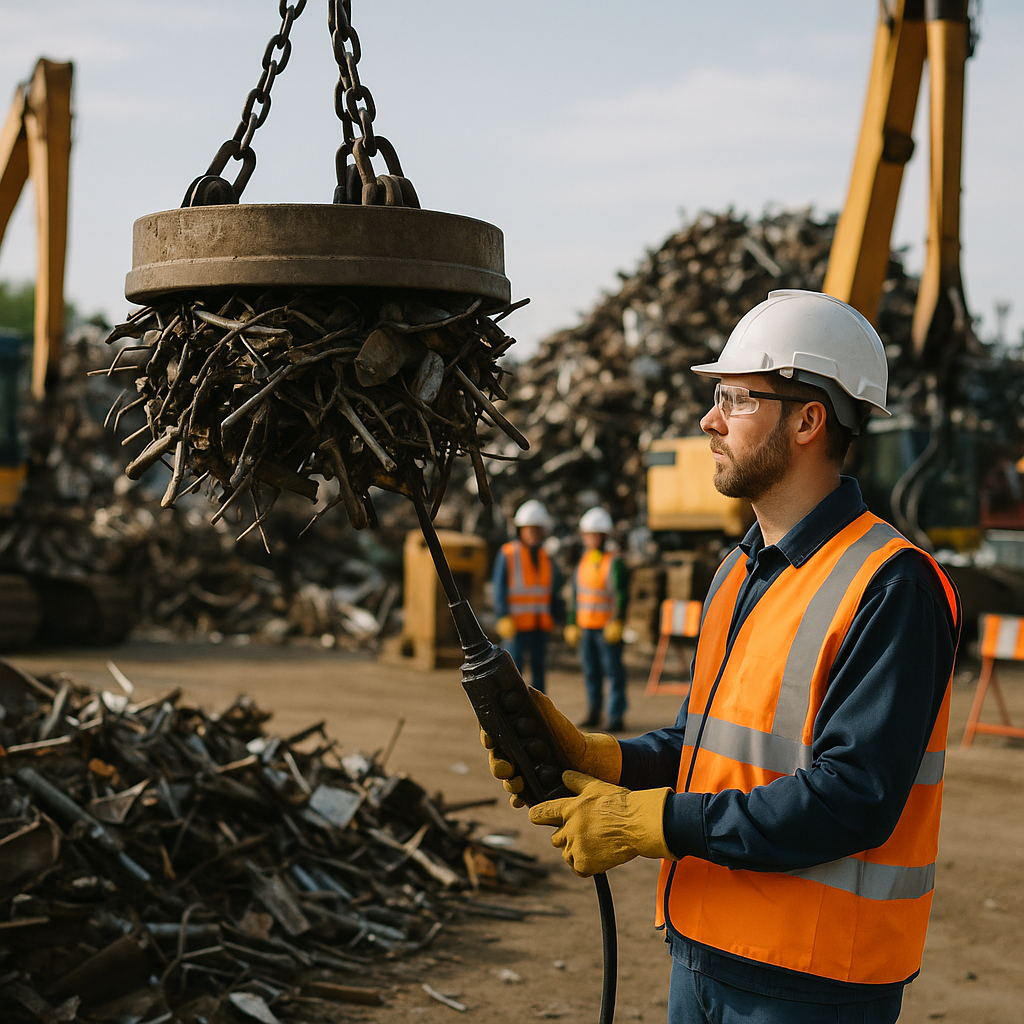
Scrap magnets transform material handling by delivering measurable improvements in efficiency and safety metrics. These systems automate the separation and lifting of ferrous materials, eliminating manual processes that slow operations. The result is faster throughput, reduced operational costs, and significantly safer working conditions.
Streamlined Operational Efficiency
Modern scrap magnets accelerate material processing by handling large volumes of ferrous metals in single operations. A North American scrap processing facility reported a 40% increase in daily throughput after implementing magnetic crane systems, achieving this without expanding their workforce.
Automation capabilities eliminate bottlenecks that occur with manual sorting methods. Magnetic separation systems continuously process mixed material streams, maintaining consistent flow rates throughout facilities. This operation maximizes equipment utilization and reduces idle time.
Increased throughput directly translates to higher processing capacity. Facilities handle more material volume during the same operating hours, improving return on investment for existing infrastructure. This speed is particularly valuable during peak demand periods when processing capacity determines profitability.
Enhanced Workplace Safety Standards
Scrap magnets significantly reduce injury risks by eliminating direct worker contact with hazardous materials. Workers no longer manually handle sharp metal pieces or heavy components, reducing risks of cuts, strains, and crushing injuries. Remote operation capabilities allow operators to maintain safe distances from dangerous materials.
The reduction in manual lifting prevents repetitive strain injuries and fatigue-related accidents. Magnetic systems eliminate these repetitive motions, creating a safer work environment.
Safety improvements extend beyond injury prevention to include better management of hazardous materials. Operators can control and position contaminated or dangerous scrap without direct exposure, especially important with demolition debris or industrial waste containing unknown contaminants.
Automation and Remote Operation Benefits
Remote operation systems enable precise material handling from control cabins or safe zones. Operators can position, lift, and release loads accurately while maintaining distance from active processing areas, representing a fundamental safety improvement over traditional methods.
The automation reduces dependency on manual labor for routine tasks. Facilities operate with smaller crews while maintaining or increasing processing volumes, which benefits operations facing labor shortages or high turnover rates.
Advanced control systems allow adjustments to the magnetic field strength for different applications. This flexibility optimizes lifting performance for varying scrap types and weights, ensuring efficient material handling across diverse processing requirements.
Cost Reduction and Labor Savings
Labor cost reduction is one immediate benefit of implementing scrap magnet systems. Key financial advantages include:
- Reduced workforce requirements for material handling
- Lower injury-related costs and workers’ compensation claims
- Decreased equipment maintenance from reduced wear and tear
- Higher processing volumes without proportional labor increases
Operational expenses decrease as magnetic separation improves accuracy and material quality. Clean separation of ferrous from non-ferrous metals ensures proper categorization, maximizing recycling value and minimizing contamination. This quality improvement directly impacts revenue potential for processed materials.
The efficiency gains from magnetic systems also reduce maintenance costs for downstream equipment. With more efficient scrap handling, conveyors, shredders, and other machinery experience less wear and tear. This extended equipment lifespan reduces replacement costs and maintenance downtime.
What Are the Different Types of Magnets Used in Recycling Operations?
Recycling facilities rely on specialized magnetic equipment to efficiently separate ferrous materials from waste streams. Each magnet type serves distinct operational needs, from heavy-duty scrap lifting to automated material sorting on conveyor systems.
Circular Scrap Magnets
Circular scrap magnets are essential in high-volume operations at steel mills and scrapyards. These electromagnets feature a round design that ensures uniform magnetic field distribution across their lifting surface. The circular configuration allows for optimal weight distribution when handling large quantities of ferrous scrap materials.
These circular lifting electromagnets are typically deployed in open areas with minimal space constraints. Their design excels at picking up mixed ferrous debris, including steel beams, rebar, and automotive scrap. The circular shape prevents material from sliding off the edges during transport, making them particularly effective for continuous material streams in busy recycling environments.
These magnets operate through electromagnetic coils that can be energized or de-energized on command. This feature enables precise material placement and release, crucial for efficient sorting operations in large-scale facilities.
Rectangular Scrap Magnets
Rectangular scrap magnets are designed for confined spaces where circular units cannot operate effectively. Their elongated shape allows operators to maneuver in tight areas commonly found at demolition sites, indoor facilities, and narrow working zones.
The rectangular configuration provides a longer magnetic contact surface, making these magnets ideal for handling elongated ferrous materials like pipes, structural steel, and rebar. They are often recommended for operations requiring precision placement in restricted environments.
These lifting magnets maintain the same electromagnetic principles as circular units but offer enhanced versatility in space-constrained applications. Their shape allows for better penetration into material piles and efficient extraction of buried ferrous items.
Conveyor-Based Magnetic Separators
Conveyor-based magnetic separation systems automate the sorting process, reducing labor costs and increasing throughput efficiency. These systems integrate directly into existing material handling infrastructure, providing continuous ferrous material removal without interrupting production flow.
Magnetic pulleys replace standard head pulleys at conveyor discharge points. As materials reach the end of the belt, ferrous items are attracted to the magnetic pulley and carried underneath the belt, while non-ferrous materials continue their normal trajectory. This automatic separation occurs without additional equipment or operator intervention.
Rotating drum separators handle fine materials and small ferrous contaminants effectively. The drum’s magnetic field attracts particles as materials pass over or under the rotating cylinder. These separators are strategically positioned in processing lines where fine iron removal is critical for product purity.
Suspended magnets hang over conveyor belts to extract ferrous contaminants from continuous material streams. These overband magnets create magnetic fields above the conveyor, pulling ferrous items upward and away from the product flow. Self-cleaning models automatically discharge captured materials, while manual-clean versions require periodic maintenance stops.
The integration of these conveyor-based systems creates comprehensive automated material sorting capabilities. Facilities can combine multiple separator types to address different material sizes and contamination levels throughout their processing lines. This layered approach maximizes ferrous recovery while maintaining high throughput rates essential for profitable recycling operations.
What are the Essential Safety and Maintenance Practices for Scrap Lifting Magnets?
Daily Inspection Requirements
Effective scrap lifting magnet safety begins with comprehensive daily inspections before each operational shift. These inspections serve as the first line of defense against equipment failure and workplace accidents. A systematic approach ensures nothing critical is overlooked during busy operations.
The magnet face requires careful examination for debris buildup, surface contamination, or physical damage that could compromise magnetic efficiency. Clean surfaces are essential for maximizing lifting capacity, as even small amounts of oil, rust, or foreign materials can significantly reduce grip strength. Any scratches, cracks, or worn areas on the contact surface should be documented and addressed immediately.
Lifting chains demand thorough inspection for wear patterns, stretched links, or visible deformation that could lead to catastrophic failure. Chain pins and connection points need particular attention, as these components bear the full load stress during lifting operations. If any portion of the chain shows 25% or more wear, replacement should be scheduled immediately to prevent dangerous breakage.
Electrical connections require inspection for damage, corrosion, or loose fittings that could cause power interruption or safety hazards. Cable connections, terminal assemblies, and junction boxes should be checked for proper sealing and secure mounting. Any signs of overheating, burning, or electrical arcing indicate immediate maintenance needs.
Periodic Maintenance Schedules
Weekly maintenance procedures focus on coil insulation testing and electrical system integrity verification. Insulation resistance measurements should be taken using a 500V minimum ground meter to ensure proper electrical isolation. Ground resistance readings below acceptable thresholds indicate potential coil failure requiring immediate attention.
Monthly maintenance involves comprehensive bolt torque verification across all critical connection points. Loose bolts can allow center pole shoes to separate from the magnet core, creating dangerous lifting conditions and potential equipment failure. Proper torque specifications must be followed to prevent both under-tightening and over-stressing of components.
The lifting chain requires monthly certification by qualified personnel, as mandated by current workplace safety regulations. This inspection goes beyond visual assessment to include load testing and dimensional verification. Chain replacement should occur when wear exceeds manufacturer specifications or when certification cannot be maintained.
Annual maintenance encompasses complete system evaluation, including electrical component testing, mechanical component replacement, and comprehensive documentation review. Terminal assemblies, protective covers, and identification plates need inspection and replacement as necessary. Battery backup systems require condition testing and replacement according to manufacturer guidelines.
Safe Operating Procedures
Load limits must never be exceeded, as this practice is the most critical safety requirement for scrap lifting operations. Each magnet has specific lifting capacities based on material type, thickness, and surface conditions that operators must understand and respect. Exceeding these limits can result in sudden load release and serious injury to personnel.
Clean surface contact between the magnet and load materials ensures maximum grip strength and safe lifting operations. Surface contamination from oil, paint, rust, or debris can reduce magnetic effectiveness by up to 50% in some cases. Operators should verify proper contact before attempting to lift any load, especially in challenging environmental conditions.
Personnel exclusion zones around lifting operations protect workers from falling materials and equipment hazards. According to HSE guidance on magnetic lifting devices, no personnel should be allowed within the lifting zone during material handling operations. Clear barriers and warning systems help enforce these safety boundaries in busy work environments.
Power failure emergency procedures require immediate implementation when electrical supply is interrupted during lifting operations. Auxiliary battery systems provide temporary power for controlled load lowering, but operators must act quickly to prevent uncontrolled load release. Emergency protocols should include clear communication procedures and designated safe areas for personnel evacuation.
Operator Training and Certification
Comprehensive operator training covers equipment limitations, hazard recognition, and emergency response procedures that are essential for safe scrap handling operations. Training programs must address specific equipment capabilities, load calculation methods, and environmental factors affecting lifting performance. Operators need to understand both theoretical principles and practical application techniques.
Hazard identification training helps operators recognize dangerous conditions before they result in accidents or equipment damage. Common hazards include electrical failures, mechanical wear, environmental contamination, and improper load configuration. Personal protective equipment requirements include hard hats, safety glasses, and steel-toed boots as minimum protection standards.
Emergency protocol training ensures operators can respond effectively to equipment failures, power outages, or accident situations. Lockout/tagout procedures are critical for maintenance safety, preventing accidental equipment energization during service operations. Regular refresher training keeps safety knowledge current and reinforces proper operating techniques.
Certification programs verify operator competency and compliance with OSHA guidelines for lifting equipment operation. Documentation of training completion and competency verification creates accountability and legal protection for employers. Ongoing assessment ensures operators maintain required skill levels throughout their employment.
Equipment Isolation and Maintenance Safety
Proper equipment isolation prevents accidental energization during maintenance operations, protecting service personnel from electrical hazards and unexpected equipment movement. Power must be completely disconnected and locked out according to established procedures before any maintenance work begins. Verification of zero energy state is mandatory before proceeding with service activities.
Magnet discharge procedures safely dissipate stored electrical energy that could otherwise cause dangerous arcing or equipment damage. Specialized discharge resistors and timing circuits control this process, but operators must understand proper shutdown sequences. Never attempt maintenance on energized equipment, as electromagnetic systems store significant energy even after power disconnection.
Service documentation requirements include maintenance records, inspection findings, and component replacement history that support regulatory compliance and equipment reliability. Detailed records help identify recurring problems and optimize maintenance schedules. Proper documentation also supports warranty claims and equipment valuation for insurance purposes.
Conclusion: Maximizing Profitability with Proper Magnet Use

Scrap lifting magnets are a key investment for any modern scrap disposal or recycling operation aiming to maximize return on investment. The right equipment selection, combined with disciplined preventative maintenance, significantly improves throughput, safety, and equipment longevity. These operational efficiencies translate directly into sustainable profitability, ensuring long-term success in a competitive market. Implementing magnetic lifting systems strategically enhances materials handling operations, resulting in measurable gains in processing speed, worker safety, and material recovery rates.
Companies that prioritize comprehensive maintenance schedules and professional equipment selection set themselves up for continued growth in the competitive recycling industry. The future of profitable recycling operations relies on strategic equipment investments and disciplined operational practices to maximize both efficiency and safety.
For expert guidance on scrap magnet solutions tailored to your facility’s specific needs, contact Okon Recycling at 214-717-4083.
Send Us a Message
Questions about what we do? Interested in commercial services? Let us know below and a member of our team will get back to you.