5901 Botham Jean Blvd, Dallas, TX 75215
Why Finding the Right Metal for Recycling Is Important
January 8, 2026Selecting appropriate metals for recycling directly impacts both environmental benefits and economic returns. Recycling aluminum saves up to 95 percent of the energy required for primary production, with copper and steel offering similar advantages in waste management systems. These energy savings lead to reduced greenhouse gas emissions and lower operational costs. By targeting high-value metals, organizations maximize resource recovery and minimize the environmental footprint of their recycling efforts.
Understanding which metals deliver the greatest recycling value helps businesses and municipalities make informed decisions about their scrap metal recycling programs. Ferrous metals like steel and iron, non-ferrous options such as aluminum and copper, and specialized materials from end-of-life products require different approaches. This knowledge forms the foundation for effective strategies that conserve resources while generating sustainable revenue streams for waste management operations.
What Types of Metals Can You Recycle?

Professional metal recycling centers process materials from two distinct categories: ferrous and non-ferrous metals. The primary difference lies in iron content. Ferrous metals contain iron and are magnetic, while non-ferrous metals do not contain iron and are not magnetic.
Understanding this classification helps facilities sort materials efficiently. Performing a simple magnet test can determine which category your scrap belongs to. If a magnet sticks strongly to the metal, it is ferrous; if not, it is non-ferrous. In early 2026, the demand for non-ferrous materials remains at historic highs due to the global push for electrification and renewable energy infrastructure.
Ferrous Metals: Iron-Based Materials
Ferrous metals are fundamental to construction and manufacturing. Steel is the most common ferrous metal in recycling, found in structural beams, appliances, automotive parts and food containers. Cast iron is also a significant source of ferrous scrap, appearing in older plumbing systems, cookware and engine blocks. Wrought iron, though less common, is still found in decorative railings and outdoor furniture.
Stainless steel is a specialized case. While it contains iron, its chromium content offers superior corrosion resistance. Most ferrous metals share common traits beyond magnetism. Their high carbon content makes them prone to rust when exposed to moisture, yet their strength makes them essential for structural applications requiring load-bearing capacity.
Non-Ferrous Metals: Iron-Free Materials
Non-ferrous metals are prized for their superior properties and relative scarcity, often fetching higher prices at professional facilities. Aluminum leads this category in volume, valued for its lightweight nature in items like beverage cans, aircraft components and window frames. Copper is the most valuable common non-ferrous metal due to its excellent electrical conductivity, which is crucial for wiring and data centers.
Brass, an alloy of copper and zinc, is known for its distinctive golden appearance and is commonly used in plumbing fixtures and musical instruments. Zinc plays multiple roles, seen as a galvanizing coating on steel products and a key component in die-cast parts. Bronze, another copper alloy containing tin, is used in bearings and marine hardware.
Advanced Metallurgy: Identifying High-Value Industrial Alloys
In the industrial recycling sector, the difference between “scrap” and “commodity” often comes down to precise alloy identification. Professional facilities utilize advanced technology to ensure that specialized metals are correctly graded, providing the highest possible return for the seller.
XRF Technology and Material Identification
To differentiate between complex alloys that look identical—such as different grades of stainless steel or nickel alloys—industrial recyclers use X-ray Fluorescence (XRF) analyzers. These handheld devices provide an instant chemical breakdown of the metal. This ensures that high-value materials like 316-grade stainless steel are not downgraded to 304-grade, which can mean a difference of hundreds of dollars per ton.
High-Temperature and Specialty Alloys
Aerospace and chemical processing industries generate scrap known as superalloys. Materials like Inconel, Monel and Hastelloy are engineered to withstand extreme heat and corrosion. Because these contain high percentages of nickel and cobalt, they are among the most valuable materials in the recycling stream. Proper segregation of these alloys at the source is essential for maintaining their purity and value.
What Common Items Contain Recyclable Metal?

Households and offices contain numerous metal items that are often overlooked. Aluminum cans are the most commonly recognized, with billions recycled annually. Steel food cans also qualify, as they consist of recoverable steel with a thin tin coating.
Kitchens offer substantial opportunities through cookware and cutlery. Stainless steel pots and pans retain value even when non-stick surfaces fail. Large appliances contain the highest metal content by weight. Refrigerators and washing machines include steel frames and copper wiring. Smaller appliances like microwaves and toasters contain aluminum components and copper motor windings.
Electronics represent a growing category through WEEE (Waste Electrical and Electronic Equipment) programs. Computer towers and laptops contain gold, silver and copper in their internal circuitry. Cables and wiring from technology upgrades also maintain consistent value. Construction materials, including steel beams, aluminum siding and copper roofing, represent the highest-volume recovery opportunities for commercial projects.
The Commercial Metal Recycling Process
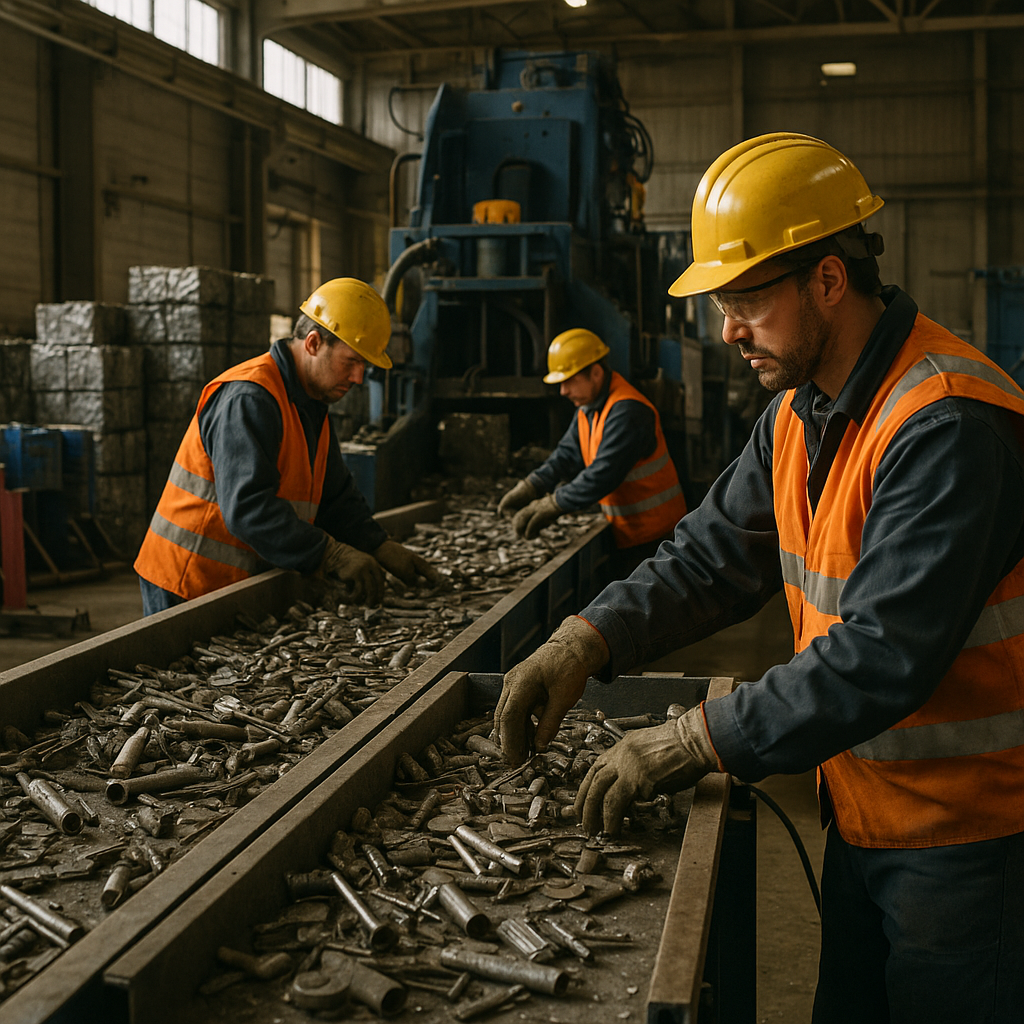
Commercial scrap metal recycling transforms discarded materials into valuable raw materials through a systematic process. The workflow manages thousands of tons of scrap daily at specialized industrial facilities.
Collection and Sorting
The journey begins when scrap arrives in large, unsorted loads. Heavy machinery like excavators and cranes position materials for sorting. Separation distinguishes ferrous metals from non-ferrous materials using magnetic systems. Advanced equipment utilizes visual identification, spectrometers and electrical currents to separate grades with precision, ensuring high-purity output streams that meet foundry specifications.
Processing and Melting
Shredding reduces scrap into manageable pieces using powerful rotating hammers. Large shredders can break down entire vehicle bodies in minutes. Baling compresses sorted scrap into dense packages for easier transport. The processed metal then enters furnaces suited to the metal type. Stanford University research demonstrates that recycling one ton of steel saves 642 kilowatt-hours of energy compared to producing new metal from ore.
Solidification and Distribution
Once purified, the molten metal is formed into bars, sheets or coils. These solidified materials are ready for use in new industrial applications, completing the loop. Steel mills use processed scrap as feedstock, while foundries incorporate recycled metals into automotive and construction castings.
Regulatory Compliance and Safety in Metal Recovery
Operating an industrial recycling program requires strict adherence to environmental and safety regulations. In 2026, businesses must ensure that their recycling practices comply with local and federal mandates to avoid liability and support corporate sustainability reporting.
Texas Metals Program and Theft Prevention
In Texas, recyclers must comply with the Texas Metals Program, which is designed to deter metal theft. This requires the collection of government-issued identification and vehicle information for regulated material transactions. Businesses and contractors should partner with registered Metal Recycling Entities (MREs) to ensure their scrap sales are legally documented and compliant with state law.
Hazardous Material Mitigation
Many metal items are attached to hazardous components, such as oils in engine blocks, refrigerants in HVAC units or lead in older electronics. Industrial recyclers must possess the necessary permits to handle these materials. Improper disposal of hazardous waste can result in significant EPA fines. A professional recycler ensures that all fluids and toxic elements are removed and managed according to environmental standards before the metal is processed.
Worker Safety and OSHA Standards
Processing heavy scrap metal involves high-risk activities. Facilities must adhere to OSHA standards for heavy machinery operation, noise control and respiratory protection. For organizations dropping off scrap, wearing proper personal protective equipment (PPE) and following site-specific safety protocols is mandatory to prevent workplace accidents.
What Are the Benefits of Recycling Metal?
The environmental and economic impacts of metal recycling are profound, serving as the backbone of modern industrial sustainability.
Environmental and Energy Conservation
Recycling aluminum saves 95 percent of the energy needed for primary production. Using recycled steel instead of virgin materials cuts carbon dioxide emissions by 58 percent. Recycling one ton of steel prevents 1.67 tons of CO2 from being released and saves 1.4 tons of iron ore and 0.8 tons of coal. These reductions are due to the elimination of energy-intensive mining and extraction processes.
| Metal Type | Energy Saved vs. Virgin Production | Environmental Impact |
|---|---|---|
| Aluminum | 95% | Reduces bauxite mining degradation |
| Copper | 85% | Lowers carbon footprint of wiring |
| Steel | 60-74% | Preserves iron ore and coal reserves |
| Zinc | 60% | Reduces smelting emissions |
Economic Impact and Job Creation
The metal recycling industry employs over one million workers in the United States and generates $236 billion annually in economic activity. It produces 36 times as many jobs as incineration and six times as many as landfill disposal. Manufacturers benefit from reduced production costs, as recycled metals are less expensive than virgin ore, allowing companies to generate revenue from their waste rather than paying disposal fees.
Conclusion: Start Your Metal Recycling Initiative

Recycling metal is an effective way to support sustainability while creating tangible economic value. By identifying common recyclable metals around your facility—such as industrial scrap, electronics and old equipment—you contribute to a circular economy that conserves resources and saves energy. The next step is to partner with a professional facility to transform your unwanted metal into a valuable commodity.
Beginning your recycling journey requires basic preparation to optimize financial returns. Whether sorting ferrous from non-ferrous materials or ensuring your scrap is clean, each step helps reduce global mining demand. To start your eco-friendly metal recycling initiative with expert guidance and competitive pricing, contact Okon Recycling at 214-717-4083.
Send Us a Message
Questions about what we do? Interested in commercial services? Let us know below and a member of our team will get back to you.