5901 Botham Jean Blvd, Dallas, TX 75215
Recycling Aluminum Swarf Briquettes: The Process, Equipment, and Value Recovery
December 3, 2025Every year, manufacturing facilities generate millions of tons of aluminum waste in the form of loose metal chips, shavings, and turnings. This voluminous material, known as swarf, creates storage challenges and transportation costs while offering limited recycling value in its raw form.
Aluminum swarf consists of the metal debris produced during machining operations like milling, turning, drilling, and sawing. These lightweight chips and curled shavings occupy substantial space in collection containers. They also retain cutting fluids and coolants that reduce their market value and complicate disposal.
Recycling aluminum swarf briquettes transforms this problematic waste stream into a valuable resource through compaction. The briquetting process compresses loose aluminum chips into dense, solid blocks that achieve up to 90% volume reduction. This compaction removes excess coolants, creates uniform shapes that melt efficiently, and produces material that commands higher prices in recycling markets. Secondary aluminum production requires significantly less energy than primary aluminum manufacturing, making briquetted swarf an essential component of sustainable metal processing and circular economy initiatives.
How Does the Aluminum Briquetting Process Work?
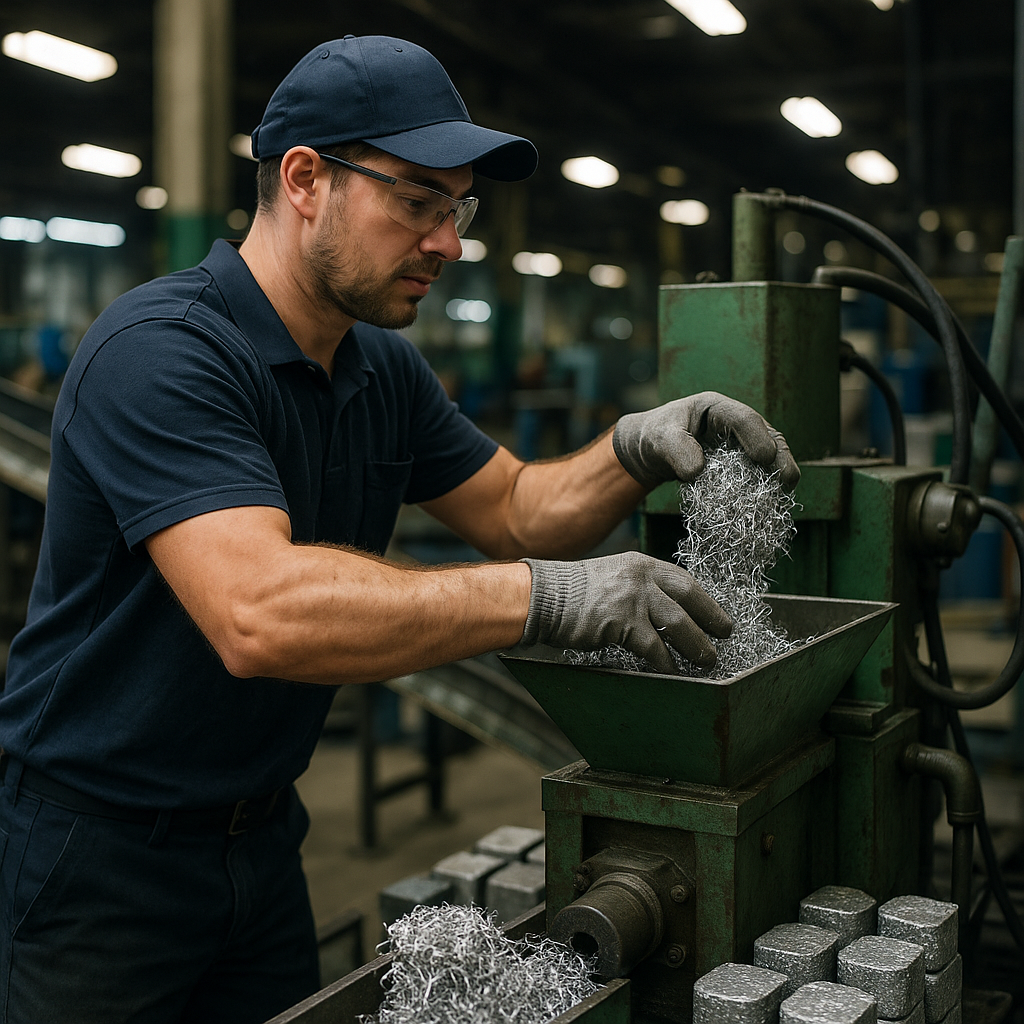
The aluminum briquetting process transforms loose metal chips and turnings from CNC metal processing into compact, high-density briquettes through a systematic compression operation. This recycling method begins at the source where aluminum waste accumulates from machining operations.
Collection represents the initial stage where aluminum chips, shavings, and turnings gather from milling, turning, drilling, and sawing operations. Manufacturing facilities typically store this voluminous swarf in containers or hoppers near machining centers. The material often contains cutting fluids, coolants, and oils that need separation during processing.
Material feed systems transport the collected aluminum chips into the briquetting equipment using screw conveyors or auger mechanisms. These feeding components move the loose material from storage containers into pre-charging chambers within the briquetting press. The feed system controls the volume and flow rate of material entering the compression zone.
Shredding operations may occur before compression to create uniform chip sizes from long, stringy turnings. This preprocessing step breaks apart tangled aluminum swarf into smaller, more manageable pieces. The shredding process improves material flow and ensures consistent briquette density throughout the compression cycle.
The main compression process utilizes powerful hydraulic press systems to apply tremendous pressure within a sealed chamber. Hydraulic rams compress the aluminum material under pressures exceeding 30,000 psi, forcing the metal chips into dense, cylindrical or rectangular shapes. This high-pressure compaction removes air pockets and creates structural integrity in the finished briquettes.
Coolant recovery occurs simultaneously during the compression phase as intense pressure squeezes lubricants and cutting fluids from the aluminum chips. The expelled fluids drain into collection tanks where they can be filtered and reused in machining operations. This fluid separation reduces the moisture content of briquettes to typically 2-4% residual levels.
Briquette formation finalizes when the compressed material reaches its target density and shape within the mold chamber. The hydraulic system maintains pressure long enough to ensure proper binding of the aluminum particles. Most systems produce briquettes ranging from 2 inches to 7 inches in diameter depending on the press specifications.
An ejection mechanism removes the finished briquettes from the compression chamber using hydraulic or pneumatic systems. The completed briquettes discharge onto conveyor systems or directly into collection containers. This automated ejection allows continuous operation without manual intervention between compression cycles.
What Types of Aluminum Waste Can Be Briquetted?
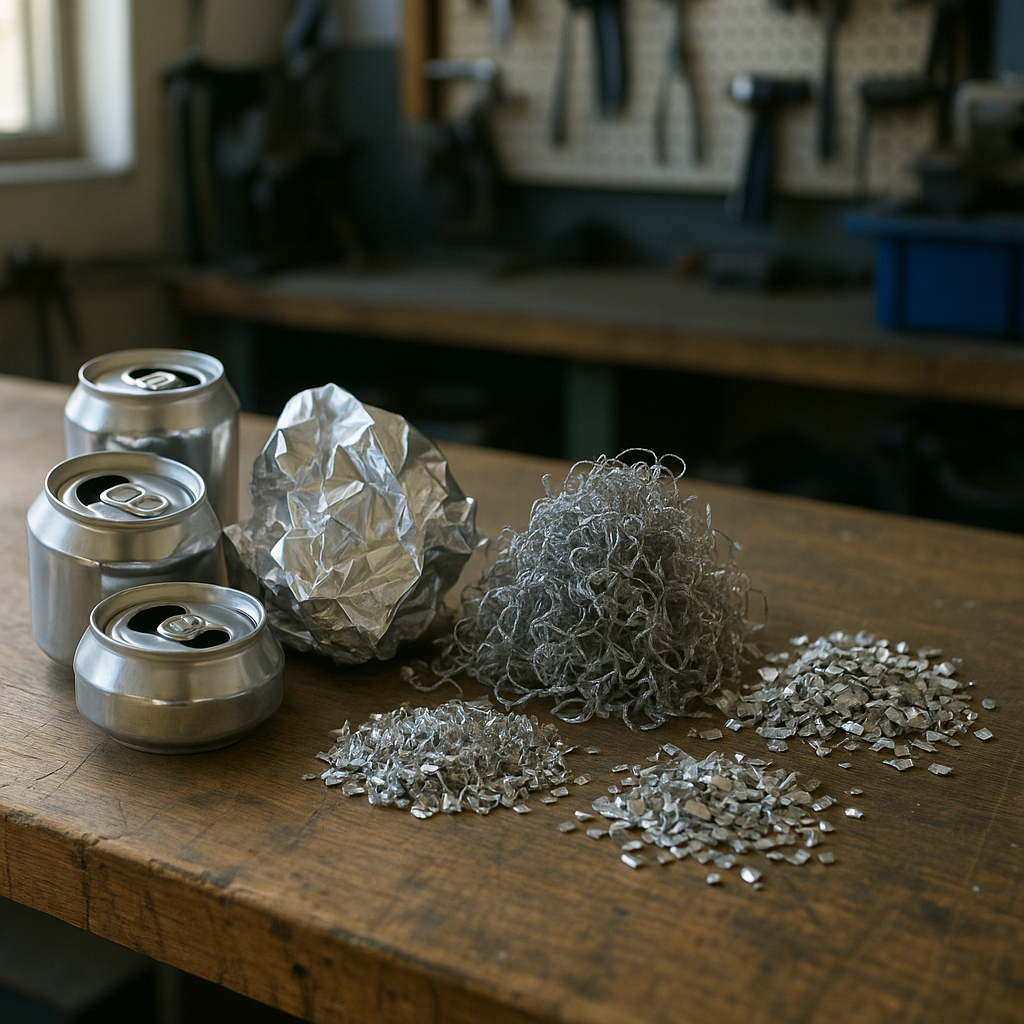
Production waste from metalworking operations represents the most suitable material for aluminum briquetting. CNC metal processing generates the highest volumes of recyclable aluminum chips through various machining operations.
The primary sources of production waste include:
- Milling waste from CNC milling operations
- Aluminum turnings from lathe work and turning processes
- Drilling chips and bore dust from hole-making operations
- Sawing waste from cutting and sectioning aluminum stock
- Grinding swarf and finishing debris
- Stamping and punching offcuts from sheet metal work
These machining processes create aluminum chips in various forms. Large spiral chips typically result from turning operations at moderate speeds. Small discontinuous chips form during brass-like machining with brittle cutting conditions.
Continuous chips emerge from high-deformation cutting processes. Flow chips develop during high-speed turning and drilling, creating characteristically long, curled formations that combine into voluminous wads.
Post-Consumer Aluminum Scrap Sources
Beyond fresh production scrap, briquetting systems can process various post-consumer aluminum waste streams. These materials require additional preparation through shredding before the briquetting process.
Common post-consumer sources suitable for briquetting include:
- Used beverage cans (UBCs) from recycling collection
- Aluminum packaging materials and food containers
- Foil waste from household and commercial applications
- Construction scrap including window frames and profiles
- Automotive components such as heat exchangers and body panels
- Wire and cable waste from electrical applications
- Cast aluminum parts from demolition and renovation projects
Manufacturing facilities in vehicle construction benefit significantly from briquetting their aluminum machining swarf. The automotive industry generates substantial volumes of aluminum chips from engine block machining, transmission case work, and suspension component manufacturing.
Packaging operations similarly produce considerable aluminum waste streams. Can manufacturing plants, foil production facilities, and container forming operations create clean aluminum scrap ideal for briquetting applications.
The aerospace sector generates high-value aluminum turnings from precision machining operations. These specialized alloys maintain their composition integrity through the briquetting process, making them particularly valuable for closed-loop recycling systems.
Construction and demolition activities provide another significant source of aluminum waste. Window replacement projects, building renovations, and infrastructure updates generate aluminum profiles, extrusions, and sheet materials that can be processed through shredding and briquetting equipment.
What Equipment Is Required for Briquetting?
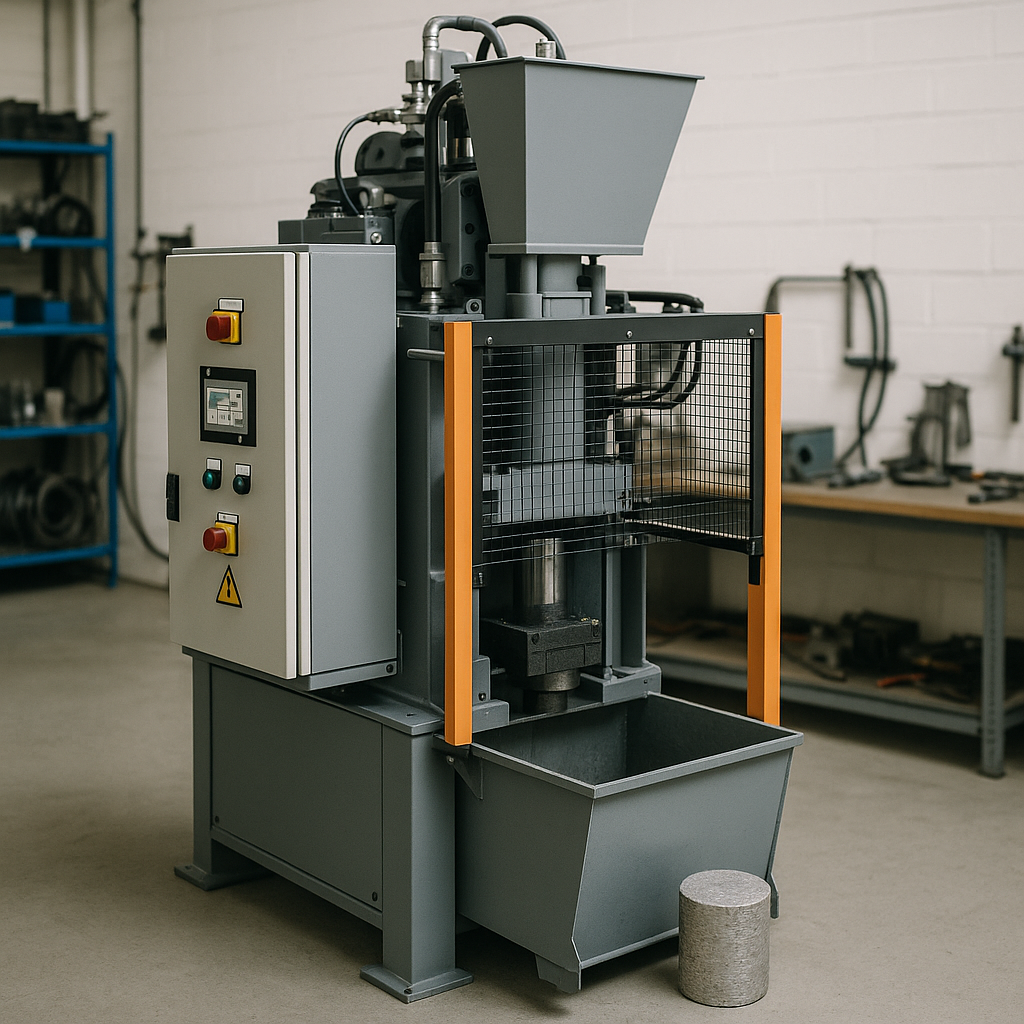
A briquetting press serves as the central component in any metal chip processing system. These hydraulic presses apply tremendous force to compress metal swarf into dense briquettes. The TH Industrial series from manufacturers like WEIMA offers specialized metal briquetting solutions with pressure capabilities ranging from 100 to 3,000 tons.
Different press models handle varying throughput requirements. Smaller operations benefit from compact units like the TH 600 M, which processes aluminum chips into 60mm diameter briquettes. Large-scale facilities often require high-capacity systems such as the TH 1500 M, capable of handling 300 to 2,800 kg per hour depending on material type.
Pre-Processing Equipment
Metal shredders play a crucial role in preparing materials for briquetting. Long, stringy metal chips or voluminous turnings must be reduced to uniform sizes before compression. Single-shaft shredders like the WLK 4 efficiently break down aluminum and steel chips into manageable pieces.
The WMS 800 and similar crushing systems handle particularly tough materials including Inconel superalloy chips. These shredders use powerful hydraulic motors and alternating direction crushing to process even the most challenging metal waste. They also feature automatic ejection systems that remove non-shreddable items like carbide bits or tooling fragments.
Some facilities combine crushing and processing in compact units. These integrated systems reduce footprint requirements while maintaining high processing efficiency. The combination approach works especially well for operations handling multiple metal types or varying chip sizes.
Auxiliary Support Systems
Fluid recovery equipment maximizes the value extraction from metal processing operations. Systems like the WEIMA TH 800 M include integrated drip trays and pumps to collect pressed-out coolants and emulsions. This equipment allows facilities to recover expensive cutting fluids for reuse, reducing both waste and operating costs.
Centrifuge systems provide additional fluid separation capabilities. These units spin metal turnings at high speeds to extract cooling lubricants before briquetting. The FC series centrifuges can recover up to 1.5% of the material weight in valuable fluids, depending on chip characteristics.
Material handling equipment ensures smooth workflow throughout the briquetting process. Chip conveyors transport materials from machining centers to processing equipment. Automated feeding systems maintain consistent material flow to briquetting presses, maximizing throughput and reducing labor requirements.
Conclusion: Boost Efficiency and Profit with Aluminum Briquetting

Recycling aluminum swarf into briquettes is a highly effective strategy for metalworking companies to manage waste efficiently. This process not only dramatically reduces storage and transport costs but also recovers valuable fluids and increases the scrap’s market value. By transforming voluminous, low-weight chips into dense, easy-to-handle briquettes, businesses can improve their recycling workflow, generate higher revenue, and contribute to a more sustainable circular economy.
Companies looking to optimize their scrap metal processes and unlock new revenue streams should evaluate how aluminum briquetting can transform their operations. Contact Okon Recycling at 214-717-4083 to discuss your recycling needs and discover how efficient metal recycling solutions can boost your bottom line.
Send Us a Message
Questions about what we do? Interested in commercial services? Let us know below and a member of our team will get back to you.