5901 Botham Jean Blvd, Dallas, TX 75215

Understanding What Determines the Price of Metal in Texas
January 7, 2026Scrap metal in your warehouse or job site is more than just debris; it holds substantial monetary value that fluctuates daily. The price of metal in Texas is a reflection of a global supply chain, local demand and material purity. In 2026, as industrial sectors prioritize the circular economy, understanding these valuation factors is essential for any business looking to transform waste into a profit center.
Several critical factors determine your material’s worth. The type of metal has the greatest impact. Copper consistently fetches the highest prices, with clean, high-grade materials often commanding a premium. Steel and iron, while lower in value per pound, yield significant returns when sold in the bulk volumes typical of demolition and manufacturing sectors. Metal grade and purity directly affect your earnings, as clean, sorted materials require less secondary processing and thus earn higher payouts.
What Are the Current Prices for Ferrous Metals Like Iron and Steel?

Current ferrous scrap metal prices vary significantly based on grade and preparation level. Cast Iron commands premium rates among ferrous materials, typically ranging from $60 to $130 per net ton depending on quality and regional demand. Prepared iron grades, which have been processed to specific size and purity standards, fetch higher rates in recent market data, while unprepared varieties trade at a discount due to the additional labor required for processing.
Steel scrap pricing relies on multiple unit systems that recycling facilities must clearly understand. Mixed Sheet Iron and light iron scrap generally trade at a lower price point, reflecting their lower density and processing requirements. When quoted per net ton, these materials can range significantly, showing how unit conversion and volume affect apparent value for industrial sellers.
Premium steel grades command higher prices due to their chemistry and cleanliness. Prepared Steel categories, such as #1 Heavy Melting scrap and #1 Busheling, reach the top end of the ferrous market. These prepared grades must meet specific sizing and cleanliness standards, justifying their premium pricing over unprocessed materials that arrive mixed with non-metallic debris.
| Material Category | Industrial Grade | Typical Payout Unit |
|---|---|---|
| Prepared Steel | #1 Heavy Melt | Per Gross Ton |
| Plate and Structural | P&S (Cut to length) | Per Gross Ton |
| Cast Iron | Clean Auto Cast | Per Net Ton |
| Light Iron | Sheet Metal / Appliances | Per Net Ton |
The pricing structure for ferrous metals reflects both material quality and mill demand. Texas iron prices often reflect transportation costs to major regional steel mills. Sorted and cleaned materials earn premium rates because they can be fed directly into electric arc furnaces with minimal secondary treatment.
How Much Are Valuable Non-Ferrous Metals Like Copper and Brass Worth?
Non-ferrous metals are the most valuable materials in the scrap metal industry. Copper consistently leads the market with the highest per-pound rates. In 2026, global demand for copper—driven by renewable energy infrastructure and vehicle electrification—has maintained high price floors for recyclers.
#1 Copper, which includes bare bright wire and clean tubing, typically commands premium pricing. This grade represents the cleanest copper, free from contamination, paint or solder. CU Light Copper, which includes roofing copper and flashings, trades at slightly lower rates but maintains strong value. The price difference reflects the additional processing required to achieve the extreme purity levels needed for new electrical applications.
Brass prices show more variation depending on the specific alloy and cleanliness. Clean Brass, including yellow brass fittings and hardware, typically achieves top dollar when it is free of steel attachments. Brass Shells from training ranges are also valuable, provided they are completely cleaned and free of live rounds or residue. Plumbing fixtures and machine shop cutoffs fall into the Yellow Brass classification, trading at competitive rates depending on the presence of solder or chrome plating.
Market Volatility and Commodity Tracking
Volatility affects non-ferrous metal prices daily. Copper prices can fluctuate based on global supply chains, mining operations and industrial demand. Professional recycling partners monitor commodity markets closely to provide accurate, up-to-the-minute pricing to industrial customers. Proper sorting and preparation maximize returns for both individual sellers and commercial recycling operations.
Advanced Industrial Sorting: Maximizing Material Purity
In the modern recycling landscape, simply “guessing” the type of metal is no longer sufficient. Professional facilities utilize advanced technology to ensure that industrial scrap is graded with scientific accuracy, ensuring that sellers are paid the true value of their specific alloys.
X-Ray Fluorescence (XRF) Analysis
When an industrial facility sends a load of “mixed stainless steel” or “high-temp alloys,” professional recyclers use X-Ray Fluorescence (XRF) analyzers. These handheld devices use x-rays to excite the atoms in a metal sample, which then emit characteristic rays that reveal the exact chemical composition of the alloy in seconds. This ensures that a high-value material like 316 Stainless Steel is not underpaid as common 304 Stainless.
Eddy Current and Optical Sorting
To process massive volumes of mixed non-ferrous scrap, automated systems use Eddy Current Separators. These machines use alternating magnetic fields to literally “jump” non-magnetic metals like aluminum and copper away from non-metallic waste. Furthermore, optical sorters use high-speed cameras and AI to identify and separate metals by color and shape, achieving purity levels that manual sorting cannot reach. This technology is vital for high-volume manufacturing plants that generate mixed waste streams.
Going Rates for Aluminum and Stainless Steel Scrap
Aluminum and stainless steel are among the most consistently demanded materials in the recycling market. Used extensively in aerospace, automotive and medical manufacturing, these metals provide a reliable revenue stream for Texas businesses.
Aluminum Scrap Grading
Aluminum Cans (UBC) remain highly sought after due to their consistent composition. However, for industrial users, clean aluminum extrusions and automotive rims often achieve higher prices than beverage containers. In 2026, premium clean alloys such as 6063 extrusions command significant market interest. Processing facilities favor materials that require minimal preparation; painted aluminum or items with steel screws receive reduced pricing due to “melt loss” and cleaning requirements.
Stainless Steel and Magnetic Properties
Stainless steel pricing depends heavily on the specific grade and magnetic properties of the material. Non-magnetic grades, such as the 300-series, generally command higher prices than magnetic (400-series) varieties. 316 solids represent a premium stainless steel because of their molybdenum content, making them highly corrosion-resistant and valuable. “Dirty” stainless materials—those with attachments or heavy grease—receive lower compensation to account for the labor required to prepare the material for the furnace.
| Material | Industrial Grade | Market Rate Estimate |
|---|---|---|
| Copper | #1 Bare Bright Wire | $4.50+ / lb |
| Brass | Clean Yellow Brass | $2.50+ / lb |
| Aluminum | 6063 Bare Extrusions | $1.00+ / lb |
| Stainless Steel | 316 Clean Solids | $0.75+ / lb |
| Lead | Clean Soft Lead | $0.50+ / lb |
Industrial Best Practices: Managing Facility Scrap for Maximum ROI
To achieve the highest returns on scrap metal, industrial facility managers must move beyond a “toss-it-in-the-bin” mentality. Implementing a structured scrap management program is the single most effective way to boost material revenue.
Source Segregation and Staff Training
The “Golden Rule” of scrap is to never mix metals. When high-value copper is mixed with low-value steel, the entire load is often graded at the lowest value. Facilities should implement color-coded bin systems and clear labeling on the shop floor. Training employees to recognize and separate “clips,” “turnings” and “solids” ensures that the facility captures the maximum grade for its specific manufacturing waste.
The Impact of “Boneyard” Audits
Many Texas facilities have a “boneyard”—an outdoor area where old machinery and structural steel accumulate. Professional recycling partners can conduct a Waste Stream Audit to evaluate these assets. Often, obsolete chillers, boilers and conveyor systems contain hidden assets like heavy copper coils and aluminum heat exchangers. Dismantling these units rather than selling them as “mixed iron” can often triple the recovery value.
Scheduled Pickups and Logistics
Operational efficiency is improved when recycling is integrated into the facility’s workflow. Utilizing roll-off container services for bulk steel and smaller forklift-ready hoppers for high-value alloys keeps the shop floor clean and safe. This organized approach reduces the labor costs associated with manual sorting and minimizes the risk of worker injury from cluttered workspaces.
Other Scrap Materials and Specialized Items in Texas
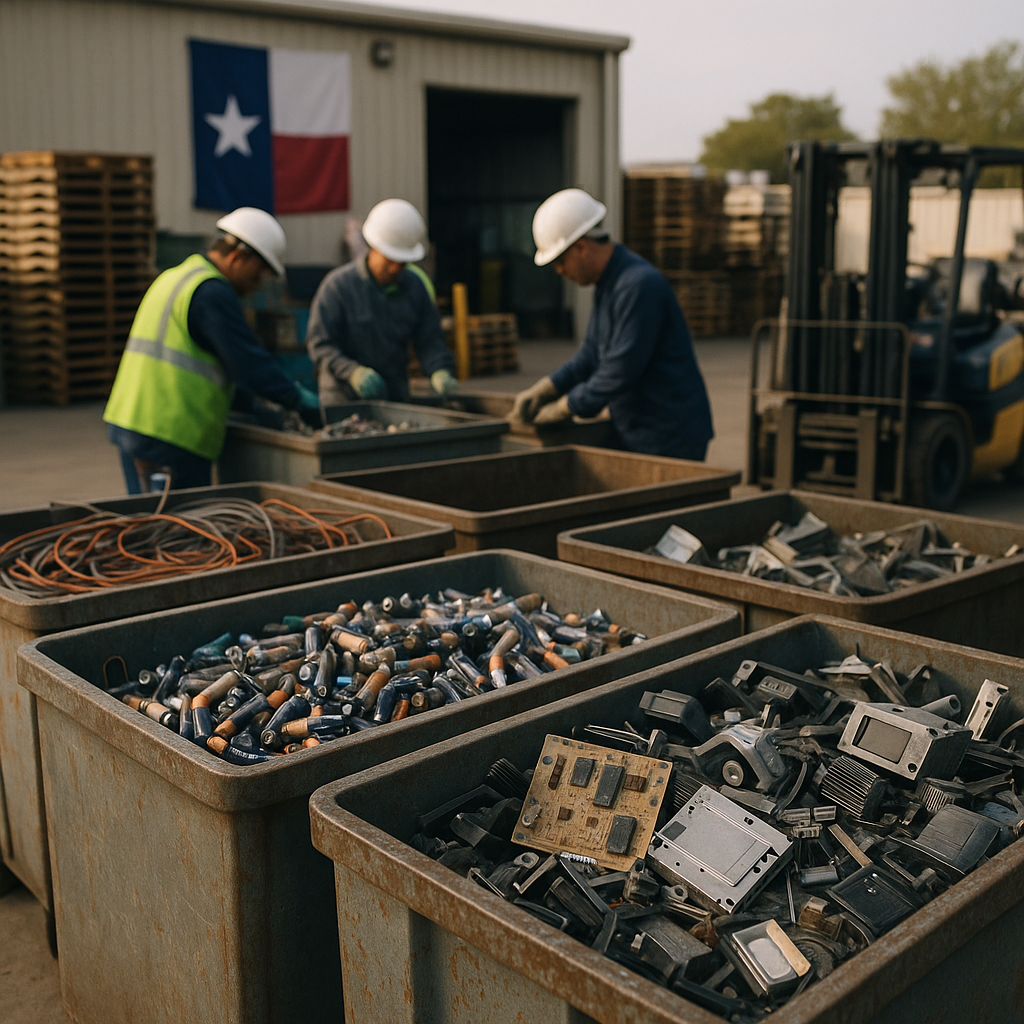
Lead-based materials offer significant revenue opportunities for automotive and industrial sectors. Car batteries are particularly valuable for auto shops, as are lead wheel weights removed during tire changes. These materials quickly accumulate and should be managed in leak-proof containers to comply with environmental standards.
Electric motor recycling provides consistent returns across various sizes. Standard motors from appliances and HVAC units contain significant copper windings. Specialized motors such as alternators and starters command higher prices due to their concentrated precious metal and copper content. Automotive repair and HVAC maintenance operations are the primary sources for these profitable materials.
Insulated wire value varies based on the copper recovery percentage. High-grade wire with minimal insulation can yield significant returns, while lower-grade wire remains valuable for high-volume sellers. Electronics scrap (E-waste) has also emerged as a high-value category. Hard drives with circuit boards intact and memory chips are prized for their precious metal content. Computer towers and servers from data center upgrades provide steady income when processed through certified facilities.
Maximizing Your Scrap Metal Payout in Texas
To secure the best price for your metal in Texas, stay informed about the daily fluctuations in the commodity markets. Professional facilities in regions like North Texas provide live pricing data to help businesses make data-driven decisions. Key factors influencing scrap value include material type, quality grade and current demand—with copper generally leading the market, followed by aluminum, brass and steel.
Success in maximizing payouts comes from building a relationship with a reputable recycling facility. Monitor market conditions regularly, as prices can change due to global supply and demand. By properly segregating your materials and partnering with established industrial recycling centers, you ensure the highest returns on your scrap metal investments.
For professional recycling services and competitive pricing, contact Okon Recycling at 214-717-4083.
Send Us a Message
Questions about what we do? Interested in commercial services? Let us know below and a member of our team will get back to you.