5901 Botham Jean Blvd, Dallas, TX 75215
What You Should Know About Metal Recycling in Spring Branch West
December 15, 2025What options are available for metal recovery in the rapidly growing Spring Branch West community? The area offers comprehensive recycling solutions that cater to both residential homeowners and industrial businesses looking to responsibly dispose of scrap metal materials. These services play a crucial role in supporting the circular economy while providing financial returns for recoverable materials.
Local facilities operate in Northwest Houston and specifically serve Spring Branch West and nearby communities. These established recovery centers process various ferrous and non-ferrous metals, including steel, aluminum, copper, and brass. They use state-certified scales and transparent pricing to ensure accurate assessments of materials brought for recovery.
The material recovery infrastructure in Spring Branch West meets diverse needs through custom scrap metal programs and container service options. Industrial clients benefit from roll-off containers, scheduled pickups, and volume-based pricing structures. Residential recyclers can drop off materials ranging from household appliances to leftover construction metals. This comprehensive approach ensures that both small-scale home projects and large commercial operations have access to professional metal recovery services.
Which Types of Metal Are Recyclable?
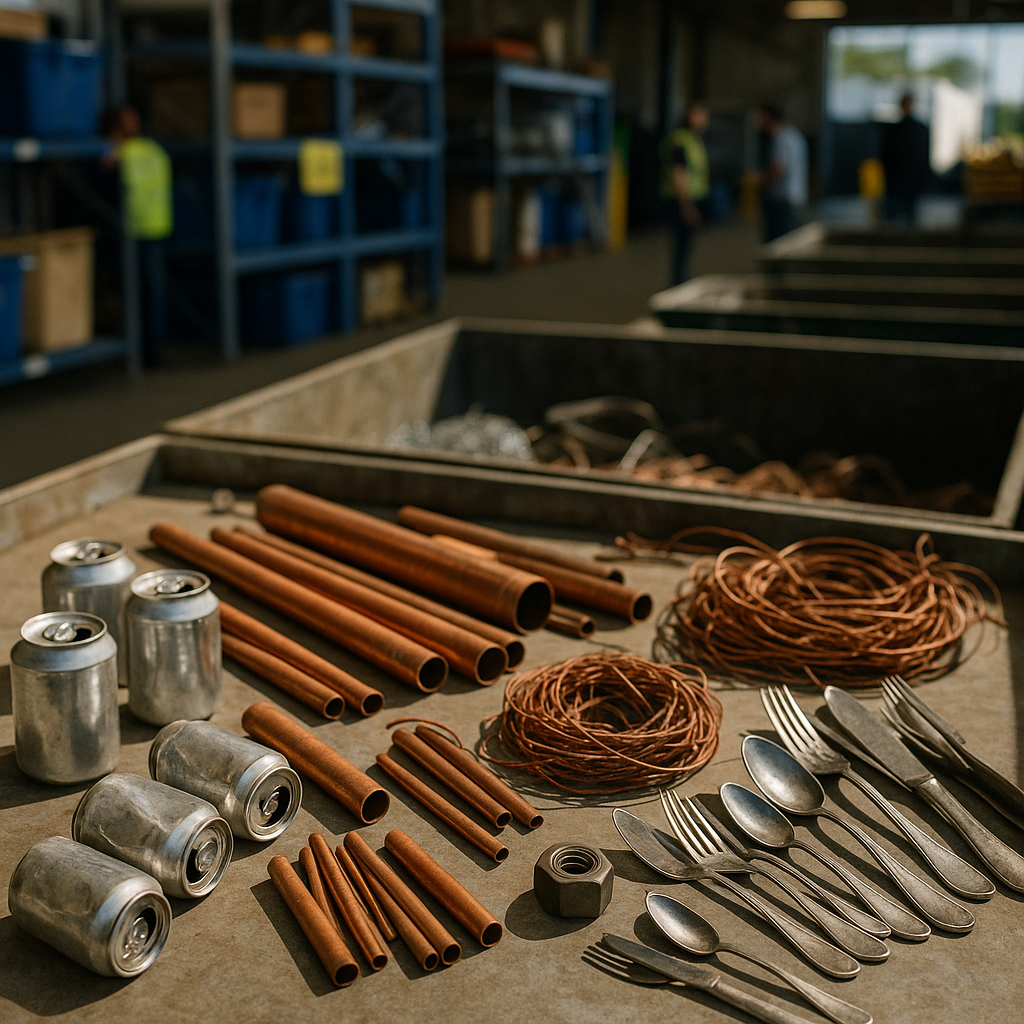
Metal recovery facilities accept a wide range of materials, spanning both ferrous and non-ferrous categories. Understanding these classifications helps businesses and organizations maximize recovery value while ensuring proper material management.
Ferrous Metals
Ferrous metals contain iron and are magnetic. These materials form the foundation of many industrial and construction applications. Common ferrous metals recovered include stainless steel, carbon steel, mild steel, and cast iron.
Iron, in its various forms, represents the most recycled material globally. According to the Institute of Scrap Recycling Industries, the United States processes 66 million metric tons of ferrous scrap annually. This considerable volume demonstrates the critical role these materials play in the circular economy.
Wrought iron and sheet iron are also part of this category, originating often from demolition projects, industrial equipment, and aging infrastructure. Their magnetic properties make sorting straightforward during processing.
Non-Ferrous Metals
Non-ferrous metals lack iron content and usually command higher market values due to their specialized properties. These materials resist corrosion and offer superior conductivity for electrical and thermal applications.
Aluminum stands out as one of the most energy-efficient metals to recycle. Processing recovered aluminum requires only 5% of the energy needed for primary production, making it particularly valuable for sustainability programs.
Copper recovery offers significant resource conservation benefits, maintaining its properties through infinite recycling cycles. Approximately 32% of annual copper usage comes from recovered sources. Brass, an alloy of copper and zinc, shares similar recyclability characteristics.
Lead recovery requires specialized handling due to safety considerations, but lead-acid batteries achieve a 99.3% recovery rate, making them the most recycled consumer product in the United States. Zinc, tin, and titanium are other common non-ferrous metals processed by recovery facilities.
Specialized and Advanced Metals
Modern recovery operations cover increasingly sophisticated materials. Nickel alloys used in aerospace and medical applications retain their value through proper recovery processes, often necessitating specialized sorting and processing techniques.
Cobalt alloys present unique opportunities for resource recovery, appearing in industrial machinery, cutting tools, and advanced manufacturing equipment. Their scarcity makes recovery particularly important for supply chain security.
Tungsten carbide represents another specialized category, originating from machining tools, mining equipment, and wear-resistant components. Recovery requires specific processing capabilities but yields significant value.
Comprehensive list of recoverable metal types by category
| Category | Examples | Primary Source |
|---|---|---|
| Ferrous Metals | Steel, Cast Iron, Stainless Steel | Construction, Industrial Machinery, Appliances |
| Non-Ferrous Metals | Aluminum, Copper, Brass, Lead, Zinc | Electrical Wiring, Plumbing, Automotive Components, HVAC |
| Specialized Metals | Nickel Alloys, Cobalt, Tungsten Carbide | Aerospace Parts, Cutting Tools, Industrial Turbines |
| Precious/Exotic Metals | Gold, Silver, Platinum, Titanium | Electronics, Jewelry, Catalytic Converters, Medical Devices |
Precious and Exotic Metals
Material recovery facilities also process precious metals like gold, silver, and platinum, often found in electronic components, jewelry, and industrial catalysts. Specialized recovery techniques extract maximum value from these high-worth materials.
Exotic metals such as bismuth, beryllium, and zirconium require careful handling and processing, serving niche applications in electronics, nuclear industries, and specialized manufacturing. Their rarity makes recovery economically attractive despite processing complexity.
Mercury presents unique challenges due to its toxicity, but proper recovery from thermostats, switches, and industrial equipment prevents environmental contamination while reclaiming valuable material.
Material Recovery Services for Businesses
Businesses across industries generate substantial amounts of scrap metal that require professional handling and removal. Commercial recovery services offer comprehensive solutions designed to meet the specific operational needs of industrial facilities, manufacturing plants, and commercial properties.
Custom recovery programs form the foundation of business-focused metal recovery services. These programs start with on-site facility assessments, where recovery professionals evaluate current material streams, identify optimization opportunities, and develop tailored collection schedules. The assessment process typically includes analyzing the types and volumes of scrap metal generated, reviewing existing storage and handling procedures, and determining the most efficient logistics approach for each location.
Container services are a core component of commercial scrap metal recovery. Roll-off boxes in 20, 30, and 40-yard capacities accommodate different volume requirements and space constraints. Self-dumping hoppers and forklift-compatible containers offer additional flexibility for facilities with specific material handling equipment. These containers can be strategically placed throughout production floors and industrial sites to streamline the collection process.
Professional pickup and hauling services ensure minimal disruption to business operations. Reputable providers offer same-day or 24-hour pickup scheduling to prevent scrap accumulation from interfering with production workflows. Flatbed trucks, end dump trailers, and specialized hauling equipment handle various load sizes and material types, from lightweight aluminum components to heavy steel assemblies.
Scrap metal assessment services provide businesses with accurate valuations and market-based pricing for their recoverable materials. Professional recovery facilities employ trained specialists who can identify different metal grades, assess material quality, and offer transparent pricing based on current market conditions. This service helps businesses maximize their financial return from scrap while ensuring proper material classification.
Advanced logistics and transportation services extend beyond basic pickup operations. Some providers offer comprehensive scrap management programs that include material tracking, compliance documentation, and chain-of-custody procedures. These services are especially valuable for businesses dealing with obsolete equipment, surplus inventory, or materials requiring special handling protocols.
Recovery Options for Individuals and Home Recyclers

Most scrap metal centers welcome individual customers, often referred to as home recyclers. These facilities acknowledge that residential recovery contributes significantly to recoverable materials. Typically, you can bring common household appliances like washers, dryers, refrigerators, stoves, and air conditioning units to these locations for cash payments.
The process for individual customers usually involves driving your materials to a scrap metal center and using their state-certified scales for accurate weighing. Many facilities offer dedicated entrances or processing areas specifically for smaller loads and walk-in material. Reputable local facilities note that household items containing metal can be recovered for cash, including car batteries, window frames, brass fixtures, and outdoor metal furniture.
However, not all recovery facilities accept residential materials. Some centers exclusively serve industrial or commercial customers due to volume requirements or operational constraints. These business-focused facilities often require minimum quantities or scheduled pickups that make individual transactions impractical. Before making a trip, contact the facility directly to confirm they accept walk-in material from home recyclers.
Individual customers should prepare for the recovery process by separating different metal types and removing non-metal components when possible. Bring a valid government-issued photo ID, as most facilities require this for all transactions. The payment process typically involves weighing your materials on certified scales, with prices based on current market rates for each metal type.
Appliance recovery requires special consideration for home recyclers. Items like refrigerators, freezers, and air conditioners contain refrigerants that need proper removal by certified technicians. Many scrap metal centers provide this service at no extra cost, ensuring environmental compliance while allowing you to receive payment for the metal components.
Your Next Steps for Metal Recovery
Metal recovery provides significant benefits for both large companies and individuals aiming to responsibly manage their scrap materials. To maximize the value of your scrap materials, choose a facility that emphasizes transparent weighing practices and exceptional customer service. Seek recovery specialists who use certified scales, offer transparent pricing based on current market rates, and possess the necessary certifications for handling various metal types. These practices help ensure you receive fair compensation while contributing to the conservation of natural resources by reusing materials that might otherwise end up in landfills.
Interested in turning your metal waste into value while promoting environmental sustainability? Contact Okon Recycling at 214-717-4083 to discuss your recovery needs, obtain current pricing information, or schedule a convenient pickup service for your materials.
Send Us a Message
Questions about what we do? Interested in commercial services? Let us know below and a member of our team will get back to you.