5901 Botham Jean Blvd, Dallas, TX 75215

What is Heavy Melting Steel (HMS) and How Are Prices Trending?
December 10, 2025Heavy melt steel prices have seen significant fluctuations throughout 2024, presenting both opportunities and challenges for recyclers and steel manufacturers globally. Heavy Melting Steel (HMS) is a vital category of recyclable ferrous metal consisting mainly of iron and steel scrap. This classification includes two primary grades: HMS 1 and HMS 2, which vary in density and composition as per industry standards.
HMS is an essential raw material for electric arc furnaces and induction furnaces used in steel manufacturing. Steel producers depend significantly on this scrap metal to produce new steel products for construction, automotive, and various industrial applications. The material’s high density and relatively low impurity levels make it particularly valuable for sustainable steel production processes. Electric arc furnaces can utilize up to 100% recycled content, making HMS a cornerstone of the circular economy in steel manufacturing.
What Were the Key HMS Price Movements in 2024 and 2025?
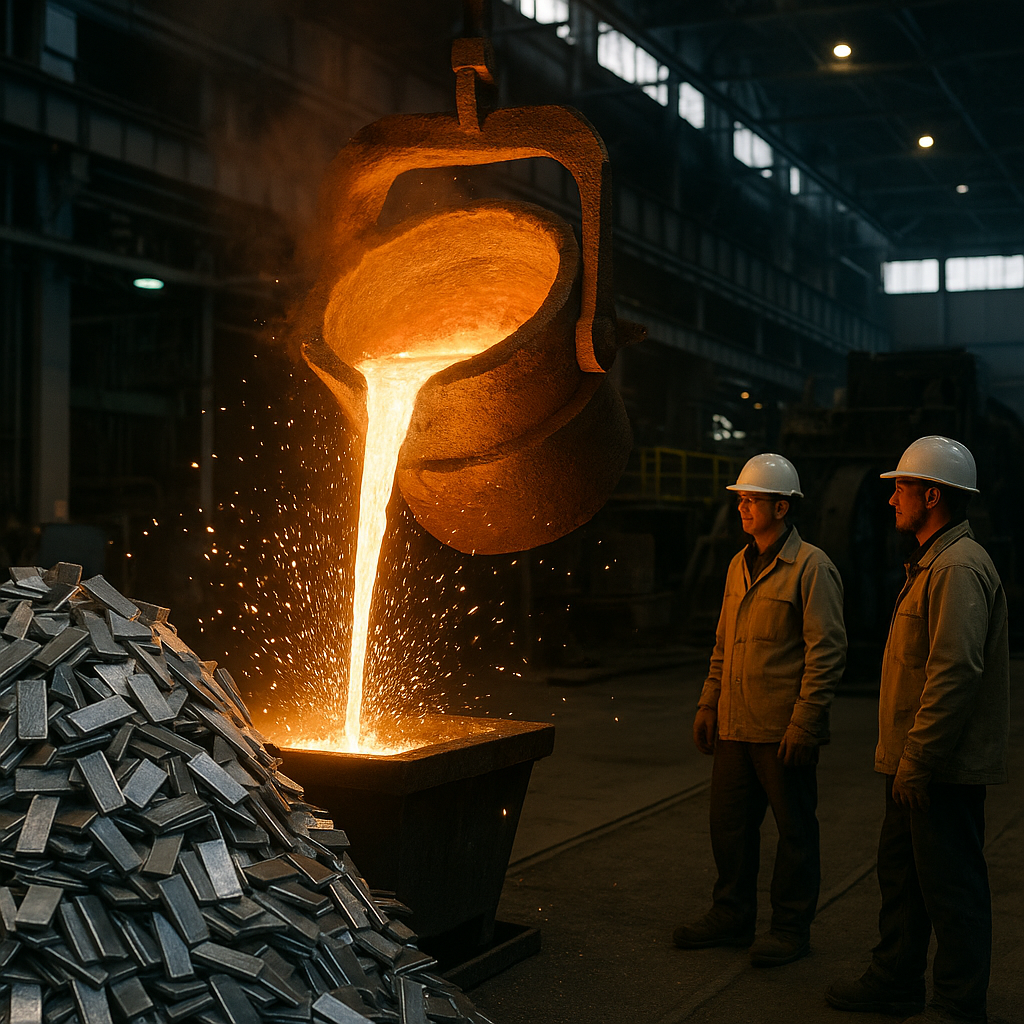
Heavy Melting Steel prices experienced significant volatility throughout 2024 and into 2025, influenced by complex global market forces. The year began with optimism but soon faced consistent downward pressure over several quarters.
In the first quarter of 2024, HMS prices peaked, rising 7.89% to $370.93 per metric ton. This increase was driven by strong global steel demand and notable supply constraints, reflecting vigorous industrial activity and limited scrap availability in key markets.
The Sustained Decline Period
After the Q1 surge, HMS prices underwent a prolonged decline continuing for six consecutive quarters. The steepest drop occurred in the second quarter of 2024, with a 5.66% decrease, marking the start of a market correction. Supply chain disruptions and changing demand patterns began to affect pricing stability across major trading hubs.
Market sentiment worsened during Q3 2024, with prices falling another 2.63%. The fourth quarter saw a further significant decline of 5.41%, concluding 2024 with substantial losses from the peak. These quarterly decreases were due to weakening construction activity and reduced steel production in key consuming regions.
2025 Market Pressures Continue
The downward trend carried into 2025, despite hopes for recovery. The first quarter saw a 1.43% decline, while Q2 2025 saw prices fall by 1.65%. These continued decreases underscored ongoing challenges in global steel markets and persistent oversupply issues.
Geopolitical tensions significantly influenced HMS pricing during this period. Trade disputes and changing international relationships created uncertainty in traditional supply routes. European markets, particularly FOB Rotterdam pricing, faced volatility as exporters adjusted to evolving trade policies and tariff structures.
Underlying Market Drivers
Several factors drove these price movements beyond typical market cycles. Weakening global steel demand resulted from reduced infrastructure spending and slower industrial growth in major economies. Challenges in the construction sector in key markets decreased the need for new steel production, directly impacting scrap demand.
Supply chain disruptions added pricing pressure throughout the period. Transportation costs varied significantly, affecting the economics of scrap movement between regions. Currency fluctuations also affected international trading patterns, especially for FOB Rotterdam shipments to Asian markets.
Tariff changes implemented during 2024 and 2025 fundamentally altered traditional trading relationships. New trade policies compelled scrap processors to reassess long-term supply contracts and pricing strategies, adding uncertainty to an already volatile market environment.
How did HMS Prices Differ Across Key Global Markets?
Heavy melting scrap markets across major global regions experienced notable price pressures during Q3 2025, although each market faced distinct challenges driving regional scrap prices downward. The United States, Netherlands, and Turkey all recorded significant declines, but the underlying factors varied considerably between these key markets.
Understanding these regional variations is crucial for scrap processors and steel mills involved in raw material sourcing. Different supply-demand dynamics, inventory levels, and competitive pressures shaped pricing throughout the quarter.
| Region | Price Change (%) | Key Factors |
|---|---|---|
| United States | -1.78% | Softer demand from domestic steel producers |
| Netherlands | -2.25% | High inventory levels, weak demand |
| Turkey | -2.27% | Weak domestic steel demand, competition from cheaper billet imports |
United States Market Performance
The US steel mills market experienced a 1.78% price decrease during Q3 2025 compared to the previous quarter. This decline was primarily due to softer demand conditions among domestic steel producers, who exhibited cautious buying behavior.
Steel mills tightened their margins as they dealt with stable to slightly oversupplied scrap availability. The cautious approach reflected broader market uncertainties, with limited export opportunities further constraining price support for domestic scrap materials.
Construction activity showed signs of slowing, directly impacting steel demand from key end-use sectors. This slowdown reduced the need for new steel production, which subsequently decreased the mills’ appetite for heavy melting scrap feedstock.
Netherlands Export Market Dynamics
The Netherlands experienced more severe pressure, with prices declining 2.25% during Q3 2025. Weak demand from the steel sector created challenging conditions for exporters who traditionally serve international markets.
High inventory levels became a significant burden for scrap dealers and processors throughout the region, resulting from continued high collection rates. This oversupply situation weighed heavily on pricing.
Limited export volumes, particularly to Turkey, compounded market challenges. According to PriceWatch, Dutch merchants play a major role in international scrap exports, making them particularly vulnerable to declining global demand for heavy melting scrap.
Turkey’s Domestic Steel Pressures
Weak steel demand in Turkey led to a 2.27% decline in Q3 2025, reflecting the country’s specific market challenges. This reduced appetite for scrap materials among Turkish steel producers.
Competition from cheaper billet imports added more pressure, providing steel producers with cost-effective options that reduced their reliance on traditional scrap metal inputs.
The combination of decreased local construction activity and global economic uncertainty created a challenging environment for Turkish scrap processors. Currency fluctuations and external market factors further complicated pricing dynamics, contributing to the overall downward pressure on regional scrap prices.
What are the Primary Factors Influencing HMS Prices?
HMS scrap prices respond to various interconnected market forces. Understanding these factors helps recycling facilities and steel producers anticipate price changes and make informed procurement decisions.
Supply and Demand Dynamics
The basic economics of supply and demand primarily influence HMS price fluctuations. When steel production increases through electric arc furnace (EAF) operations, demand for HMS rises significantly. A construction industry boom adds pressure as demolition projects generate more scrap, and infrastructure development demands more finished steel.
Seasonal patterns also affect this balance. During spring and summer, HMS prices typically rise as construction activity peaks. In contrast, winter months often see price declines when industrial activity slows, and scrap collection becomes more challenging.
Global Steel Market Trends
HMS prices closely mirror broader steel market conditions. As prices for finished steel increase, scrap becomes more valuable as a raw material. Steel mills adjust their scrap purchasing based on production schedules and order backlogs.
Major steel-producing regions such as China, Turkey, and the European Union create ripple effects across global HMS markets. Changes in production in these areas can alter international demand patterns and influence regional pricing structures.
Energy and Processing Costs
Transportation and processing expenses directly impact HMS pricing. Rising fuel costs increase freight rates for moving scrap from collection points to processing facilities. Energy-intensive operations like shredding and sorting become more costly when utility prices rise.
Processing facilities must consider these logistics costs in their pricing models. Remote locations face higher transportation expenses, which can significantly affect local HMS rates.
Geopolitical and Regulatory Factors
Government policies create substantial price volatility in HMS markets. The following regulatory elements influence pricing:
- Import and export restrictions on scrap materials
- Tariffs affecting international trade flows
- Environmental regulations governing scrap collection and processing
- Trade sanctions limiting market access to certain countries
Currency fluctuations amplify these effects. When the US dollar strengthens, HMS becomes more expensive for international buyers. Exchange rate volatility can lead to rapid price adjustments as markets react to monetary policy changes.
Market Speculation and Economic Indicators
Financial markets increasingly influence HMS prices through commodity trading activities. Investors treating metals as portfolio assets can cause short-term price swings that don’t reflect underlying supply and demand fundamentals.
Economic indicators like manufacturing indices and construction spending forecasts help predict HMS price movements. Steel industry analysts monitor these metrics to anticipate demand shifts before they fully materialize in the market.
Understanding these interconnected factors enables better decision-making in HMS procurement and sales. Market participants who track multiple price drivers simultaneously often achieve better results than those focusing on single variables. The complexity of modern scrap markets requires comprehensive analysis for successful navigation.
Which Major Historical Events Have Impacted the HMS Market?
The heavy melting scrap (HMS) market operates within a connected global economy where significant events create ripple effects across supply chains and pricing structures. Understanding these historical disruptions helps us anticipate market movements and prepare for similar challenges in waste management and materials recovery operations.
COVID-19 Pandemic Disruptions (2020-2021)
The COVID-19 pandemic led to unprecedented disruptions in scrap collection and processing systems worldwide. Steel mills and recycling facilities faced widespread shutdowns during the initial outbreak, significantly reducing the industry’s ability to collect and process heavy melting scrap materials.
This supply-side constraint had an immediate impact on HMS availability. As documented by the U.S. Bureau of Labor Statistics, steel production dropped 16.9% during the pandemic’s initial phase, directly affecting scrap generation from manufacturing processes. The automobile industry, which typically generates substantial steel scrap, saw manufacturers temporarily halt production.
However, as economies began recovering in late 2020 and early 2021, demand returned faster than supply chains could respond. This mismatch drove HMS prices sharply upward as steel producers competed for limited scrap materials. The recovery phase demonstrated how quickly market dynamics can shift when global events disrupt normal collection and sorting operations.
Post-Pandemic Steel Demand Recovery (2021-2022)
The post-pandemic recovery period marked one of the most dramatic price escalations in HMS market history. Infrastructure stimulus programs rolled out across major economies, particularly in the United States, China, and India, created unprecedented demand for steel production.
Electric arc furnace steelmaking, which relies heavily on HMS as a primary raw material, experienced surging demand during this period. Construction projects resumed at accelerated paces, and manufacturing sectors ramped up production to meet pent-up consumer demand. This recovery increased competition among steel producers for available scrap materials.
The price volatility during this period highlighted the critical role HMS plays in global steel production. As recycling providers, we witnessed firsthand how geographically distant infrastructure projects and policy decisions could immediately impact local scrap pricing and availability.
Geopolitical Tensions and Export Disruptions (2022-2023)
The Russia-Ukraine conflict that began in February 2022 introduced a new dimension of supply chain disruption to the HMS market. Russia and Ukraine combined represented steel output equivalent to the world’s third-largest producer, making their conflict’s impact on global scrap supplies inevitable.
Export bans and trade restrictions affected not only these key suppliers but also created broader market uncertainty. European Union and United States sanctions against Russian steel products forced supply chain rerouting and created regional supply shortages. Ukrainian steel facilities faced direct physical damage and operational shutdowns due to military actions.
These geopolitical tensions demonstrated how quickly political events can transform global scrap trade patterns. Supply chains that had operated reliably for decades suddenly required reconfiguration, affecting pricing stability and material availability across international markets.
The HMS market’s experience during these major historical events reveals its sensitivity to global economic and political developments. Each disruption taught valuable lessons about supply chain resilience and the importance of diversified sourcing strategies in materials recovery operations. These events continue to influence current market dynamics and shape our approach to sustainable scrap metal processing.
Conclusion: Navigating the HMS Steel Market

The HMS market’s inherent volatility requires proactive risk management and strategic partnerships with experienced recycling providers who comprehend market complexities. As geopolitical events, energy price fluctuations, and regulatory changes continue to impact steel recycling markets, organizations must collaborate with knowledgeable partners to navigate these challenges effectively.
For comprehensive scrap metal recycling solutions tailored to current market conditions, contact Okon Recycling at 214-717-4083.
Send Us a Message
Questions about what we do? Interested in commercial services? Let us know below and a member of our team will get back to you.