5901 Botham Jean Blvd, Dallas, TX 75215
Buyers of Aluminum Dross in Texas: A Guide to Zero-Landfill Recovery and ROI
December 22, 2025Texas is undergoing a transformation in aluminum dross processing capabilities. A new specialized facility is set to innovate aluminum waste recovery in Mount Pleasant. This zero-landfill aluminum recovery facility is the first of its kind in North America, designed specifically to process aluminum dross and scrap materials.
The industry landscape now includes both innovative newcomers and established specialists. Modern facilities focus exclusively on converting white dross, black dross, and aluminum scrap into high-grade secondary aluminum through advanced tolling processes. These regional operations process 140,000 metric tons annually, creating significant capacity for aluminum waste materials previously destined for landfills.
Alongside this emerging technology leadership, established material recovery specialists continue serving the Texas aluminum recycling market. These facilities provide complementary services for various aluminum scrap types. The combination creates a more robust infrastructure for aluminum waste recovery across the state, offering producers multiple pathways for responsible material management.
What Is Aluminum Dross and Why Is Recovery Critical?
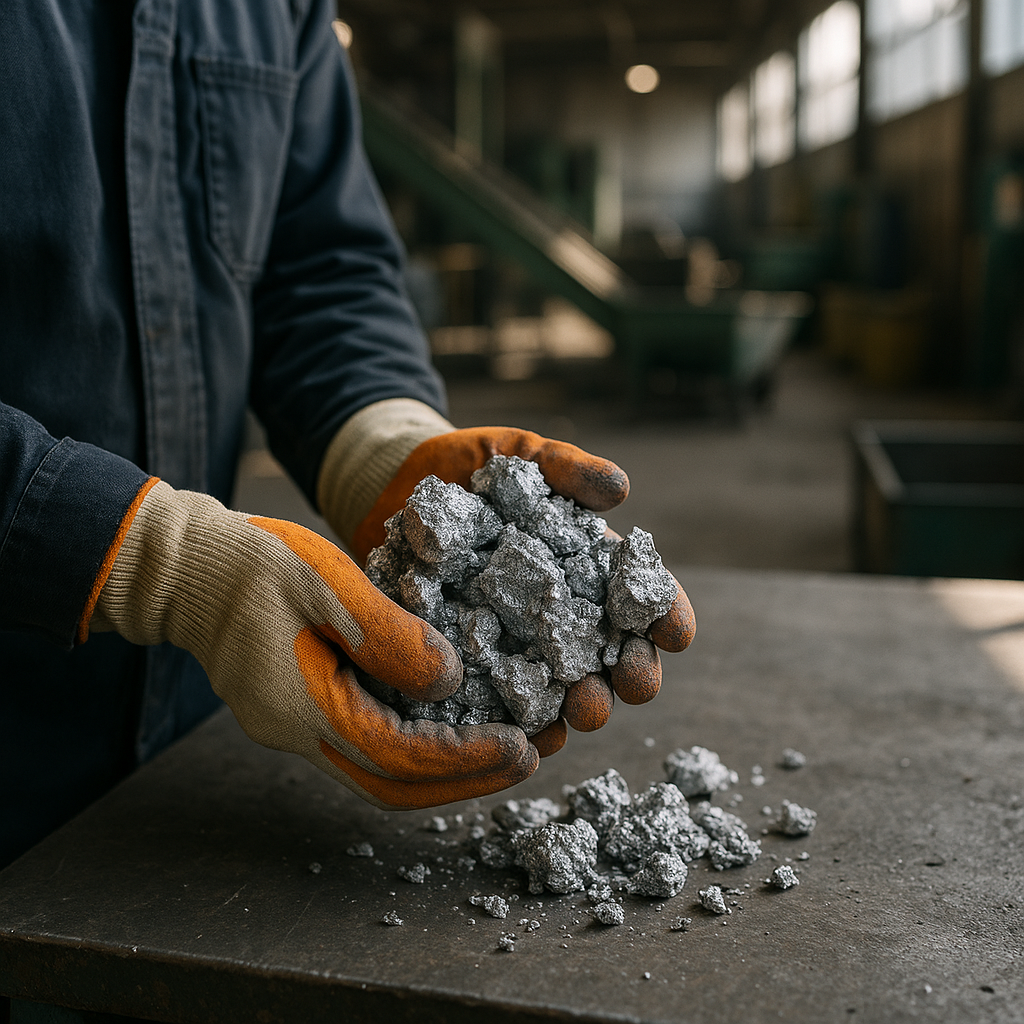
Aluminum dross forms as a byproduct during the aluminum smelting process when molten aluminum reacts with oxygen in the air. This reaction creates aluminum oxide on the metal’s surface, which combines with the underlying material through mechanical stirring and skimming operations. The result is a semi-solid waste stream containing valuable aluminum alongside various oxides and impurities.
Three Main Types of Aluminum Dross
The aluminum industry generates three distinct categories of dross, each requiring different processing approaches:
- White Dross: Originates from primary and secondary aluminum melting without salt flux. This material has high metallic aluminum content (15% to 70%) and often appears silvery when freshly skimmed.
- Black Dross: Typically comes from secondary aluminum recovery or contaminated scrap processing. It contains lower aluminum percentages (12% to 18%) due to higher oxide content and non-metallic inclusions.
- Salt Slag: The most challenging category, generated in rotary salt furnaces using flux mixtures. Many jurisdictions classify salt slag as hazardous waste due to potential ammonia gas emissions if exposed to water.
According to U.S. Environmental Protection Agency estimates, the aluminum content in dross represents substantial economic value that can be reclaimed through mechanical separation. Modern processing methods can extract metallic aluminum without the toxic chemicals used in traditional operations, making dross recovery more attractive to material management facilities.
Sustainability and Circular Economy Benefits
Recovering aluminum dross supports crucial sustainability targets by reclaiming metal that would otherwise become landfill waste. Each ton of recovered aluminum reduces the need for primary production, which requires significantly more energy and generates higher carbon emissions. This aligns with circular economy principles by keeping materials in productive use.
Aluminum recycling uses approximately 95% less energy than primary production from bauxite ore. When facilities successfully recover aluminum from dross streams, they contribute to this energy-efficient loop while addressing a historically underserved waste stream. Modern mechanical processing methods have eliminated many environmental concerns, making these operations more viable for industrial producers.
Managing Byproducts: Saltcake and Industrial Inputs
After aluminum recovery from dross, a byproduct called saltcake remains. This material typically contains 3-10% metallic aluminum, 20-60% aluminum oxide, and 20-80% salt, according to the Aluminum Association. Currently, facilities dispose of approximately 2 billion pounds of saltcake annually in landfills across the United States.
The composition of saltcake makes it a valuable resource when processed correctly. Its salt content can be recovered as flux materials, while the aluminum oxide component offers opportunities for creating industrial inputs for cement manufacturers and other sectors.
Converting Saltcake Into Reusable Materials
Advanced processing techniques transform saltcake into various valuable products. Water leaching processes dissolve the salt components, creating saturated brine solutions that can be concentrated through evaporation to crystallize pure salts for reuse as flux. The remaining aluminum-rich fraction can be returned to furnaces for further metal recovery.
Aluminum oxides recovered from saltcake processing serve as feedstock for cement production. These oxides possess the chemical properties needed by cement manufacturers as supplementary materials, creating a secondary revenue stream from what was previously considered waste. This creates a closed-loop system, reducing the need for virgin flux and mined materials while significantly lowering greenhouse gas emissions.
Aluminum Recovery Options for Texas Businesses
Texas hosts numerous industrial recovery companies offering comprehensive aluminum services. These facilities provide practical alternatives for businesses seeking reliable scrap metal management. Professional recovery centers handle a broad range of materials and offer accessible services for diverse industrial operations.
Reputable recovery centers in the Dallas-Fort Worth area have established themselves as trusted partners for commercial and industrial clients. These facilities maintain proper licensing credentials, such as secondary metal recycling licenses, to ensure full adherence to environmental standards and Texas state regulations.
A professional service model typically accommodates different client needs through flexible collection options, including industrial bin services and secure drop-off locations. These specialists process a wide range of aluminum materials, including:
- Aluminum wheels and sheet aluminum
- Painted siding and cast aluminum
- High-grade alloys (6061, 6063, 7075)
- Aluminum breakage, mixed clips, and shavings
By using certified scales and transparent pricing, these specialists ensure accurate material valuation for every transaction. Engaging with a dedicated recovery partner helps businesses optimize their energy savings and environmental impact reporting.
Conclusion: A New Era for Texas Aluminum Recovery
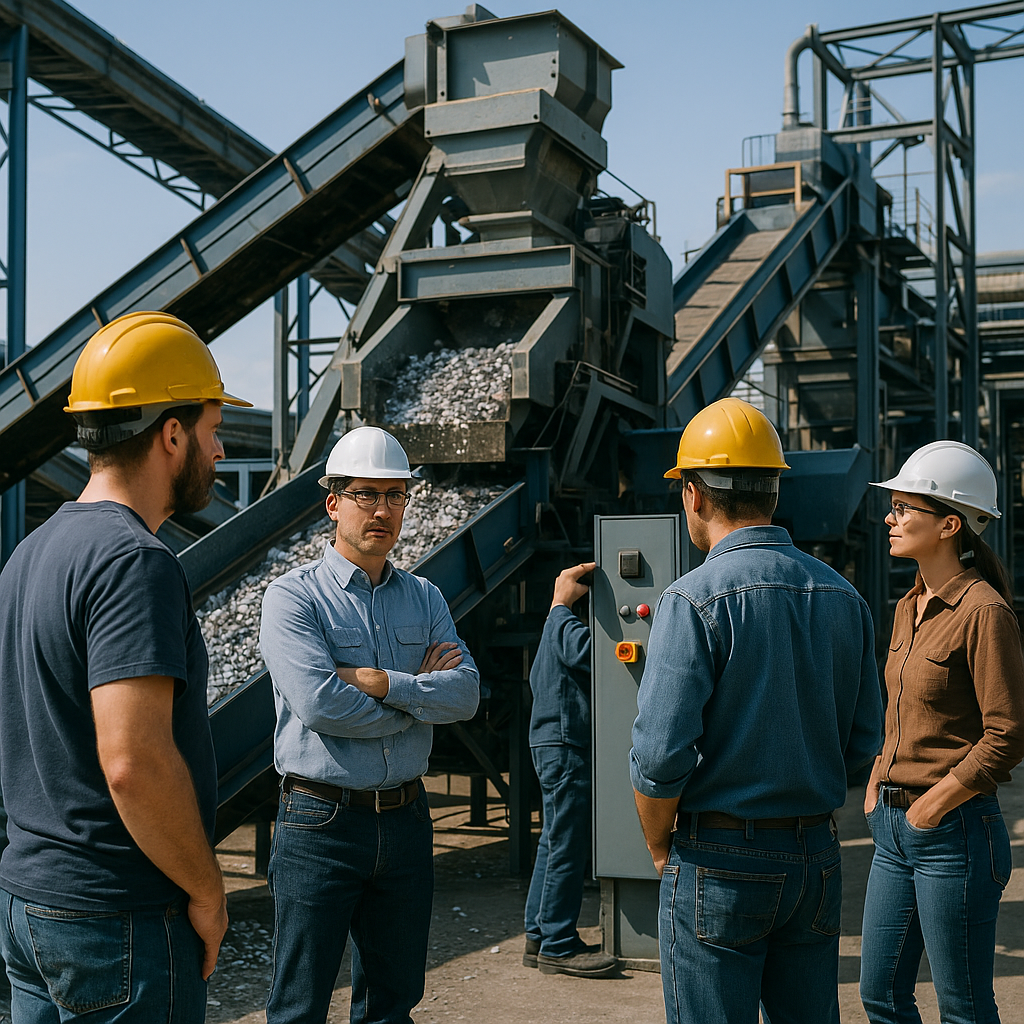
The emergence of groundbreaking zero-landfill aluminum facilities in Texas marks a significant advancement in the state’s recycling infrastructure. Modern proprietary technology converts aluminum dross and scrap into high-grade secondary aluminum while completely eliminating landfill waste. These facilities can achieve up to a 90% reduction in greenhouse gas emissions compared to traditional methods, addressing crucial material recovery challenges.
This progress enables aluminum producers across Texas to adopt true circular economy practices. With specialized dross processing and established scrap metal recovery networks, the state strengthens its position as a leader in sustainable manufacturing. For businesses seeking comprehensive recovery solutions for their aluminum waste streams, contact Okon Recycling at 214-717-4083.
Send Us a Message
Questions about what we do? Interested in commercial services? Let us know below and a member of our team will get back to you.