5901 Botham Jean Blvd, Dallas, TX 75215
Exploring the Current Price of Recycled Aluminum in Texas
January 8, 2026Recycling aluminum provides an effective way for Texas businesses and industrial facilities to monetize waste streams while promoting environmental sustainability. Texas recycling facilities currently offer competitive rates for various aluminum grades, making it one of the most valuable non-ferrous metals in the scrap market. These prices reflect strong global demand for secondary aluminum, which requires significantly less energy—up to 95% less—than producing new aluminum from raw bauxite ore.
Current aluminum recycling prices vary significantly based on the type, alloy and condition of the material. Clean aluminum items typically fetch the highest rates, while materials with high “breakage” or non-metallic attachments earn lower payouts. Common industrial grades like 6063 extrusions and aluminum wheels often sit at the top of the pricing hierarchy, while light sheet aluminum and mixed alloys provide a consistent middle-tier return.
Market trends affect these prices daily. Factors such as global industrial demand, energy costs and supply chain conditions influence what recycling centers can offer at the scale. Understanding these variations is essential for facility managers and demolition contractors looking to maximize their return on investment when selling scrap metal in the Lone Star State.
Understanding Aluminum Scrap Grades and Industrial Payouts
Aluminum scrap pricing is not a “one-size-fits-all” calculation. To accurately estimate the value of a load, one must understand how professional recyclers classify materials. Clean, high-grade aluminum consistently commands premium prices because it can be fed directly into a furnace with minimal secondary processing.
Premium Industrial Aluminum Grades
High-value categories include clean extrusions and automotive wheels. Aluminum car rims are among the most valuable scrap due to their solid construction and consistent alloy composition. Clean aluminum extrusions, commonly found in commercial window frames and door tracks, also command premium prices. These materials are generally categorized as 6061 or 6063 alloys, which are highly sought after by secondary smelters.
Mid-Tier Commercial Materials
Common recyclable materials that facilities process daily include used beverage cans (UBC), which provide a reliable income source for high-volume generators. Cast aluminum parts—such as engine blocks, transmission cases and outdoor furniture—usually fall into a middle pricing tier. While valuable, cast aluminum often contains higher percentages of silicon or iron, requiring more specific refining processes than extruded or sheet aluminum.
Construction and Demo Scrap
Sheet aluminum and siding materials are staple waste streams for construction and demolition projects. Payouts for these materials depend heavily on whether the aluminum is “clean” or “dirty.” Painted siding is widely accepted, but the removal of steel screws, plastic end-caps and foam insulation is required to reach the highest price per pound. When these contaminants remain attached, the material is graded as “breakage,” which significantly reduces its value.
Specialty Wire and Cable
Aluminum wire and cable present unique pricing scenarios. Bare aluminum wire (often called EC wire) can earn top-tier rates comparable to some copper grades in specific markets. However, insulated aluminum wire requires mechanical stripping or granulation to separate the metal from the plastic or rubber jacket. The final price is determined by the “recovery percentage”—the actual weight of the metal compared to the weight of the insulation.
| Material Type | Industrial Classification | Typical Pricing Tier |
|---|---|---|
| Aluminum Rims | Clean Auto Wheels | Premium / High |
| 6063 Extrusions | Clean / No Paint | High |
| Aluminum Cans | UBC (Baled or Loose) | Moderate / Stable |
| Old Sheet | Siding / Gutters | Moderate |
| Cast Aluminum | Engines / Grills | Moderate / Low |
| Aluminum Breakage | Mixed with Steel/Trash | Lowest |
New in 2025: Advanced Sorting Technology and Its Impact on Value
The industrial recycling landscape has shifted toward high-tech automation to increase material purity and maximize payouts for large-volume sellers. In 2025, professional facilities are utilizing advanced machinery that ensures scrap is graded with scientific accuracy.
Eddy Current Separation
To process massive volumes of mixed waste, modern facilities employ Eddy Current Separators. These machines use a rapidly rotating magnetic rotor to create a magnetic field that repels non-ferrous metals. This causes aluminum to “jump” away from non-metallic debris like plastic or glass. For the seller, this means mixed loads can be processed more efficiently, often leading to better rates for “clean” output streams.
XRF and LIBS Alloy Analysis
For high-performance industries like aerospace and defense, knowing the exact alloy (e.g., 2024 vs. 7075 aluminum) is vital. Professional recyclers now use handheld X-ray Fluorescence (XRF) and Laser-Induced Breakdown Spectroscopy (LIBS) analyzers. These tools provide an instant chemical breakdown of the metal. If your facility produces high-grade aerospace scrap, utilizing a recycler with this technology ensures you are paid for the specific alloy’s value rather than a generic “mixed aluminum” rate.
Key Market Drivers for Aluminum Scrap Prices
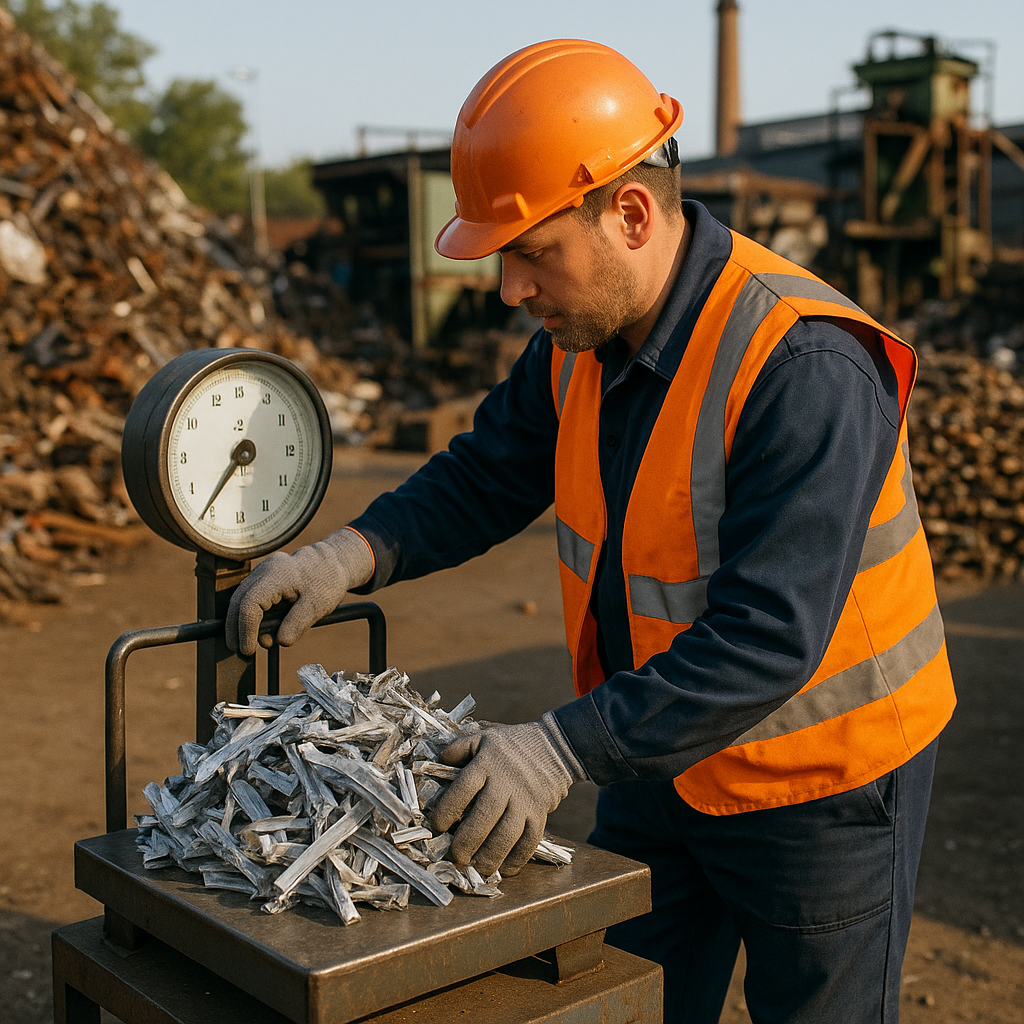
Aluminum scrap pricing is influenced by a complex system of market forces. Global commodity exchanges establish baseline values that impact local Texas markets. These prices constantly evolve as global economic conditions change.
The London Metal Exchange (LME)
The London Metal Exchange sets primary aluminum pricing, which serves as the benchmark for scrap values. When the cost of producing primary aluminum rises—often due to increased bauxite mining costs or energy spikes—recycled aluminum becomes more attractive to manufacturers. Because aluminum is traded globally in U.S. dollars, currency fluctuations can also create volatility in local scrap yard offerings.
Supply and Demand Dynamics
Industrial manufacturing activity is the engine behind aluminum demand. The automotive sector, in particular, is using more aluminum than ever to lighten vehicle weights and increase fuel efficiency. When domestic manufacturing expands, scrap prices typically rise to meet the need for raw material. Conversely, economic slowdowns can lead to a temporary softening of prices as inventories at secondary smelters grow.
Regional Logistics and Energy Costs
Transportation costs significantly impact what Texas recycling centers can pay. Aluminum’s weight-to-value ratio means that shipping expenses can quickly eat into profit margins. Facilities located near major transportation hubs or secondary smelters often provide more competitive pricing. Furthermore, smelting is an energy-intensive process; when Texas energy prices rise, the value of “pre-refined” scrap metal increases because it requires less energy to melt than raw ore.
Maximizing ROI: Best Practices for Industrial Scrap Management
For manufacturers and construction firms, scrap metal should be managed like any other inventory asset. Implementing a structured scrap management program on-site can increase revenue by 20% to 30% through improved material purity and reduced labor costs.
Source Segregation Strategies
The single most effective way to get the best price for your aluminum is to keep it separate from other metals. When high-value 6063 aluminum is mixed with stainless steel or common sheet metal, the entire load is often graded at the “lowest common denominator” price. Implementing color-coded bins and clear signage on the shop floor ensures that employees sort materials correctly at the point of generation.
Managing “Breakage” and Attachments
Recyclers pay more for “furnace-ready” scrap. This means removing steel screws from aluminum window frames, stripping rubber gaskets from automotive parts and ensuring that aluminum siding is free of excessive roofing tar. While professional recyclers can process “dirty” aluminum, the labor and loss involved in cleaning the material are deducted from the final payout. If your facility has the labor capacity to clean materials on-site, the price jump to a “clean” grade is often worth the effort.
Volume and Logistics Optimization
Transportation is one of the highest overhead costs in recycling. To maximize your return, aim to ship full loads rather than small, frequent batches. Professional recycling partners can provide roll-off containers or specialized hoppers that allow your facility to accumulate significant weight before a pickup is triggered. This reduces the “per-ton” hauling fee and allows the recycler to offer a higher net price for the material.
How to Get the Best Price for Your Recycled Aluminum

Maximizing returns from aluminum recycling requires strategic preparation and market awareness. The difference between casual disposal and profitable recycling often comes down to understanding what the secondary market values most.
Monitoring Daily Fluctuations
Aluminum prices can shift by 5% to 10% within a single month based on global economic data. It is important to track these trends rather than selling purely based on convenience. Building a relationship with a high-volume recycling partner allows you to gain insights into market timing, ensuring you sell when the “spread” between scrap and primary metal is most favorable.
Leveraging Industrial Container Services
For businesses discarding substantial quantities, partnering with a recycler that offers on-site container services is vital. Specialized containers—ranging from 20-yard roll-offs for demolition debris to forkliftable bins for machine shop turnings—keep your site organized and safe. Routine collections eliminate the need for your staff to transport materials, allowing your team to focus on core operations while the scrap generates revenue in the background.
Conclusion: Turn Your Aluminum Waste into a Strategic Asset

Recycling aluminum in Texas presents significant opportunities for municipalities, businesses and industrial organizations when approached with a professional strategy. Current market rates remain strong for clean aluminum scrap and specialized alloys, providing a tangible way to offset operational costs while achieving sustainability goals. Success depends on understanding your material grades, maintaining purity through source segregation and monitoring daily price fluctuations with a trusted partner.
Maximizing your aluminum recycling value involves preparation, market awareness and partnering with experienced recycling professionals who offer transparent weighing and reporting. Start by conducting a waste audit of your current aluminum materials, and work with a scrap yard that prioritizes fair, index-linked pricing.
For expert guidance on industrial aluminum recycling and up-to-the-minute market rates in Texas, contact Okon Recycling at 214-717-4083.
Send Us a Message
Questions about what we do? Interested in commercial services? Let us know below and a member of our team will get back to you.