5901 Botham Jean Blvd, Dallas, TX 75215
Current Price of Clean Aluminum: 2026 Scrap Market Update
January 24, 2026Clean aluminum currently trades between $0.55 and $0.65 per pound across most Texas scrap metal markets as of January 2026. However, specific types of high-purity aluminum can command significantly higher prices. Clean aluminum extrusions often reach $0.85 per pound, while premium clean aluminum wire can sell for up to $1.15 per pound. These rates reflect a growing domestic demand for secondary materials as Texas continues its industrial and manufacturing expansion.
Clean aluminum refers to material that is entirely free from contamination, such as plastic coatings, steel attachments, or organic debris. The grade and specific alloy of the aluminum determine the final price at the scale. For example, cast aluminum typically brings around $0.50 per pound, while clean aluminum siding and gutters average $0.67 per pound. These prices reflect the material’s high recycling value in the non-ferrous metals market.
These pricing levels make aluminum one of the most consistently valuable materials in scrap metal recycling.
How Do Prices Vary by Aluminum Type?

A showcase of aluminum products in bright natural lighting, highlighting their versatility from everyday items to industrial components.
Aluminum scrap pricing varies significantly based on the specific alloy, purity level, and condition of the material. Clean, high-grade aluminum commands premium prices due to its immediate reusability in manufacturing processes. The market identifies distinct categories that determine value, from pristine 6063 bare aluminum to contaminated mixed materials that require intensive refining.
High-value aluminum grades
Premium aluminum types provide the strongest financial returns for industrial recycling programs. Clean aluminum wire currently trades at the top of the market, reflecting its high recovery rate and minimal processing needs. Similarly, 6063 bare aluminum remains highly valuable due to its consistent chemical composition, which is ideal for extrusion applications in the construction and window manufacturing industries.
Common industrial and residential items
Common aluminum items show more moderate pricing structures but offer high volume potential. Clean aluminum rims typically sell at a premium, provided they have no steel weights, valves, or attached rubber. Sheet aluminum from construction and manufacturing sources also maintains a steady price point. Cast aluminum pieces, including engine blocks and transmission housings from automotive teardowns, generally price at a mid-tier level when properly cleaned of all steel bolts and oil residues.
| Aluminum Type | Average Price (USD/lb) – Jan 2026 |
|---|---|
| Clean Aluminum Wire (Talon) | $1.15 |
| 6063 Bare Aluminum (Extrusion) | $1.10 |
| 6063 Painted Aluminum | $0.95 – $1.00 |
| Clean Aluminum Rims | $0.82 |
| Aluminum Cans (UBC) | $0.55 – $0.65 |
| Sheet Aluminum | $0.60 |
| Cast Aluminum | $0.50 |
| Irony/Dirty Aluminum | $0.05 – $0.15 |
Contamination significantly impacts scrap values across all categories. Materials with attached steel, plastic, or rubber components can see their value drop by 80 percent or more. This dramatic reduction reflects the extra labor and processing costs required to separate contaminants. Aluminum siding with insulation backing or heavily painted surfaces also commands lower prices due to the preparation needs at the smelter.
Current market conditions and regional demand influence final pricing structures. Daily commodity fluctuations affect all aluminum grades. Professional facilities evaluate materials based on market indices, volume quantities, and preparation quality to offer competitive pricing for industrial partners.
What Key Factors Influence Scrap Aluminum Prices in 2026?
Purity is the most critical factor in determining scrap aluminum value. Clean aluminum that is furnace-ready commands significantly higher prices. Recyclers pay premium rates for materials requiring zero manual processing before melting, as this streamlines the supply chain and reduces secondary emissions.
Global and regional market drivers
Manufacturing demand from key industries causes substantial price fluctuations. In 2026, the automotive and aerospace sectors are the primary consumers of recycled aluminum, with their production cycles directly influencing scrap values. As electric vehicle (EV) production ramps up in North Texas, the demand for lightweight aluminum alloys has reached record highs. When these industries increase production, scrap prices typically rise due to heightened demand for feedstock.
Global market conditions set by the London Metal Exchange (LME) provide the foundational pricing framework. LME aluminum pricing serves as the baseline for scrap valuations worldwide. When primary aluminum prices rise on global exchanges, scrap prices typically follow similar trends, though local factors like transportation costs and yard competition also play a role.
Energy costs and primary production
Energy costs indirectly influence aluminum scrap pricing through their impact on primary production. Because smelting aluminum from raw ore is extremely energy-intensive, spikes in electricity prices make primary aluminum more expensive. This increases the value of recycled aluminum as a cost-effective and carbon-friendly alternative, particularly for companies focused on Environmental, Social, and Governance (ESG) reporting.
The Rise of Green Aluminum: ESG and Circular Economy Impact
In the industrial landscape of 2026, aluminum recycling has moved beyond simple waste management; it is now a strategic lever for corporate sustainability. High-performance manufacturers are increasingly seeking “Green Aluminum”—material produced with a significantly lower carbon footprint than traditional metal.
Circular economy and material traceability
Advanced recycling programs in Texas are now integrating blockchain and digital tracking to document the origin of recycled aluminum. This traceability allows manufacturers to prove the high recycled content of their products, which is essential for meeting international green building standards and automotive regulations. By participating in a professional recycling program, businesses contribute to a circular economy that keeps valuable molecules in use for decades rather than centuries in a landfill.
Energy savings and emissions reduction
The environmental case for aluminum is unmatched in the metal industry. Recycling one ton of aluminum prevents the mining of four tons of bauxite ore and saves enough electricity to power an average home for over a year. For Texas businesses, this translates to quantifiable reductions in Scope 3 emissions. As regulations tighten regarding carbon reporting, the financial value of these emissions offsets is becoming a factor in long-term scrap metal contracts.
Advanced Strategies for Industrial Scrap Preparation
To maximize your recycling payout, your facility must view scrap as a product rather than a byproduct. Implementing a structured sorting and cleaning protocol can increase your annual revenue from aluminum by up to 40 percent.
Source separation and alloy management
The most successful industrial programs utilize “source separation” on the factory floor. Instead of a single bin for all non-ferrous waste, dedicated bins for specific alloys—such as 6061 or 7075 aluminum—prevent “downgrading.” A simple magnet test is the first step in ensuring that no steel components are mixed in, as a single steel bolt in a 1,000-pound bin can move the entire load from a “clean” price to a “dirty” or “irony” price.
De-manufacturing and contaminant removal
Recyclers pay a premium for “furnace-ready” scrap. Businesses can capture this value by performing basic de-manufacturing on-site. Removing plastic handles, rubber gaskets, or wood frames from aluminum components increases the purity of the load. Additionally, stripping the insulation from aluminum wire allows it to be graded as “Talon,” which commands nearly double the price of insulated wire. Professional recycling partners can provide on-site training to help your staff identify these high-value opportunities during the sorting process.
How Can You Get the Best Price for Your Scrap Aluminum?
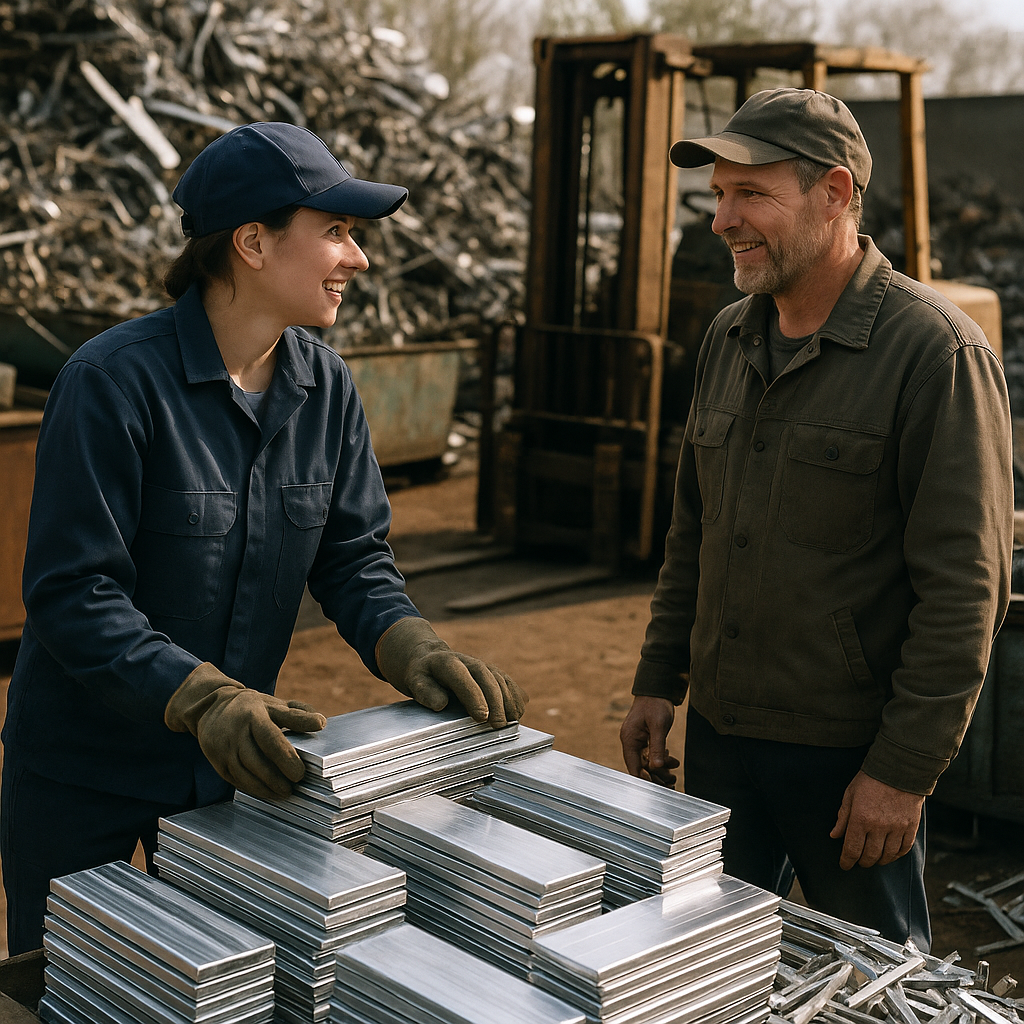
The effort invested in sorting and cleaning directly correlates to improved recycling payouts. Before visiting a facility, follow these best practices to ensure you receive the maximum market value for your material:
- Sort by grade: Separate clean extrusions from cast aluminum. Keep aluminum cans in their own category, and group window frames and siding separately from automotive parts.
- Clean non-metal attachments: Remove steel screws, plastic gaskets, and rubber seals. Recyclers pay more for furnace-ready scrap that does not require additional manual labor.
- Maximize volume: Wait until you have a substantial load. Most centers offer better rates for bulk quantities (typically 100 pounds or more) because transportation costs are spread across more weight.
- Remove insulation: Stripping aluminum wire exposes the high-purity metal, allowing it to be priced closer to copper-level returns in specific markets.
- Keep it dry: Store materials in a dry, covered area. Water weight and oil contamination can lead to deductions at the scale.
Finally, monitor market conditions. Aluminum prices fluctuate based on global demand and energy costs. Contact a reputable center that offers transparent pricing and uses state-certified scales to ensure you are treated fairly.
Conclusion: Maximizing Your Scrap Aluminum Payout
Recycling clean aluminum offers significant value opportunities, but success depends on preparation and market knowledge. Research consistently shows that properly sorted materials can be worth 20 to 40 percent more than unsorted scrap. By taking the time to separate different aluminum grades and remove all contaminants, you ensure the highest possible price for your industrial or residential materials.
Staying informed about 2026 market trends and preparing materials properly transforms what many consider waste into a strategic asset within the global supply chain. When you are ready to optimize your aluminum recycling returns, contact Okon Recycling at 214-717-4083 for professional aluminum recycling services.
Send Us a Message
Questions about what we do? Interested in commercial services? Let us know below and a member of our team will get back to you.