5901 Botham Jean Blvd, Dallas, TX 75215
Where Can You Find Centers to Take Aluminum Scrap in Texas?
January 6, 2026Texas offers abundant opportunities for aluminum scrap recycling, with industrial and public facilities spread across major metropolitan areas and smaller communities throughout the state. From the expansive urban landscape of the Dallas-Fort Worth metroplex to the industrial corridors of the Gulf Coast, recycling centers actively purchase aluminum materials from both residential and commercial sources.
Scrap yards operate in virtually every major Texas city, providing essential infrastructure for the collection of aluminum cans, household appliances and industrial-grade materials like aluminum extrusions and HVAC components. These centers serve as the primary intake point for the circular economy, ensuring that valuable non-ferrous metals are diverted from landfills and returned to the manufacturing supply chain.
What Is the Typical Process for Selling Aluminum Scrap?
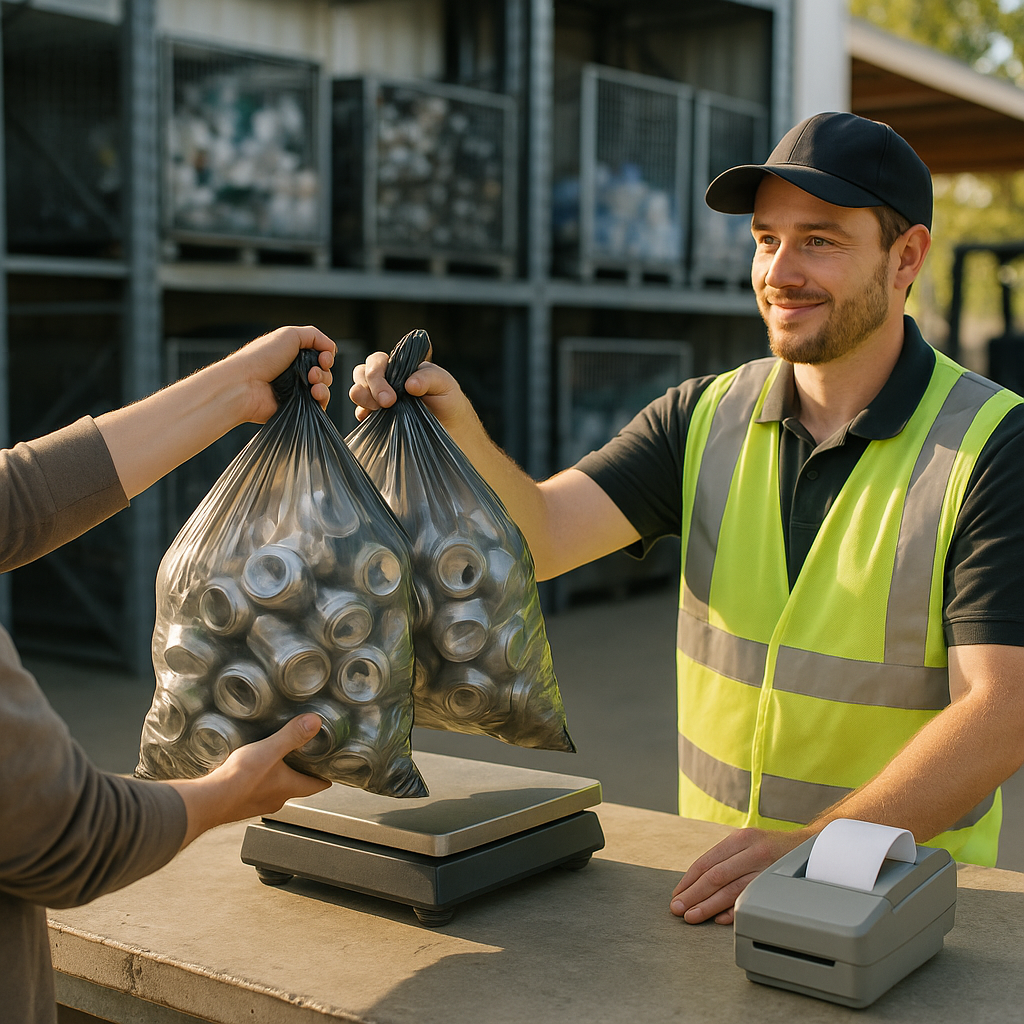
The process at professional Texas scrap yards is designed for efficiency and transparency, typically involving three main steps: bringing sorted scrap metals to the facility, weighing materials on certified scales and receiving payment. For most industrial users and individuals, this “Bring It, Scale It, Cash It” workflow allows for a quick turnaround, often taking less than 30 minutes.
When you arrive at a facility, staff will direct you to the appropriate area based on your materials. Aluminum falls under non-ferrous metals, so you will head to that designated section. You must present a valid government-issued photo ID, as required by Texas state regulations for all regulated metal transactions. These laws are strictly enforced to prevent theft and ensure a legitimate paper trail for all scrap sales.
The weighing process happens in two stages for larger loads. First, you drive your vehicle with the scrap aluminum onto the certified scale to get an initial “heavy” weight. After unloading your materials in the designated area, you return to the scale for a final “light” weight. The difference determines the exact weight of the aluminum you are selling. For smaller quantities, platform scales are used to provide accurate measurements down to the pound.
Understanding Texas Payment Restrictions
Texas law imposes specific restrictions on cash payments for certain regulated materials to deter metal theft. For aluminum wire specifically, cash payments are limited to $25 per transaction. Any amount above this threshold must be paid by check, money order or electronic transfer unless the seller holds a valid cash transaction card. However, most aluminum cans and general aluminum scrap are not subject to these specific cash limits, allowing for immediate payout at the facility’s window.
Energy Efficiency: Why Recycled Aluminum Outperforms Primary Production
The primary reason aluminum is one of the most recycled materials in the world is the sheer energy savings achieved through secondary production. Understanding this “energy gap” helps businesses quantify their sustainability efforts and realize why aluminum scrap maintains such a high market value.
The 95 Percent Energy Rule
Producing aluminum from raw bauxite ore is an incredibly energy-intensive process. It requires the Bayer process to refine bauxite into alumina and the Hall-Héroult electrolysis process to smelt that alumina into molten metal. In contrast, recycling aluminum uses only 5 percent of the energy required for primary production. This 95 percent energy saving is a major driver for the automotive and aerospace industries as they work to reduce their carbon footprints.
Environmental Impact and Emissions Reduction
By choosing to recycle aluminum scrap rather than disposing of it, Texas businesses directly help reduce greenhouse gas emissions. Recycling one ton of aluminum prevents approximately nine tons of CO2 from entering the atmosphere. Additionally, recycling reduces the need for open-pit bauxite mining, which often leads to deforestation and habitat destruction. In 2026, these metrics are essential for companies pursuing LEED certification or ESG (Environmental, Social and Governance) reporting goals.
What Types of Aluminum and Metal Items Are Accepted?
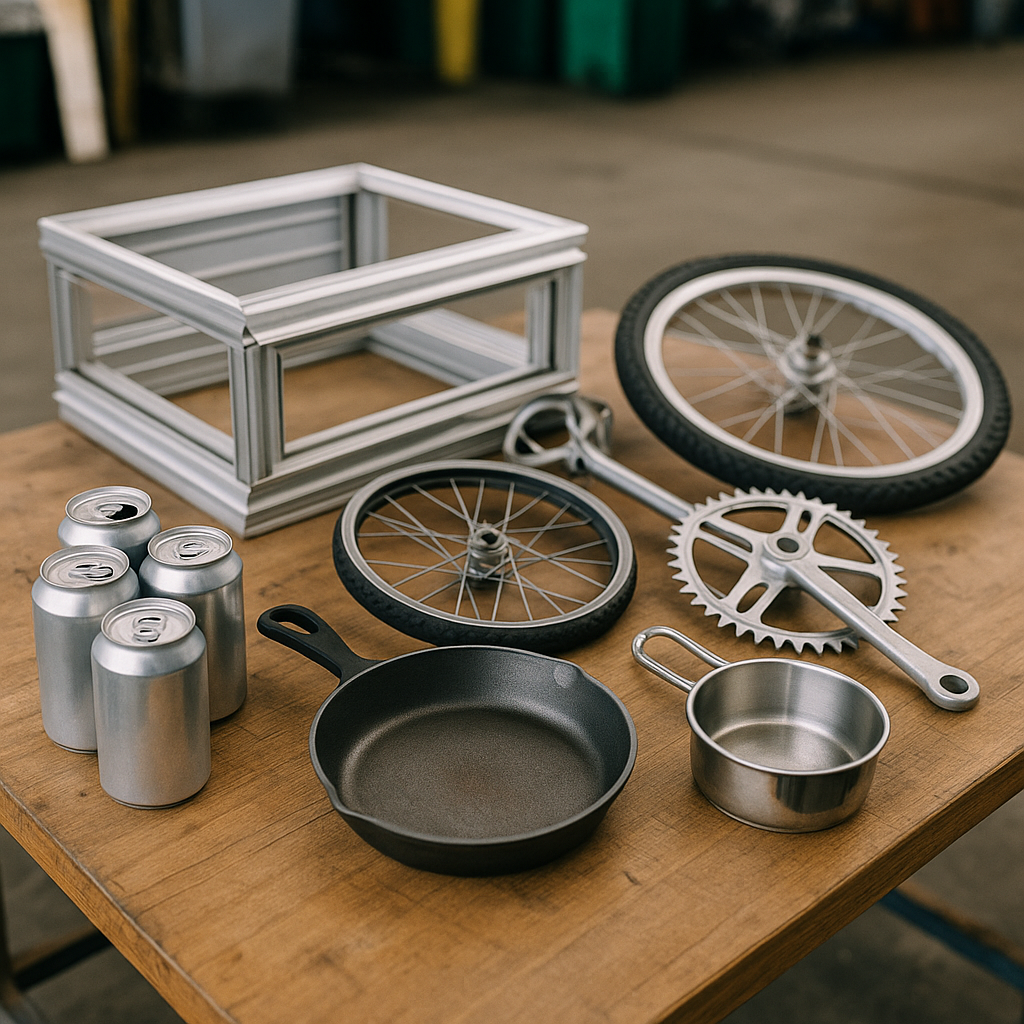
Professional recycling centers process a wide range of scrap metals. While everyday aluminum cans are the most recognizable, the industrial and residential waste streams provide a diverse array of recyclable assets. These are generally classified as either ferrous (iron-based and magnetic) or non-ferrous (non-magnetic and typically more valuable).
Residential and Common Household Items
Aluminum cans are among the most frequently processed items. However, many residents overlook other valuable sources such as old appliances (refrigerators, washers and dryers), which contain aluminum heat exchangers and copper-wound motors. Kitchen items like pots, pans and aluminum foil also qualify. Even damaged or rusted metals can be recycled, as the melting process removes oxidation and restores the material’s purity.
Industrial and Commercial Aluminum Grades
The industrial sector provides high-value aluminum scrap that is often graded by alloy type. Common industrial items include:
- Aluminum Extrusions: Often found in window frames and door tracks (6063 alloy).
- MLC (Mixed Low Copper): High-quality aluminum sheet used in manufacturing.
- Cast Aluminum: Found in engine blocks and transmission housings.
- Painted Siding: Aluminum used in residential and commercial siding.
- ACSR and Wire: Aluminum cable used in electrical distribution, often reinforced with steel.
| Item | Metal Type | Industrial Grade | Common Source |
|---|---|---|---|
| Beverage Cans | Aluminum | UBC (Used Beverage Cans) | Consumer waste |
| Window Frames | Aluminum | 6063 Extrusions | Construction/Demolition |
| Engine Blocks | Aluminum | Cast Aluminum | Automotive repair |
| Electrical Wire | Aluminum | EC Wire / ACSR | Utilities/Contractors |
| Kitchen Sinks | Stainless Steel | 300 Series | Home renovation |
Advanced Technology in Modern Aluminum Sorting
The success of an industrial recycling facility depends on its ability to accurately separate different alloys. Modern centers in 2026 utilize sophisticated technology to ensure that aluminum is processed at its highest possible purity level, which in turn ensures higher payouts for the seller.
Eddy Current and Magnetic Separation
To separate aluminum from general trash or steel, recyclers use a “magnetic belt” to pull out ferrous items. However, since aluminum is non-magnetic, it requires an Eddy Current Separator. This machine uses a high-speed rotating drum with magnets to create a magnetic field that literally “jumps” the aluminum away from other materials, allowing for high-speed, automated sorting of mixed scrap streams.
XRF and LIBS Analysis
For high-performance industries like aerospace, the specific alloy of the aluminum (e.g., 2024 vs. 7075) is critical. Professional facilities use handheld X-ray Fluorescence (XRF) or Laser-Induced Breakdown Spectroscopy (LIBS) analyzers. These devices can determine the chemical composition of a piece of metal in seconds. This allows a recycler to pay a premium for high-grade aerospace alloys that would otherwise be undervalued if processed as “mixed aluminum.”
What Special Services Are Offered for Large Quantities or Businesses?
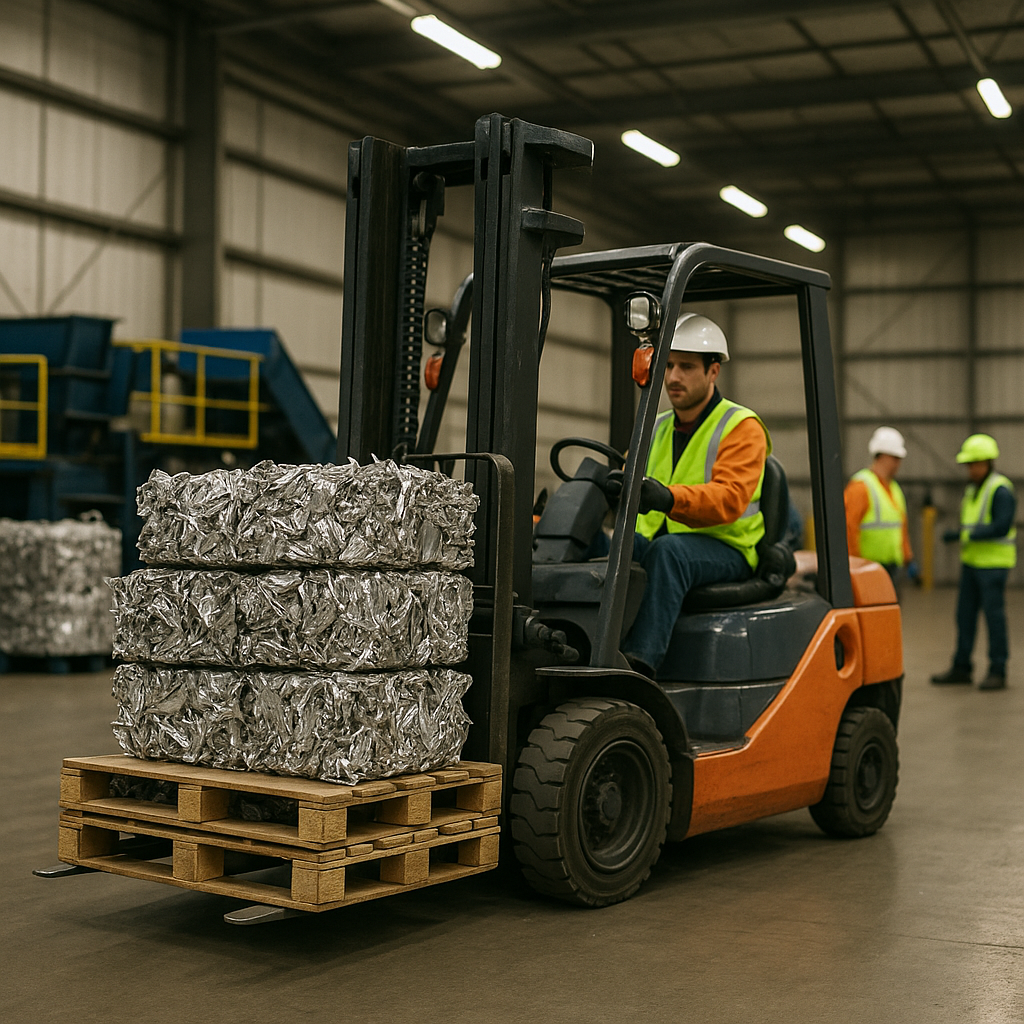
Texas scrap yards offer container services tailored for commercial and large-scale operations. For businesses managing manufacturing waste, construction debris or industrial demolition projects, having the right equipment on-site is essential for maintaining an organized and safe workspace.
Customized Container Placement
Roll-off containers, ranging from 10 to 50 yards, are provided to accommodate substantial volumes. Specialized bins, hoppers and forklift-compatible containers are also available for facilities with limited space. These units enable efficient material movement within a plant, reducing labor costs and improving safety by keeping scrap off the floor.
Industrial Demolition and Pick-Up Services
For large-scale projects, recyclers provide industrial demolition support, utilizing hydraulic shears and excavators with magnets for selective material recovery. Pick-up services operate on flexible schedules—whether routine collections or emergency responses—utilizing flatbeds, lowboys and roll-off trucks. This ensures that a business can focus on its core operations while its scrap management is handled by professionals.
Which Texas Cities Have Scrap Metal Recycling Facilities?
Texas hosts an extensive network of scrap metal recycling facilities, spanning major metropolitan areas and smaller communities across the state. These facilities provide essential waste management services that support the circular economy while serving both residential and commercial clients.
Major urban centers lead the way in recycling infrastructure. Houston has numerous facilities throughout the metropolitan area, including Sugar Land and Stafford. The Dallas-Fort Worth metroplex supports extensive recycling operations in cities such as Dallas, Fort Worth, Plano, McKinney and Garland. These regional hubs ensure that industrial scrap from North Texas’s booming tech and manufacturing sectors has a reliable destination.
East Texas and the Gulf Coast also maintain a strong recycling presence. Regional centers in Orange and Port Arthur serve the industrial corridor with facilities designed for processing heavy industrial waste. Abilene provides central collection services for West Texas, while the Austin-San Antonio corridor serves the growing central Texas region. This strategic network makes recycling accessible to almost every business and resident in the state.
Conclusion: Turn Your Aluminum Scrap into an Opportunity
Recycling aluminum scrap in Texas provides a simple way to earn money while supporting environmental sustainability. The state’s many recycling facilities offer competitive pricing and convenient services like container rentals and pick-up options, making it easy for both individuals and businesses to engage in responsible waste management. These Texas scrap yards not only help reduce landfill waste but also conserve natural resources through efficient metal recycling processes.
The combination of financial rewards and environmental benefits makes aluminum scrap recycling a worthwhile pursuit. For reliable recycling services that emphasize both competitive pricing and sustainability, contact Okon Recycling at 214-717-4083 to discuss your metal recycling needs.
Send Us a Message
Questions about what we do? Interested in commercial services? Let us know below and a member of our team will get back to you.