5901 Botham Jean Blvd, Dallas, TX 75215
How to Process Aluminum Salt Slag: A Guide to Methods & Material Recovery
November 7, 2025Secondary aluminum recycling produces between 200 to 500 kilograms of hazardous salt slag per ton of recycled aluminum. This inevitable byproduct forms when fluxing salts like sodium chloride and potassium chloride are added to rotary furnaces during the aluminum scrap melting process. Its value and danger stem from its complex composition of recoverable salts, metallic aluminum, and reactive compounds.
Aluminum salt slag consists of 30-55% sodium chloride, 15-30% potassium chloride, 15-30% aluminum oxide, and 5-7% metallic aluminum, along with hazardous impurities like nitrides and carbides. When exposed to water or humidity, these reactive compounds can release toxic and flammable gases, such as ammonia and hydrogen. Due to this chemical instability, regulatory authorities classify salt slag as hazardous waste, mandating proper handling.
Processing salt slag is crucial in response to increasing environmental regulations and disposal restrictions. Most European countries have prohibited landfill disposal of this material, compelling recycling facilities to develop treatment systems that recover valuable components while neutralizing hazardous elements. Improper processing of salt slag can significantly risk groundwater contamination, atmospheric pollution through gas emissions, and safety hazards for workers and neighboring communities.
What Are the Main Methods for Processing Salt Slag?
The hydrometallurgical method is the most commonly used approach for processing aluminum salt slag. This process starts with the mechanical preparation of the material, where the slag is milled or crushed to achieve a grain size smaller than 1.25 millimeters. Reducing the size maximizes surface area exposure for subsequent chemical treatment.
The milling stage is directly linked to a screening operation, which separates larger metallic aluminum particles from finer materials. These recovered aluminum pieces are returned directly to the furnace for remelting. The screening step typically recovers over 80% of the metallic aluminum content from the original slag.
The leaching process is central to hydrometallurgical salt recovery. The finer slag fraction is stirred in water or hot aqueous solutions at temperatures ranging from 90 to 115 degrees Celsius. This dissolves the sodium chloride and potassium chloride components, creating a saturated brine slurry containing both dissolved salts and suspended aluminum oxide particles.
Solid-liquid separation follows the leaching stage through filtration systems. Vacuum filtration or chamber filter presses separate the clear brine solution from the aluminum oxide filter cake, operating under pressures of 6 to 15 bar to maximize liquid recovery. This produces two distinct streams for further processing.
Salt recovery from the brine solution is achieved through crystallization methods, where cooling crystallization is more energy-efficient than evaporation. The filtered brine is cooled to precipitate potassium chloride crystals. The crystallization process recovers essentially all fluxing salts for reuse in aluminum production.
High-Temperature Processing Alternative
High-temperature processing offers another approach to salt slag treatment. This method involves heating the slag to about 1600 degrees Celsius, causing the salt components to evaporate completely. The evaporated salts are collected as dust particles through specialized capture systems.
The high-temperature method leaves behind a non-salt residue containing aluminum oxide and other inert materials, which can be used in construction materials and ceramic production. This process eliminates the need for water-based treatment but requires substantial energy input.
Both processing methods effectively recover salt while meeting environmental compliance requirements. The hydrometallurgical approach typically offers better energy efficiency and lower operating costs, whereas high-temperature processing provides complete salt removal but demands higher capital investment for temperature control systems.
Which Valuable Materials Can Be Recovered from Salt Slag?
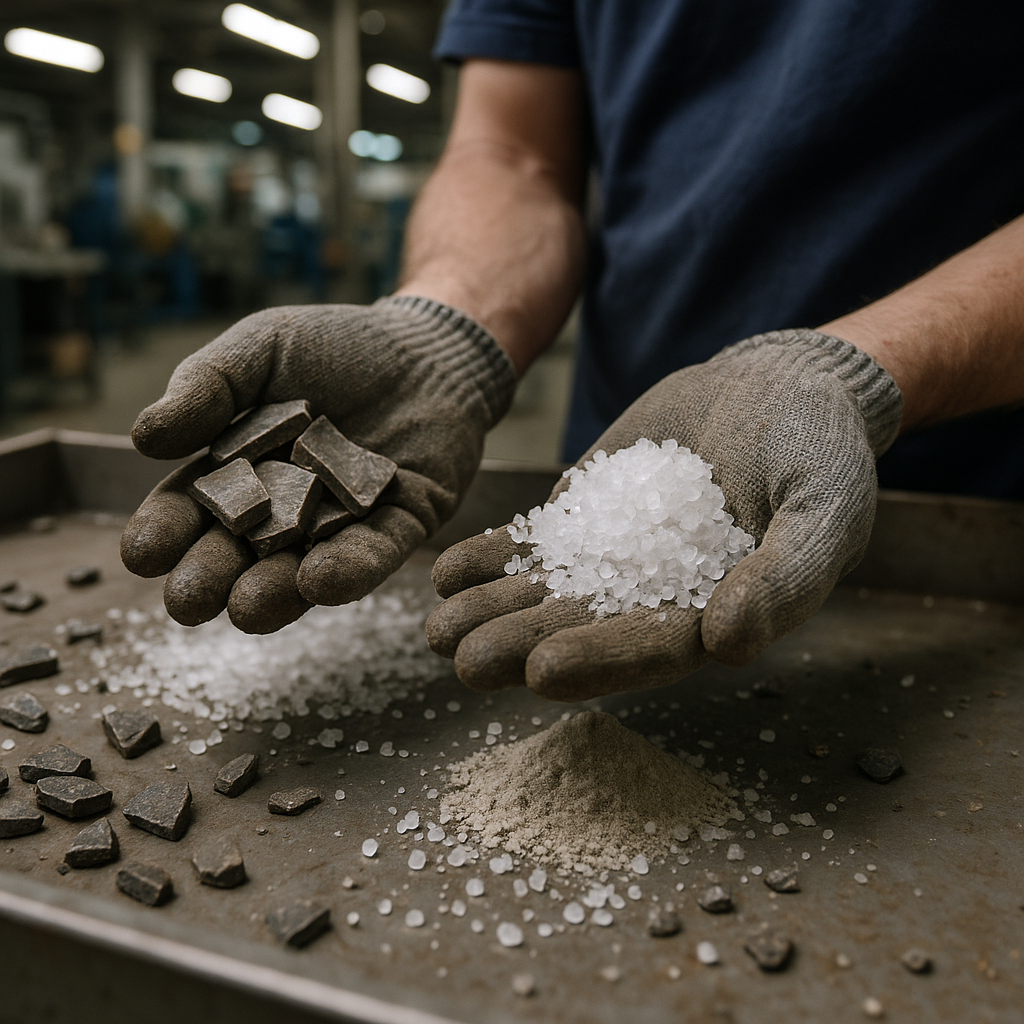
Metallic aluminum is the most immediately valuable component recoverable from salt slag processing. Studies show that salt slag typically contains 5-10% metallic aluminum by weight, with recovery rates reaching over 80% through proper mechanical separation techniques. We extract this aluminum using dry mechanical processes such as screening and crushing, separating the metallic particles from other components. The recovered aluminum goes back to smelting furnaces, maintaining material quality while reducing the need for new aluminum inputs.
Fluxing salts constitute the largest recoverable fraction, representing approximately 60% of salt slag composition. Sodium chloride and potassium chloride can be separated through multi-stage dissolution and recrystallization processes using specialized centrifuge systems. These recovered salts undergo purification to remove impurities before being reused in rotary furnaces as flux materials. The recovered salts maintain their chemical properties, reducing the need to purchase new flux materials and lowering operational costs significantly.
Aluminum oxide residue, comprising about 30% of salt slag, finds valuable applications in construction and steelmaking industries. This non-metallic residue undergoes thorough washing and dewatering to reduce moisture content and create transportable products. The processed aluminum oxide serves as a raw material for construction applications and can function as a flux additive in steelmaking processes. Some facilities derive additional value by converting this residue into specialized ceramic products or refractory materials.
Ammonia gas recovery provides an often-overlooked revenue stream from salt slag processing. When aluminum nitride compounds in the slag react with water during hydrolysis, they generate ammonia gas that can be captured and processed. We convert this ammonia into ammonium sulfate through specialized column scrubber systems, creating a marketable fertilizer product. This byproduct recovery transforms an environmental concern into an additional revenue source.
The comprehensive recovery approach turns hazardous waste streams into valuable raw materials, supporting circular economy principles within aluminum recycling operations. Processing 500 kilograms of salt slag can yield approximately 50 kilograms of metallic aluminum, 300 kilograms of reusable salts, and 150 kilograms of aluminum oxide products. This recovery rate means virtually nothing goes to landfill, eliminating disposal costs while generating multiple revenue streams from materials previously considered waste products.
How Can Salt Slag Be Converted into Value-Added Products?
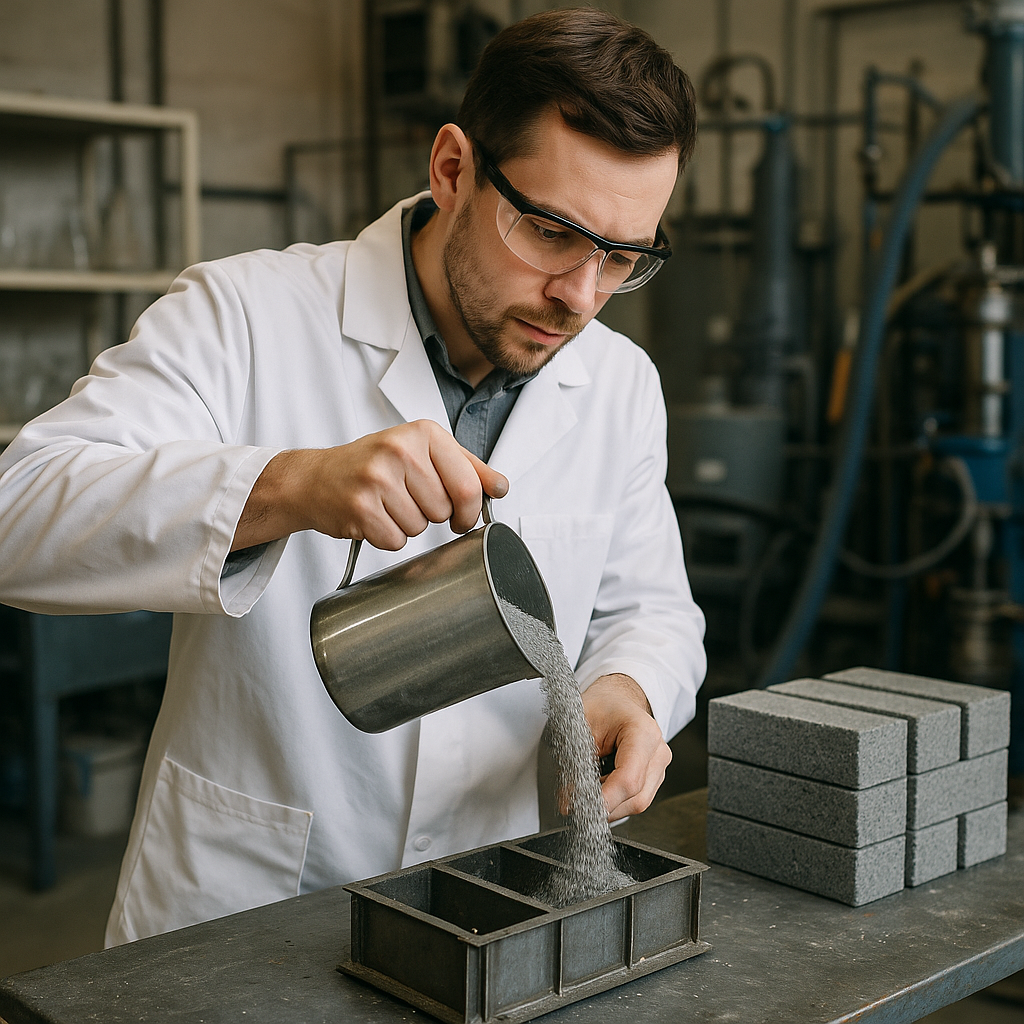
Valorization marks a fundamental shift in waste management, transforming waste into products with enhanced economic and functional value instead of merely disposing of materials. This approach turns aluminum salt slag from a costly disposal issue into a revenue-generating raw material. It aligns with circular economy principles, where waste becomes an input for new production cycles.
Salt slag valorization involves a two-step process that maximizes material recovery while creating valuable end products. The first step is hydrolysis, which extracts salts and gases. The second converts the remaining solids into zeolites through hydrothermal synthesis, capturing value from every component of the original waste stream.
During hydrolysis, salt slag undergoes controlled water treatment at 90°C with specific solid-to-water ratios. This process dissolves salt content and triggers chemical reactions that release ammonia gas. Research shows that this step recovers over 90% of the salt content as sodium chloride. Simultaneously, about 90% of the ammonia content is available as a valuable byproduct. The recovered salt can return to aluminum smelting operations, while ammonia is useful in fertilizer production.
The hydrolyzed solid cake from the first step contains concentrated aluminum compounds ideal for zeolite synthesis. Hydrothermal synthesis occurs under controlled temperature and pressure conditions, typically at 100-120°C. Sodium silicate solution is added to achieve the optimal silicon-to-aluminum ratio for NaP zeolite formation. This process transforms the aluminum-rich waste into crystalline zeolite structures without generating additional solid waste streams.
NaP zeolites produced from salt slag have excellent functional properties for commercial uses. They exhibit cation exchange capacity values around 2.12 meq/g, making them effective for removing metal ions from contaminated water. The zeolites also have suitable surface area characteristics and pore size distribution for catalysis applications. Their negative surface charge under basic pH conditions enhances performance in environmental remediation processes.
This valorization approach offers sustainability benefits beyond waste reduction. It eliminates environmental risks associated with salt slag disposal while creating products for essential industrial and environmental functions. The process requires relatively mild conditions compared to traditional metallurgical recovery methods. Each ton of processed salt slag yields approximately two tons of zeolite products, highlighting the economic potential of waste valorization in the aluminum recycling industry.
Conclusion: Advancing Toward Sustainable Slag Management
The processing of aluminum salt slag is shifting from a mandatory environmental compliance task to a valuable opportunity for resource recovery and sustainable innovation. By using methods like hydrolysis and hydrothermal synthesis, industries can go beyond recycling salts and metals to create high-value products such as zeolites. This transition not only reduces the environmental risks of salt slag but also greatly supports the circular economy by turning hazardous waste into a valuable raw material, promoting a zero-waste approach in the secondary aluminum industry.
As shown by companies like Real Alloy and Befesa through their advanced processing facilities, aluminum salt slag is a critical resource rather than waste simply needing disposal. These innovative waste valorization technologies enhance environmental sustainability and generate economic value through industrial ecology principles.
For municipalities and businesses seeking comprehensive recycling solutions that align with zero-waste initiatives and sustainable management goals, contact Okon Recycling at 214-717-4083.
Send Us a Message
Questions about what we do? Interested in commercial services? Let us know below and a member of our team will get back to you.