5901 Botham Jean Blvd, Dallas, TX 75215
Industrial Equipment Recycling in Arlington: Turn Scrap into Cash
January 30, 2026Broken forklifts and outdated manufacturing equipment sitting in your warehouse represent more than just clutter. They are untapped revenue sources waiting to be converted into cash. Industrial equipment recycling in Arlington offers businesses a direct path to reclaim valuable warehouse space while generating competitive payouts from assets that would otherwise drain resources through storage costs. In early 2026, as North Texas continues its industrial boom, managing these end-of-life assets has become a hallmark of operational efficiency and fiscal responsibility.
The process transforms what many businesses view as disposal expenses into profit opportunities. Professional recyclers specialize in extracting maximum value from scrap machinery, including heavy equipment, production tools, and industrial vehicles. This approach ensures that old equipment undergoes responsible processing rather than contributing to landfill waste, aligning with Texas’s 2026 sustainability mandates for industrial waste diversion.
What Types of Industrial and Commercial Equipment Are Accepted in Arlington?
Arlington recycling facilities accept a broad range of industrial and commercial items. This includes everything from large assets like scrap forklifts and manufacturing machinery to smaller components such as electric motors from HVAC units or industrial controls. In 2026, the demand for secondary raw materials has made the recycling of diverse industrial components more profitable than ever.
Heavy-duty industrial equipment
Large industrial assets form a significant portion of recyclable materials in Arlington facilities. Scrap forklifts represent one of the most common heavy equipment items processed through local centers. Manufacturing equipment from production facilities, including machinery that has reached end-of-life or requires replacement, finds new purpose through materials recovery. Warehouse equipment such as conveyor systems, storage racks, and material handling devices are also highly sought after for their dense steel content.
Electronic components and IT assets
Commercial electronic recycling encompasses a wide variety of IT equipment. Computers, laptops, and servers from corporate office environments are regularly processed through specialized programs. Circuit boards, networking equipment, and telecommunications devices contain precious metals and rare earth elements that require scientific recovery processes. Power supplies from various electronic devices are also accepted, ensuring that electronic waste is diverted from North Texas landfills.
Electric motors and HVAC components
Electric motors from large industrial applications are actively sought by Arlington recycling centers. HVAC motors, pump motors, and other mechanical components contain valuable copper and steel that can be recovered efficiently. Industrial controls, including electrical panels, switches, and automation equipment, are also valuable. The copper wiring and steel casings in these systems make them ideal for materials recovery operations, providing immediate value for contractors and facility managers.
The 2026 Regulatory Landscape for Arlington Heavy Equipment Disposal
As we navigate 2026, the State of Texas has implemented new mandates that impact how industrial equipment must be decommissioned and recycled. Staying compliant with these laws is essential for protecting your organization from legal liability and ensuring that your asset recovery process is fully transparent.
Adherence to Texas HB 3424 and quarterly reporting
Effective January 1, 2026, Texas House Bill 3424 has streamlined the reporting requirements for heavy equipment inventory. While the law primarily addresses tax reporting for dealers, it has increased the scrutiny on the lifecycle documentation of industrial vehicles.
For Arlington businesses recycling a fleet of forklifts, maintaining detailed records of equipment disposition for at least four years is now a standard requirement. Professional recycling partners provide the “Certificates of Destruction” and disposition records necessary to satisfy these updated state requirements during corporate audits.
Universal waste and battery energy storage mandates
In 2026, industrial vehicles—specifically electric forklifts and pallet jacks—are subject to new EPA “Universal Waste” standards for their battery systems. Lithium-ion and lead-acid battery packs from industrial equipment must be handled by certified professionals who can provide 100 percent material traceability.
Professional recycling facilities in Arlington have upgraded their processing lines to accommodate these high-capacity energy storage systems, ensuring that hazardous components are captured while valuable cobalt, nickel, and lead are returned to the manufacturing loop.
Maximizing Asset Value: The Financial Impact of Heavy Equipment Scrap
For Arlington businesses, an old piece of machinery is a repository of high-value raw materials. In the early 2026 market, the global demand for “Green Steel” and secondary aluminum has driven the buy-back rates for industrial scrap to significant highs.
Reclaiming non-ferrous alloys and high-purity metals
Industrial machinery often contains more than just heavy iron. Excavators, forklifts, and manufacturing presses are filled with high-purity copper wiring, brass fittings, and aluminum heat exchangers. By utilizing a professional industrial recycler that uses X-ray Fluorescence (XRF) analyzers, Arlington businesses can identify exactly which high-performance alloys are present. This ensures the payout is based on the actual metallurgical value of the machine, rather than a flat “mixed iron” rate, often increasing the net return by 20 to 30 percent.
The benefit of volume-based logistics
Efficiency in transportation is key to maximizing payout. Professional recyclers provide specialized roll-off containers and flatbed services tailored to heavy equipment. By coordinating a “bulk cleanup” of an entire warehouse bay or an end-of-quarter fleet replacement, Arlington businesses can leverage lower logistics costs. Heavy-duty towing and specialized loading equipment—such as crane trucks and heavy-lift forklifts—allow for the safe removal of oversized machinery, ensuring the property owner receives the maximum market value without the expense of hiring a third-party rigger.
What Does the Recycling Process for Heavy Equipment Involve?
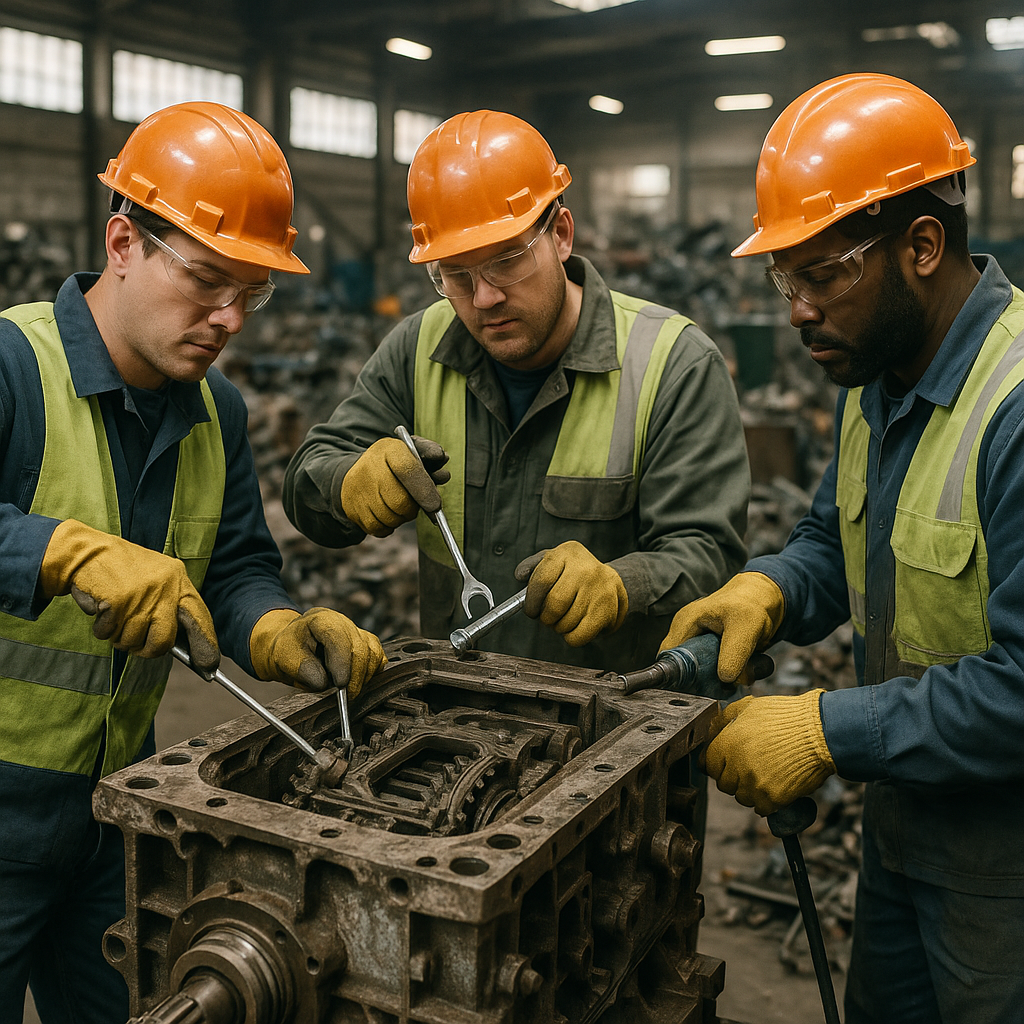
The heavy equipment recycling process begins with a convenient pick-up service that eliminates the logistical challenges businesses typically face. Recycling facilities in Arlington provide direct collection from your location, removing the burden of transporting bulky machinery, forklifts, and industrial equipment. This approach significantly reduces transportation costs while saving valuable time and labor resources that businesses can redirect toward core operations.
Once collected, the equipment undergoes systematic de-manufacturing designed to maximize material recovery. Trained technicians carefully dismantle machinery to separate valuable metals such as copper wiring, steel components, and other recoverable materials. The sorting process ensures that any residual hazardous materials—such as oils, hydraulic fluids, or refrigerants—are handled according to Texas Commission on Environmental Quality (TCEQ) regulations while preserving the integrity of recyclable components.
The material recovery phase involves advanced sorting technology and manual inspection to identify high-value alloys. Steel frames, copper windings, and aluminum parts are processed separately to maintain their market purity. This scientific processing ensures that materials enter the recycling stream in their most valuable form, supporting both regional environmental goals and corporate economic returns.
Businesses receive competitive payouts based on current market rates—often indexed to the London Metal Exchange (LME)—creating a hassle-free solution that turns obsolete equipment into revenue. The payout structure reflects the actual weight and grade of materials recovered, ensuring fair compensation for the equipment’s intrinsic value and providing the immediate liquidity needed for facility upgrades.
Beyond Machinery, What Scrap Metals and Components Can Be Recycled?
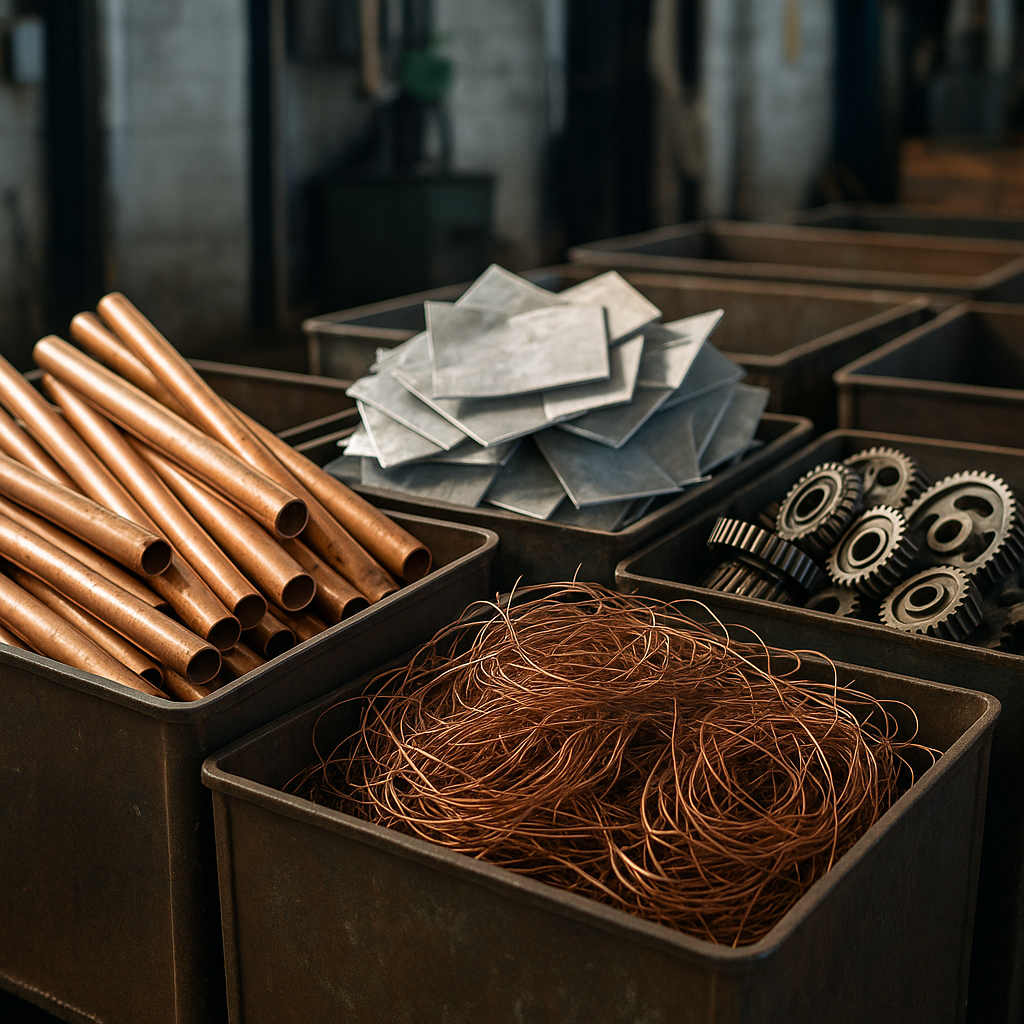
Heavy machinery represents just one category of recyclable materials. Arlington recycling facilities accept an extensive range of scrap metals and electronic components that many businesses overlook. Understanding the full scope of acceptable materials helps organizations maximize their recycling efforts while ensuring valuable resources do not end up in landfills.
Common metal types and industrial alloys
Aluminum scrap forms a significant portion of the materials handled daily. This includes everything from industrial siding and sheet aluminum to high-precision machining turnings. Aluminum’s lightweight properties and infinite recyclability make it a cornerstone of the circular economy. Brass fittings and components also offer excellent potential; plumbing fixtures, decorative hardware, and industrial brass valves maintain their value through multiple recycling cycles due to their copper and zinc composition.
Specialized components and electrical systems
Copper recycling extends far beyond simple wire. Professional facilities process insulated power cables, communication wiring, and heavy-duty bus bars from industrial facilities. These materials command premium pricing in secondary markets due to their high electrical conductivity. Additionally, transformers represent high-value items due to their copper windings and steel cores. Capacitors and circuit breakers from electrical panels contain recoverable metals and are actively sought during facility renovations or electrical system upgrades.
Getting Started with Industrial Recycling in Arlington
Recycling unwanted industrial equipment in Arlington offers significant financial and environmental benefits. By turning old assets into cash, clearing out warehouse space, and ensuring responsible material recovery, your business can operate more efficiently and sustainably. Industrial recycling transforms waste streams into revenue sources while reducing disposal fees and supporting corporate ESG goals. In 2026, materials like scrap metals, electronics, and industrial vehicles retain substantial value when processed through professional recycling programs.
The combination of financial returns, environmental stewardship, and operational efficiency makes industrial recycling a strategic business decision for North Texas firms. Companies gain immediate liquidity from recovered assets while contributing to resource conservation and quantifiable carbon footprint reduction.
To maximize these benefits and ensure professional, compliant material processing, contact Okon Recycling at 214-717-4083 for competitive payouts and convenient pick-up services.
Send Us a Message
Questions about what we do? Interested in commercial services? Let us know below and a member of our team will get back to you.