5901 Botham Jean Blvd, Dallas, TX 75215
What Determines the Copper Value in Houston?
January 8, 2026Copper holds some of the highest prices in the scrap metal market, with values frequently exceeding $4.50 per pound for premium grades in Houston. This broad price range reflects the significant impact of material quality, grade classification and market conditions on copper’s worth. In early 2026, understanding these pricing factors is essential for industrial managers and demolition contractors looking to maximize returns on their non-ferrous materials.
The value of copper in Houston is determined by several factors, including its purity, thickness and the specific type of scrap. As one of the most sought-after commodities, copper prices are influenced by global demand, localized supply and fluctuating commodity markets. High demand in the renewable energy and electric vehicle (EV) sectors, combined with lower primary mining availability, has driven prices up, making copper a lucrative material for industrial recycling programs.
Why Is Copper Worth So Much in the Global Market?

Copper commands premium prices in the scrap metal market due to its exceptional physical properties and its critical role in modern infrastructure. As an unparalleled conductor of electricity and heat, copper is the foundation of the modern power grid. Its high ductility, malleability and corrosion resistance make it indispensable across the aerospace, automotive and construction industries.
The metal’s value stems from fundamental supply and demand imbalances that have intensified throughout 2025 and into 2026. Unlike many other materials, copper maintains nearly all its properties when recycled, making it a “permanent” material that can be reprocessed repeatedly without quality loss. This characteristic alone significantly contributes to its high market valuation.
Supply Constraints and Aging Mines
Global copper supply faces mounting challenges that directly impact Houston scrap metal values. Many copper mines worldwide are aging, with average ore grades declining by approximately 40 percent since 1991. This means mining operations must process significantly more material to extract the same amount of copper, increasing primary production costs. Furthermore, development times for new mines average 17 years from discovery to production, creating a significant lag that makes “urban mining” through recycling more vital than ever.
The Surge in “Green” Demand
The energy transition has added substantial new demand for this red metal. Electric vehicles require three times more copper than traditional internal combustion engines. Wind turbines, solar panels and large-scale grid storage all depend heavily on copper windings and bus bars. Data centers supporting artificial intelligence applications have also emerged as a major consumption driver in 2026, requiring massive amounts of copper for power distribution and cooling systems.
What Are the Current Scrap Copper Prices in Houston?
Current scrap copper prices in Houston vary significantly depending on the grade and type of material. In early 2026, the market has seen a “bullish” trend, with top-tier materials reaching record highs. Higher-grade materials receive better pricing because they require less refining before they can be reintroduced to the manufacturing stream.
Bare Bright Copper: Often referred to as “Bright and Shiny,” this is the most valuable grade. It consists of uncoated, unalloyed wire or cable at least 16-gauge in thickness. In the current Houston market, Bare Bright Copper is trading at approximately $4.90 to $5.00 per pound.
#1 Copper: This grade includes clean copper tubing, bus bars and wire that may have slight oxidation but is free of solder, paint or attachments. Professional facilities in Houston are currently paying roughly $4.60 to $4.70 per pound for #1 Copper.
#2 Copper: This classification includes copper that has solder, paint or heavy oxidation. It also includes wire thinner than 16-gauge (hair wire). Current payouts for #2 Copper average between $4.40 and $4.50 per pound. While lower than #1, this remains a high-value category for demolition scrap.
Insulated Wire and Components
Pricing for insulated copper wire is based on the “recovery rate”—the percentage of copper weight compared to the insulation. Large industrial cables (500-750 MCM) with high recovery can reach $3.70 per pound, while common household extension cords or Romex typically range from $1.30 to $2.30 per pound.
| Material Type | Grade Classification | Price per Pound (Est.) |
|---|---|---|
| Bare Bright Wire | Premium / No Coating | $4.90 – $5.00 |
| #1 Copper | Clean Tubing / Bus Bar | $4.60 – $4.70 |
| #2 Copper | Solder / Paint / Hair Wire | $4.40 – $4.50 |
| THHN / High-Rec. Wire | Industrial Insulated | $3.10 – $3.70 |
| Electric Motors | Copper-Bearing Material | $0.25 – $0.35 |
Advanced Industrial Recovery: Purity Control and Granulation
In the modern Houston recycling landscape, simply “eyeballing” a load of copper is no longer sufficient for high-volume industrial sellers. Professional facilities utilize advanced technology to ensure that purity is maintained and that every pound of metal is accurately valued.
XRF Alloy Identification
When an industrial facility sends a load of mixed copper alloys or “leaded” light copper, professional recyclers use X-Ray Fluorescence (XRF) analyzers. These handheld devices provide an instant chemical breakdown of the metal. This ensures that high-value copper is not accidentally “down-graded” because it was mixed with brass or bronze components, protecting the revenue of the industrial client.
Automated Wire Granulation
For large-scale electrical contractors, stripping miles of wire by hand is not feasible. Industrial granulation systems use a series of shredders and magnetic separators to reduce insulated wire into small “chops.” Through air-density separation, the heavy copper granules are separated from the lighter plastic “fluff.” This process allows for the recovery of nearly 100 percent of the copper content, providing a high-volume solution that traditional “manual” yards cannot match.
Optical and Color Sorting
Advanced facilities now employ optical sorters that use high-speed cameras to identify copper based on its unique “salmon-pink” color. This technology can separate copper from other non-ferrous contaminants like aluminum or stainless steel in a mixed stream. Achieving this level of purity is essential for providing feedstock for “Green Copper” initiatives, which require recycled metal that meets the stringent standards of high-tech manufacturing.
“Doctor Copper”: The Metal as an Economic Indicator
In the world of finance and commodities, copper is frequently referred to as “Doctor Copper.” This moniker stems from the metal’s uncanny ability to predict the health of the global economy. Because copper is used in almost every sector of industry—from housing and electronics to power generation—its price trends often precede shifts in broader economic cycles.
Gauging Global Industrial Activity
When Houston’s scrap copper prices rise, it is often a signal that global industrial activity is accelerating. A “bullish” copper market typically indicates that construction and manufacturing orders are increasing. Conversely, when the price of copper begins to slide, it can serve as an early warning for an economic slowdown. For Houston businesses, monitoring these price shifts provides valuable data for timing their capital equipment upgrades or facility maintenance projects.
The Impact of Regional Port Activity
Houston’s unique position as a global shipping hub means that local scrap prices are also a barometer for international trade. Much of the copper scrap collected in Texas is exported to smelters across Asia and Europe. Disruptions at the Port of Houston or shifts in international tariff policies can create “local spreads”—differences between the Houston scrap price and the global exchange price. A professional recycling partner helps businesses navigate these regional anomalies to ensure they receive fair market value.
How Can You Identify Different Types of Copper Scrap?
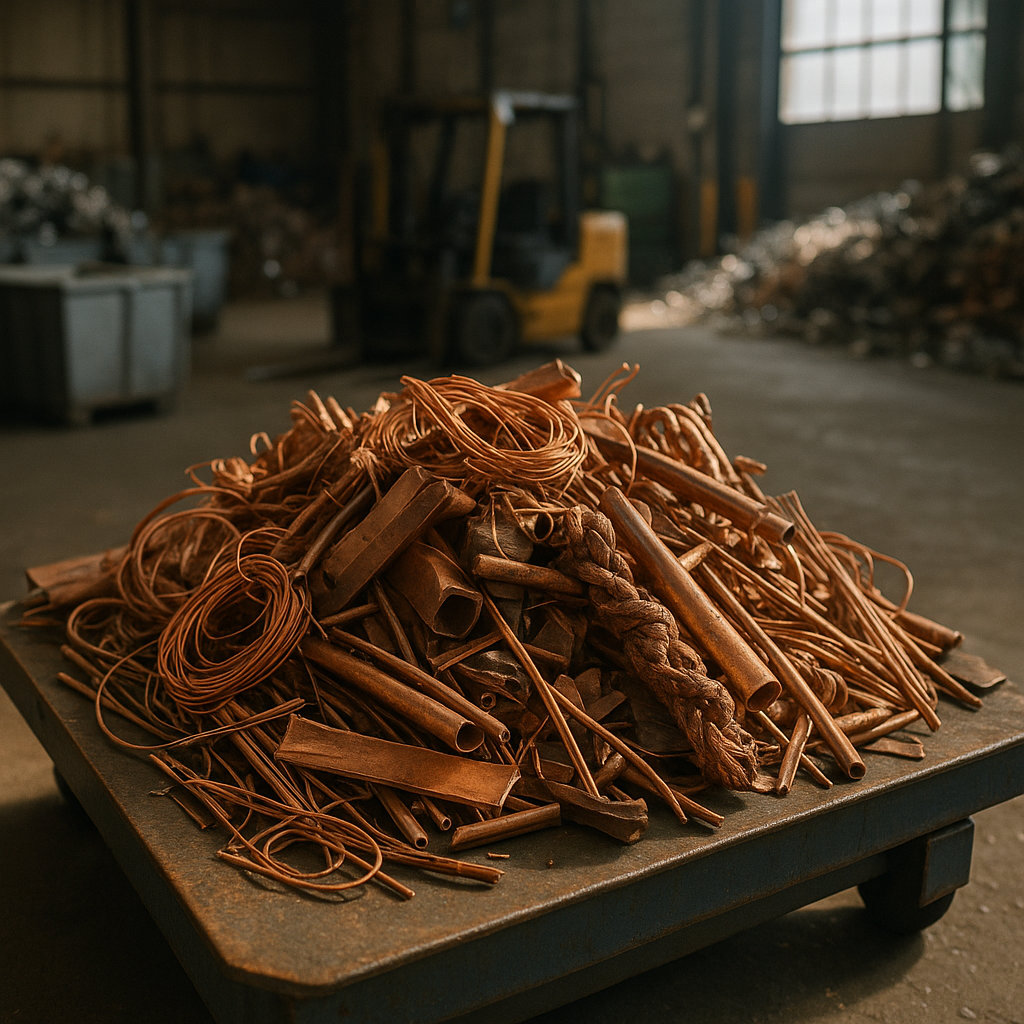
Identifying copper scrap begins with determining whether your metal is ferrous or non-ferrous. Non-ferrous metals contain no iron and are the primary materials sought by professional scrap facilities due to their higher value. The magnet test is the most reliable first step in this identification process.
The magnet test requires only a simple handheld magnet. Place the magnet against the scrap metal; if it sticks firmly, the metal is ferrous (steel or iron). If there is no attraction, you have identified high-value non-ferrous metal, such as copper, aluminum or brass. The magnet test streamlines sorting and increases earnings by helping to separate copper from steel-clad or plated materials that have significantly lower value.
Beyond the magnet test, visual inspection of the copper’s condition is vital for grading. Clean, unalloyed wire or tubing with no attachments is #1 copper. If the copper has minor oxidation, paint or solder joints, it classifies as #2 copper. Professional testing at recycling centers provides precise identification beyond visual cues. Most facilities offer metal composition scanning to remove guesswork and ensure you receive fair market prices based on accurate metallurgical identification.
Conclusion: Maximizing Your Return on Scrap Copper in Houston
To get the best value for copper in Houston, it is important to understand that prices vary based on the specific grade and purity of your material. Higher purity and thickness, such as Bare Bright Wire and #1 tubing, yield the highest returns. Current 2026 market conditions indicate that top-grade copper is a premium asset that can significantly offset industrial waste management costs.
Maximizing returns involves properly sorting your metals, removing contaminants like steel attachments or plastic valves and timing your sales with favorable commodity market conditions. Partnering with a professional recycling facility that offers transparent pricing and advanced weighing systems ensures you are paid the true value of your assets.
For the latest Houston scrap rates and expert advice on optimizing your copper recovery, contact Okon Recycling at 214-717-4083.
Send Us a Message
Questions about what we do? Interested in commercial services? Let us know below and a member of our team will get back to you.