5901 Botham Jean Blvd, Dallas, TX 75215
Why We Can’t Rely on Nature Alone: The Case for Copper Recycling
January 9, 2026Every time you flip a light switch or use your smartphone, you rely on copper that began its journey deep within the Earth millions of years ago. This versatile element is found naturally across all continents, making it one of the most globally available metals we use daily. Understanding copper’s natural distribution helps industrial sectors appreciate the geological processes that created the raw materials essential for modern recycling operations.
Copper exists primarily in two forms within the Earth’s crust. Pure native copper appears as irregular masses or veins that fill fractures in crustal rock formations. However, this native form accounts for only about 1 percent of all copper deposits worldwide. Most copper combines with other elements to form minerals, such as copper sulfides like chalcopyrite and copper oxides like cuprite. In early 2026, the demand for these materials has surged as global electrification reaches new heights.
These copper deposits typically formed through hydrothermal water activities, often linked to volcanism or sedimentary processes. The University of Arizona explains that copper ore formation occurred as heated fluids moved through rock formations, concentrating copper minerals in economically viable quantities. While most global copper ore comes from porphyry deposits formed by volcanic activity, the industrial sector is increasingly looking toward secondary recovery to supplement these finite natural reserves.
In What Natural Forms Does Copper Occur?
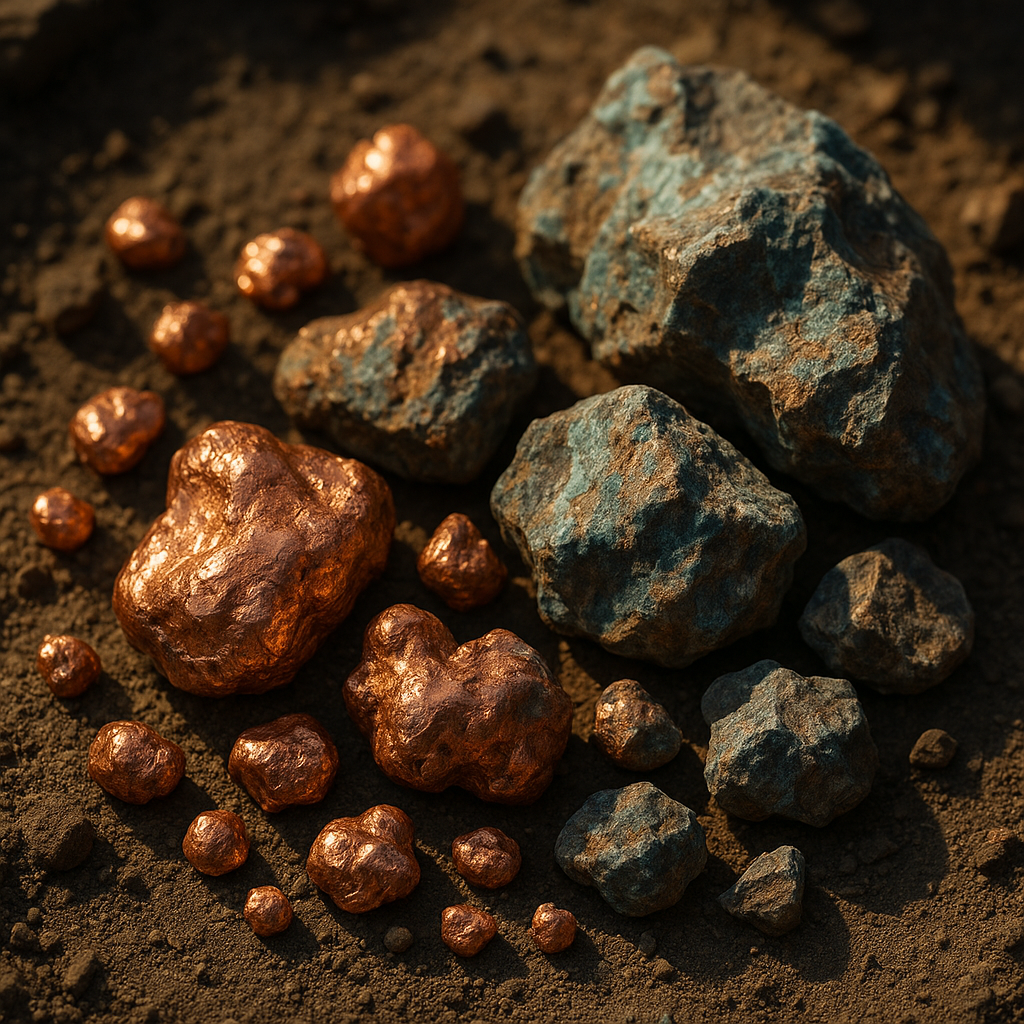
Copper is unique among most metals because it can exist in nature as pure, uncombined native copper. This rare form appears as irregular masses and veins filling fractures in the Earth’s crust. Native copper requires minimal processing, making it invaluable for sustainable metal recovery operations. However, because it is so rare, industrial production relies on the processing of mineral compounds.
Copper Sulfide Minerals
Sulfide minerals are the most abundant source of copper in nature. Chalcopyrite (CuFeS2) is the primary copper ore mineral globally, containing copper, iron and sulfur in its crystal structure. This brassy-yellow mineral has been crucial for copper production for millennia. Other important sulfides include bornite, chalcocite and covellite. These minerals typically occupy deeper parts of ore deposits where weathering has not altered their chemical composition.
Copper Oxide and Carbonate Minerals
Oxidized copper minerals form near the surface through weathering processes. Cuprite is the most common copper oxide, while tenorite also contributes to oxide ore bodies. Copper carbonate minerals create some of nature’s most striking displays. Azurite produces brilliant blue crystals, while malachite displays vibrant green banded patterns. These colorful minerals are often indicators of larger copper deposits and respond well to hydrometallurgical processing methods.
| Mineral Type | Typical Minerals | Industrial Processing Method |
|---|---|---|
| Sulfide | Chalcopyrite, Bornite, Chalcocite | Smelting and Refining |
| Oxide | Malachite, Azurite, Cuprite | Heap Leaching (SX-EW) |
| Native | Pure Copper Nuggets | Direct Melting |
Processing Implications for Secondary Recovery
The natural form of copper minerals directly impacts extraction and recycling strategies. Sulfide ores require energy-intensive smelting processes, while oxide and carbonate ores allow for lower-temperature leaching. Different copper types require distinct approaches that impact the economic viability of metal recovery. In a professional recycling facility, these metallurgical differences are accounted for to ensure maximum purity in the final recycled commodity.
Industrial Purification: From Scrap to 99.9 Percent Purity
For industrial users, the “purity” of copper is the most important metric. Whether the copper comes from a mine in Chile or a demolition site in Texas, it must be refined to a specific standard before it can be used in safety-critical electrical applications.
The Fire Refining Process
In fire refining, recycled copper scrap is melted in a large furnace. Air is blown through the molten metal to oxidize impurities, which then form a slag layer that can be skimmed off. This process typically produces copper that is about 99 percent pure. While sufficient for plumbing or roofing, this level of purity is often too low for high-performance electronics or the fine wire used in electric vehicle motors.
Electrolytic Refining and 2026 Standards
To reach the 99.9 percent purity standard required for “Grade A” copper, the metal undergoes electrolytic refining. The fire-refined copper is cast into anodes and placed in a chemical bath. When an electric current is applied, the copper dissolves from the anode and plate out onto a cathode, leaving any remaining impurities behind as “anode slime” (which often contains valuable silver or gold). In 2026, this process is being optimized with AI-driven current monitoring to reduce energy consumption by up to 15 percent, making recycled copper an even more sustainable choice.
Which Countries and Regions Are the Largest Producers of Copper?

Global copper production has reached record levels to meet the demands of the global energy transition. This impressive output comes from mines located across various continents, though production is significantly concentrated in specific regions. A few countries lead the market, handling most of the newly mined copper that enters global supply chains.
Chile remains the top performer in copper mining, accounting for nearly 23 percent of the global output. Large-scale open-pit operations are significant contributors to this dominance. South America’s strength continues in Peru, which remains a key player following recent recoveries in production stability. In Africa, the Democratic Republic of Congo has risen as a critical center, now potentially rivaling Peru as the second-largest global producer.
North American Production and Arizona’s Role
North America’s primary production is centered in the United States, with Arizona leading the way. The state accounts for approximately 70 percent of U.S. output, followed by Utah, New Mexico and Nevada. This geographic concentration makes the domestic supply chain vulnerable to localized disruptions, which is why copper recycling in hubs like Texas is so critical for maintaining regional supply stability.
| Country | Primary Production (Million Tons) | Global Share (%) |
|---|---|---|
| Chile | 5.1 | ~23% |
| DR Congo | 2.9 | ~13% |
| Peru | 2.7 | ~12% |
| China | 1.8 | ~8% |
| United States | 1.1 | ~5% |
The International Copper Study Group reports that approximately 32 percent of global copper consumption comes from recycled sources. As primary ore grades continue to decline, the role of materials recovery is expected to grow, making industrial-scale recycling the most reliable source of future growth for the manufacturing sector.
The Rise of “Urban Mining”: Why Recycled Copper Is the Future
As traditional mines become deeper and more expensive to operate, the concept of “Urban Mining” has emerged as a dominant trend in 2026. This strategy treats the metal already present in our infrastructure—old buildings, retired machinery and obsolete electronics—as a high-grade ore deposit.
Comparing Ore Grades
A typical copper mine today processes ore with a copper concentration of only 0.5 percent to 1 percent. This means for every ton of copper produced, 99 tons of waste rock must be moved and processed. In contrast, common scrap items like #1 insulated wire contain over 50 percent copper by weight, and bare bright copper is over 99 percent pure. From an industrial efficiency standpoint, recycling is “high-grade mining” that requires significantly less energy and creates a fraction of the environmental waste.
Supply Chain Resilience and “Friend-Shoring”
By utilizing recycled copper, North American manufacturers can bypass the geopolitical risks associated with international mining. Relying on domestic scrap streams—a process known as “friend-shoring”—ensures that a factory in Texas or Michigan has a steady supply of metal regardless of trade tensions or labor strikes in distant regions. Professional recycling partners play a vital role in this national security initiative by providing the logistics and processing capacity to return high-purity copper to the domestic market.
How Are Copper Deposits Geologically Formed?
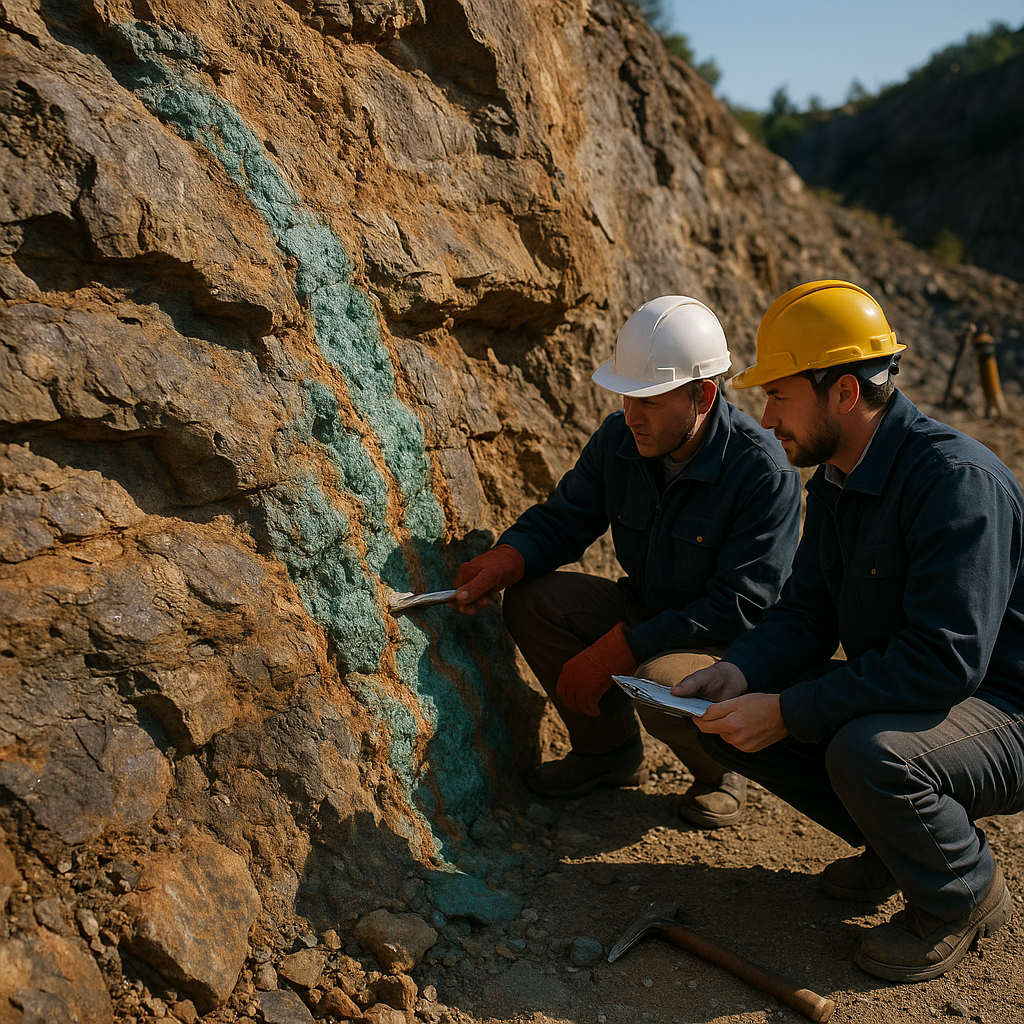
Geological processes create concentrated copper deposits through complex interactions between heat, fluids and rock formations. These deposits form primarily through hydrothermal activity, where hot, mineral-rich waters transport copper from deep sources to areas where it can solidify. Understanding these formation processes highlights the importance of recycling, as these natural deposits take millions of years to develop.
Porphyry copper deposits are the most important type of copper formation worldwide. These develop when small magmatic intrusions cool and release metal-rich volatiles. The movement of tectonic plates creates fractures and pathways for mineral-rich fluids to travel through the Earth’s crust. Many deposits occur at or near plate boundaries or rift valleys, where the Earth’s crust is most dynamic.
Submarine hydrothermal systems also play a significant role. Saline brines flow through fractures in oceanic crust, particularly around mid-ocean ridges. These underwater hot springs concentrate metals from seawater and underlying rocks. Over geological time, these submarine deposits can become part of continental landmasses through tectonic movement, eventually becoming the mines that supply our modern industries.
Conclusion: Copper’s Natural Abundance and Strategic Importance
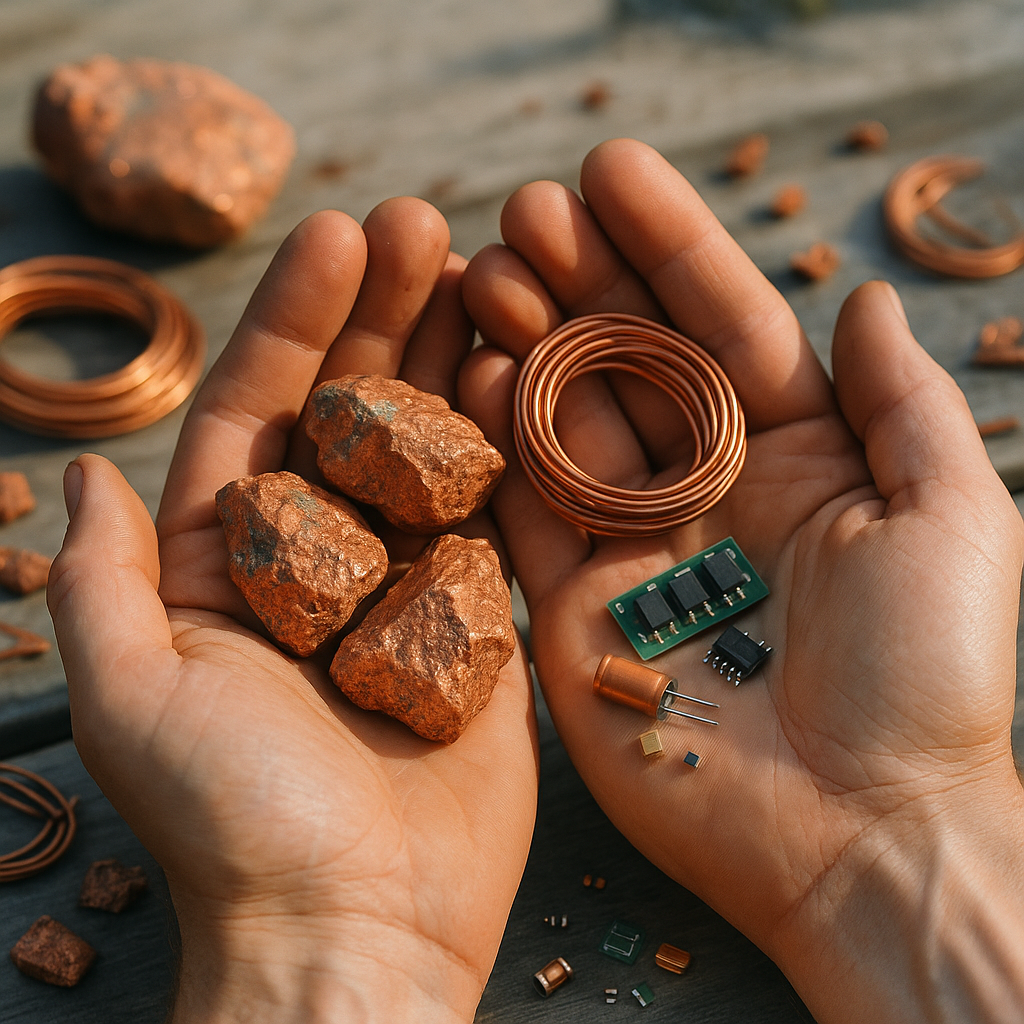
From the Earth’s crust to our daily lives, copper is a fundamental natural resource available on every continent. This versatile metal appears as both pure native copper and within numerous mineral ores. Countries like Chile, Peru and the Democratic Republic of the Congo contain over half of global reserves, but the future of the industry is increasingly focused on the materials already in use within our societies.
Due to its exceptional conductivity and durability, copper is crucial for construction, telecommunications and the transportation infrastructure that defines modern society. As demand rises with the energy transition, copper’s natural abundance must be supplemented by professional material recovery.
For businesses and municipalities managing copper-containing materials and seeking responsible recycling solutions, contact Okon Recycling at 214-717-4083 to maximize resource recovery and support the circular economy.
Send Us a Message
Questions about what we do? Interested in commercial services? Let us know below and a member of our team will get back to you.