5901 Botham Jean Blvd, Dallas, TX 75215
Learn the Basics of What Parts Harvesting in Dallas, TX Entails
January 19, 2026Parts harvesting in Dallas spans various industries, generally referring to the systematic extraction of valuable components from end-of-life equipment and machinery for reuse or repurposing. This industrial recycling practice extends the life of functional parts while significantly reducing landfill waste.
For businesses, parts harvesting involves collaboration with specialized recycling partners to salvage components from decommissioned equipment. Industrial recycling professionals understand complex manufacturing processes, allowing them to effectively de-manufacture machinery without damaging sensitive internals. These parts are then inventoried and redistributed, helping postpone equipment obsolescence. This method is considered highly efficient as it requires far less energy than producing new items from raw materials.
Consumers in North Texas often encounter parts harvesting in automotive salvage yards, where facilities extract usable OEM parts from vehicles for resale to repair shops and individuals. While the term sometimes arises in other contexts, industrial and automotive applications remain the primary focus of legitimate, sustainable recycling efforts in the Dallas-Fort Worth area.
Which Companies Offer Industrial and Electronic Parts Harvesting?
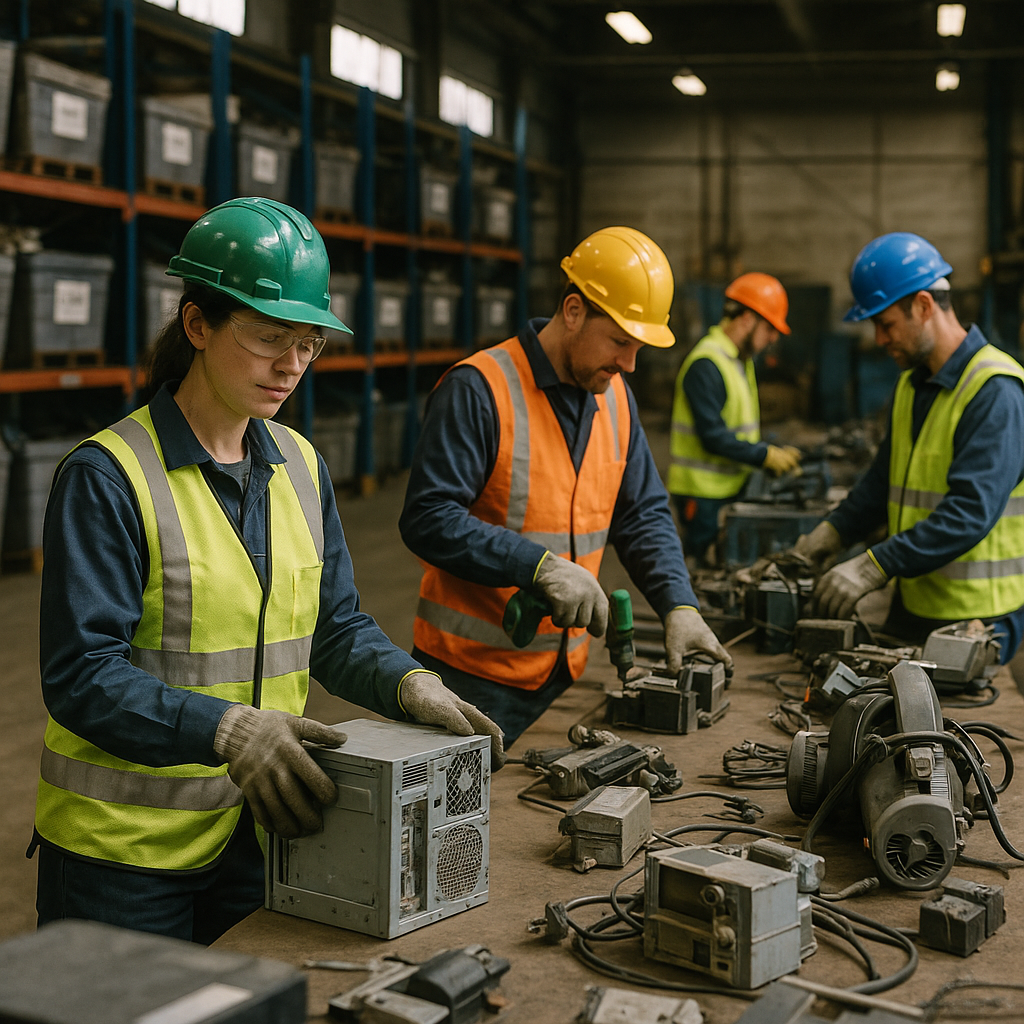
Dallas businesses seeking industrial and electronic parts harvesting services have access to specialized providers that focus on maximizing value from end-of-life equipment. These providers offer comprehensive solutions that extend beyond traditional scrap methods, focusing on “recovery” rather than just “disposal.”
Industrial Asset Recovery Services
Professional recycling centers provide comprehensive parts harvesting for businesses managing heavy machinery or manufacturing lines. These experts handle the entire lifecycle of the equipment, from the initial harvest through the final shipping of recovered components. By focusing on asset recovery, companies can often recoup a portion of their initial investment that would otherwise be lost in a standard scrap haul.
A systematic approach ensures businesses can track valuable components recovered from their retired industrial equipment. These services often include detailed inventory management, where every harvested motor, circuit board, or specialized gear is logged and cataloged. This level of detail is essential for corporate accounting and sustainability reporting.
These services support the circular economy by keeping functional components in use. This approach maximizes value recovery from industrial equipment that has reached the end of its operational life but still contains thousands of dollars in high-performance parts.
Electronics Harvesting and Data Protection
In the tech sector, specialized facilities focus on extracting usable components from devices that may be non-functional as a whole. This is particularly common for devices with water damage or motherboard failures where the peripheral components—such as screens, batteries, and camera modules—remain in perfect working order.
The process involves the certified destruction of data-containing modules, such as hard drives or solid-state drives, while preserving the structural and functional parts for reuse. This dual approach protects sensitive corporate information while extending the useful life of recoverable parts. Maintaining strict data protection standards is a hallmark of a reputable parts harvesting operation.
By ensuring that devices with functional components do not become complete waste streams, these services help mitigate the growing e-waste crisis. Instead, these parts continue serving their intended purposes in other equipment while data security remains uncompromised.
Selecting Parts Harvesting Partners
Businesses should evaluate parts harvesting companies based on their data destruction certifications and component handling procedures. Proper certification ensures compliance with state and federal data protection regulations while maintaining environmental responsibility.
Effective parts harvesting services include detailed reporting on recovered components and their final disposition. This documentation supports environmental, social, and governance (ESG) goals and helps businesses track the environmental impact of their equipment disposal decisions.
Where Can You Find Used Auto Parts in Dallas?
Dallas offers numerous automotive recycling facilities that provide cost-effective solutions for sourcing used OEM parts. Many premier destinations for salvage inventory are located along the South Central Expressway corridor, providing extensive access for both commercial mechanics and DIY enthusiasts. These facilities maintain fresh vehicle additions daily, offering significant opportunities for materials recovery across diverse makes and models.
Most salvage yards operate with standard business hours throughout the week, often extending into the weekend to accommodate local repair needs. These yards typically require safety protocols, such as prohibiting minors from the “pull” areas and requiring closed-toe shoes. These measures ensure proper waste management while maintaining secure operations for those seeking everything from alternators to body panels.
Beyond the major self-service yards, Dallas supports a strong network of specialized automotive recycling centers. These facilities often focus on specific vehicle types, such as domestic trucks or European imports, providing a higher level of expertise and pre-pulled inventory. This ecosystem creates multiple access points for sustainable parts procurement throughout the metropolitan area.
Professional-grade facilities in the region have served North Texas for decades, specializing in quality OEM components with nationwide search capabilities. These operations uphold rigorous quality standards for recycled parts, ensuring reliable performance while supporting circular economy principles. Local delivery services extend throughout the Dallas-Fort Worth corridor, facilitating efficient distribution for municipal fleets and commercial operations.
The automotive recycling industry in Dallas processes thousands of vehicles annually, diverting substantial materials from landfills while providing affordable alternatives to new parts. Many facilities offer specialized environmental services like mercury switch removal and used oil recycling, demonstrating comprehensive stewardship that goes beyond simple parts recovery.
What Are the Ethical Issues Tied to Parts Harvesting in Dallas?
Consent and Transparency in Public Programs
Recent investigations into public programs in Dallas and Tarrant counties have highlighted the critical importance of consent and transparency. Ethical concerns were raised regarding the use of unclaimed bodies in medical research without explicit permission from next of kin. In several instances, officials failed to conduct exhaustive searches for surviving family members before declaring bodies unclaimed for research purposes.
These findings underscore the necessity for strict ethical oversight in any harvesting process, whether biological or industrial. Families have expressed the need for better notification systems, emphasizing that the dignity of the individual must be preserved through clear communication and respect for legal rights.
Commercial Considerations and Vulnerable Populations
Ethical discussions also focus on the financial incentives within public programs. When programs generate revenue from the distribution of specimens or parts, it can create a conflict of interest. Ensuring that financial gain does not outweigh ethical obligations is a primary concern for modern ethics boards. This is especially true when programs involve vulnerable populations, such as the impoverished or those without strong social support systems.
Modern Ethical Standards and Reform
Current medical ethics guidelines have evolved to prioritize justice and autonomy. Most major medical institutions have moved away from using unclaimed materials, condemning practices that bypass the informed consent process. In Dallas, these revelations have led to significant program suspensions and the implementation of new, rigorous oversight committees to ensure future compliance with human rights and medical standards.
How Parts Harvesting Strengthens the Industrial Supply Chain
In the modern industrial landscape, parts harvesting is no longer just a “green” initiative; it is a strategic supply chain advantage. For many manufacturing and logistics companies in Dallas, the ability to source legacy parts from decommissioned equipment is the only way to keep aging machinery operational.
Mitigating Equipment Obsolescence
Industrial machinery is designed to last decades, but manufacturers often stop producing replacement parts just a few years after a model is retired. This creates a “parts gap” that can lead to catastrophic downtime for a factory. Parts harvesting fills this gap by creating a secondary market for components that are otherwise unavailable. By reclaiming motors, sensors, and controllers from end-of-life units, businesses can extend the lifespan of their primary assets by five to ten years.
Cost Savings and Rapid Procurement
Procuring new industrial parts often involves long lead times, especially for specialized components that must be shipped internationally. Harvesting parts locally in Dallas allows for much faster turnaround times. Furthermore, harvested parts typically cost 40 to 60 percent less than their brand-new counterparts. For a facility managing dozens of production lines, these savings represent a significant impact on the bottom line without sacrificing the reliability of the machinery.
Best Practices: How to Prepare Equipment for Harvesting
To maximize the value of your end-of-life equipment, preparation is key. Whether you are dealing with a fleet of delivery trucks or a warehouse full of server racks, following a structured decommissioning process ensures that the most valuable parts are preserved.
Maintain Accurate Service Logs
The value of a harvested part is directly tied to its history. A motor with a documented history of regular maintenance is worth significantly more than one with an unknown background. Before contacting a harvesting partner, compile all service records and technical manuals. This documentation proves the viability of the components and allows the harvester to provide a more accurate valuation of the assets.
Avoid “Scrap-First” Mentalities
One of the most common mistakes businesses make is treating retired equipment as “junk” from the moment it is decommissioned. If equipment is tossed into a scrap pile or left exposed to the elements, the most valuable components can be damaged beyond repair. Designate a clean, dry area for equipment awaiting harvest. Keeping units intact until the professional de-manufacturing team arrives ensures that sensitive electronics and precision-machined parts remain in “like-new” condition for reuse.
Choosing Reputable Parts Harvesting Services in Dallas

The Dallas recycling scene features established providers for parts harvesting across the industrial, electronic, and automotive sectors. Expert providers showcase mastery in de-manufacturing processes, collaborating closely with clients to understand the intricacies of original machinery before extracting valuable components. These services extend product lifecycles by reclaiming usable parts for global redistribution, supporting circular economy principles, and creating value for both Fortune 500 companies and smaller enterprises.
Due diligence is crucial when selecting parts harvesting partners in North Texas. Reputable providers emphasize maximizing component reuse, effective inventory management, and transparent processes that adhere to international sustainability standards.
For businesses seeking reliable parts harvesting services that prioritize environmental responsibility and operational efficiency, contact Okon Recycling at 214-717-4083.
Send Us a Message
Questions about what we do? Interested in commercial services? Let us know below and a member of our team will get back to you.