5901 Botham Jean Blvd, Dallas, TX 75215
How Can Factories in Houston Manage Their Scrap Metal?
January 21, 2026Houston factories generate millions of tons of scrap metal annually from manufacturing operations, equipment maintenance, and facility upgrades. This industrial waste stream presents both a disposal challenge and a revenue opportunity that many facilities struggle to optimize. In 2026, as manufacturing reshoring continues to surge across Southeast Texas, effective scrap management has become essential for maintaining clean operations and ensuring environmental compliance.
For factories generating scrap metal in Houston, specialized industrial and commercial recycling services offer a strategic advantage. These services are designed to handle high volumes of materials, providing factories with efficient ways to manage their scrap, including various ferrous and non-ferrous metals. Established industrial recycling partners in the Houston area bring decades of experience processing everything from heavy structural steel to intricate copper wiring from complex manufacturing systems.
What Specialized Services Are Offered for Industrial Scrap?
Houston scrap metal recyclers have developed comprehensive service portfolios to address the complex needs of modern industrial facilities. These specialized offerings streamline operations for factories while optimizing material recovery and ensuring strict environmental compliance.
Container and collection services
Roll-off containers form the backbone of industrial scrap collection programs. These containers are available in various sizes—from 20-yard bins for small machine shops to 40-yard heavy-duty containers for large manufacturing plants—to accommodate different production volumes. Professional partners offer on-site placement with scheduled or on-call pickup services, ensuring that scrap never interferes with the factory floor’s workflow.
Drive-through drop-off facilities provide an alternative for smaller loads or maintenance teams. This service is particularly valuable for contractors who require quick, convenient disposal options during regular business hours without the need for a dedicated roll-off box.
Transportation and logistics
Job site pickup services extend beyond basic collection. Professional drivers work with facility managers to ensure minimal disruption to ongoing operations. In Houston’s industrial corridors, advanced logistics capabilities include barge loading and rail car services for high-volume generators. These options are essential for large facilities that produce substantial quantities of scrap metal, such as refineries and large-scale metal fabricators near major transportation links.
Specialized industrial services
Factory dismantling is among the most complex services offered in the Houston market. This process involves extensive planning and specialized equipment. Professional dismantling services handle everything from production line removal to complete facility decommissioning, ensuring that every asset is either repurposed or recycled according to its highest value.
Certified destruction services protect proprietary information and sensitive industrial materials. These programs ensure the complete destruction of intellectual property—such as prototypes or specialized tooling—while providing official documentation for compliance and security purposes.
What Types of Factory Metals Are Accepted for Recycling?
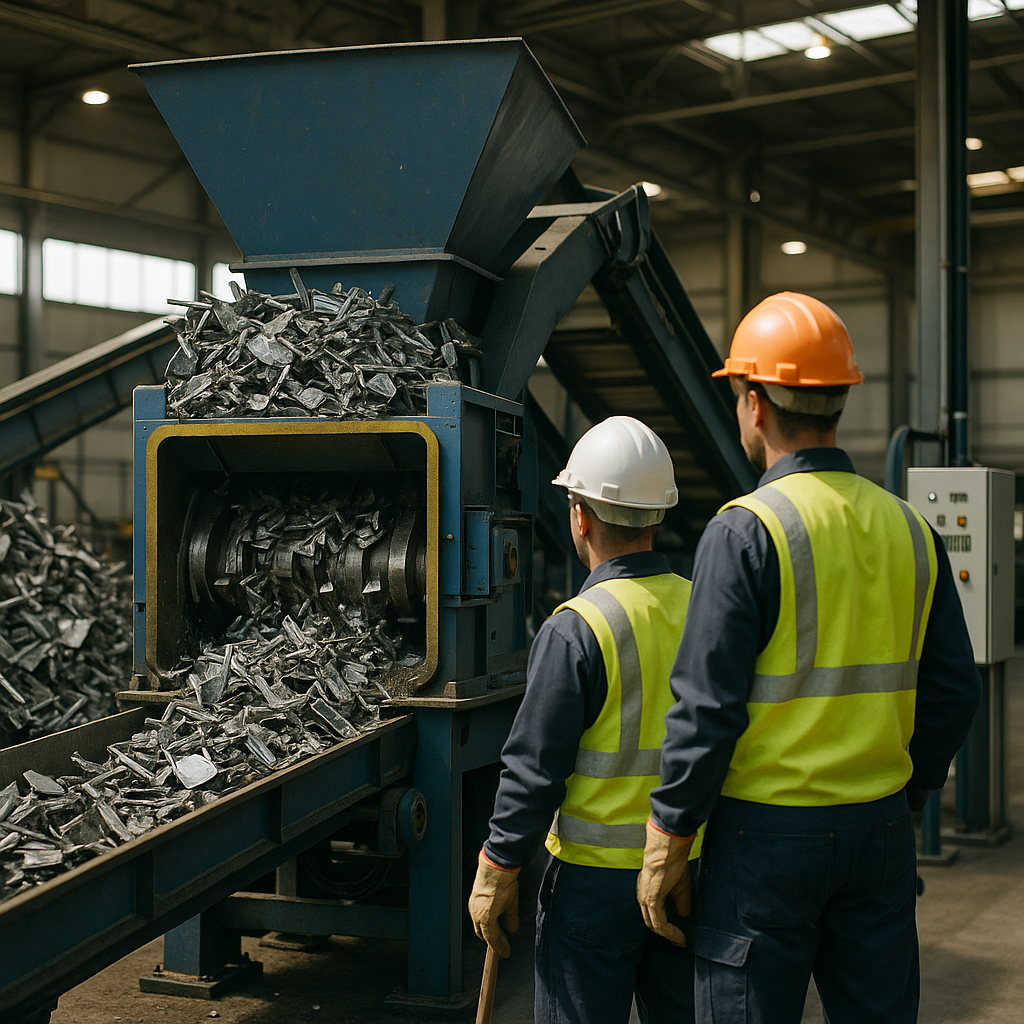
Houston recycling centers process both ferrous and non-ferrous metals from factory operations. Ferrous metals contain iron and are magnetic, while non-ferrous metals lack iron and resist magnetism. Understanding this distinction helps factories sort materials efficiently to maximize their financial return.
Commonly accepted ferrous metals
Steel is the most abundant ferrous metal in factory recycling streams. Manufacturing facilities generate steel scrap from structural components, machinery housings, and fabrication waste. Iron materials, such as cast iron parts and wrought iron elements, also have strong acceptance rates. Modern recyclers process these large-scale ferrous materials through specialized equipment, including balers and shears, to prepare them for domestic steel mills.
Non-ferrous metal categories
Non-ferrous metals command higher market values due to their corrosion resistance and specialized applications. Aluminum scrap includes extrusions, sheet materials, and HVAC components. Copper materials encompass wiring, piping, and motor windings that retain significant value. Brass components from valves and fittings, along with various stainless steel alloys, are also highly sought after by industrial buyers.
| Accepted Industrial Metals | Common Prohibited Materials |
|---|---|
| Copper (Wire, Tubing, Bus Bars) | Electronic Waste (Monitors, Computers) |
| Brass (Fittings, Valves) | Household Appliances (with Refrigerants) |
| Aluminum (Extrusions, Castings) | Radioactive Materials |
| Steel (Plate, Beam, Piling) | Live Ammunition or Explosives |
| Stainless Steel (304, 316 Grades) | Materials Containing Asbestos |
| Specialty Alloys (Inconel, Monel) | Mercury-Containing Equipment |
Materials typically excluded
Recycling centers maintain strict policies regarding hazardous materials. Explosives, radioactive materials, and chemically contaminated metals cannot enter standard recycling streams. Furthermore, non-metallic materials like plastic, wood, and glass require separate sorting. Certain specialized alloys used in high-heat environments may face specific restrictions and require a case-by-case evaluation by the recycling partner’s metallurgical team.
Implementing Advanced Recycling Technology in 2026
The industrial recycling landscape in Houston has been transformed by technological advancements that increase the accuracy and speed of material processing. For factory managers, these innovations mean more precise grading and faster payment cycles.
AI-driven sorting and alloy identification
Modern recycling facilities now utilize sensor-based sorting enhanced by artificial intelligence. These systems use deep learning to identify metal types with near-laboratory accuracy at high speeds. For example, AI can distinguish between different grades of aluminum or stainless steel that appear identical to the naked eye. This ensures that a factory’s high-value alloys are not accidentally downgraded to a lower-priced “mixed metal” category.
XRF and LIBS technology
X-ray fluorescence (XRF) and Laser-Induced Breakdown Spectroscopy (LIBS) are now standard tools for professional Houston recyclers. These handheld or inline devices provide an instant chemical breakdown of a metal’s composition. When a factory decommissioned specialized refinery equipment, these tools can identify expensive nickel or titanium alloys on the spot, ensuring the manufacturer receives the full market value for these rare materials.
Safety and Compliance: Navigating Texas Recycling Regulations
Industrial recycling in Harris County is subject to strict state and local regulations designed to prevent theft and protect the environment. Staying compliant is not just a legal obligation—it is a critical part of a factory’s risk management strategy.
The Texas Metals Program and HPD Compliance
All metal recycling entities (MREs) in Texas are regulated under the Texas Occupations Code. For Houston factories, this means every transaction must be documented with a real-time electronic record. This includes capturing the full name, address, and personal identification of the person delivering the scrap, as well as high-quality photographs of the material. Compliance with these “cash-for-scrap” laws prevents the trade of stolen industrial materials and provides a transparent audit trail for corporate facility managers.
Cradle-to-grave environmental responsibility
Texas environmental laws mandate that industrial generators are responsible for their waste “from cradle to grave.” If a factory’s scrap metal is found to be contaminated with oils, PCBs, or other hazardous substances at an unpermitted site, the factory could be held liable for cleanup costs. Partnering with a recycler who provides end-of-lifecycle certification and environmental insurance protects the factory from these long-term legal risks. In 2026, many Houston facilities also require “Notice of Intent” documentation to prove their materials were processed at a TCEQ-authorized facility.
What Are the Key Benefits of Using a Houston Industrial Recycler?

Selecting a local Houston partner offers strategic advantages that go beyond simple waste removal. From financial returns to environmental impact, professional recycling is a cornerstone of modern manufacturing excellence.
Competitive pricing and market-based returns
Industrial recyclers in Houston offer pricing that aligns with global commodity markets. By checking current scrap prices daily, professional partners ensure that factories receive optimal compensation. This market-responsive approach turns what was once a disposal cost into a significant revenue stream that can be used to fund other facility improvements.
Transparency through certified weighing systems
Professional recyclers use state-certified scales with weight read-out monitors. This system allows factory representatives to verify exact measurements in real-time. Regular auditing of these scales by the Texas Department of Agriculture ensures accuracy, fostering a high level of trust between the recycler and the industrial client.
ESG reporting and circular economy impact
Technology-enabled tracking systems help factories document their environmental impact, supporting Environmental, Social, and Governance (ESG) reporting requirements. These systems generate detailed reports on material diversion rates and carbon footprint reductions. Participation in these programs supports the circular economy by keeping valuable materials like copper and aluminum in a continuous loop of use, drastically reducing the energy needed for primary production.
Operational efficiency and superior service
Operational efficiency includes quick turnaround times and reliable pickup schedules that minimize disruption to industrial operations. Houston recyclers understand that a factory’s primary goal is production; a dependable service partner ensures that scrap containers are exchanged on time, keeping the facility clear and safe for workers. Knowledgeable staff can also provide on-site training to help factory employees sort materials more effectively at the source.
Choosing Your Factory’s Scrap Metal Partner in Houston
Selecting the right partner for factory scrap metal in Houston is crucial for operational efficiency and long-term profitability. The best recycling solutions prioritize transparent pricing, reliable transportation, and comprehensive service offerings that match your specific manufacturing requirements. Key factors include on-site container services, certified weighing systems, and the capability to handle high-volume industrial recycling needs with consistent processing schedules.
Houston’s competitive scrap management landscape offers factories a range of options. When evaluating potential partners, prioritize companies with proven track records in industrial recycling, customized programs, and high safety standards.
For expert consultation on your factory’s specific scrap metal needs and to develop a tailored recycling program, contact Okon Recycling at 214-717-4083.
Send Us a Message
Questions about what we do? Interested in commercial services? Let us know below and a member of our team will get back to you.