5901 Botham Jean Blvd, Dallas, TX 75215
What Are the Alternatives to On-Site Dumpsters for Ongoing Metal Scrap Management?
April 1, 2026Most businesses usually turn to on-site dumpsters when metal scrap starts piling up. This method is familiar and straightforward. However, dumpster rentals often create more problems than they solve for ongoing metal scrap management.
Better alternatives offer greater flexibility and cost savings. On-demand junk removal services eliminate the need for permanent container placement. Comprehensive metal recycling programs provide specialized handling for different metal types, while strategic process modifications can reduce scrap generation at the source, making disposal unnecessary.
These alternatives transform metal scrap from a disposal cost into a potential revenue stream. Businesses with ongoing metal generation can significantly reduce their waste management expenses while enhancing sustainability compliance. The key is to match the right solution to your specific metal scrap volume and generation patterns.
How Can On-Demand Haul-Off Services Improve Scrap Management?
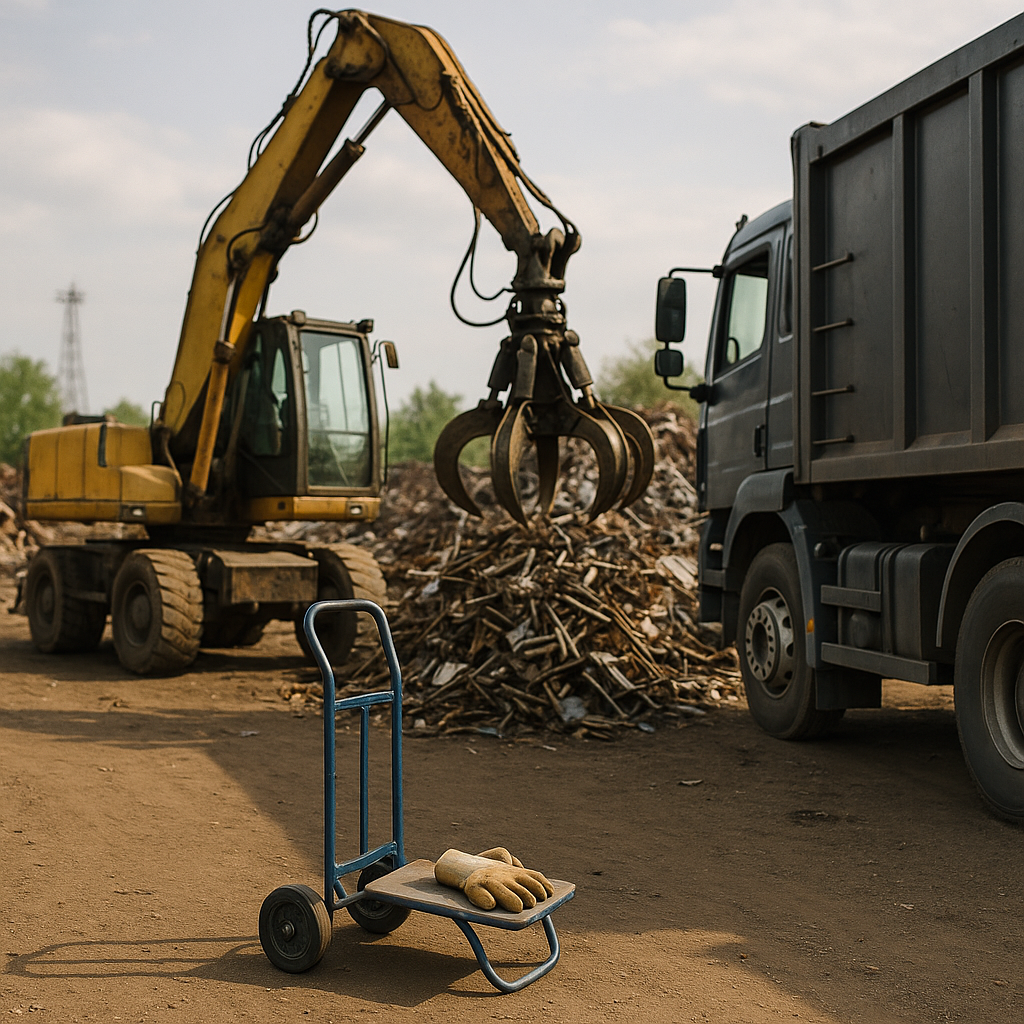
On-demand haul-off services resolve several key challenges businesses face with traditional dumpster rentals. These services eliminate the need for permanent container placement, allowing companies to reclaim valuable space for operations. Construction sites, manufacturing facilities, and commercial properties often struggle with layout constraints, where a fixed dumpster becomes an obstacle as projects evolve.
The flexibility extends beyond space considerations. Variable production cycles benefit greatly from on-demand scheduling, especially for renovation projects, equipment upgrades, or seasonal work that generate uneven scrap volumes. Paying for a container during slow periods wastes money, while on-demand services align costs directly with actual waste generation.
Professional crews handle all loading and removal, reducing the internal labor burden on businesses. This approach is especially valuable when staff time is already stretched thin across core business functions. Workers can focus on productive tasks instead of scrap handling, container maintenance, and coordination with haulers.
Material evaluation becomes more accurate with on-demand services. Professional recycling crews can properly assess and separate different types of materials on-site, ensuring fair compensation for higher-value metals like copper, brass, and aluminum. Mixed loads in permanent dumpsters often receive blended rates that undervalue premium materials.
Project timelines benefit from the responsive nature of on-demand services. Healthcare facilities, offices, and construction sites with compressed schedules can coordinate rapid removal without extended rental periods. This eliminates the inefficiency of paying for containers that sit partially filled or extend beyond actual project needs.
Documentation and compliance requirements are better supported through on-demand services. Professional providers typically offer detailed weight tickets and material categorization at pickup, supporting regulatory requirements and audit trails that many industries require for waste diversion reporting.
What Are The Differences Between On-Site And Off-Site Metal Recycling?
Core Operational Differences
Metal scrap management involves two distinct approaches that alter the flow of materials through your recycling process. On-site recycling, also known as source-separated recycling, employs multiple designated containers positioned throughout your facility or construction site. Each container is assigned a specific metal type—such as steel, aluminum, copper, or brass.
Workers sort materials as they generate waste, placing each metal type into its designated container. This immediate separation prevents different metals from mixing. The sorted containers are then transported to specialized recycling facilities that process each metal type separately.
Off-site recycling employs a different model altogether. Here, all metal materials are placed into a single container regardless of type. This commingled approach, sometimes called single-stream recycling, simplifies the collection process but transfers sorting responsibilities to a transfer station equipped with sorting technology and trained personnel.
Financial Impact Analysis
The cost structures of these methods lead to different financial outcomes for your operation. On-site recycling typically requires a higher upfront investment due to multiple container rentals. Each specialized container costs over $400 nationwide on average. A facility separating five metal types could face $2,000 in container costs alone before accounting for delivery fees and labor.
However, this initial investment often generates better long-term returns. Clean, separated metals command higher market prices and recycling rebates. Copper sorted at the source might yield 15-20% higher payments than copper extracted from mixed loads. Steel and aluminum also maintain better value when free from contamination.
Off-site recycling offers lower immediate costs through simplified logistics. Single-container systems reduce delivery fees and minimize space requirements. Yet contamination risks can negate these savings. Mixed loads face rejection rates when materials cross-contaminate, potentially requiring costly re-sorting or disposal.
Space And Logistics Requirements
Physical space considerations often determine the most suitable approach for your operation. On-site recycling demands strategic planning for multiple container placements. Urban construction sites, in particular, face this challenge. William Turley, Executive Director of the Construction & Demolition Recycling Association, notes that “trying to squeeze four or five dumpsters in a small lot might not be possible.”
Container placement affects traffic flow and worker efficiency. Multiple containers necessitate more coordinated pickup schedules. Each metal type may require different collection frequencies based on accumulation rates. This complexity can disrupt workflows when trucks block access during critical operations.
Off-site systems simplify site management by requiring minimal space. Single containers preserve valuable work areas for equipment and materials. Fewer truck visits help reduce traffic congestion and scheduling conflicts. This streamlined approach is particularly beneficial for facilities with limited space or complex operational schedules.
Quality Control And Contamination Management
Material quality directly impacts recycling success and financial returns. On-site sorting allows for immediate quality control. Workers can identify and rectify contamination issues before materials leave your site, reducing the risk of entire loads being rejected by processing facilities.
Cross-contamination is a significant challenge in metal recycling. When different metals mix, separation becomes more difficult and expensive. Some metal combinations, like aluminum mixed with steel, require advanced sorting technology not possessed by all facilities. Clean separation at the source eliminates these complications.
Off-site sorting faces higher contamination risks due to the commingled collection approach. Materials can cross-contaminate during collection, transport, or initial handling. Advanced sorting facilities use optical sensors, magnetic separation, and eddy current systems to address these challenges, but separation success varies by facility.
Waste Diversion Rate Performance
Environmental compliance and sustainability goals often rely on achieving specific waste diversion rates. On-site recycling typically delivers higher diversion rates through improved material control. When workers sort materials immediately, fewer recyclable metals end up in general waste streams.
Source separation enables the capture of specialty metals that might be overlooked in mixed streams. Items like brass fittings, copper wire, or aluminum fixtures retain their recycling value when properly identified and separated. This attention to detail can increase overall diversion rates by 20-30% compared to mixed collection systems.
Off-site recycling achieves respectable diversion rates when processing facilities have advanced sorting capabilities. Modern transfer stations can recover 85-90% of metals from mixed streams using automated sorting systems. However, this performance heavily depends on the specific facility’s technology and expertise.
Operational Timeline Considerations
Project schedules influence recycling method selection in practical ways. On-site recycling requires initial setup time for container positioning and worker training. Teams need clear guidelines on material identification and proper sorting procedures. This front-loaded time investment can slow early project phases.
The complexity increases with worker oversight requirements. Site supervisors must monitor sorting compliance and address contamination issues promptly. Rejected loads create significant delays while replacement containers are delivered and materials are re-sorted.
Off-site recycling allows for faster project startup through simplified waste management procedures. Workers need minimal training beyond basic waste disposal practices. Single-container systems eliminate complex sorting decisions and reduce management overhead during busy construction phases.
| Operational Factor | On-Site Recycling (Source-Separated) | Off-Site Recycling (Commingled) |
|---|---|---|
| Sorting Location | Sorted immediately by workers at the source. | Sorted later at a transfer station. |
| Space Requirements | High (Requires multiple containers). | Low (Requires only one container). |
| Financial Impact | Higher upfront cost, but highest payout potential. | Lower logistics cost, but potential for lower material value. |
| Contamination Risk | Low (Quality controlled on-site). | High (Cross-contamination during transport). |
| Setup Complexity | Complex (Requires training and planning). | Simple (Minimal training required). |
Technology And Equipment Factors
The sorting technology available at processing facilities significantly impacts off-site recycling effectiveness. Advanced facilities employ multiple separation methods, including magnetic separators for ferrous metals, eddy current separators for aluminum, and optical sorters for copper identification. These systems can achieve separation rates comparable to manual on-site sorting.
However, not all transfer stations possess equivalent technology. Facilities in smaller markets might rely on manual sorting or basic magnetic separation. This limitation can reduce recovery rates and affect the financial returns from your recyclable metals.
On-site sorting relies on human expertise rather than sophisticated equipment. This approach works well when workers receive proper training and oversight. Success depends on the consistent application of sorting procedures and ongoing quality control measures.
How Can Modifying Processes Reduce The Need For Scrap Removal?
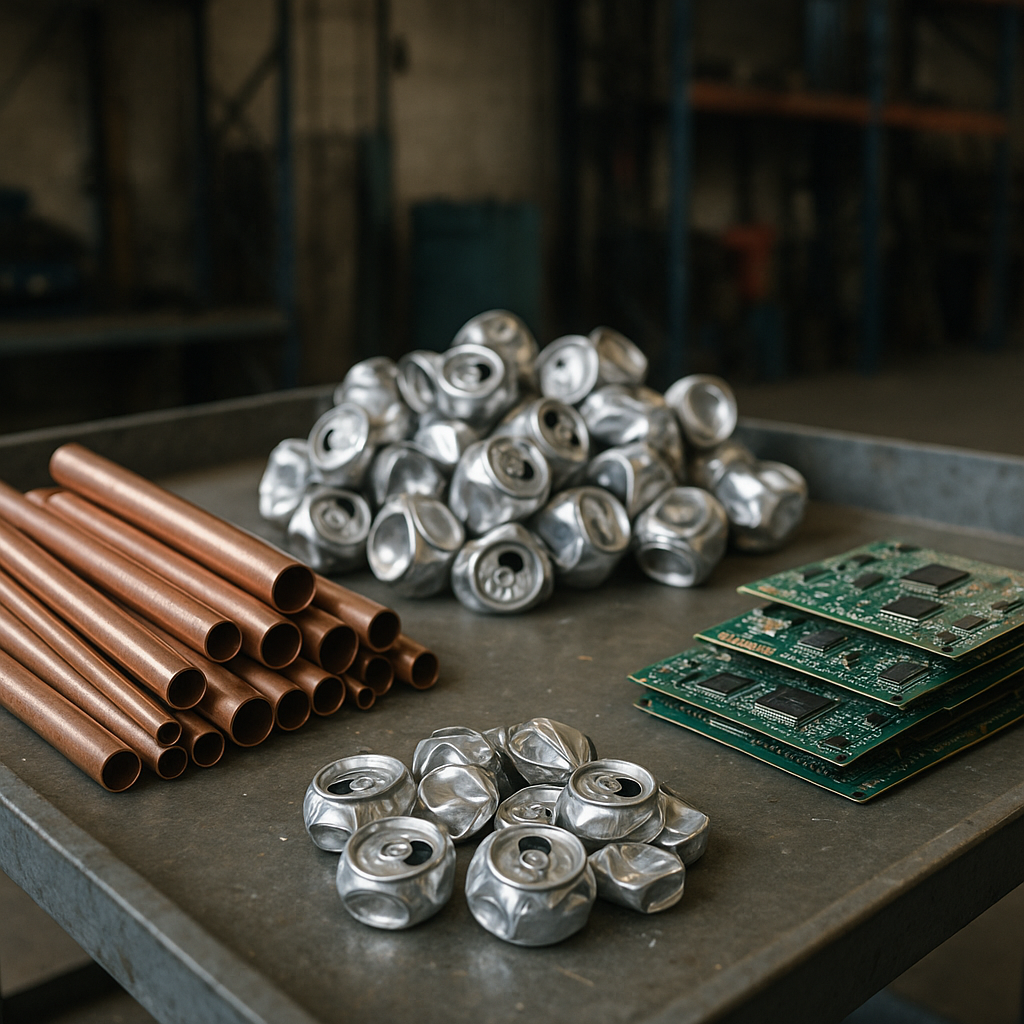
Process modifications offer the most direct path to reducing metal waste generation at its source. Instead of managing scrap after it is created, these strategic changes prevent excess material from being produced initially. This approach shifts waste management from a reactive cost center to a proactive profit driver.
Pre-cut steel is one of the most effective modifications for reducing drop material. When facilities purchase blanks closer to final part dimensions, they significantly eliminate cutting waste. An aerospace manufacturer, documented in EPA research, reduced metal waste significantly by switching from standard stock sizes to pre-cut blanks. This approach became highly cost-effective as nickel and chromium prices increased substantially.
Cutting layout optimization delivers immediate waste reduction by improving material utilization. Advanced nesting software analyzes part geometries to minimize gaps between components during cutting operations. This process modification can reduce drop material by 15-30% compared to traditional layout methods. Facilities also benefit from grouping similar parts to enhance process efficiency and material usage.
Upgrading technology provides another pathway for substantial scrap reduction. According to EPA research, replacing saws with laser cutting systems reduces scrap generation through improved precision and reduced kerf width. Laser technology also enables tighter nesting patterns and cleaner cuts that require less secondary processing.
Drop material evaluation creates additional value recovery opportunities. Facilities can analyze leftover shapes and sizes to identify alternative parts that can be manufactured from waste material. This secondary use approach maximizes virgin material utilization and reduces both waste generation and raw material purchasing needs.
The economic case for process modification strengthens as metal prices rise. TRI-listed metals like chromium and nickel carry high replacement costs, making waste prevention increasingly valuable. Facilities that implement comprehensive process modifications often achieve material cost reductions of 20-40% while simultaneously reducing waste disposal expenses.
These modifications are most effective when integrated as systems rather than isolated changes. Combining pre-cut purchasing with optimized layouts and advanced cutting technology creates compounding benefits. The result is reduced scrap generation, lower virgin material consumption, and improved profitability across metal fabrication operations.
What Transportation And Disposal Options Are Available For Bulk Metal Waste?
Handling large volumes of metal scrap necessitates specialized transportation solutions beyond standard waste collection methods. These services offer efficient alternatives for industrial facilities generating substantial amounts of ferrous and non-ferrous materials. Specialized providers offer comprehensive logistics support that streamlines the waste management process.
Portable truck-to-rail services are among the most economical options for transporting bulk metal waste over land. This intermodal approach combines the flexibility of truck collection with the cost-effectiveness of rail transport over longer distances. Rail transport is particularly advantageous when moving large volumes to smelters and refiners located hundreds of miles from the generation sites.
Container Management Solutions
Service providers offer a variety of container types to meet diverse industrial needs and material characteristics. Roll-off containers effectively handle general metal scrap and demolition materials. These containers typically range from 20 to 40 cubic yards and can accommodate mixed ferrous materials from construction and manufacturing operations.
Vacuum containers are used for specialized applications requiring liquid-solid separation. They work well for metalworking fluid recovery and contaminated metal processing. Frac tanks provide temporary storage solutions for large-volume operations where materials need staging before transport to recycling facilities.
Container selection depends on material type, contamination levels, and site accessibility. Hazardous waste containers require additional certifications and handling protocols. Non-hazardous metals can use standard containers with appropriate weight distribution considerations.
Turnkey Transportation Services
Comprehensive service packages manage every aspect from initial collection through final disposal or recycling, eliminating the need for multiple vendor relationships and simplifying logistics coordination. Providers handle all Department of Transportation compliance requirements, including packaging, marking, labeling, and documentation.
Turnkey services include on-site assessment, container placement, material characterization, and transportation scheduling. Providers coordinate directly with smelters and refiners to optimize routing and processing schedules, reducing administrative burdens while ensuring proper waste management.
Documentation management is a critical component of these services. Bills of lading and manifests have specific completion procedures and timing requirements. Professional service providers maintain expertise in hazardous materials regulations and ensure proper paperwork accompanies all shipments.
Safety And Efficiency Benefits
Specialized bulk transportation services offer significant safety advantages over standard waste handling methods. Professional operators understand proper load organization and securing techniques that prevent material movement during transport. They separate incompatible materials and use appropriate buffering strategies to minimize risks.
Efficiency gains result from optimized routing, proper container sizing, and coordination with processing facilities. Service providers leverage established relationships with recycling technologies and facilities to ensure materials reach suitable end markets, reducing transportation costs and improving material recovery rates.
Professional services also eliminate the need for internal fleet management and driver training. Companies can focus on core operations while ensuring proper waste stream management through qualified transportation providers.
Conclusion: Choosing The Right Scrap Management Strategy
Exploring options beyond a simple on-site dumpster for metal scrap management can lead to more efficient, sustainable, and cost-effective solutions. By considering options like on-demand hauling, source-separated recycling, and internal process improvements, businesses can create a strategy that aligns with their project duration, space, and budget. The key is assessing your specific needs and partnering with a flexible waste provider to optimize your metal recovery and disposal workflow.
Strategic scrap management requires understanding your waste generation patterns, available storage space, and recycling goals while considering environmental impact and disposal regulations. For tailored metal recycling solutions that maximize cost savings and environmental benefits, contact Okon Recycling at 214-717-4083.
Send Us a Message
Questions about what we do? Interested in commercial services? Let us know below and a member of our team will get back to you.