5901 Botham Jean Blvd, Dallas, TX 75215
Does Texas Pay You to Recycle? Exploring Options
February 6, 2026Yes, you can get paid for recycling in Texas, but not through a single statewide program. Compensation comes in various forms across the Lone Star State. Direct cash payments are available through public buy-back programs that purchase materials like paper, cardboard, and metals. In 2026, as commodity markets stabilize and demand for domestic raw materials increases, these programs have become a viable revenue stream for both individuals and businesses.
Financial rebates for businesses operate in specific municipalities like Austin, where companies can receive up to $3,000 for waste reduction efforts that go beyond basic recycling compliance. Local government projects also benefit from state-allocated grants that improve recycling infrastructure and expand waste diversion programs. These incentives are designed to support the state’s growing circular economy by making sustainable practices financially attractive.
The payment methods vary significantly by location and material type. Some facilities offer immediate cash for sorted recyclables based on daily commodity rates, while others provide indirect savings through reduced waste management service fees. Understanding which options apply to your situation requires knowing what programs operate in your area and what specific materials—such as non-ferrous metals or high-grade electronics—they accept.
How Can You Get Cash Through Public Buy-Back Programs?

Public buy-back programs offer a straightforward way to monetize recyclable materials while promoting environmental sustainability. Participants bring qualifying materials to designated collection points and receive immediate cash payments based on current market rates. In 2026, the pricing for these materials is driven by the global demand for “green” manufacturing inputs.
While Texas does not have a “bottle bill” like New York’s Returnable Container Act, which mandates deposits on beverage containers, private sector recycling centers fill this gap. These facilities purchase aluminum cans, typically by the pound, offering a financial incentive for residents to collect and sort their beverage waste. This market-driven approach has maintained steady participation rates without government mandates.
Scrap metal and fiber markets
Scrap metal facilities provide the most lucrative option for cash recycling in Texas. These operations buy various metals, including aluminum, copper, steel, and brass, at competitive market prices. In early 2026, prices for clean copper tubing and wire have remained strong, making them a primary target for asset recovery. Paper recycling programs also offer cash opportunities, particularly for high-volume commercial generators. Materials like cardboard (OCC), office paper, and newspaper qualify for payment when delivered in bulk to processing centers in the Dallas-Fort Worth metroplex.
Regional variations and accepted materials
Regional variations significantly impact program availability and pricing. Urban centers with established manufacturing bases often maintain more comprehensive buy-back systems due to the local demand for recycled feedstock. These programs frequently cover electronics, batteries, and specialty items not included in traditional residential recycling streams. Payment structures vary considerably; while bottle collection centers might offer a fixed rate per pound, scrap metal payments fluctuate daily with the London Metal Exchange (LME) and other commodity indices.
Navigating the 2026 Texas Regulatory Landscape
As we move through 2026, the Texas Commission on Environmental Quality (TCEQ) has implemented new reporting requirements and definitions that impact how businesses manage their recyclable assets. Staying informed about these changes is essential for any commercial entity looking to monetize their waste stream legally and efficiently.
New reporting for recycling facilities
Under updated state regulations, recycling facilities operating under a “Notice of Intent” (NOI) must now submit more detailed annual reports regarding their operating status and material recovery rates. For businesses selling scrap, this means that your recycling partner must be fully transparent about where your material goes. Working with a compliant facility ensures that your company is contributing to verifiable diversion goals and protects you from liability associated with improper waste handling. Facilities must now demonstrate that at least 50 percent of the material they receive is actively recycled, preventing the stockpiling of waste under the guise of recycling.
Renewable energy component recycling
A major shift in 2026 involves the handling of renewable energy components. New mandates require specific reporting for the recycling of solar panels, wind turbine blades, and associated energy storage batteries. If your business is decommissioning a solar array or upgrading a fleet of electric forklifts, the scrap value of these items is now tied to strict chain-of-custody documentation. Professional recyclers assist in navigating these “Universal Waste” rules, ensuring that valuable commodities like silver (from solar panels) and lithium (from batteries) are recovered while hazardous components are managed safely.
What Financial Incentives Can Businesses Receive in Texas?
Texas businesses can access substantial financial support for implementing advanced recycling and waste reduction programs. The City of Austin leads the state with comprehensive rebate opportunities that help commercial properties exceed basic compliance requirements, but similar initiatives are appearing in other major manufacturing hubs.
Austin’s Zero Waste Business Rebate
Austin’s Zero Waste Business Rebate program offers up to $3,000 annually to eligible businesses that enhance their waste diversion efforts beyond minimum Universal Recycling Ordinance standards. This program targets premises under the city’s recycling requirements, reimbursing qualifying expenses that advance zero-waste goals.
Eligible rebate categories and requirements
The rebate program covers various sustainability initiatives across multiple categories. Food rescue equipment funding supports refrigeration systems that extend food life. Organics services qualify for up to 12 months of commercial composting collection. Reusable and compostable ware purchases are also included, reimbursing businesses for replacing single-use plastics with durable alternatives. The program supports recycling expansion beyond standard single-stream collection, covering specialty materials like shrink wrap and foam.
| Expense Category | Description | Maximum Funding Amount |
|---|---|---|
| Food Rescue Equipment | Refrigeration systems and transportation tools | Up to $3,000 |
| Organics Services | Up to 12 months of commercial composting collection | Up to $3,000 |
| Reusable/Compostable Ware | Replacement of single-use items with durable alternatives | Up to $3,000 |
| Recycling Expansion | Collection systems for specialty materials like e-waste | Up to $3,000 |
| Infrastructure Improvements | Construction for recycling enclosures and compactors | Up to $3,000 |
Application process and compliance standards
Successful applicants must register as city vendors and comply with existing recycling ordinances. The program typically operates on a first-come, first-served basis with limited annual funding. City staff conduct eligibility meetings and site visits to establish baseline measurements. Participants must maintain new services for at least six months to verify program effectiveness. This systematic approach ensures funds support genuine waste reduction improvements rather than routine operational costs.
The Evolving Economics of E-Waste in 2026

Electronic waste, or e-waste, represents one of the fastest-growing waste streams in Texas. In 2026, the economic model for recycling electronics has bifurcated into two distinct paths: manufacturer take-back programs for consumers and high-value asset recovery for businesses.
Manufacturer take-back programs
For residential consumers and small businesses, Texas law requires computer and television manufacturers to offer free and convenient recycling. This “Extended Producer Responsibility” model means that brands must provide a way for you to return their branded equipment—often through mail-back programs or partnered drop-off sites—at no cost. While you do not get paid cash for these items, the “payment” is the elimination of disposal fees, which can otherwise be significant for CRT monitors and hazardous devices.
Commercial asset recovery and component value
For businesses with large volumes of IT assets, the dynamic changes. Corporate IT departments can generate revenue by selling retired electronics to certified recyclers who harvest components. In 2026, the scrap value of high-grade circuit boards, gold-plated connector pins, and memory modules remains high. “Green” motherboards, RAM sticks, and server power supply units are traded by the pound. By properly sorting and depopulating these devices (removing batteries and separating steel cases), businesses can turn a disposal cost into a revenue line item. Security remains paramount; reputable recyclers provide cash for these assets only after performing certified data destruction to NIST 800-88 standards.
Are There State-Level Grants for Recycling Projects?
The Texas Commission on Environmental Quality operates a comprehensive grant program supporting recycling infrastructure across Texas. The Regional Solid Waste Grants Program distributes millions annually to local communities, enhancing recycling services for residents and businesses alike.
This program is funded through tipping fees collected at municipal solid waste landfills. The state legislature directs the TCEQ to allocate a portion of these revenues to grants for local solid waste projects. Funding reaches communities via a two-tier system, where funds are assigned to the state’s 24 councils of governments (COGs) based on population and waste generation metrics.
Private sector and community partnerships
Recent grant recipients have utilized funds for diverse recycling projects, such as acquiring vertical balers to process cardboard for revenue or hosting community-wide collection events. Private partnerships also play a role; programs like H-E-B’s Community Recycling Grants collaborate with organizations such as Keep Texas Beautiful to enhance local recycling access in rural areas. These grants often fund the physical infrastructure—bins, trucks, and balers—that makes recycling economically viable in smaller markets.
How Can Recycling Save You Money Indirectly?
Recycling offers cost savings that go beyond direct payments for materials. These indirect financial benefits affect households, businesses, and entire communities by reducing waste management expenses and avoiding long-term infrastructure costs.
Reducing disposal fees and “Right-Sizing” service
Household and commercial waste collection costs decrease when active recycling reduces the volume of trash sent to the landfill. In many Texas cities, residents can lower their monthly fees by downsizing to a smaller trash cart while utilizing a larger, often free, recycling bin. For businesses, “right-sizing” dumpster service by diverting cardboard and metal to recycling streams can slash monthly hauling bills by 20 to 30 percent.
Long-term cost avoidance for communities
Communities also benefit from significant long-term cost avoidance. By lowering the volume of waste sent to landfills, municipalities can postpone costly landfill replacement projects. In Texas, developing a new landfill can cost over $30 million, resulting in substantial taxpayer savings when recycling programs successfully extend the lifespan of existing facilities. Furthermore, recycling programs offer opportunities to keep raw materials local, supporting Texas industries and stabilizing the regional economy.
Conclusion: Maximizing Your Recycling Earnings in Texas
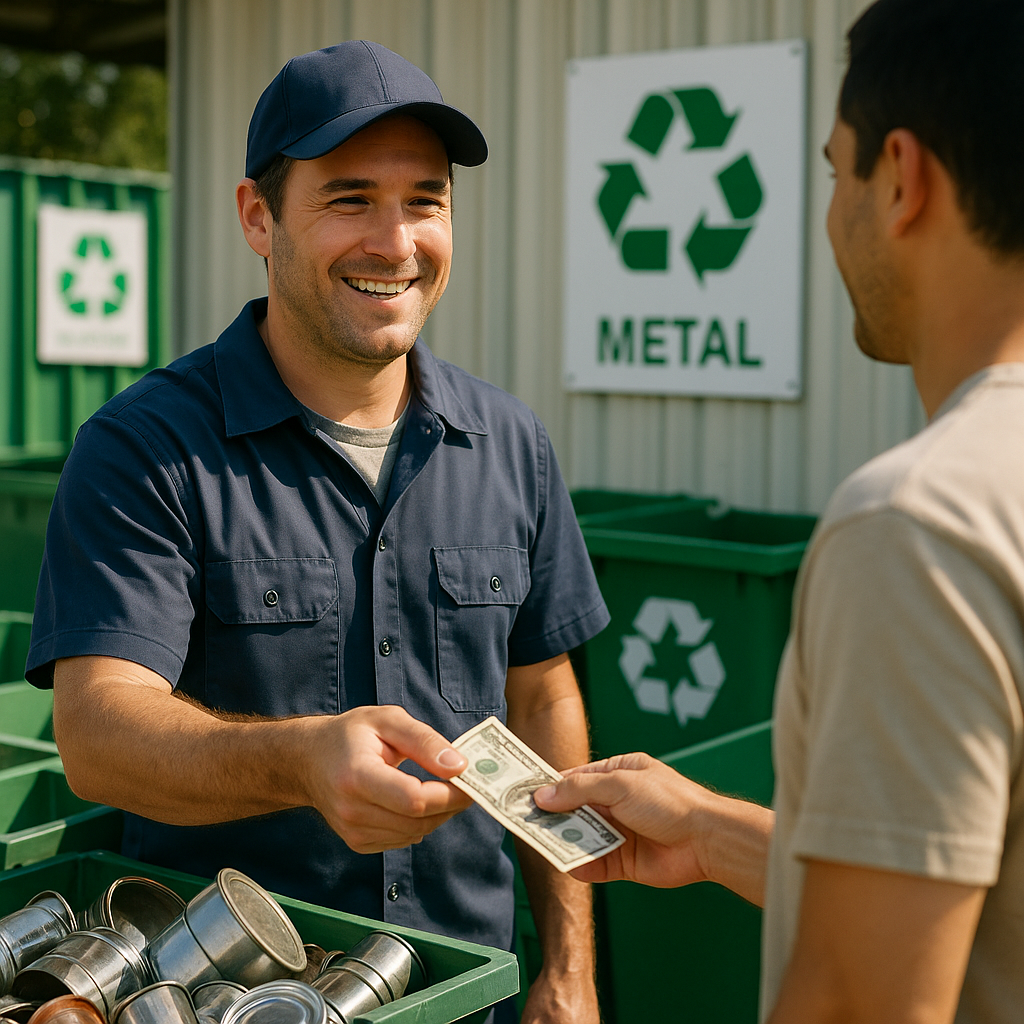
While Texas does not have a single statewide program that pays residents to recycle, there are multiple financial opportunities available across the state in 2026. Buy-back centers offer direct cash payments for materials like paper, cardboard, and scrap metals based on active commodity markets. Cities like Austin provide business rebates for waste reduction initiatives, and all Texans can enjoy significant cost savings through reduced waste management expenses and tax-funded grants.
The key to maximizing your recycling earnings is researching local programs and private buy-back centers in your area. Whether you are an individual looking for quick cash for aluminum cans or a business seeking long-term financial benefits through asset recovery, these diverse opportunities can turn your recycling efforts into measurable returns.
For comprehensive recycling solutions tailored to your specific material needs, contact Okon Recycling at 214-717-4083.
Send Us a Message
Questions about what we do? Interested in commercial services? Let us know below and a member of our team will get back to you.