5901 Botham Jean Blvd, Dallas, TX 75215
Manufacturing Waste Recycling in McKinney: A Comprehensive Guide
January 29, 2026McKinney’s rapid industrial expansion has created significant demand for specialized waste management solutions. The city’s strategic position in Collin County and the Dallas-Fort Worth Metroplex attracts manufacturers who generate complex waste streams requiring professional handling. This growth has fostered a comprehensive network of recycling facilities equipped to manage diverse industrial materials. In 2026, as manufacturing reshoring continues to surge in North Texas, effective material recovery has become a cornerstone of both operational efficiency and environmental stewardship.
Manufacturing facilities in McKinney can access specialized recycling services tailored to their operational needs. Professional partners provide mixed waste scrap metal recycling for contaminated materials that require careful separation before processing. Industrial waste management services handle regulated materials through fully permitted treatment facilities staffed by chemists and industrial hygienists, ensuring that Texas soil and groundwater remain protected.
What Types of Industrial Materials Are Recycled in McKinney?
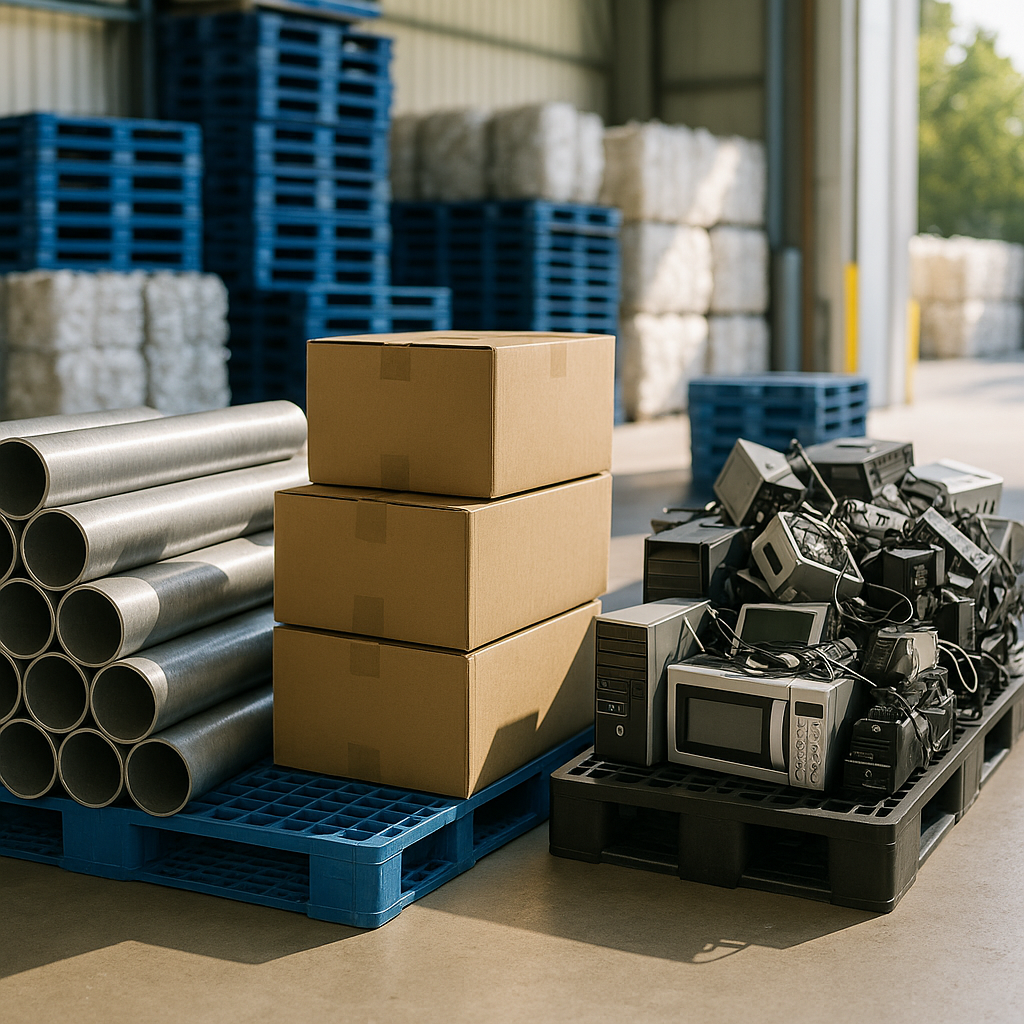
McKinney’s recycling infrastructure handles diverse industrial materials through specialized facilities and processing centers. The city’s role as a manufacturing hub has attracted recycling operations capable of managing everything from standard metals to complex electronic equipment and aerospace-grade alloys.
Metal recycling services
Ferrous metals represent one of the largest recycling categories in North Texas. Local facilities process steel and iron from manufacturing activities, construction projects, and demolition operations. These materials flow through established processing channels that separate clean metals from contaminated sources, ensuring that they meet the strict quality standards required by domestic steel mills.
Non-ferrous metals like aluminum and copper require dedicated handling systems. Specialized recycling operations focus on these higher-value materials, which often originate from electrical components, industrial equipment, and CNC machining centers. Mixed waste scrap metal containing hazardous substances demands careful mechanical and manual separation before processing to prevent contamination in the furnace.
Construction and demolition materials
Construction debris forms a substantial portion of McKinney’s industrial recycling stream. Wood framing, flooring materials, and interior components from commercial projects enter regional processing facilities for recovery. Concrete recycling has become particularly prevalent in the area; crushed concrete transforms into reusable aggregate products, ensuring demolition materials reenter the construction supply chain rather than filling Collin County landfills.
Electronic waste processing
Electronics recycling addresses increasing volumes of e-waste from manufacturing facilities, corporate offices, and data centers. These materials require specialized processing to recover valuable metals like gold, silver, and palladium while managing hazardous components like lead and mercury. Industrial equipment containing electronic assemblies, such as PLCs and control panels, follows similar processing protocols to ensure maximum material recovery.
Industrial packaging and manufacturing plastics
Cardboard packaging from industrial operations represents significant recycling volumes. Distribution centers and manufacturing facilities generate these materials in large quantities, requiring efficient on-site baling and processing systems. Furthermore, specialized facilities process post-manufacturing plastic waste, such as HDPE and LDPE production scrap. These materials require sorting and cleaning before reprocessing into new high-quality pellets, supporting circular economy principles.
How Is Hazardous Manufacturing Waste Managed in the Area?
Hazardous industrial waste in McKinney is handled by specialized environmental service providers with permitted facilities that meet strict state and federal standards. These certified handlers manage regulated materials like ignitable liquids, toxic metals, used solvents, and corrosive materials. The differentiation between standard waste streams and hazardous materials is a critical legal and operational distinction for McKinney businesses.
Standard construction and demolition landfills are strictly prohibited from accepting hazardous items such as industrial batteries, used oil, liquid waste, and electronics. This clear separation ensures that hazardous substances receive appropriate treatment while protecting workers and the environment. Conventional facilities focus on non-hazardous industrial materials while hazardous waste specialists manage the more sensitive, regulated streams.
Specialized environmental service capabilities
Professional hazardous waste management providers serve McKinney’s industrial, commercial, and healthcare facilities by maintaining fully permitted treatment, storage, and disposal facilities across Texas. These providers typically accept over 500 RCRA and non-RCRA waste codes. Specialists in the field, including chemists and engineers, provide regulatory guidance to ensure businesses maintain their “cradle-to-grave” responsibility for waste generation.
Teams work directly with municipal departments for emergency chemical spill response and property remediation. These providers collaborate with local Environmental Health and Safety (EHS) managers to develop comprehensive sustainability programs covering hazardous, non-hazardous, electronic, and universal waste materials. This ensures businesses select the most efficient management practices while maintaining regulatory compliance.
Regulated material categories and treatment requirements
McKinney’s industrial waste system handles diverse categories of regulated materials under the Texas Administrative Code framework. Ignitable liquids, such as flammable solvents and cleaning solutions, require special handling to prevent fire hazards during storage. Toxic metals, contaminated soils, plating solutions with chromium, and industrial sludges require extensive testing and characterization before treatment. Corrosive materials must be neutralized using specialized equipment to prevent damage to infrastructure and protect the environment.
Maximizing Asset Recovery: Financial Value in Industrial Scrap
In the industrial landscape of 2026, scrap metal and manufacturing byproducts are no longer viewed simply as waste—they are recoverable assets. For McKinney businesses, implementing a structured asset recovery program can significantly impact the bottom line.
Source separation and alloy grading
The most effective way to maximize the value of industrial scrap is through source separation. When high-value alloys—such as 304 stainless steel or 6061 aluminum—are kept in dedicated bins at the point of generation, they command a significantly higher price at the scale. Commingled or “dirty” loads require additional labor for the recycler to sort, which lowers the payout to the manufacturer. Professional recycling partners can provide on-site training for plant staff to help identify and separate metals more efficiently, ensuring that the company captures the full market value for its production scrap.
Technological verification with XRF and LIBS
McKinney’s leading recycling facilities now utilize advanced technology like X-ray fluorescence (XRF) and Laser-Induced Breakdown Spectroscopy (LIBS) to verify the exact chemical composition of alloys. For a manufacturer generating specialized aerospace or defense scrap, this technology ensures that expensive nickel, titanium, or molybdenum alloys are identified with near-laboratory accuracy. This scientific verification removes the guesswork from material grading and ensures that businesses are compensated for the specific metallurgical value of their scrap.
Industrial Logistics and Container Solutions for McKinney Businesses
Efficiency in waste management is driven by logistics. For McKinney manufacturing and construction sites, having the right equipment and a reliable pickup schedule is vital for maintaining a lean production floor and a safe work environment.
Roll-off and specialized bin programs
Industrial recycling partners provide a wide array of container solutions tailored to specific project needs. From 10-yard hoppers for machine shops to 40-yard roll-off containers for large-scale demolition sites, having the correct bin prevents overflow and reduces the number of truck trips required. Professional recyclers offer both scheduled and on-call pickups, ensuring that scrap never interferes with daily operations. Many facilities now use digital monitoring systems to track bin levels, allowing for “just-in-time” logistics that minimize transportation costs and carbon emissions.
On-site processing and de-manufacturing
For high-volume projects, on-site processing can significantly increase efficiency. Mobile shears, balers, and wire strippers allow for the volume reduction and cleaning of scrap metal directly at the job site. This is especially valuable during major industrial retrofits or the decommissioning of large HVAC systems and chillers. By de-manufacturing equipment on-site, businesses can separate high-value copper and aluminum from heavy steel, maximizing the recovery rate and providing immediate liquidity for the project.
Who Are the Key Providers for Industrial Recycling in McKinney?

McKinney’s industrial recycling infrastructure relies on a diverse network of equipment suppliers and processing facilities that work together to return raw materials to the global economy. This competitive landscape ensures that businesses have access to the latest technology and market-based pricing.
Equipment suppliers and manufacturing support
Local equipment manufacturers provide essential machinery like balers and compactors. This equipment helps McKinney businesses reduce waste volumes and improve material handling efficiency. Balers compress materials like cardboard and paper into dense bundles, making transportation more cost-effective. Compactors serve a similar function for general waste streams, allowing businesses to maximize container capacity while minimizing pickup frequency and associated fees.
Full-service processing facilities
Comprehensive waste management providers handle large-scale projects throughout Collin County. These facilities offer services ranging from engineering and project development to construction and operations management. They manage diverse waste streams, including construction debris, manufacturing byproducts, and mixed industrial materials. These operations often include preprocessing capabilities that prepare materials to specific mill specifications, ensuring a high-purity output for secondary markets.
Specialized environmental and electronic services
McKinney benefits from specialized providers who operate fully permitted treatment and disposal facilities for regulated materials. Their expertise proves essential for manufacturers and healthcare centers that generate hazardous waste. Furthermore, electronics recyclers provide secure data destruction and materials recovery for servers, networking equipment, and industrial control systems. These specialists maintain zero-landfill policies and provide certified destruction documentation, which is vital for audit purposes and data security compliance.
Conclusion: Advancing Industrial Sustainability in McKinney
McKinney provides a comprehensive infrastructure for managing manufacturing waste, offering solutions for scrap metal, e-waste, construction debris, and hazardous materials. With experienced providers specialized in high-tech recovery and post-industrial plastics, local industries can implement sustainable and environmentally responsible waste management practices. Partnering with these experts enables businesses to reduce their carbon footprint, ensure regulatory compliance, and contribute to a circular economy while optimizing resource recovery from diverse waste streams.
The city’s strategic position in the North Texas corridor has attracted specialized facilities that handle everything from residential cleanups to complex industrial decommissioning. Manufacturing facilities throughout McKinney can leverage these comprehensive recycling services to advance their sustainability goals and meet modern environmental regulations.
For businesses seeking reliable industrial recycling solutions that maximize scrap value and support long-term sustainability objectives, contact Okon Recycling at 214-717-4083.
Send Us a Message
Questions about what we do? Interested in commercial services? Let us know below and a member of our team will get back to you.