5901 Botham Jean Blvd, Dallas, TX 75215
Where Can Homeowners Drop Off Old Appliances and Metal Safely?
February 11, 2026When your refrigerator stops cooling or your washing machine breaks down after years of use, disposing of them presents a challenge beyond regular trash pickup. Most curbside waste management services cannot accommodate large appliances due to size limitations and safety concerns. Improper disposal of these items can release harmful substances into the environment and violate local waste management regulations.
Safe appliance drop-off requires knowing which facilities accept different types of metal items and appliances. Refrigerators, air conditioners, and dehumidifiers contain refrigerants that must be professionally removed before recycling. Other appliances like stoves, washers, and dryers can often be easily recycled at scrap metal facilities. The key is matching your specific items with the right recycling centers and understanding their acceptance requirements.
Homeowners have several options for responsible disposal, including municipal recycling programs, certified scrap metal dealers, and retailer take-back services. Each option caters to different needs and item types, ensuring valuable metals are recovered while hazardous materials are properly handled. Understanding these pathways helps homeowners make informed decisions that benefit both their communities and the environment.
What Are The Main Drop-Off Options For Appliances And Metal?
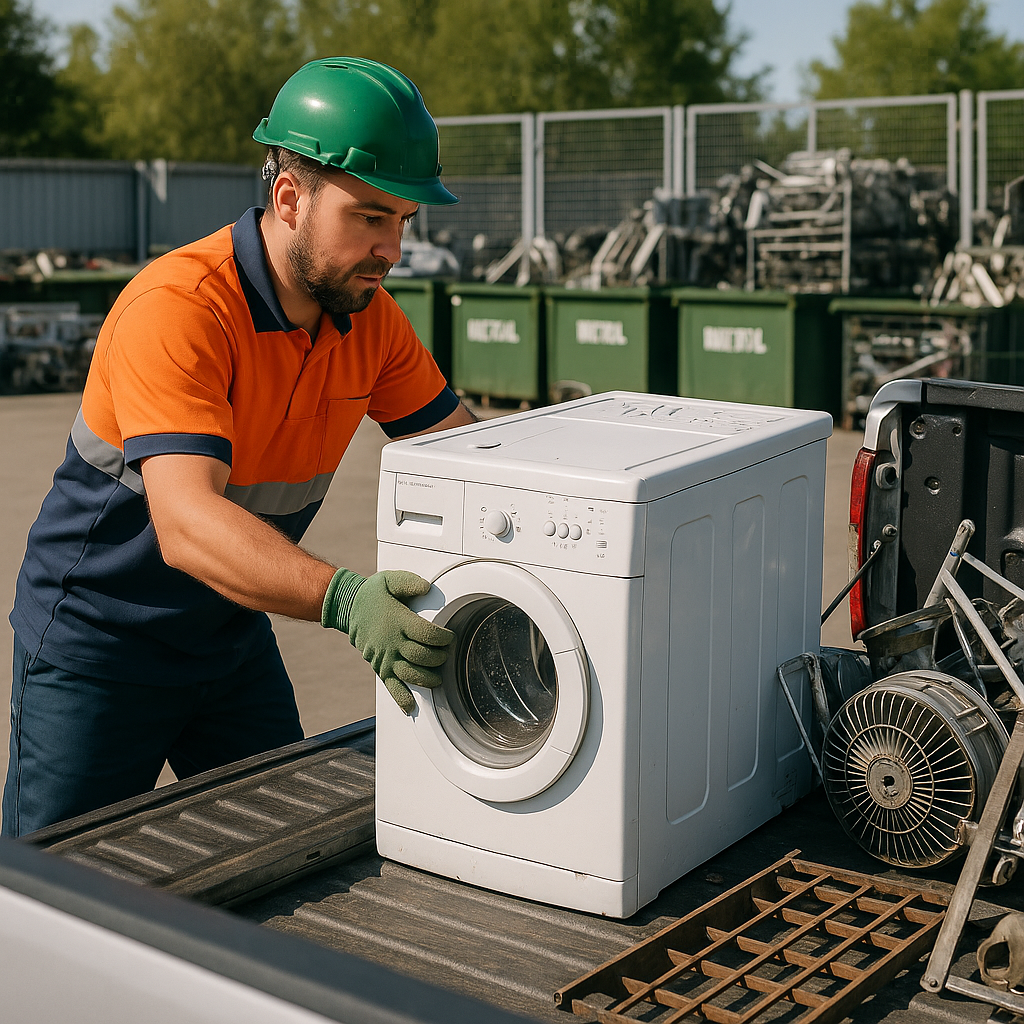
Municipal recycling drop-off centers are among the most accessible options for disposing of appliances and scrap metal. Many counties and municipalities operate these facilities, often offering free drop-off services for residents. These centers usually accept large appliances like refrigerators, washers, dryers, and various types of scrap metal, including steel, aluminum, and copper.
The municipal waste authority in your area may also coordinate special collection events throughout the year. These events provide a convenient way for residents to dispose of bulky items that don’t fit in regular curbside programs. Contact your local waste management department to learn about scheduled collection dates and accepted materials.
Certified appliance recyclers specialize in handling items containing hazardous components. These facilities are equipped to safely remove refrigerants from air conditioners and refrigerators following EPA guidelines. Professional appliance recycling services ensure the proper disposal of hazardous materials while recovering valuable metals for reuse.
Private scrap metal facilities provide another viable option, particularly for those looking to earn money from their materials. These businesses purchase various types of scrap metal and appliances based on current market prices. Many facilities accept everything from aluminum cans to large appliances, offering a comprehensive solution for metal recycling needs.
Retailer take-back programs offer convenience when purchasing new appliances. Many appliance retailers provide haul-away services for old units when delivering new ones, eliminating the need for separate transportation and ensuring proper disposal through established recycling channels.
Local donation centers accept appliances and metal items that are still in good working condition. These organizations refurbish donated items for resale, supporting community programs while extending the useful life of appliances. This option is best for items that still function properly and can benefit other households.
Some areas also offer curbside programs for appliance pickup, though availability varies by location. These programs typically require advance scheduling and may involve fees depending on local policies. Check with your waste management provider to see if curbside appliance collection is available in your area.
How Should You Handle Appliances With Hazardous Materials Like Refrigerants?
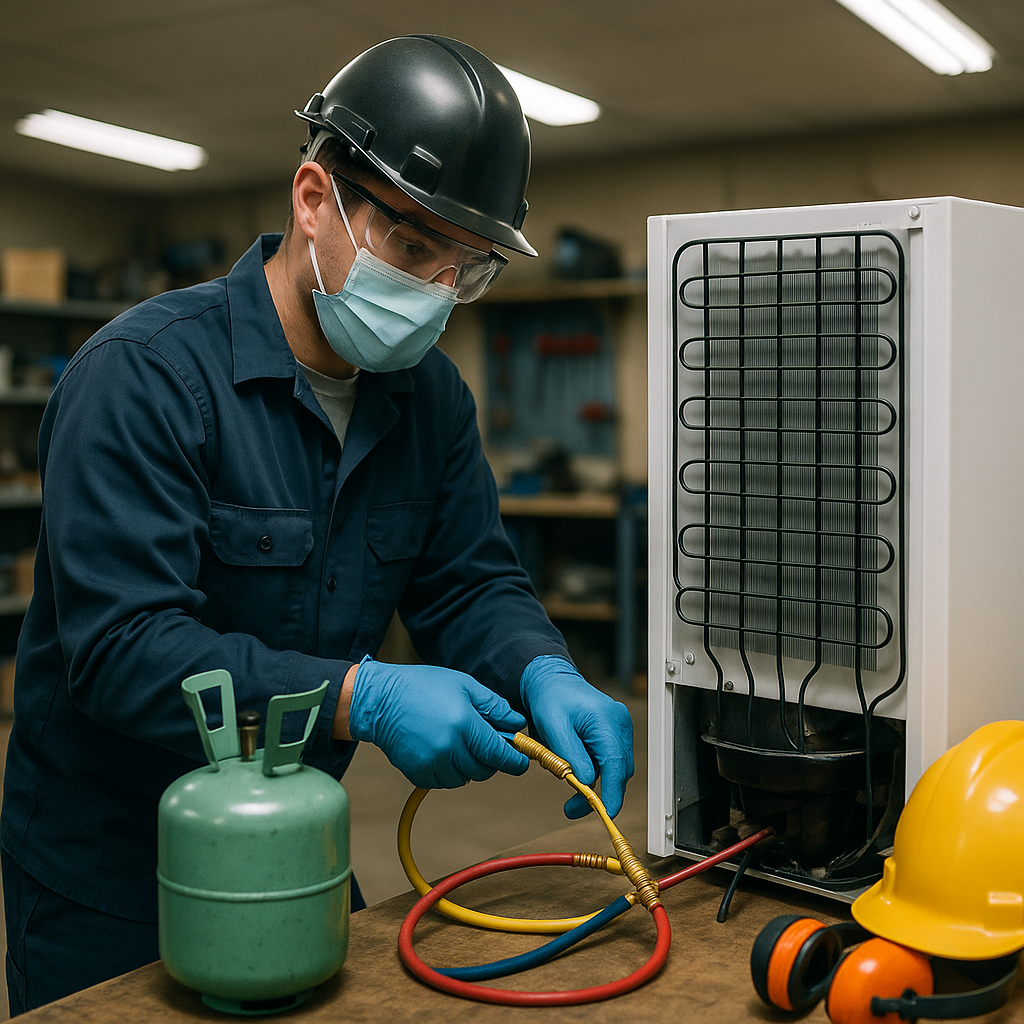
Refrigerants are chemical compounds that play a crucial role in cooling systems by absorbing and transferring heat. These include chlorofluorocarbons (CFCs), hydrochlorofluorocarbons (HCFCs), and newer alternatives used in refrigerators, freezers, and air conditioners. While vital for cooling, these chemicals pose serious environmental and legal risks when improperly handled.
The EPA, under Section 608 of the Clean Air Act, strictly prohibits the intentional release of refrigerants into the atmosphere, as they harm the ozone layer and significantly contribute to climate change. Violating these regulations can lead to substantial fines for both individuals and businesses.
Only certified technicians are legally allowed to remove refrigerants from appliances bound for disposal. These professionals use specialized recovery equipment that meets EPA certification standards to capture refrigerants before any dismantling, crushing, or scrapping occurs.
Attempting refrigerant removal yourself can lead to various problems. Cutting refrigerant lines releases harmful chemicals into the environment, violating federal law and potentially incurring fines. The process also requires proper documentation that only certified professionals can provide.
Municipal drop-off centers usually accept refrigerators, freezers, and air conditioners for disposal, but most facilities charge an appliance disposal fee to cover refrigerant removal costs. These fees ensure proper handling while safeguarding both the environment and public health.
Many municipalities require written verification that refrigerants have been properly removed before accepting appliances. This documentation must include the technician’s name, address, and the specific date of refrigerant recovery. Some facilities offer to arrange professional removal on-site, often with additional charges.
Compressor oils present another hazard in these appliances, as they can become contaminated with refrigerants and other harmful substances over time. Certified technicians manage both refrigerant and oil removal as part of the proper disposal process.
Retailers sometimes offer take-back programs when delivering new appliances, typically including professional refrigerant removal at no additional cost. We recommend exploring these options before pursuing municipal disposal programs. For detailed guidance on appliance disposal requirements, consult the EPA’s official appliance disposal information.
Can You Donate Functional Appliances Or Get Paid For Scrap?
Working appliances are valuable resources that can benefit communities through donation programs. Organizations like Habitat for Humanity ReStores accept functional appliances and often provide pickup services for large items. These retail outlets sell quality used appliances at reduced prices, making them accessible to families in need while supporting housing initiatives.
Various national and local charitable organizations operate extensive donation networks throughout North America. Many accept working appliances, including air conditioners, microwaves, washing machines, and dryers. Most organizations require that all appliances be in good working order with no mechanical difficulties or missing power cords before acceptance.
For appliances that have reached the end of their functional life, scrap metal recovery offers economic value. Non-working appliances contain significant amounts of recyclable metals, including copper, aluminum, steel, and iron. These materials command market prices that fluctuate based on global demand and supply conditions.
Scrap metal facilities evaluate appliances based on their metal content and current market rates. Refrigerators, stoves, washing machines, and air conditioning units typically contain the highest concentrations of valuable metals. However, appliances with hazardous components like refrigerants must have these materials professionally removed before processing, which can affect the final payout.
The decision between donation and scrapping depends entirely on the appliance’s condition. Working units suitable for continued use generate greater community value through donation programs. Non-functional appliances contribute to the circular economy through materials recovery, ensuring metals return to manufacturing processes rather than occupying landfill space.
How Do You Find A Local Drop-Off Location?
The most effective approach starts with targeted online searches using specific terms. Search for phrases like “appliance recycling near me,” “scrap metal drop-off,” or “recycling center” combined with your city or county name. These searches often lead to local government pages, private recycling facilities, and municipal drop-off centers in your area.
Local government websites are the most reliable resource for accurate recycling information. Most city and county waste authority websites maintain comprehensive lists of approved facilities, complete with addresses, operating hours, accepted materials, and fee structures. Your local sanitation department likely provides detailed listings of facilities, noting which accept appliances with refrigerants and the associated charges.
Municipal drop-off centers offer different services depending on their classification. Transfer stations typically handle larger volumes of materials and may charge fees for appliances containing refrigerants like air conditioners or freezers. Standard recycling centers often accept non-refrigerated appliances at no cost, while specialized facilities focus on specific materials like scrap metals or electronics.
County recycling programs frequently partner with private companies to expand service coverage. These partnerships create networks of authorized drop-off points throughout the region. Some locations operate 24 hours for basic recyclables, while others maintain specific business hours for staffed services and hazardous material handling.
Always call the facility before making the trip to confirm current policies and requirements. Operating hours can change seasonally, accepted materials lists get updated, and fee structures may vary based on appliance type or size. Some facilities require advance scheduling for large appliances, while others operate on a first-come basis during regular hours.
Your Guide To Responsible Appliance And Metal Disposal
Proper disposal of old appliances and metals requires careful planning to ensure safety and protect the environment. These items often contain hazardous materials like refrigerants, mercury, and oils that need specialized handling by certified recyclers. Your disposal options include municipal drop-off centers, retailer take-back programs, utility rebate programs, and donation opportunities for working units. Always check local regulations and potential fees beforehand to ensure proper waste diversion and environmental protection.
Choosing the right method for appliance disposal helps maintain a cleaner environment by keeping hazardous substances out of landfills. For safe appliance recycling and responsible disposal services that comply with all regulatory requirements, contact Okon Recycling at 214-717-4083.
Send Us a Message
Questions about what we do? Interested in commercial services? Let us know below and a member of our team will get back to you.