5901 Botham Jean Blvd, Dallas, TX 75215
How Many Cans Do You Need to Recycle to Make $100?
February 5, 2026The number of aluminum cans you need to recycle to earn $100 depends entirely on the current price per pound offered by local scrap yards and recycling centers. Because these prices fluctuate daily due to market volatility and regional supply chain factors, the required number of cans is a moving target. This comprehensive guide breaks down the 2026 pricing landscape and provides the formulas you need to calculate your potential earnings accurately.
Most professional recycling centers currently pay between $0.45 and $0.78 per pound for aluminum cans (often referred to in the industry as UBCs, or Used Beverage Cans). According to recent market data, the national average in early 2026 is hovering around $0.56 per pound. These scrap metal prices are not arbitrary; they fluctuate based on global commodity markets, the cost of energy required for smelting, and regional manufacturing demand.
What are the Current Scrap Prices for Aluminum Cans?
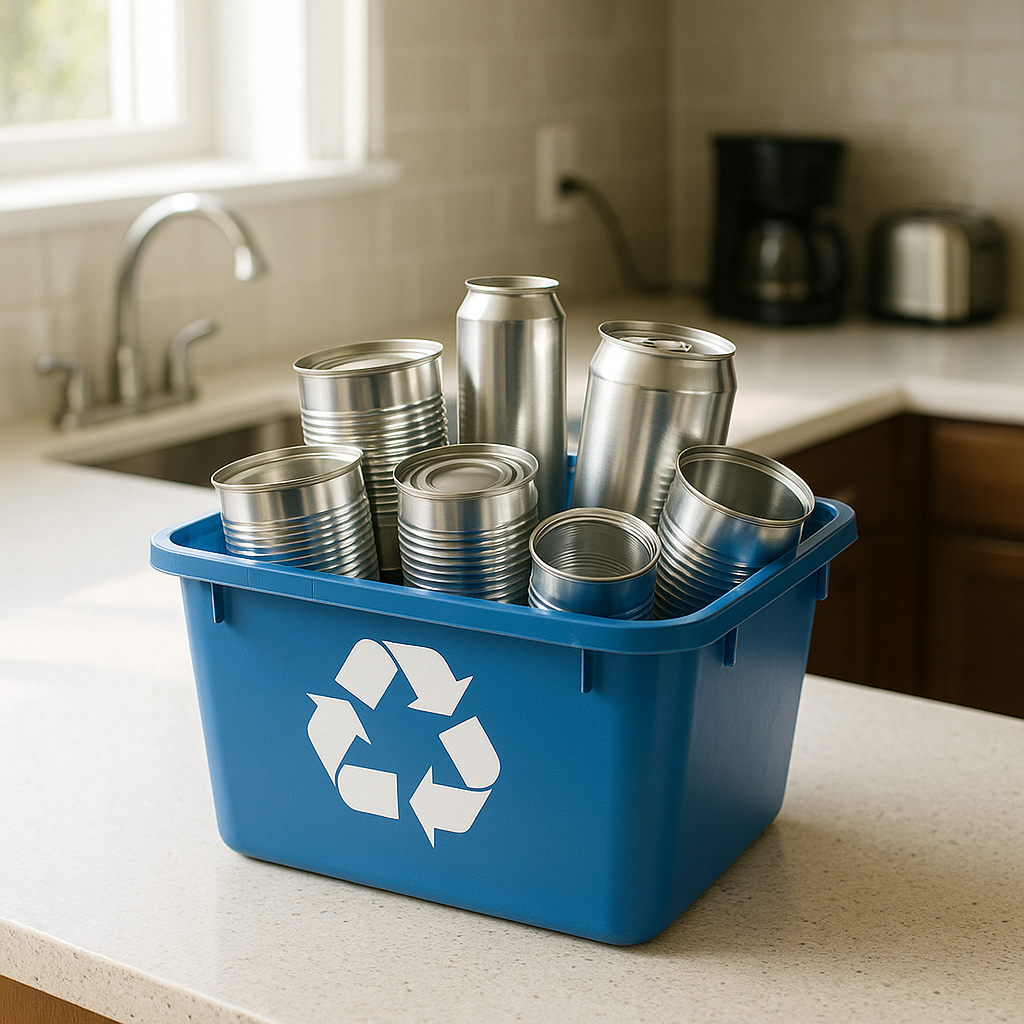
Aluminum can scrap prices vary significantly across the United States, driven by logistics, local competition, and state laws. Current market data indicates a national average price of about $0.56 per pound, though recycling centers in high-demand industrial zones typically offer rates ranging from $0.45 to $0.65 per pound for clean, dry aluminum beverage containers. In 2026, we have observed a stabilization in non-ferrous markets, making aluminum a reliable source of secondary income.
Regional pricing variations create notable differences in recycling revenue potential. States with “Bottle Bill” deposit laws lead with the highest effective aluminum prices—often exceeding $1.50 per pound equivalent—because the refund value is legislated rather than market-driven. In contrast, states without deposit laws, such as Texas, rely strictly on the commodity value of the metal. In these regions, prices are dictated by the London Metal Exchange (LME) and local demand from smelters.
Quantity requirements often influence pricing structures at professional recycling centers. Many facilities utilize a tiered pricing model to encourage bulk delivery. For example, a customer bringing in less than 100 pounds might receive a base rate, while a commercial client delivering over 500 pounds could negotiate a premium rate. This structure reflects the operational efficiency gained by processing larger loads at once, reducing the labor cost per pound for the facility.
Market volatility and seasonal trends
Market conditions continue to influence aluminum scrap values throughout 2026. Manufacturing demand from the automotive and construction industries drives price movements, as recycled aluminum is a critical ingredient in the production of “green” building materials and electric vehicles. Transportation costs between collection points and processing facilities also impact local rates; if diesel prices rise, the payout at the scale often dips to cover the logistics spread.
Price volatility remains a constant factor in the aluminum recycling market. Daily fluctuations of 5 to 10 percent are common. It is generally observed that facilities in metropolitan areas typically offer more competitive rates than those in rural locations. Urban recycling centers benefit from higher processing volumes and reduced transportation distances to aluminum mills, allowing them to pass those savings on to the customer.
How do aluminum can prices differ by state?
Aluminum can prices vary significantly across the United States, impacting recycling returns dramatically. These state-by-state differences result in a complex pricing landscape where the same pound of aluminum cans can yield vastly different payouts depending on location. Understanding these regional scrap prices helps recyclers make informed decisions about collection strategies and whether to focus on weight-based or count-based recycling.
Some states lead the nation with effective aluminum can prices reaching over $1.50 per pound. This is not due to the metal being more valuable there, but rather due to legislative bottle deposit systems. In these jurisdictions, consumers pay a deposit at the point of purchase and receive a refund (typically 5 or 10 cents per unit) upon return. This system artificially sets a floor price that is decoupled from the actual scrap market.
In contrast, states like Texas, which operate on a free-market scrap basis, offer prices that reflect the true industrial value of the aluminum. While the per-pound rate is lower than in deposit states, it allows for the recycling of crushed and damaged cans that reverse vending machines would reject. This middle tier represents the majority of states where aluminum can recycling provides moderate but consistent returns based on the global supply chain.
| Region / State Type | Pricing Model | Average Value (Est.) |
|---|---|---|
| Deposit States (e.g., CA, MI, OR) | Per Unit Refund | $1.50+ per lb (Equivalent) |
| Industrial Hubs (e.g., TX, OH) | Scrap Weight Market | $0.55 – $0.70 per lb |
| Rural / Remote Areas | Scrap Weight Market | $0.40 – $0.50 per lb |
Several factors drive these state price differences in the aluminum recycling market. Transportation costs to processing facilities heavily influence local rates, as states farther from major recycling centers typically offer lower prices. Local industrial demand also shapes regional pricing, with states hosting aluminum rolling mills or manufacturing operations often maintaining higher scrap values to secure a steady stream of local feedstock.
Understanding the 2026 market trends: The rise of “Green Aluminum”
As we navigate through 2026, the economics of aluminum recycling are being reshaped by the global push for sustainability. This shift has turned the humble soda can into a highly sought-after commodity for major corporations.
The demand for low-carbon feedstock
Primary aluminum production (extracting metal from bauxite ore) is extremely energy-intensive. In contrast, recycling aluminum requires 95 percent less energy. As automotive and aerospace manufacturers strive to meet aggressive carbon reduction goals, they are increasingly demanding “low-carbon” aluminum. This has created a premium market for Used Beverage Cans (UBCs), which are known for their high-quality alloy series (typically 3000-series for the body and 5000-series for the lid). Recyclers who can provide clean, dry loads of cans are finding themselves in a seller’s market.
Advanced sorting technology
In 2026, modern Material Recovery Facilities (MRFs) have adopted AI-driven optical sorting technology. These systems can distinguish aluminum cans from other metals and plastics with incredible speed and accuracy. This technological leap means that the “bales” of aluminum produced by recyclers are purer than ever before. For the individual collector, this emphasizes the importance of keeping your cans clean. Contaminated loads—those mixed with steel cans, foil, or significant liquid residue—are being penalized more heavily at the scale because they disrupt these high-precision automated systems.
How do you calculate the pounds of cans needed?
Calculating the weight of aluminum cans required to hit a financial goal is a straightforward process. By dividing your target earnings by the current price per pound at your local recycling center, you can determine exactly how much material you need to collect.
Here is a current market example based on 2026 averages: at $0.56 per pound, you would need approximately 179 pounds of aluminum cans to earn $100 ($100 divided by $0.56 equals 178.57 pounds). This reflects the U.S. national average pricing for clean aluminum cans in non-deposit states.
The “Cans Per Pound” formula
To convert this weight into a tangible number of cans, you need to account for “lightweighting.” Over the decades, manufacturers have made cans thinner and lighter to save on shipping costs. In 2026, the industry average is roughly 32 to 34 standard 12-ounce cans per pound.
Using the pricing example above:
- Target Earnings: $100
- Price Per Pound: $0.56
- Required Weight: ~179 lbs
- Cans Per Pound: ~33
- Total Cans Needed: 179 x 33 = 5,907 cans
Regional differences lead to substantial variations in recycling earnings potential. In states like California offering premium redemption rates, you might only need 60 pounds of cans (approx. 2,000 cans) to generate $100 in revenue. Conversely, in states with lower scrap values or higher transportation costs, you might need to collect upwards of 250 pounds to reach the same financial milestone.
Volume thresholds can determine the price per pound you receive. Accumulating larger volumes before transport allows you to negotiate better rates. Bringing in 500 pounds of cans in one trip is far more valuable to a recycler than 50 trips of 10 pounds each, and many facilities will offer a “commercial rate” for such volume.
Navigating container deposit laws vs. scrap value
One of the most confusing aspects of aluminum recycling for newcomers is the distinction between “Scrap Value” and “Deposit Value.” Knowing which system applies to your location is the single most important factor in estimating your earnings.
The “Bottle Bill” advantage
Ten U.S. states have Container Deposit Laws, colloquially known as “Bottle Bills.” In these states, a refundable deposit is paid on beverage containers at the time of purchase. When you return the can, you get that specific deposit back—usually 5 or 10 cents. In these systems, the weight of the can is irrelevant; the value is per unit. To earn $100 in a state with a 5-cent deposit, you simply need to return 2,000 cans. Important Note: In deposit states, you generally should not crush your cans, as the reverse vending machines need to scan the barcode to issue the refund.
Scrap value in non-deposit states
In states like Texas, there is no deposit system. You are paid strictly for the aluminum metal itself. In this scenario, crushing your cans is highly beneficial. Uncrushed cans are mostly air; crushed cans are dense metal. By crushing your cans, you can fit significantly more weight into your vehicle, making your trip to the recycling center more fuel-efficient and profitable. A standard pickup truck bed can hold a few hundred pounds of crushed cans, whereas it might only hold 50 to 70 pounds of loose, uncrushed cans.
Maximizing your earnings from recycling cans
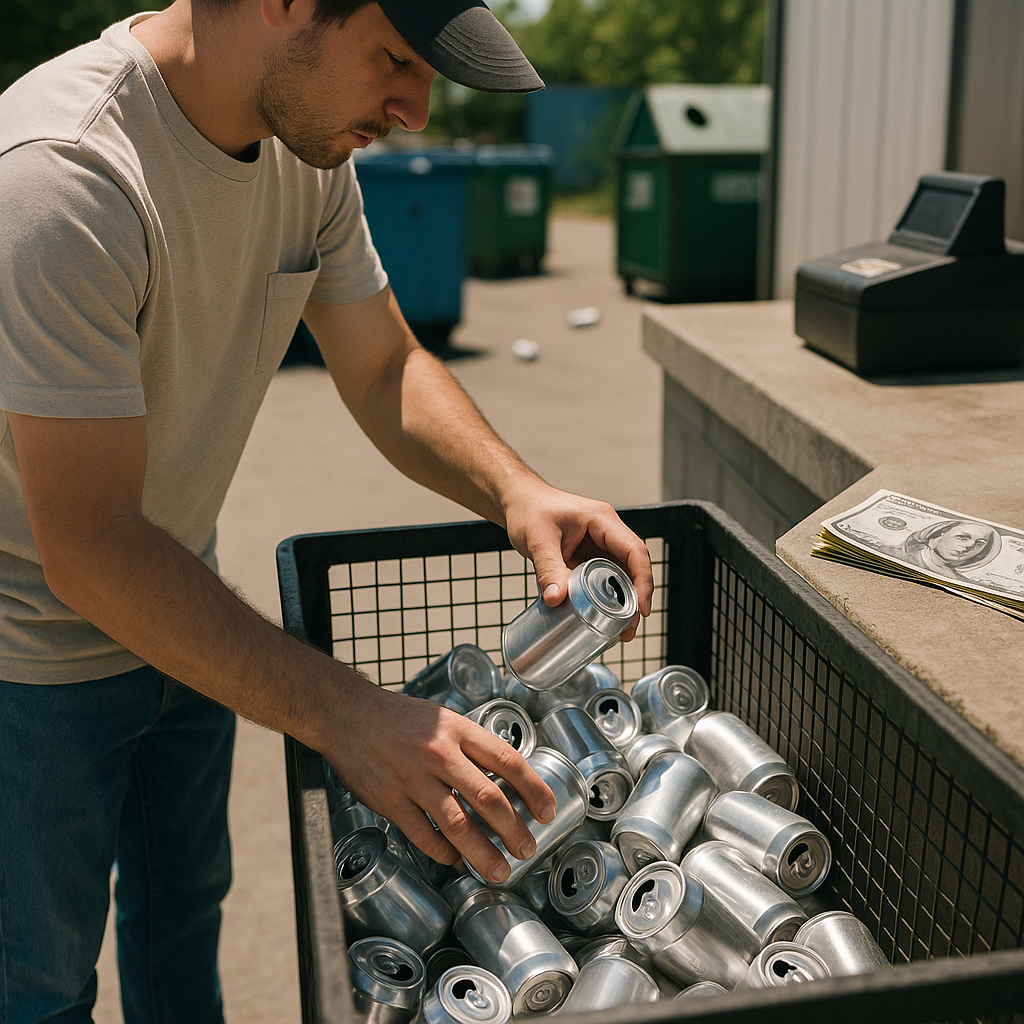
The question of how many cans you need to recycle to earn $100 doesn’t have a fixed answer; it depends on fluctuating local prices and state laws. On average, at a national scrap rate of $0.56 per pound, you would need about 179 pounds—roughly 5,900 cans—to hit that goal. However, since prices can vary from $0.40 to over $1.00 per pound based on your location, consulting with local scrap yards is the best approach to determine your exact target.
For businesses and municipalities aiming to implement effective recycling programs that maximize aluminum recovery and revenue, contact Okon Recycling at 214-717-4083. We offer customized waste management solutions to optimize your recycling efforts and ensure you capitalize on the full value of your aluminum materials.
Send Us a Message
Questions about what we do? Interested in commercial services? Let us know below and a member of our team will get back to you.