5901 Botham Jean Blvd, Dallas, TX 75215
How Can You Maximize the Payout on Mixed Aluminum and Steel Scrap?
April 1, 2026Many scrap metal sellers unknowingly miss out on potential earnings each time they visit a recycling center. When aluminum and steel are combined in the same container, recycling facilities typically pay the lower-grade bulk rate. As a result, sellers receive payment based on the cheapest material in their load—often steel—regardless of how much valuable aluminum is present.
This issue arises from how recycling centers handle mixed loads. Steel usually has a lower price per pound than aluminum, so when these metals are mixed, the entire batch is classified and priced as contaminated steel. Consequently, the presence of aluminum goes unrecognized, costing sellers substantial amounts of money.
By separating aluminum from steel before arriving at the recycling center, sellers can completely resolve this issue. A simple magnet test can easily categorize the materials: steel sticks to the magnet, while aluminum does not. Implementing this basic sorting step ensures sellers receive the appropriate payout for each metal type, often boosting total earnings by 20-40% compared to mixed loads.
Why Is Separating Aluminum And Steel Crucial For A Higher Payout?
When aluminum and steel arrive at recycling facilities mixed together, the entire load is priced based on the cheapest material. This occurs because steel, as a ferrous metal, typically has significantly lower market rates than aluminum. Processing costs for sorting mixed materials compel facilities to apply a low-grade rate to protect operational margins.
This pricing approach financially impacts every pound of valuable aluminum in your load. Research from industry sources indicates that properly sorted materials can be worth 20% to 40% more than unsorted scrap. Your aluminum cans and siding, which should fetch premium non-ferrous metal prices, are weighed at steel rates when materials remain mixed.
This pricing discrepancy arises because facilities must account for the time and labor required to separate mixed metals post-collection. Processing costs include equipment operation, extra handling, and quality control measures needed to meet the purity standards required by end users. These expenses are passed back to sellers through reduced pricing on mixed loads.
Proper separation allows recycling facilities to weigh high-value items individually rather than applying bulk pricing structures. When you deliver pre-sorted aluminum, facilities can offer you 100% of the current market value for that specific metal type. The same principle applies to your steel materials, which receive their proper ferrous metal pricing when kept separate.
| Load Type | Pricing Basis | Value Impact |
|---|---|---|
| Mixed Load (Aluminum + Steel) | Lowest Grade (Contaminated Steel) | Significant Loss (Aluminum paid as steel) |
| Separated Aluminum | Non-Ferrous Premium Rate | Maximum Value (20-40% higher) |
| Separated Steel | Standard Ferrous Rate | Fair Market Value |
The separation process becomes even more critical when dealing with larger quantities of scrap metal. A mixed load containing valuable aluminum extrusions, copper components, and steel structures will receive pricing based on the lowest-value material present. This bulk low-grade rate can reduce your total payout by hundreds of dollars depending on the composition and weight of your materials.
What Is The Easiest Way To Identify And Separate Aluminum From Steel?
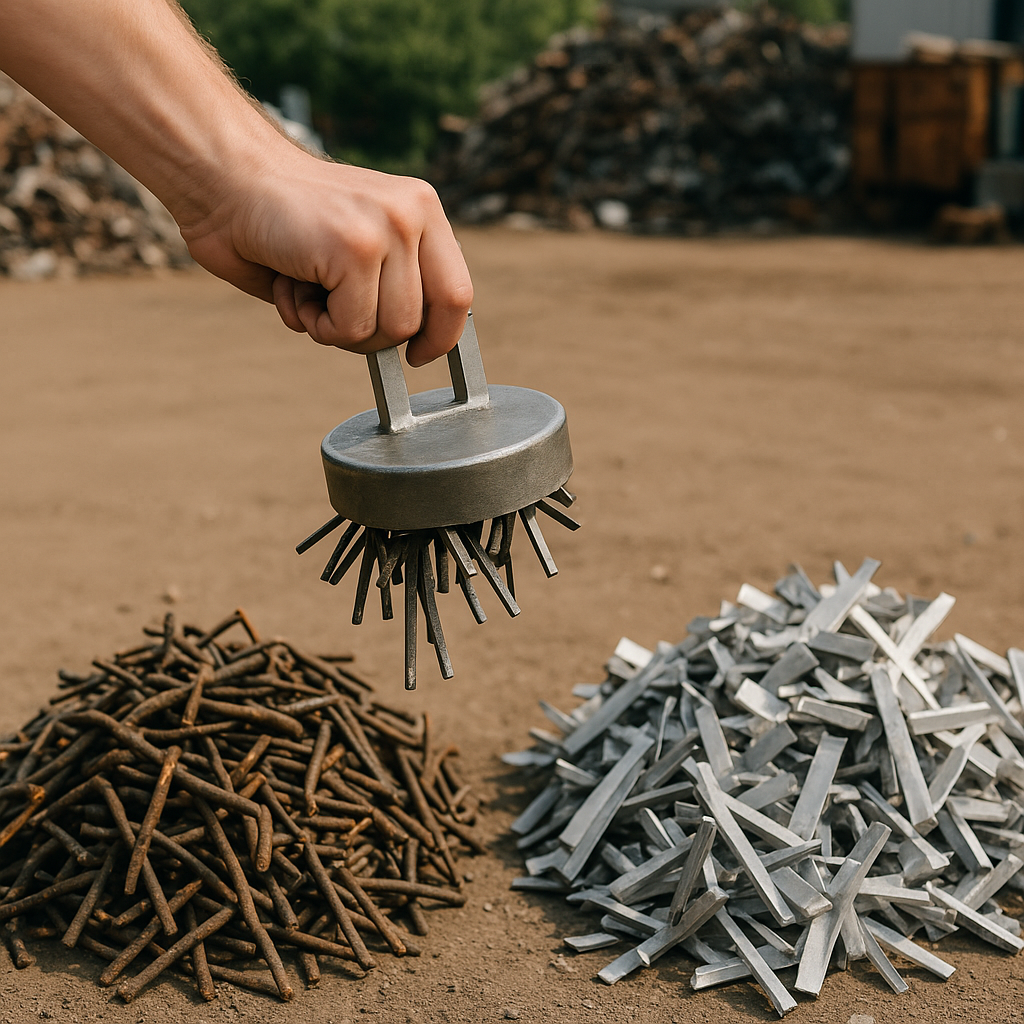
The simplest and most effective way to separate aluminum from steel is with a magnet. Steel is a ferrous metal, meaning it contains iron and is magnetic. Therefore, a magnet will stick to it.
Aluminum is a non-ferrous metal, so a magnet will not stick. This basic magnet test is the first and essential step to divide your collection into two distinct categories. It forms the foundation of all metal sorting processes in recycling facilities.
To perform the magnet test, take any strong magnet and place it against the metal item. Even a refrigerator magnet will work for basic identification. If the magnet sticks firmly, the metal contains iron and is ferrous steel.
If the magnet shows no attraction and falls away easily, the metal is non-ferrous aluminum. This test works because iron creates magnetic properties in steel alloys. Aluminum lacks iron content entirely, making it non-magnetic.
The magnet test provides immediate results with virtually no equipment investment, making it the preferred first-step sorting method for both small-scale recyclers and large industrial facilities. The technique reliably separates these two common metals without specialized knowledge or training.
Steel typically appears darker with a more metallic gray finish, while aluminum often has a lighter, more silvery appearance. However, surface coatings and oxidation can mask these visual differences. The magnet test eliminates guesswork by providing definitive identification regardless of surface appearance.
Once you separate steel from aluminum using the magnet test, more advanced sorting techniques can follow. Steel items go into ferrous metal collection areas, while aluminum pieces move to non-ferrous processing streams. This initial separation step ensures maximum efficiency in downstream recycling operations.
What Are The Best Practices For Preparing Your Scrap For Sale?
Proper scrap preparation directly affects the value you obtain from recycling operations. Clean, uncontaminated materials fetch premium prices because they require less processing and result in higher-quality recycled products. Contaminated scrap is often rejected or significantly devalued at processing facilities.
The foundation of effective scrap preparation begins with removing all non-metal attachments during collection. These components significantly reduce material value and can contaminate entire processing batches. We recommend systematically removing these common contaminants:
- Plastic casings and components from electronics
- Rubber insulation and gaskets from plumbing fixtures
- Wood handles and attachments from tools
- Glass elements from lighting fixtures
- Fabric coverings from appliances
Surface contaminants present another critical challenge. Dirt, grease, and excessive paint layers reduce material purity and increase processing costs for recycling facilities. Heavy oil contamination can lead to complete load rejection, especially for aluminum and copper materials. Light cleaning with rags or industrial degreasers removes most problematic residues without extensive labor investment.
Wire preparation offers significant value improvement opportunities. Stripping insulation from copper wire can upgrade the material grade from #2 to #1 bare bright copper, reflecting a 30 to 50 percent price increase. For smaller gauge wire, manual wire strippers provide efficient removal. Larger quantities may justify investing in mechanical stripping equipment, especially for operations handling substantial wire volumes regularly.
Material separation prevents cross-contamination that downgrades entire loads. A single contaminated item can reduce the entire batch to the value of the lowest-grade material present. For example, mixing copper turnings with steel reduces the entire load value to steel pricing. We use dedicated containers for each material type during collection to prevent such costly mixing errors.
Size preparation also influences material value and handling efficiency. Cutting large items into manageable pieces lowers transportation costs and facilitates processing equipment operation. Recycling facilities often specify dimensional requirements for different material grades, with properly sized materials receiving premium pricing.
Advanced preparation techniques can further enhance material value for specialized applications. Shot blasting removes stubborn surface contaminants and creates textures suitable for coating applications. High-pressure water jets offer gentler cleaning for delicate materials while controlling dust generation. Though these methods require equipment investment, they can justify the costs for high-volume operations processing valuable materials.
Documentation during preparation supports quality control and pricing transparency. Recording material types, weights, and preparation methods ensures accountability throughout the recycling chain. This documentation proves particularly valuable when negotiating pricing with recycling facilities or resolving disputes over material grades and contamination levels.
How Can Refining Your Sorting Process Increase Profits Further?

Advanced sorting by metal grade offers a significant opportunity for facilities to maximize recycling returns. Beyond basic ferrous and non-ferrous separation, grade-specific sorting can increase revenue by 15% to 40%, according to the Institute of Scrap Recycling Industries. While this refined approach requires additional processing time and expertise, it delivers substantially higher payouts per pound.
The key is understanding that recyclers pay premium rates for precisely sorted materials. Mixed aluminum scrap might fetch standard rates, but clean extrusions command significantly higher prices. Steel separated into light iron and heavy melt categories is valued more than general ferrous materials.
Advanced sorting reduces contamination risks for recyclers, providing furnace-ready materials. This efficiency translates directly into higher purchase prices for your sorted inventory.
Aluminum Grade Separation Techniques
Sorting aluminum beyond basic non-ferrous classification unlocks substantial value increases. Clean extrusions from window frames and architectural components represent the highest-grade aluminum category, containing minimal contaminants and specific alloy compositions preferred by smelters.
Cast aluminum from automotive components and machinery requires separate handling due to different melting characteristics. Engine blocks, transmission housings, and industrial equipment contain cast aluminum that commands moderate pricing, while aluminum cans form their own category with consistent composition and high recyclability rates.
Removing steel screws, plastic attachments, and other contaminants from aluminum pieces elevates them to higher grade classifications. Wire brushing oxidation from aluminum surfaces can shift materials from lower to premium pricing categories. Each contamination removal step directly impacts the final valuation your facility receives.
Steel Grade Classification Systems
Sorting steel beyond magnetic separation creates multiple revenue streams from ferrous materials. Light iron includes thin materials like appliance shells, automotive body panels, and structural sheeting, which typically weigh less and process differently than heavy steel components.
Heavy melt steel encompasses thick structural beams, industrial machinery frames, and dense equipment components. The substantial weight and processing characteristics of heavy melt justify higher per-pound rates from recyclers. Separating these categories during collection optimizes transportation efficiency and maximizes returns.
Identifying and separating stainless steel yields the highest returns within ferrous categories. Kitchen equipment, medical devices, and industrial piping contain various stainless grades. Even basic stainless steel separation from regular steel can significantly increase overall load value.
Grade-specific sorting requires an initial investment in staff training and additional storage capacity. However, facilities implementing these advanced techniques consistently report 15% to 20% higher revenues compared to basic sorting approaches. The enhanced returns justify the operational adjustments needed for grade-level material separation.
Conclusion: Turning Your Sorted Scrap Into More Cash
Maximizing the payout for your mixed aluminum and steel scrap requires strategic planning and attention to detail. Key steps include separating metals using a magnet, cleaning them of contaminants, and sorting them by grade. Each step is an opportunity to increase recycling returns, transforming waste into a valuable revenue source. Proper preparation can boost scrap metal profits by up to 40% compared to unsorted materials, demonstrating the direct impact of these actions on market value.
Proven sorting methods can turn ordinary metal waste into profitable opportunities through systematic preparation. When you’re ready to enhance your recycling returns and turn your sorted materials into cash, contact Okon Recycling at 214-717-4083 for expert guidance and competitive pricing on your aluminum and steel scrap.
Send Us a Message
Questions about what we do? Interested in commercial services? Let us know below and a member of our team will get back to you.