5901 Botham Jean Blvd, Dallas, TX 75215
How Can You Handle Scrap from a Factory Line Changeover Efficiently?
April 1, 2026Factory line changeovers generate substantial material waste, directly impacting both operational costs and environmental sustainability. Studies show that changeover-related scrap can account for 15-20% of total material usage during production transitions, representing millions of dollars in lost resources across manufacturing facilities. This waste stream creates a dual challenge: immediate financial losses and an increased demand for raw materials that could otherwise remain in productive use.
Changeover scrap includes all unusable materials generated when switching production from one product to another, such as setup materials, test runs, cleaning residuals, and defective products created during machine adjustments. The waste occurs across three distinct phases: cleanup of previous production materials, setup adjustments for new specifications, and startup calibration to achieve quality standards. Each phase presents opportunities for material recovery and waste reduction through systematic approaches.
Modern manufacturing operations can significantly reduce changeover waste through proven methodologies and emerging technologies. Lean manufacturing principles, combined with real-time monitoring systems and process automation, enable facilities to minimize material losses while maintaining production quality. These strategies improve profitability and support circular economy goals by keeping valuable materials in productive use for longer. The most effective approaches integrate standardized procedures, advanced sensing technology, and data-driven decision-making to transform changeover processes from waste generators into efficiency drivers.
How Do Automation And Real-Time Data Minimize Changeover Waste?
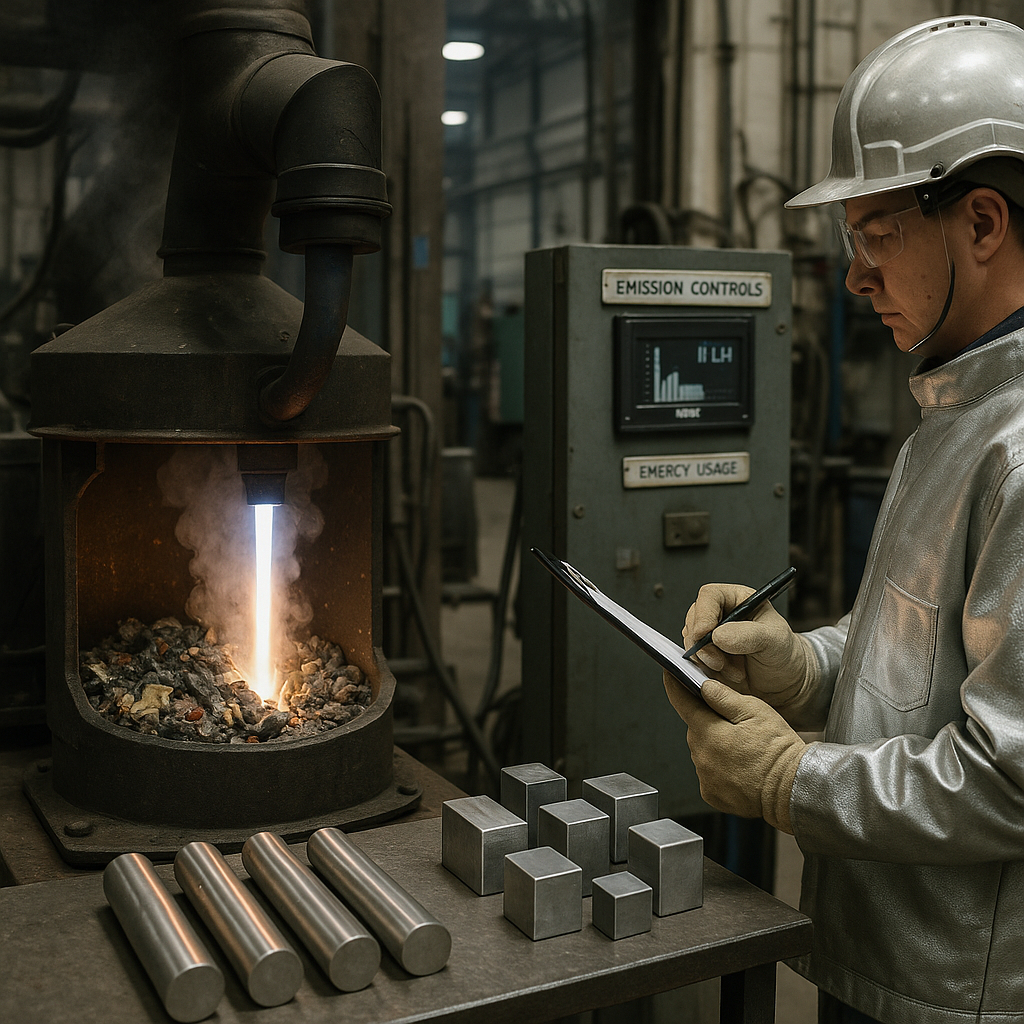
Reporting waste at the end of a shift is often too late. Real-time monitoring using IoT sensors and automation provides manufacturers with the immediate visibility needed to prevent scrap from becoming a costly issue. This proactive method transforms changeover processes, moving from reactive waste management to preventive resource conservation.
IoT sensors continually track essential machine parameters, including temperature, pressure, and vibration levels during changeovers. These smart devices monitor equipment performance and detect deviations that can lead to material waste. Temperature sensors detect thermal fluctuations that could compromise product quality, pressure monitoring reveals hydraulic system anomalies, and vibration analysis identifies mechanical misalignment or tool wear before these issues result in defective products.
Closed-loop control systems are the next step in waste reduction technology. These automated systems receive sensor data and promptly adjust machine parameters without human input. For example, if temperature readings exceed optimal ranges, the system automatically adjusts heating elements. Pressure variations trigger immediate hydraulic adjustments. This quick response capability eliminates the delay between problem detection and corrective action, historically a source of significant changeover waste.
Manufacturing Execution Systems (MES) integrate real-time data streams to manage comprehensive changeovers. These platforms coordinate sensor inputs with production schedules to ensure optimal timing for equipment adjustments. MES technology enables predictive analytics that forecast potential waste scenarios before changeovers begin. Computer vision systems enhance sensor data by providing visual quality monitoring throughout the changeover process.
| Feature | Traditional Changeover | Automated / Data-Driven Changeover |
|---|---|---|
| Data Visibility | Post-shift reports (Reactive) | Real-time IoT streams (Proactive) |
| Adjustment Method | Manual trial-and-error | Closed-loop automated control |
| Defect Detection | Visual inspection after production | Computer vision & sensors during setup |
| Maintenance Strategy | Scheduled or run-to-failure | Predictive analytics based on wear |
Predictive maintenance capabilities further reduce changeover waste by addressing equipment issues before they affect production quality. IoT-enabled predictive maintenance systems analyze historical performance data to predict when components need attention, preventing tool wear and calibration drift that typically generate scrap during changeovers. Advanced algorithms detect patterns in equipment behavior that may lead to waste-generating failures.
Process automation reduces human error factors that contribute to changeover waste. Automated material handling systems ensure consistent component positioning, and robotic systems maintain precise tolerances throughout changeover sequences. These technologies operate continuously without fatigue or distraction, maintaining the accuracy needed to prevent material loss during transitions between production runs.
Which Lean And Quality Methodologies Are Most Effective?
Standardized frameworks lay the groundwork for systematically reducing waste in recycling operations. These established methodologies help facilities identify inefficiencies, eliminate defects, and optimize material recovery. The most effective approaches combine prevention-focused strategies with real-time quality monitoring.
Lean Manufacturing and Six Sigma are two complementary approaches that excel in recycling environments. Lean emphasizes waste elimination and improved flow, while Six Sigma targets defect reduction through statistical analysis. Implementing both frameworks together can lead to a 25% to 30% improvement in operational efficiency.
Lean Manufacturing Fundamentals
Lean Manufacturing targets eight types of waste that reduce efficiency in recycling operations. Transportation waste occurs when materials are unnecessarily moved between processing stations. Inventory waste builds up when sorted materials wait for processing.
Overproduction waste arises when facilities process more material than downstream operations can handle. Motion waste involves unnecessary operator movements that slow sorting activities. Defect waste occurs when contaminated materials enter clean material streams, necessitating costly reprocessing.
The methodology emphasizes continuous flow and pull systems, matching processing capacity to actual demand. This prevents bottlenecks at critical sorting stations and maintains steady throughput throughout the facility.
Six Sigma And The DMAIC Process
Six Sigma employs the DMAIC process to systematically improve quality in recycling operations. The Define phase pinpoints specific problems, such as contamination in sorted materials. Measure establishes baseline metrics for contamination levels and first-pass yield rates.
Analyze uses statistical tools to examine root causes of quality issues. According to industry research, implementing Six Sigma techniques reduces defects by 30% in manufacturing operations. Improve applies solutions based on data analysis, and Control monitors ongoing performance to sustain gains.
DMAIC is particularly effective for reducing contamination in single-stream recycling. The process identifies material combinations that cause high contamination rates and develops targeted sorting improvements.
5S System For Workplace Organization
The 5S System organizes workspaces to minimize errors and enhance safety. Sort removes unnecessary items from work areas. Set in Order arranges tools and equipment logically. Shine keeps work environments clean and well-lit.
Standardize establishes uniform procedures across work areas. Sustain maintains improvements through regular audits and training. Studies indicate that a properly implemented 5S can reduce workplace accidents by up to 50% while boosting productivity.
In recycling facilities, 5S is used to organize sorting stations and maintenance areas. Clear labeling systems help operators quickly identify different material grades. Standardized tool placement reduces time spent searching for equipment during maintenance.
Poka-Yoke Error-Proofing Methods
Poka-Yoke, meaning “mistake-proofing” in Japanese, designs processes to make errors impossible or immediately detectable. Industrial engineer Shigeo Shingo developed this concept as part of the Toyota Production System in the 1960s.
Contact methods use physical devices to detect incorrect materials or components. Advanced contact methods, such as optical sorting systems, identify materials by color, density, and chemical composition, automatically rejecting contaminated items before they enter clean streams.
Fixed-value methods ensure all required actions are completed. Weighing systems at baling stations confirm that bales meet minimum weight requirements before wrapping. Motion-step methods enforce correct processing sequences.
Poka-Yoke is most effective at quality control points throughout the recycling process. Simple mechanical guides prevent operators from loading incompatible materials into the same processing line. Visual indicators promptly alert supervisors when contamination levels exceed acceptable thresholds.
Quality Gates And In-Line Inspection
Quality gates establish criteria that materials must meet before proceeding to the next processing stage. These checkpoints catch defects before further value and labor are added to faulty products. Early detection significantly reduces rework costs and material waste.
In-line inspection systems continuously monitor material quality during processing. Near-infrared sensors identify plastic types in real-time, automatically diverting materials to appropriate lines. Properly calibrated systems achieve first-pass yield rates above 95%.
Quality gates are positioned at critical control points where contamination risk is highest. The first gate occurs right after initial sorting, where visual inspection catches obvious contaminants. Secondary gates use automated systems to detect subtle quality issues that might be missed by human operators.
| Methodology | Primary Goal | Application In Recycling |
|---|---|---|
| Lean Manufacturing | Eliminate waste & improve flow | Reduces transportation/motion waste; optimizes throughput. |
| Six Sigma (DMAIC) | Reduce defects & variance | Data-driven reduction of contamination in sorted streams. |
| 5S System | Workplace organization | Organizes tools and sorting stations for speed/safety. |
| Poka-Yoke | Error/Mistake proofing | Automated rejection of incorrect materials (e.g., optical sorters). |
Successful implementation requires integrating all methodologies rather than applying them in isolation. Facilities that combine 5S workplace organization with Poka-Yoke error-proofing achieve the greatest improvements in safety and quality metrics. The systematic approach of DMAIC helps sustain gains from Lean improvements over time.
What Is The Role Of Operator Training And Company Culture?

Effective scrap reduction requires a workforce skilled in both technical abilities and waste management processes. Operators familiar with equipment functionality and standardized procedures can detect potential issues before they lead to costly waste. This foundation of skills directly impacts our capability to maintain efficient recycling operations and minimize material losses.
Comprehensive training programs should encompass equipment operation, changeover procedures, and quality control measures. Workers need hands-on experience with troubleshooting techniques and clear protocols for handling different materials. These skills allow operators to make informed decisions quickly and maintain consistent processing standards across shifts.
A culture of continuous improvement transforms individual training into collective organizational strength. When operators feel empowered to suggest improvements and report potential problems, we foster an environment where waste reduction becomes shared responsibility. This cultural shift requires management commitment and recognition of employee contributions to operational excellence.
Feedback loops and root cause analysis are critical to sustainable improvement initiatives. Encouraging operators to report ‘near misses’ and participate in root cause analysis fosters a culture of continuous improvement that prevents small issues from escalating into major waste events. These reporting systems help identify patterns and implement preventative measures before problems arise.
Training employees on the financial impact of scrap fosters personal investment in waste reduction. When workers understand how material losses affect profitability and environmental goals, they become more vigilant about preventing waste. This financial awareness, combined with maintenance knowledge, enables operators to make decisions that balance operational efficiency with resource conservation.
Conclusion: Adopting A Proactive Strategy For Efficient Changeovers
Scrap and rework are controllable process breakdowns, not unavoidable manufacturing costs. The most effective approach combines standardized procedures with real-time data from automation and IoT systems, lean quality principles, and comprehensive workforce training. These integrated strategies transform changeovers from waste generators into streamlined operations, preventing defects before they occur.
This comprehensive approach delivers measurable results beyond waste reduction. Manufacturers applying these proactive strategies report 10-30% reductions in material costs, improved operational efficiency, and enhanced quality assurance protocols. The combination of cost savings, faster delivery times, and superior quality creates a significant competitive advantage in today’s market.
For manufacturers seeking to optimize their waste management and recycling processes, contact Okon Recycling at 214-717-4083.
Send Us a Message
Questions about what we do? Interested in commercial services? Let us know below and a member of our team will get back to you.