5901 Botham Jean Blvd, Dallas, TX 75215
Are Solar Panels Able to Be Recycled? Discover How!
April 1, 2026Yes, solar panels can be recycled. This process is crucial for addressing the environmental and economic challenges associated with disposing of old panels. As solar energy usage increases in 2026, recycling helps prevent landfill waste and enables the recovery of valuable raw materials, contributing to a more sustainable energy sector. In Texas, where utility-scale solar capacity continues to break records, the transition to a circular energy economy is no longer a future goal—it is a current operational necessity.
The solar industry faces a growing challenge as millions of photovoltaic (PV) panels approach their 25- to 30-year lifespan. By 2050, experts predict that 78 million tons of panel waste will accumulate globally. Without proper waste management systems, this equipment could overwhelm landfills and squander valuable resources. Professional industrial recyclers in North Texas are scaling infrastructure to ensure these materials are returned to the manufacturing stream rather than occupying landfill space for centuries.
Modern recycling technologies can recover up to 95% of semiconductor materials and 90% of glass content from end-of-life solar panels. This material recovery process supports the circular economy by extracting silicon, aluminum, copper, and silver for reuse in new manufacturing. For municipalities and businesses planning renewable energy infrastructure, understanding solar panel recycling options ensures long-term sustainability compliance and responsible resource stewardship.
What Materials in a Solar Panel Can Be Recycled?

Solar panels contain many recyclable components that can be recovered and reused in manufacturing processes. Understanding these materials helps facility managers and sustainability officers make informed decisions about end-of-life panel management. The composition varies between crystalline-silicon and thin-film modules, but most materials have high recycling potential when handled by a specialized facility.
Glass is the largest recoverable component in most solar panels, making up approximately 75% of a panel’s total weight. It can be recycled at rates exceeding 95%. Low-iron solar glass requires specialized processing to maintain its purity for reuse in new panel manufacturing. When properly separated, this glass can return directly to solar manufacturing or other high-grade applications such as fiberglass or container glass.
The aluminum frame surrounding each panel provides another highly valuable recyclable material. Aluminum recovery achieves nearly 100% efficiency in modern recycling processes, using 95% less energy than producing new aluminum from bauxite ore. The frame removal process has become increasingly automated, allowing for clean separation without contamination from other panel components.
Copper wiring and internal connections also offer significant value despite comprising a smaller portion of panel weight. Both external copper wiring and internal copper traces can be fully recovered. The copper content varies by panel design, but recovery rates consistently exceed 90% when proper separation techniques are employed.
More challenging but extremely valuable materials include silver contacts used in crystalline-silicon panels. Silver represents only a small fraction of panel weight but carries significant economic value. The solar industry currently consumes over 15% of global silver supplies, with projections suggesting this could reach nearly 100% within two decades. Recovery of silver requires specialized chemical processes but yields materials suitable for direct reuse in new panels.
| Material | Approximate Percentage by Weight | Recovery Rate |
| Glass | 70-76% | 90-95% |
| Polymers (EVA, Backsheet) | 10-11% | Captured for Energy |
| Aluminum (Frame) | 8-13% | 95-100% |
| Silicon (Cells) | 3-5% | 85-96% |
| Copper (Wiring) | 1% | 95% |
| Silver & Other Metals | <0.1% | 80-95% |
Silicon recovery presents technical challenges but offers substantial environmental benefits. Modern processes can recover approximately 85% of silicon content through mechanical and chemical separation techniques. Recovered silicon reduces dependence on energy-intensive virgin production. Additionally, toxic metals like lead solder and cadmium telluride necessitate specialized processing to prevent environmental contamination, a service provided by certified industrial recyclers.
Navigating New 2026 Texas Solar Recycling Regulations
As we enter 2026, the regulatory landscape for solar disposal in Texas has shifted dramatically. Proactive compliance is now essential for solar farm operators and commercial facility managers to avoid significant legal and financial liabilities.
Texas House Bill 3228 and HB 3229 compliance
Texas now mandates the recycling of retired solar projects. Under recently implemented legislation, including HB 3228 and HB 3229, solar facility agreements must stipulate that the grantee is responsible for collecting and recycling all components that are practicably capable of being reused or recycled. This includes the modules, racking systems, and transformers. Furthermore, developers are now required to provide financial assurance—such as a bond or letter of credit—to cover the full cost of decommissioning. This ensures that North Texas landowners are not left with “orphaned” panels that have no clear path for disposal.
Annual TCEQ reporting requirements
Effective January 15, 2026, recycling facilities that accept renewable energy components must submit annual reports to the Texas Commission on Environmental Quality (TCEQ). These reports must include a complete inventory of all unrecycled components on-site. For businesses generating solar waste, this means partnering with a recycler who provides “Certificates of Recycling” is no longer optional. These certificates serve as critical proof of compliance during state audits and are a standard requirement for corporate Environmental, Social, and Governance (ESG) reporting.
Industrial Decommissioning: A Strategic Lifecycle Approach
In 2026, solar panel management is moving away from reactive disposal and toward strategic asset decommissioning. This lifecycle approach allows manufacturers and operators to reclaim capital and maintain operational agility.
The “Super-Cycle” of silver and rare metals
The global push for electrification has created a supply super-cycle for metals like silver and copper. In 2026, the scrap value of high-grade solar modules has reached record highs because of the precious metal paste used in the cells. By utilizing a professional recycler that uses X-ray Fluorescence (XRF) and Laser-Induced Breakdown Spectroscopy (LIBS), operators can verify the exact metallurgical content of their decommissioned arrays. This ensures they receive a payout based on the actual raw material value rather than a flat “scrap” rate, turning a decommissioning project into a genuine revenue-generating event.
Safe removal and reverse logistics
Removing thousands of fragile panels requires a specialized logistics framework. Certified technicians handle the safe disconnection and secure packaging of modules to prevent glass breakage, which can release internal materials like lead or selenium. Modern industrial recyclers provide turnkey removal services, managing the entire chain of custody from the rooftop or field directly to the processing facility. This “reverse logistics” model minimizes the risk of workplace injury and ensures that hazardous materials are contained within a regulated system from start to finish.
How Are Solar Panels Recycled?
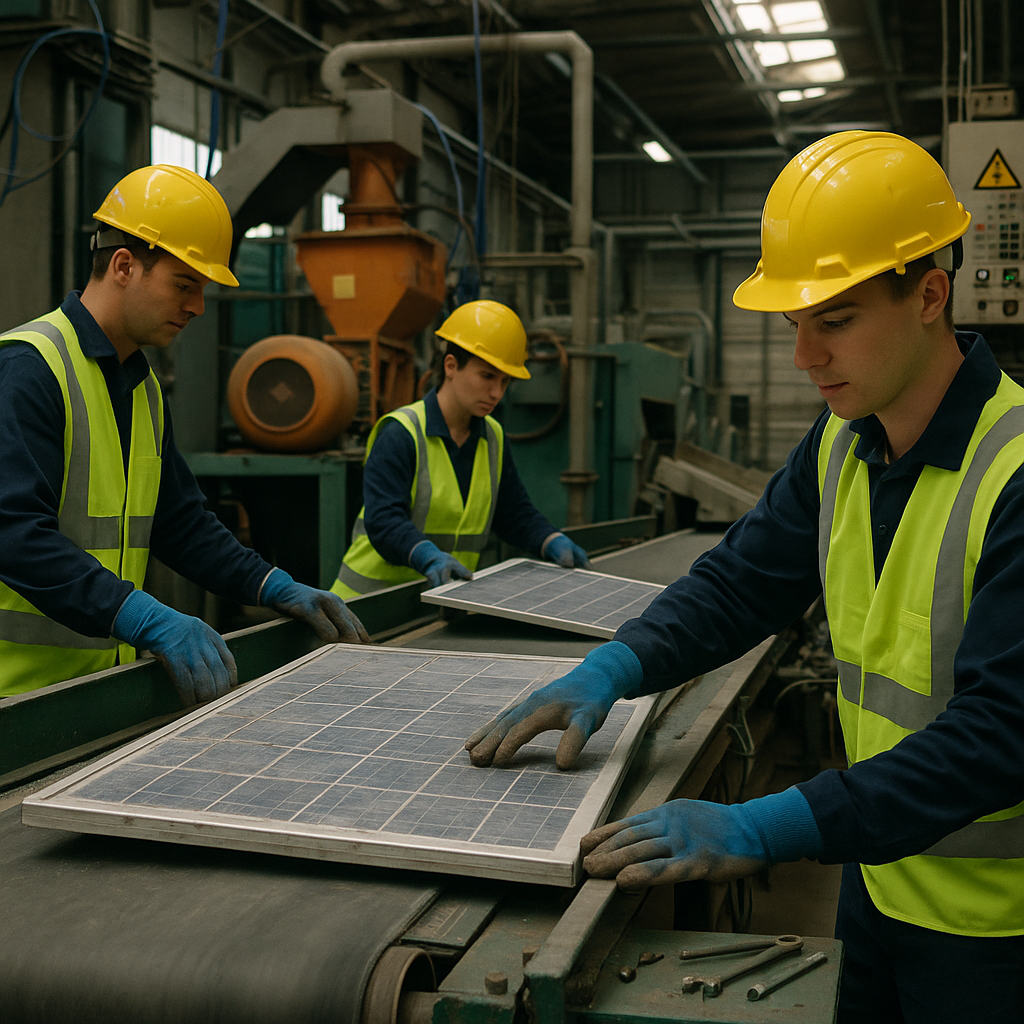
Solar panel recycling depends on the specific panel technology involved, as different methods are used to recover valuable materials efficiently. The two dominant types of panels require distinct industrial processing approaches.
Crystalline silicon panel processing
The disassembly process begins with the manual or robotic removal of external components. Workers first extract the aluminum frame and junction box to recover copper wiring and aluminum. Glass recovery is the next critical step; specialized facilities use conveyor systems to separate glass sheets from the underlying silicon assembly, recovering up to 95% of the glass for direct reuse.
Thermal treatment is the most intensive phase of silicon recycling. Materials undergo heating at 500°C in specialized units. This high temperature breaks down the ethylene vinyl acetate (EVA) encapsulant binding the cell elements together. The evaporated plastic material is often captured and reused as fuel for the process, ensuring a zero-waste loop. Finally, chemical processing involves acid etching to remove metallic contacts and purify the silicon wafers for reuse in semiconductor applications.
Thin-film panel processing
Thin-film panels require more aggressive processing methods due to their distinct construction. The process begins with mechanical shredding via hammer mills to reduce particles to 4-5mm sizes. Rotating screw systems then separate solid materials from liquids. Solid particles remain in rotating chambers while liquids undergo precipitation and dewatering to ensure purity. This liquid processing extracts critical semiconductor materials, typically recovering 95% for reuse. Solid matter is further processed through vibrating surfaces to separate pure glass, yielding a consistent 90% recovery rate.
What Are the Challenges and Benefits of Recycling Solar Panels?
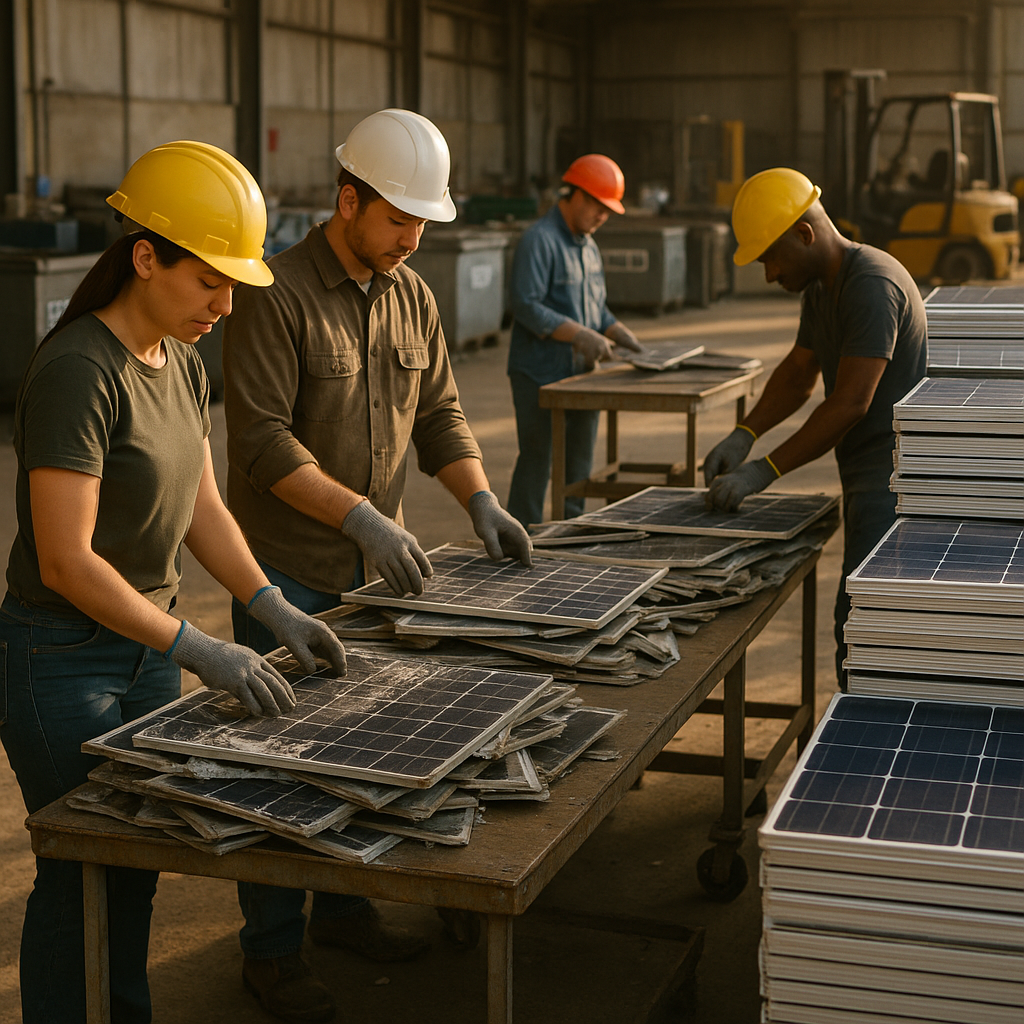
Recycling solar panels comes with significant economic and technical barriers that currently limit its widespread adoption, though 2026 market shifts are rapidly changing the ROI. The most pressing challenge has historically been cost-effectiveness. In the past, landfill disposal was significantly cheaper than recycling. However, new state mandates and the rising cost of virgin raw materials have made recycling the more strategic long-term choice.
The complex design of solar panels also presents a challenge. These modules are built for extreme durability, with materials tightly bonded to survive decades of weather. This durability makes disassembly labor-intensive. However, manufacturers are now moving toward “design-for-recycling,” incorporating modular parts that are easier to separate at end-of-life.
Economic and environmental opportunities
Despite these challenges, recycling solar panels offers substantial economic opportunities. The International Renewable Energy Agency projects that recoverable materials from recycled panels will skyrocket to over $15 billion by 2050. Advanced processes can reclaim up to 96% of silicon and 95% of semiconductor materials, reducing the need for destructive virgin mining operations.
The recycling industry also creates thousands of “green jobs” across the supply chain, from collection and logistics to chemical engineering and dismantling. Supply chain resilience is perhaps the most significant benefit in 2026; recovered materials can substitute for newly mined resources, reducing dependency on volatile global commodity markets and ensuring a steady flow of materials for the North Texas solar sector.
Conclusion: A Sustainable Future for Solar Energy

Solar panels are highly recyclable, and this process has become crucial to the renewable energy industry. Despite challenges like technical complexity and logistics, advancements in 2026 are paving the way for a circular solar economy. By efficiently recovering valuable materials like silver, copper, and glass, recycling supports a domestic supply chain that ensures solar energy remains sustainable from manufacturing to end-of-life. With recovered materials valued at billions globally, the economic incentives now align perfectly with environmental responsibility.
The full transition to a circular solar economy depends on partnerships between manufacturers, installers, and specialized recycling providers who understand the technical and regulatory intricacies of end-of-life management. As we progress, effective material recovery will determine whether solar energy fulfills its promise as a truly carbon-free energy solution. For comprehensive solar panel recycling solutions that meet all 2026 Texas mandates, contact Okon Recycling at 214-717-4083.
Send Us a Message
Questions about what we do? Interested in commercial services? Let us know below and a member of our team will get back to you.