5901 Botham Jean Blvd, Dallas, TX 75215
Find Scrap Metal Buyers for Demolition Projects
April 1, 2026Scrap metal represents a valuable revenue stream, not merely discarded waste. Demolition projects generate substantial quantities of copper, aluminum, steel, and other recyclable materials that command competitive market prices. Professional scrap metal buyers recognize this value and partner with contractors to convert construction debris into immediate cash flow. In 2026, as North Texas continues its industrial redevelopment boom, the strategic recovery of these assets has become a primary driver of project profitability.
Certified scale tickets are the foundation of transparent scrap metal transactions. These weigh tickets from certified scales provide legally documented proof of material weights and fair pricing. Demolition contractors require this documentation for accurate project accounting and regulatory compliance in commercial operations. Without third-party verified weights, contractors risk losing significant revenue due to inaccurate estimations of high-tonnage loads.
Finding reliable scrap metal buyers involves identifying partners who specialize in commercial and industrial clients rather than residential customers. These professional buyers offer on-site pickup services, heavy-duty weighing equipment, and comprehensive documentation, including invoices and environmental compliance records. The right partnership streamlines material removal while maximizing revenue from demolition scrap recycling operations, ensuring that the job site remains clean and OSHA-compliant.
What Services Do Scrap Buyers Provide for Demolition Sites?
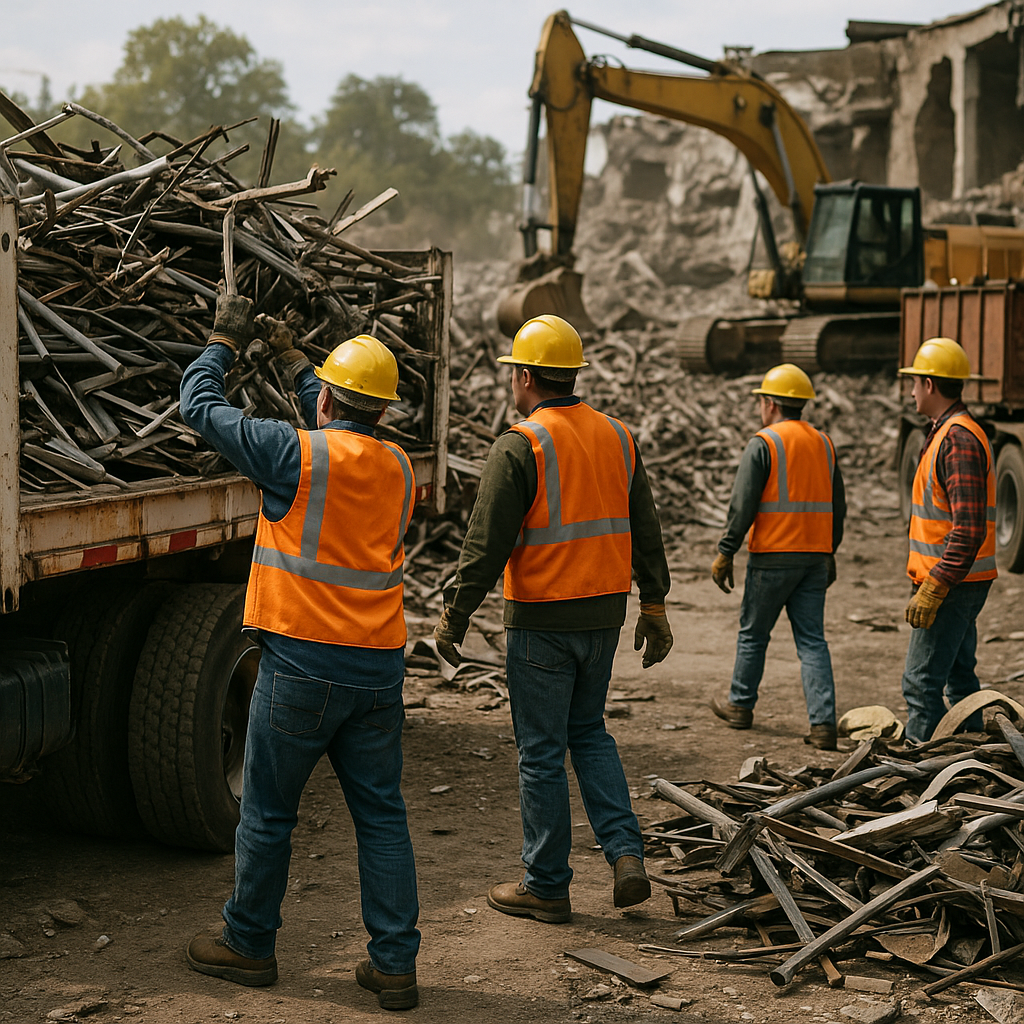
Professional scrap metal buyers offer comprehensive services tailored for demolition projects of all sizes. These services extend far beyond simple material hauling, providing the logistics and technical expertise needed to turn a complex teardown into a structured asset recovery operation.
On-site collection and specialized logistics
Industrial scrap partners provide on-site pickup services specifically designed for the high-volume output of demolition projects. Many companies offer same-day or next-day collection to ensure that material accumulation does not stall heavy machinery operations. This rapid response is vital for urban sites where space for debris storage is limited. For sites with extreme space constraints, “live load” services allow trucks to arrive for immediate loading and removal, eliminating the need for permanent containers on the ground.
Container and high-capacity equipment solutions
Roll-off containers are the primary tool for high-volume scrap generation. Available in various sizes—ranging from 20-yard bins for dense heavy melting steel to 40-yard containers for lighter aluminum siding—these units are monitored and replaced by the scrap buyer throughout the project lifecycle. Additionally, open-top gondolas and specialized van trailers are utilized for specific industrial materials, ensuring that transportation is as cost-effective as possible.
Material processing and on-site sorting
Maximizing scrap value requires the separation of ferrous and non-ferrous materials. Professional teams provide sorting guidance at the pick-up location, identifying high-value copper and brass components that would otherwise be downgraded if mixed with steel. On larger sites, mobile processing equipment—such as portable shears and magnetic separators—can be deployed to break down oversized structural components into “prepared” sizes, which command a higher price at the mill because they require less processing after delivery.
Asset recovery and facility cleanouts
Before the first wrecking ball swings, professional buyers offer asset recovery evaluations. This involves identifying valuable equipment, industrial motors, or specialized machinery that retains value beyond its weight in scrap. By purchasing reusable components separately, buyers can provide a higher total project revenue than a simple scrap-only approach. Following the metal recovery phase, comprehensive cleanout services ensure that the site is cleared of all debris types while adhering to environmental safety standards.
Advanced Metallurgical Verification: Precision Grading in 2026
In the modern demolition market, the difference between “stainless steel” and “high-nickel alloy” can represent thousands of dollars in revenue. In 2026, professional recycling facilities utilize advanced technology to ensure that demolition contractors are paid for the exact chemical composition of their scrap.
Handheld XRF and LIBS technology
To provide guaranteed pricing, recyclers utilize handheld X-ray fluorescence (XRF) and Laser-Induced Breakdown Spectroscopy (LIBS) technology. These devices provide an instant chemical breakdown of a metal sample. For a demolition site, this means distinguishing between different series of aluminum or identifying the molybdenum content in high-grade steel. This precision ensures that high-value materials are not “downgraded” to lower-priced scrap categories, directly increasing the contractor’s net revenue and providing a verifiable audit trail for corporate stakeholders.
The importance of alloy separation
Demolition projects often uncover specialized alloys in HVAC systems, industrial piping, and aerospace facilities. Without scientific verification, these materials are often lost in a “mixed metal” pile. By using sensor-based sorting, professional recyclers can identify copper-nickel alloys or titanium components on-site. Educating on-site crews to separate these high-value items based on XRF readings is one of the most effective ways to maximize the financial return on an industrial teardown.
Navigating New 2026 Texas Environmental Compliance Mandates
Operating a high-tonnage demolition site in 2026 requires strict adherence to updated Texas state laws. Staying compliant is not only a legal necessity but also a protection for your organization’s reputation and financial health.
Compliance with the Texas Metals Program
The Texas Department of Public Safety (DPS) regulates all Metal Recycling Entities (MREs) through the Texas Online Metals (TOM) database. Under 2026 updates, every transaction involving regulated materials—such as structural steel or copper wiring—must be reported electronically in real-time. This involves documenting the seller’s identification, capturing photographs of the material, and recording vehicle information. Professional recyclers manage this documentation on behalf of demolition contractors, providing a clean chain of custody that protects against allegations of handling stolen or non-compliant materials.
Cradle-to-grave liability and TCEQ reporting
The Texas Commission on Environmental Quality (TCEQ) mandates that industrial generators are responsible for their waste from “cradle to grave.” If demolition scrap is improperly landfilled or processed at an uncertified facility, the original contractor can be held liable for environmental remediation costs. Partnering with a professional recycler who provides “Certificates of Recycling” ensures that your business meets the notification requirements for industrial waste, shielding you from potential fines and environmental liability.
Why Is Official Documentation Like Weigh Tickets Crucial?
Official documentation forms the backbone of legitimate scrap metal transactions. Weigh tickets provide precise records of material weights, types, and values that protect both buyers and sellers. These documents eliminate disputes by establishing clear, measurable facts about each load that leaves the job site.
Fair payment depends entirely on accurate weight measurements. Third-party scale tickets, particularly those from certified facilities like CAT Scale, are the industry standard for verification. These independent measurements ensure you receive payment based on actual material weights rather than potentially biased readings. In 2026, most professional recyclers utilize digital ticketing systems that provide instant transparency for demolition project managers.
Compliance documentation serves multiple functions beyond simple record-keeping. EPA standards require detailed tracking of recyclable materials to ensure environmentally responsible processing. Facilities must maintain records showing material sources and final destinations. This documentation proves adherence to environmental regulations and supports the legitimate recycling chain, which is essential for businesses maintaining ISO certifications or green building credentials.
What Is Certified Destruction and When Is It Necessary?
Certified destruction provides a secure, documented disposal method for sensitive materials requiring complete removal from circulation. This specialized service employs traceable methods like industrial shredding or crushing to prevent materials from being reconstructed. Unlike standard recycling, certified destruction maintains an unbreakable chain of custody, protecting organizations from risks to brand integrity.
Regulatory requirements for high-stakes industries
Federal regulations require certified destruction for specific material categories. ITAR-controlled defense articles must undergo certified destruction to prevent unauthorized access to sensitive technology. The United States Munitions List defines 21 categories of defense articles that require this level of security during disposal. Healthcare organizations also require certified destruction for documents and devices containing patient data under HIPAA standards.
Aerospace, automotive, and brand protection
Aerospace components frequently require certified destruction. Failed parts, obsolete inventory, and proprietary manufacturing materials must be destroyed to safeguard trade secrets. Similarly, recalled consumer products or automotive parts—such as defective airbags—must be eliminated to prevent re-entry into commercial markets. The process results in a Certificate of Destruction, which details the material, the method of destruction, and the date, serving as legal proof of proper disposal and protecting the organization from future liability claims.
What Should You Know Before Selling Demolition Scrap Metal?
Demolition projects generate substantial quantities of metals that buyers actively seek. Understanding the fundamentals of the selling process helps ensure you receive fair compensation and efficient service for your recovered materials.
Metal types and acceptance standards
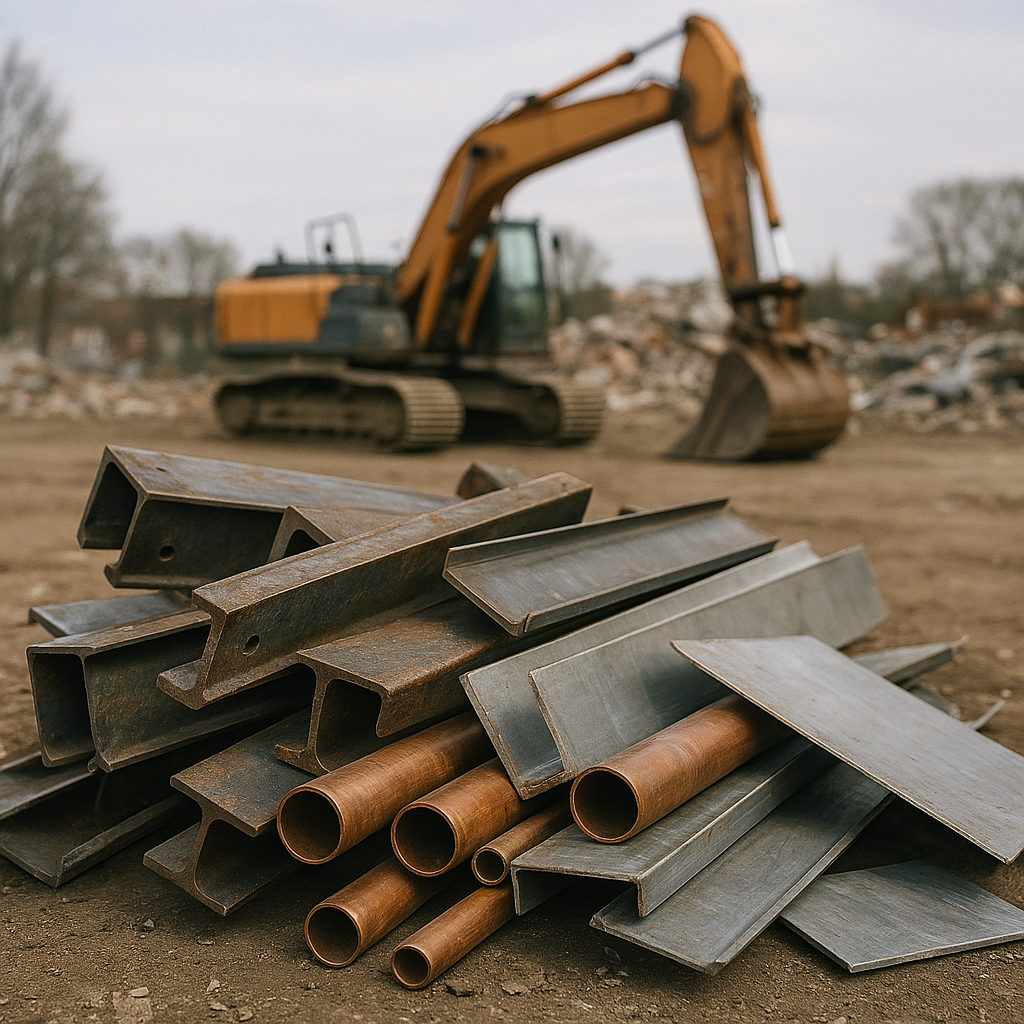
Scrap metal buyers accept both ferrous and non-ferrous metals. Ferrous metals include steel beams, rebar, and structural components. These materials are typically priced by the ton. Non-ferrous metals offer significantly higher per-pound values; copper piping, insulated wiring, and aluminum HVAC ductwork are among the most profitable materials found on demolition sites. Separating these different metals before sale typically increases the overall payout, as mixed materials are often priced based on the least valuable component in the bin.
Payment methods and commercial quantity advantages
Demolition projects often generate large volumes that qualify for commercial pricing tiers. Bulk quantities generally command better rates than smaller loads, and professional buyers frequently offer volume-based incentives. Payment processing typically happens via company check or bank transfer after the weighing process is complete. On-site weighing using certified scales ensures accurate measurement and transparent pricing, with most commercial transactions receiving same-day processing to support the contractor’s cash flow.
Choosing a Partner for Demolition Scrap Recycling
Choosing the right scrap metal buyer for demolition projects requires careful evaluation of several critical factors. Prioritize partners who demonstrate transparent pricing, provide certified scale tickets, and maintain comprehensive compliance documentation. These elements ensure accurate asset recovery while protecting your business from regulatory risks. For projects involving sensitive materials, verified certified destruction capabilities are essential to safeguard proprietary information and maintain environmental responsibility.
Successful demolition scrap recycling partnerships combine competitive pricing with operational reliability and regulatory compliance. Professional scrap metal buyers who offer streamlined logistics and accurate documentation create lasting value beyond the material transaction. For your demolition scrap recycling needs and to partner with a compliant, professional service provider in North Texas, contact Okon Recycling at 214-717-4083.
Send Us a Message
Questions about what we do? Interested in commercial services? Let us know below and a member of our team will get back to you.