5901 Botham Jean Blvd, Dallas, TX 75215
Where Can I Find Roll-Off Containers for Metal Scrap?
April 1, 2026Yes, you can find local services that offer roll-off containers specifically for metal scrap, with fast pickup options. Many high-capacity recycling facilities now provide temporary dumpster rentals designed for both residential and commercial metal recycling needs. These services handle everything from small home renovation projects to large-scale industrial cleanouts in the North Texas region. In 2026, the logistics of metal recovery have become more streamlined, allowing for real-time tracking and rapid asset liquidation.
The demand for efficient scrap metal disposal has grown significantly as more property owners recognize the value of proper metal recycling. Professional recycling centers offer comprehensive container and dumpster drop-off services, working around customer schedules for maximum convenience. These providers typically offer various container sizes to match different project requirements, from residential garage cleanouts to commercial construction debris removal. By utilizing specialized bins, generators can ensure that high-value non-ferrous materials are separated from bulk steel, maximizing the financial return on every load.
Which Companies Offer Roll-Off Dumpsters for Scrap Metal?
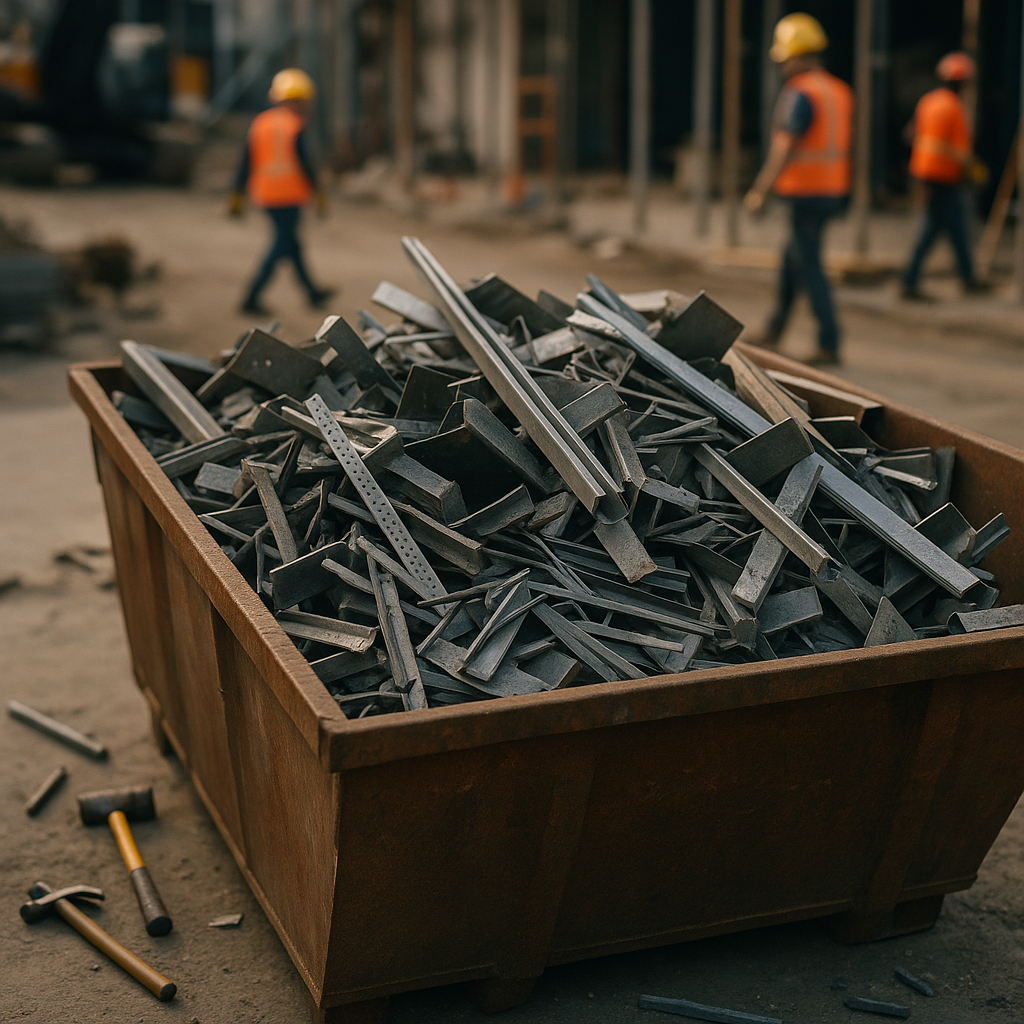
A large construction dumpster filled with metal scraps and steel beams, set against a concrete ground in an industrial environment.
Several regional and national industrial recycling firms provide roll-off containers suitable for scrap metal collection and recycling. These providers serve both residential and commercial customers, offering competitive pricing and specialized services for various project needs. In 2026, the industry has shifted toward digital-first service models where containers can be requested and tracked via mobile platforms.
Industrial recycling leaders provide comprehensive dumpster rentals for scrap metal recycling, accepting both ferrous and non-ferrous metals. These specialized roll-off services are designed to handle high-density materials like structural steel and rebar, as well as high-volume light iron. Many facilities also provide specialized bins for car batteries, insulated copper wire, and other high-value recyclable materials that require secure containment.
Commercial and industrial container solutions
For large-scale construction, demolition, and renovation projects, national and regional processors offer roll-off dumpsters typically in 20-yard, 30-yard, and 40-yard sizes. These containers can accommodate heavy scrap metal alongside other demolition debris removal needs. Specialized metal processors often provide containers exclusively for metal recycling projects to prevent cross-contamination and ensure that the generator receives the highest possible rebate for their materials.
[[artifact_table]]Comparison of roll-off dumpster services for scrap metal recycling[[/artifact_table]]Most companies offer flexible rental periods and pricing structures based on material type and weight. Professional material recovery centers provide both ferrous and non-ferrous metal processing capabilities, handling sorting at their own facilities to ensure proper recycling of different metal types. Commercial and industrial customers often benefit from customized pickup schedules and bulk pricing arrangements that reflect the daily commodity market rates. These services ensure consistent availability for large-scale projects requiring multiple container deliveries across wide geographic areas.
Navigating the 2026 Technological Landscape: Smart Containers
The scrap metal industry has undergone a technological revolution as we enter 2026. Roll-off containers are no longer static steel boxes; they are becoming “smart” assets that provide real-time data to both the recycler and the generator. This technology is essential for businesses looking to optimize their logistics and material recovery rates.
RFID and IoT integration in roll-offs
Modern roll-off containers are increasingly equipped with Radio Frequency Identification (RFID) tags and Internet of Things (IoT) sensors. These devices allow facility managers to track the exact location of every bin on a job site. Furthermore, weight-sensing technology can alert the recycling facility when a container is reaching its maximum capacity. This prevents overweight violations during transport and ensures that pickups are scheduled precisely when needed, eliminating “dry runs” where a truck arrives to pick up a half-empty container. This data-driven approach slashes fuel consumption and reduces the carbon footprint of the entire recycling cycle.
Advanced metallurgical identification on-site
In 2026, the ability to identify complex alloys before they ever leave the site has become a game-changer. Professional recycling partners now provide on-site metallurgical verification using handheld X-ray Fluorescence (XRF) and Laser-Induced Breakdown Spectroscopy (LIBS). When a roll-off container is being filled at a demolition or manufacturing site, technicians can verify if a material is 304 stainless steel or 316 stainless steel, which contains valuable molybdenum. By using these scientific tools to ensure proper segregation in the container, businesses can capture thousands of dollars in “hidden” value that would otherwise be lost in a mixed metal load.
Navigating New 2026 Environmental and ESG Mandates
The regulatory landscape for industrial waste in Texas and across the nation has become significantly more rigorous. In 2026, Environmental, Social, and Governance (ESG) reporting is no longer just for Fortune 500 companies; it is a standard requirement for any firm participating in the modern industrial supply chain.
Cradle-to-grave traceability and TCEQ compliance
The Texas Commission on Environmental Quality (TCEQ) has implemented stricter “cradle-to-grave” responsibility standards. This means that an industrial generator is legally responsible for their scrap metal until it has been fully processed into a secondary raw material. Professional recycling partners provide digital “Certificates of Recycling” that document the material’s journey from the roll-off container to the smelter. This audit trail is essential for satisfying state regulators and protecting businesses from the massive fines associated with improper hazardous waste disposal or illegal dumping by uncertified haulers.
Scope 3 emissions and sustainability reporting
Major manufacturers are now requiring their vendors to report Scope 3 emissions, which include the carbon footprint of their waste management and recycling activities. Utilizing a roll-off service that optimizes routes and maximizes material recovery directly lowers a company’s carbon intensity. In 2026, professional recyclers provide detailed sustainability reports that quantify the energy saved and CO2 emissions avoided by recycling the specific tonnage found in your roll-off containers. This data is vital for securing new contracts with environmentally conscious corporate partners and maintaining a competitive edge in a green economy.
For Which Projects Are Scrap Metal Roll-Off Containers Typically Used?
Home renovation and remodeling projects
Home renovation projects generate substantial amounts of scrap metal and construction debris. Kitchen remodels produce old appliances, plumbing fixtures, and metal cabinetry hardware. Bathroom updates create waste from outdated fixtures, pipes, and ventilation systems. Basement finishing projects often involve removing old furnaces, water heaters, and metal ductwork. These heavy-duty items require proper disposal methods that standard residential trash services cannot accommodate. Roll-off containers manage the weight and volume efficiently, allowing homeowners to clear space without multiple trips to the yard.
Commercial construction and demolition projects
Commercial construction and demolition operations rely heavily on roll-off containers for debris removal. Large-scale demolition projects produce tons of structural steel, rebar, and metal fixtures that must be removed quickly to keep the site safe. New construction sites use containers to manage scrap metal from electrical work, plumbing installations, and HVAC systems. Copper pipes, steel conduit, and aluminum ductwork accumulate throughout the building process. Construction sites benefit from centralized collection systems that keep work areas organized and OSHA-compliant.
Roofing and exterior projects
Roofing debris removal requires containers designed for high-density materials. Metal roofing, gutters, and flashing create substantial waste volumes. Siding replacement generates aluminum and steel materials that have significant scrap value. Window and door installations produce metal frames and hardware that are easily recyclable. Storm damage cleanup also frequently involves removing distorted metal roofing and damaged gutters. Dedicated roll-off containers provide immediate debris management during emergency repairs and large-scale restorations.
Large household cleanouts and estate management
Spring-cleaning projects often uncover decades of accumulated metal items, such as old appliances, exercise equipment, and furniture with metal frames. Estate cleanouts present unique challenges with large volumes of mixed materials where metal furniture and workshop tools accumulate over time. Professional roll-off services provide a convenient solution for these emotionally and logistically complex projects, allowing families to work at their own pace without the pressure of curbside pickup windows.
Landscaping and property maintenance
Major landscaping projects produce surprising amounts of metal waste, including fence removals, old playground equipment, and irrigation system components. Commercial property maintenance involves regular equipment upgrades and infrastructure improvements. HVAC replacements and security system installations create ongoing waste streams that benefit from scheduled container services. Specialized containers can handle these mixed debris types while ensuring that the metal content is recovered and returned to the manufacturing cycle.
Conclusion: Choosing Your Scrap Metal Dumpster Service
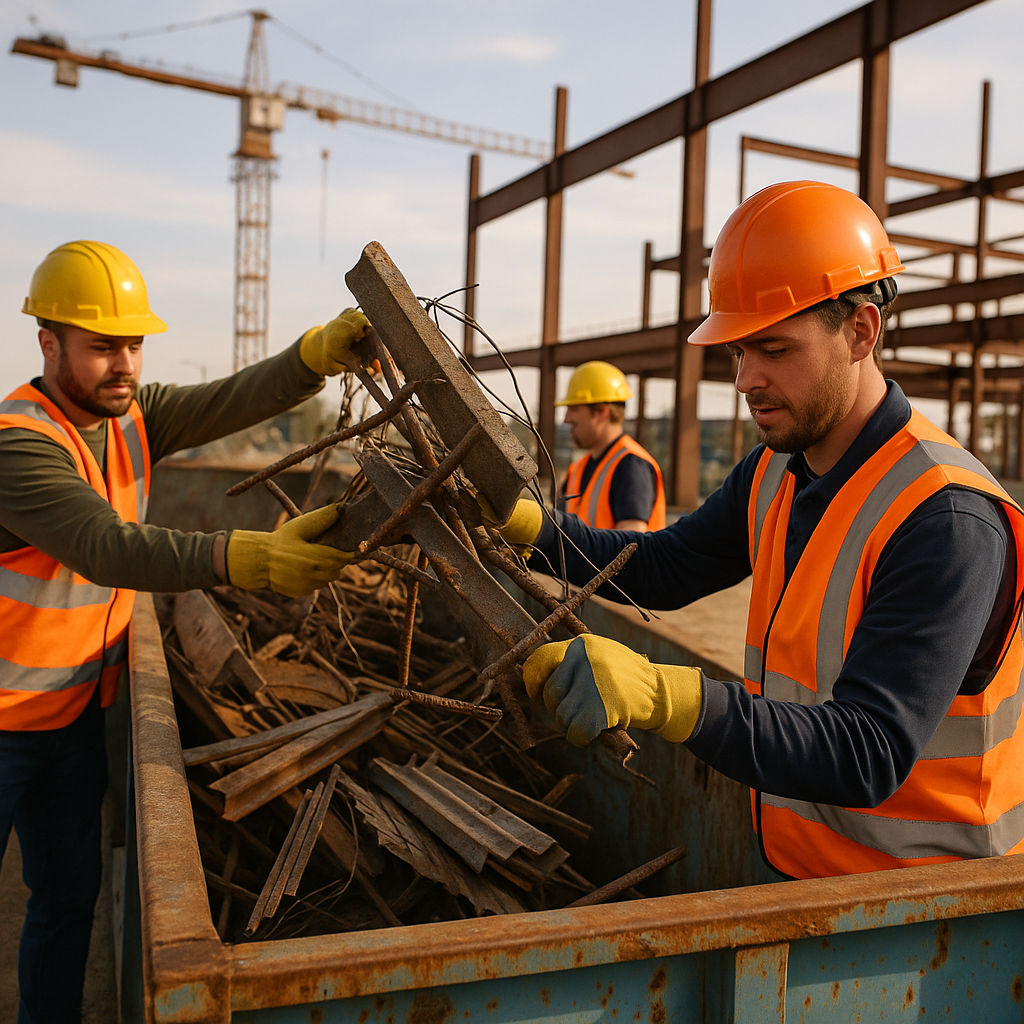
When you need a roll-off container for metal scrap, finding a provider that offers fast and reliable service is crucial for project success. Begin by identifying professional haulers that specifically handle industrial scrap metal disposal rather than general municipal waste. Review their service offerings to ensure they accommodate diverse metal types and offer convenient modern features like transparent pricing and digital reporting. In 2026, the best partners are those who leverage technology to provide real-time weight data and ESG compliance documentation.
The key to a hassle-free experience is choosing a provider that prioritizes prompt delivery, efficient pickup, and clear communication throughout the rental process. Always confirm pricing and availability before your project begins to avoid costly delays on the job site. For professional scrap metal disposal services that combine speed, reliability, and competitive market-indexed pricing in North Texas, contact Okon Recycling at 214-717-4083 for your recycling needs.
Send Us a Message
Questions about what we do? Interested in commercial services? Let us know below and a member of our team will get back to you.