5901 Botham Jean Blvd, Dallas, TX 75215
Construction Material Recycling in Richardson: A Complete Guide
February 4, 2026Every construction project in Richardson generates substantial amounts of debris that require proper management. From small home renovations to major commercial demolitions, these materials cannot simply end up in regular waste streams. The city has established clear regulations to ensure construction and demolition debris is handled responsibly.
In 2026, as North Texas continues its unprecedented industrial expansion, the role of material recovery has transitioned from a backend task to a primary operational strategy for successful developers.
Construction and Demolition in Richardson
Construction and demolition (C&D) debris in Richardson refers to materials generated during construction, renovation, and demolition of structures like buildings and roads. According to the City of Richardson’s Solid Waste Ordinance, this debris often includes bulky materials like concrete, wood, metals, and glass. These materials must be collected by private contractors who are franchised or permitted by the city, ensuring that the waste follows a documented path from the job site to an authorized processing facility.
The ordinance outlines specific requirements for construction waste management in Richardson. Private haulers must operate under city-granted franchises or permits to collect this demolition debris. These contractors handle all billing and logistics directly with customers. By partnering with a specialized industrial recycler, Richardson businesses can go beyond simple disposal and actively participate in the circular economy by reclaiming high-value metals and masonry.
What Types of Construction Materials Can Be Recycled?
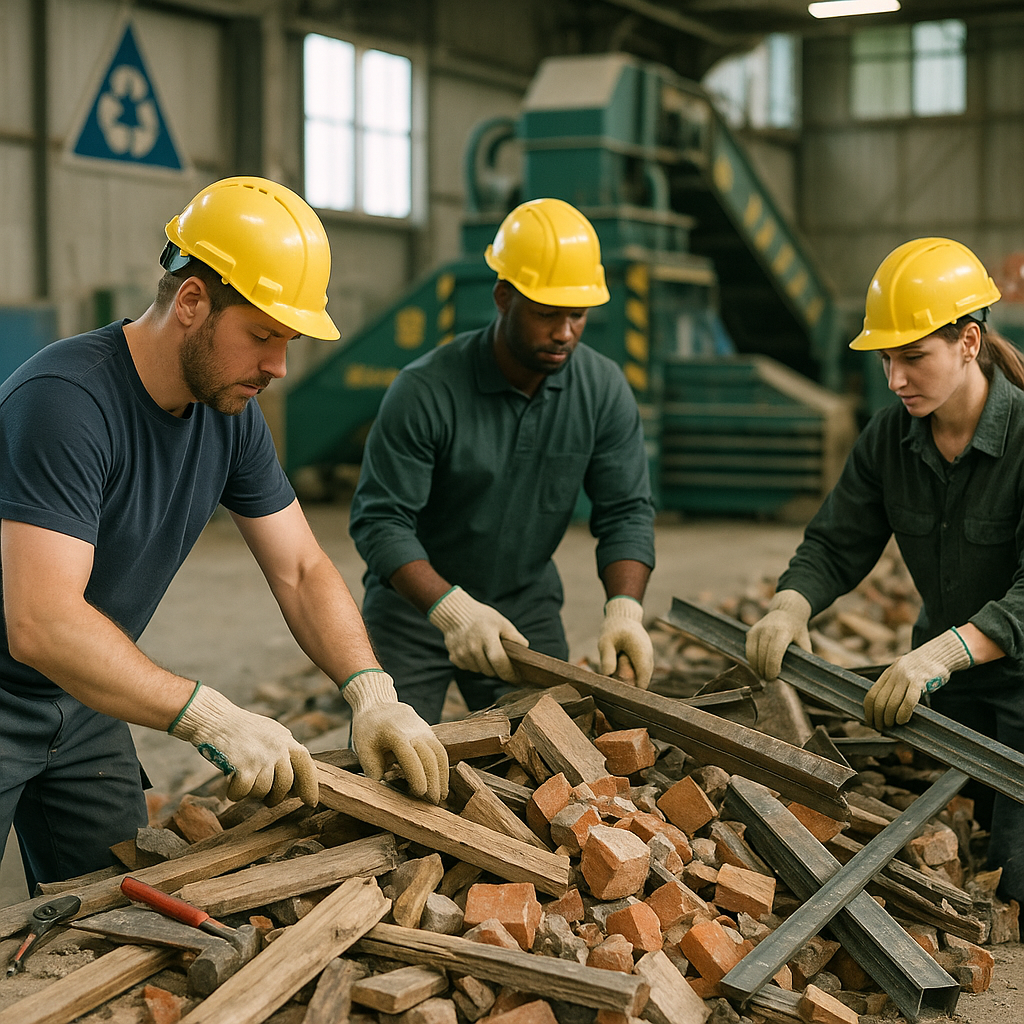
Construction sites in Richardson generate diverse materials suitable for recycling. Metal components represent the largest category by weight and value, followed by materials like concrete, wood, and glass that require specialized industrial processing approaches to ensure they are returned to the manufacturing stream.
Ferrous metals and structural steel
Ferrous metals contain iron and respond to magnetic attraction, making them easy to identify during automated sorting. Steel is the most commonly recycled ferrous material in Richardson construction projects, including structural beams, rebar, and building frameworks. Cast iron also frequently appears in older plumbing systems and industrial components. These materials maintain their structural properties through multiple recycling cycles, providing the essential feedstock for domestic steel mills using electric arc furnace (EAF) technology.
Non-ferrous metals and high-value alloys
Non-ferrous metals lack iron content and command significantly higher market values due to their resistance to corrosion and specialized applications. Aluminum components appear in window frames, siding, and industrial HVAC systems on Richardson jobsites. Copper wiring is one of the highest-value materials recovered during renovations; electrical contractors often find significant quantities of bare bright and insulated wire. Brass fittings from plumbing systems also fall into this category, representing a valuable copper-zinc alloy stream.
Masonry and concrete waste
Concrete materials require heavy-duty crushing to transform them into usable aggregates. Richardson construction sites generate substantial concrete waste from foundations, sidewalks, and structural elements. When processed correctly, this material becomes the base material for new road and parking lot construction. Reinforced concrete presents additional complexity due to embedded steel rebar, requiring magnetic separation to ensure both the concrete aggregate and the steel components enter their respective recycling loops.
Wood and architectural glass
Untreated lumber, such as framing studs and pallets, is recyclable and can be processed into mulch or engineered wood products. Treated wood requires more careful handling due to chemical preservatives and is often routed to specialized biomass facilities. Construction glass from windows and architectural elements can also be recycled, though safety glass and tempered materials require different processing techniques due to their laminated structure.
Maximizing Asset Recovery: The Financial Value of Richardson C&D Scrap
For Richardson developers and industrial facility managers, a demolition project is not just a cleanup task; it is an asset recovery opportunity. In the 2026 commodities market, the materials contained within a building’s skeleton possess significant tangible value that can offset project costs.
Reclaiming structural steel and rebar
Structural steel is one of the most valuable components of any commercial teardown. When a building is dismantled systematically rather than crushed, the steel beams can be graded as “Prepared Plate and Structural” scrap, which commands a premium price at the mill. Rebar, while lower in value than beams, is almost 100 percent recyclable and represents significant tonnage. By utilizing a professional recycling partner that provides precise on-site weighing and grading, Richardson businesses can turn a disposal liability into a project-funding asset.
Harvesting high-value non-ferrous metals
While steel makes up the bulk of the weight, the highest profit margins in demolition often lie in non-ferrous metals. Copper wiring, brass plumbing fixtures, and aluminum window frames should be source-separated on the jobsite. In 2026, the demand for copper is at an all-time high due to its role in the green energy and tech sectors. Ensuring that these materials are not lost to a mixed waste pile is essential for maximizing the ROI of a renovation project. Industrial recyclers provide specialized bins for these metals, ensuring they stay clean and fetch the highest possible market rate.
Navigating Safety and Compliance: 2026 Texas C&D Mandates
Operating a construction or demolition site in Richardson involves significant regulatory oversight. A professional recycling partnership acts as a shield against the legal and safety risks associated with high-volume material handling.
Cradle-to-grave responsibility and TCEQ mandates
Texas environmental law dictates that industrial generators are responsible for their waste from “cradle to grave.” If scrap materials are improperly handled or landfilled at an unpermitted site, the original generator can be held liable for cleanup costs. Professional recycling partners provide “Certificates of Recycling” and detailed manifest documentation that proves materials were handled according to TCEQ standards. This audit trail is essential for Richardson businesses during corporate sustainability reviews or municipal inspections.
On-site safety and OSHA compliance
The physical handling of tons of structural metal and concrete poses risks to site personnel. Professional recycling services provide OSHA-compliant bins and specialized material handling equipment that minimize the risk of workplace injuries. By utilizing a professional pickup service, Richardson contractors transfer the heavy lifting and transport logistics to trained experts who utilize personal protective equipment (PPE) and rigorous safety protocols, reducing the project’s liability and workers’ compensation risks.
How Is Construction and Demolition Debris Collected in Richardson?
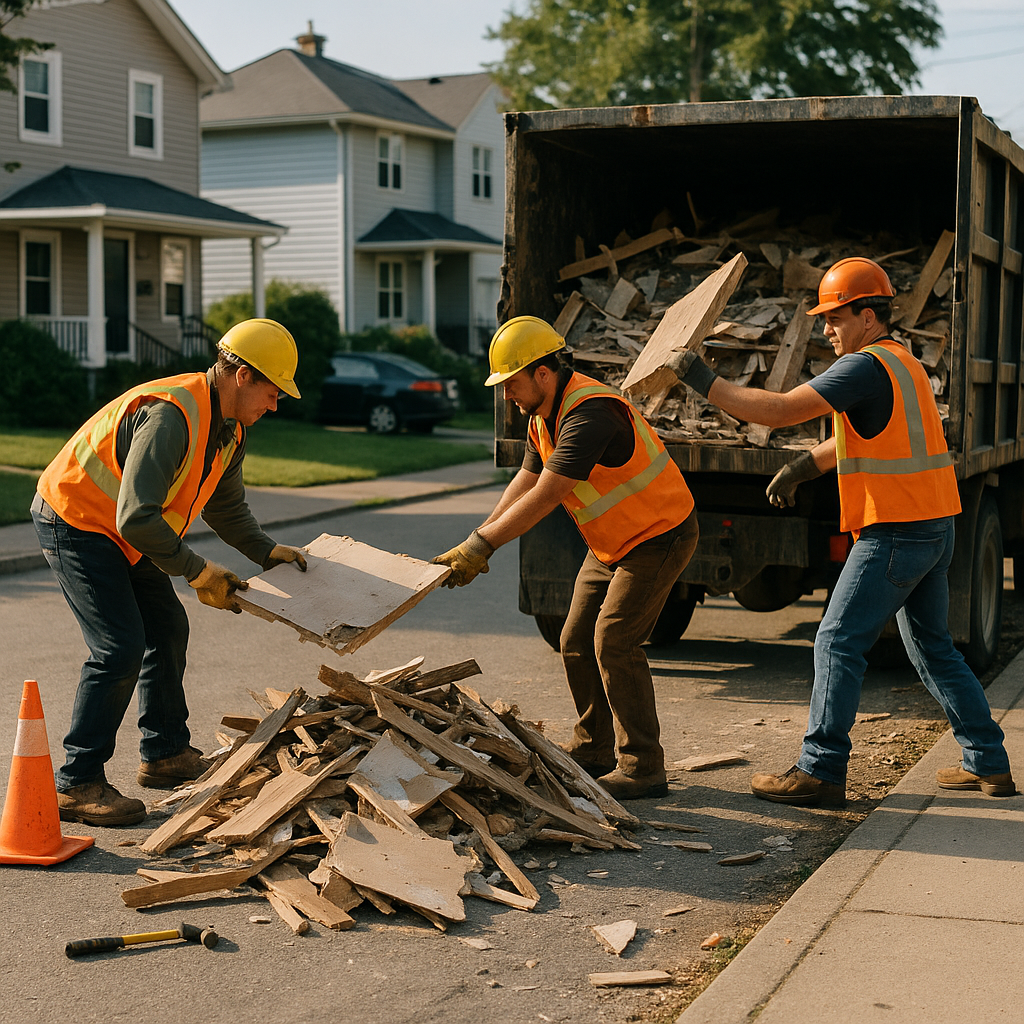
Richardson operates a franchise-based system for collecting construction and demolition debris. The city grants permits or franchises to private contractors tasked with handling all C&D waste collection services. This regulated approach ensures proper waste management while maintaining accountability through municipal oversight.
Private haulers must secure official authorization before operating within city limits. The City of Richardson requires all C&D contractors to obtain franchise agreements as outlined in the municipal solid waste ordinance. This licensing process helps maintain service standards across all collection operations. Franchised contractors assume full responsibility for customer relationships and billing, contracting directly with the property owners and developers generating the debris.
The municipal ordinance defines C&D debris as materials generated during building construction, renovation, and demolition activities. This includes concrete, wood, metals, glass, and salvaged building components from both residential and commercial projects. It also covers debris from road and bridge construction work. Chapter 19 of Richardson’s ordinance governs these waste collection services and establishes requirements for debris transportation and disposal.
Are There Drop-Off Locations for Solid Waste in Richardson?
Richardson residents have access to a dedicated solid waste disposal facility through the Lookout Drive Transfer Station. This facility offers a convenient option for disposing of materials that cannot be handled through regular curbside collection services, such as furniture or bulk household waste.
The Lookout Drive Transfer Station is located at 1601 E. Lookout Dr., Richardson, TX 75082. It operates Monday through Saturday from 8 a.m. to 4:30 p.m. Richardson residents who pay for city solid waste services can use this transfer station twice per month at no charge, provided they present a current Texas driver’s license and a matching city-issued utility bill dated within 30 days.
Accepted municipal waste and commercial gate rates
The transfer station accepts most household solid waste that cannot fit in standard containers, including mattresses and appliances. Residents must ensure all gasoline and oil are removed from lawn equipment before transport. While construction waste is accepted, it is not included in the free residential program; these materials incur the posted gate rate. The North Texas Municipal Water District manages this facility and accepts credit or debit cards for payment.
Why Is Recycling Construction Metals Environmentally Important?
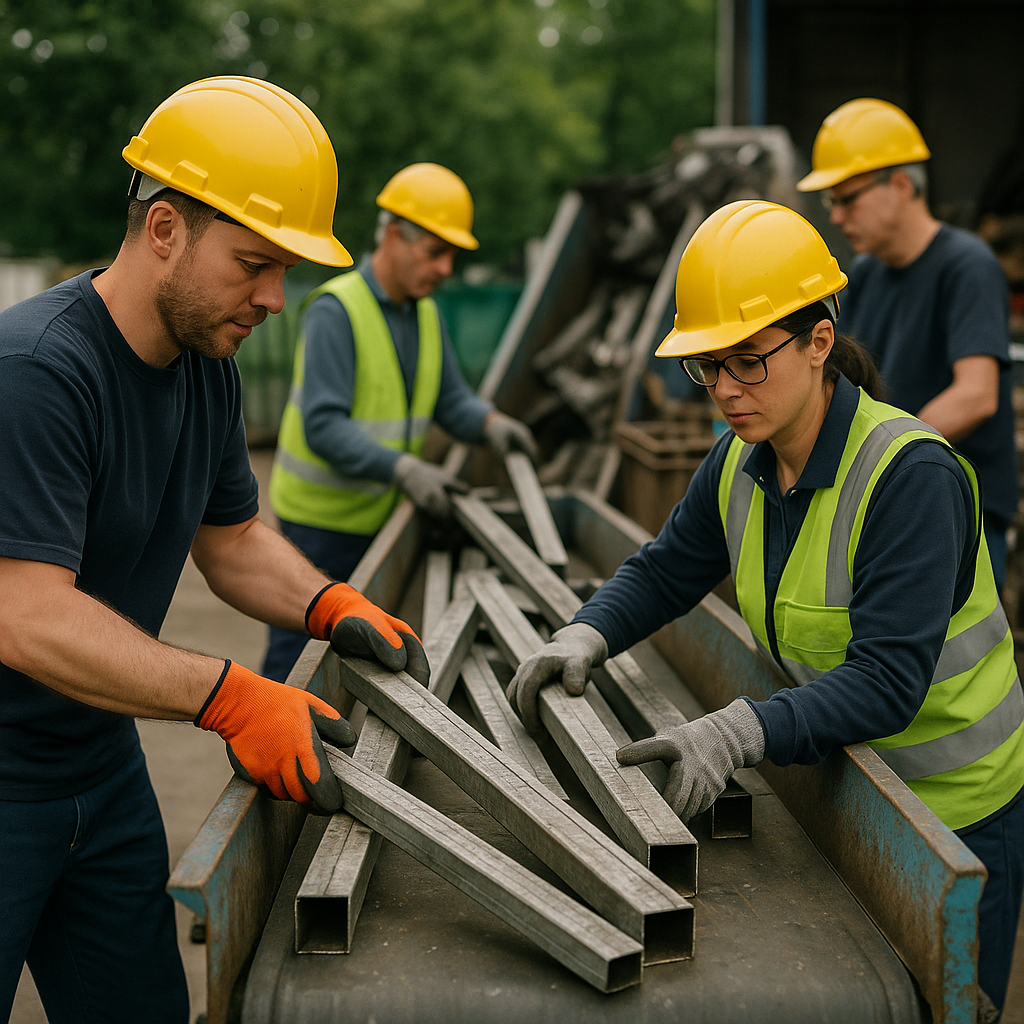
Recycling construction metals provides significant environmental benefits beyond simple waste reduction. Energy savings make it one of the most impactful sustainability practices in the industry, creating a positive effect on the North Texas ecosystem.
Energy conservation and emission reductions
Metal recycling requires significantly less energy than producing metals from virgin ore. Using recycled aluminum saves 95 percent of the energy compared to extracting it from raw bauxite. Steel recycling achieves a 60 percent energy saving. These reductions lead to substantial greenhouse gas emission cuts. The EPA states that recycling and composting saved over 193 million metric tons of CO2 equivalent in 2018. Steel recycling is particularly impactful, as every ton recovered prevents the consumption of approximately 1,100 pounds of coal.
Natural resource preservation and landfill diversion
Recycling metals protects finite natural resources by reducing mining demand. Mining operations disrupt wildlife habitats, contaminate water sources, and leave permanent environmental scars. By opting for recycled metals, Richardson construction projects support sustainable practices that preserve these resources. Furthermore, diverting metals from landfills prevents harmful chemicals from leaching into the soil and groundwater. Steel and aluminum do not decompose for centuries; recycling them ensures they remain a productive resource rather than a permanent environmental liability.
Conclusion: Managing Your Construction Waste in Richardson
For contractors and businesses in Richardson, managing construction waste is a structured process governed by local city ordinances. The primary method involves partnering with city-permitted industrial haulers for debris collection and material recovery. While municipal facilities like the Lookout Drive Transfer Station offer options for household waste, professional industrial recycling is the standard for high-volume construction projects.
Choosing to recycle construction materials—especially metals—is not only a matter of compliance but a commitment to energy conservation and resource protection. Richardson’s comprehensive approach to debris disposal ensures that projects can proceed efficiently while adhering to high environmental standards. For professional waste management and specialized metal recycling solutions that maximize your material value, contact Okon Recycling at 214-717-4083.
Send Us a Message
Questions about what we do? Interested in commercial services? Let us know below and a member of our team will get back to you.