5901 Botham Jean Blvd, Dallas, TX 75215
AC Unit Recycling in Lewisville, TX: Everything You Need to Know
January 27, 2026Old air conditioners pose serious environmental threats when improperly disposed of in landfills. These units contain harmful refrigerants like R-22 and CFCs that damage the ozone layer when released into the atmosphere. They also house valuable metals such as copper, aluminum, and steel that become wasted resources in landfills.
Professional AC unit recycling in Lewisville, Texas, addresses these concerns through specialized handling processes. Certified technicians safely extract refrigerants according to EPA regulations. They dismantle units to recover valuable materials while ensuring hazardous components receive proper treatment. This approach prevents environmental contamination and supports sustainable waste management practices throughout North Texas.
These professional recycling services accommodate diverse project scales across the region. Residential air conditioner removal handles single units from homes and apartments. Large-scale commercial HVAC systems from hospitals, schools, and office buildings require specialized equipment and coordination. Both service levels ensure landfill diversion while recovering materials that support the circular economy.
What Recycling Options Are Available for Residents in Lewisville?
Lewisville residents have multiple pathways for responsible air conditioner disposal, each designed to handle different situations and unit types. The region’s waste management system accommodates both municipal collection and specialized private removal services for these bulky appliances.
Municipal curbside collection
Lewisville residents may utilize franchised waste haulers for curbside pickup, but air conditioning units require specific preparation before collection becomes available. Appliances containing PCB, CFC, or HCFC coolants must receive certification from a qualified technician before they can be placed on the curb. This certified technician tags the unit to confirm safe refrigerant removal. The tagging process ensures environmental compliance and protects waste management workers from hazardous materials during collection.
Steps for curbside pickup preparation include:
- Schedule refrigerant removal with a certified technician.
- Obtain proper documentation and tagging for the unit.
- Place the tagged unit at the designated collection point.
- Ensure the unit does not exceed local bulky waste size limitations.
Professional pickup and hauling services
Professional pickup services eliminate the physical challenges associated with AC unit disposal. These experts handle residential and window units regardless of size or installation location. Removal teams manage the heavy lifting, loading, and transport to appropriate facilities. Many of these services prioritize environmental responsibility by partnering with certified recycling centers to ensure that up to 95 percent of the metal components are recovered for reuse.
Industrial and e-waste recycling facilities
Local industrial recycling facilities offer direct drop-off options for residents who can transport their units independently. These facilities specialize in handling appliances containing refrigerants and possess the equipment necessary for safe coolant extraction and metallurgical processing. Residents should verify facility requirements before transport, as some locations may require advance scheduling for appliances containing fluids.
How Can Businesses Manage Commercial HVAC Recycling?
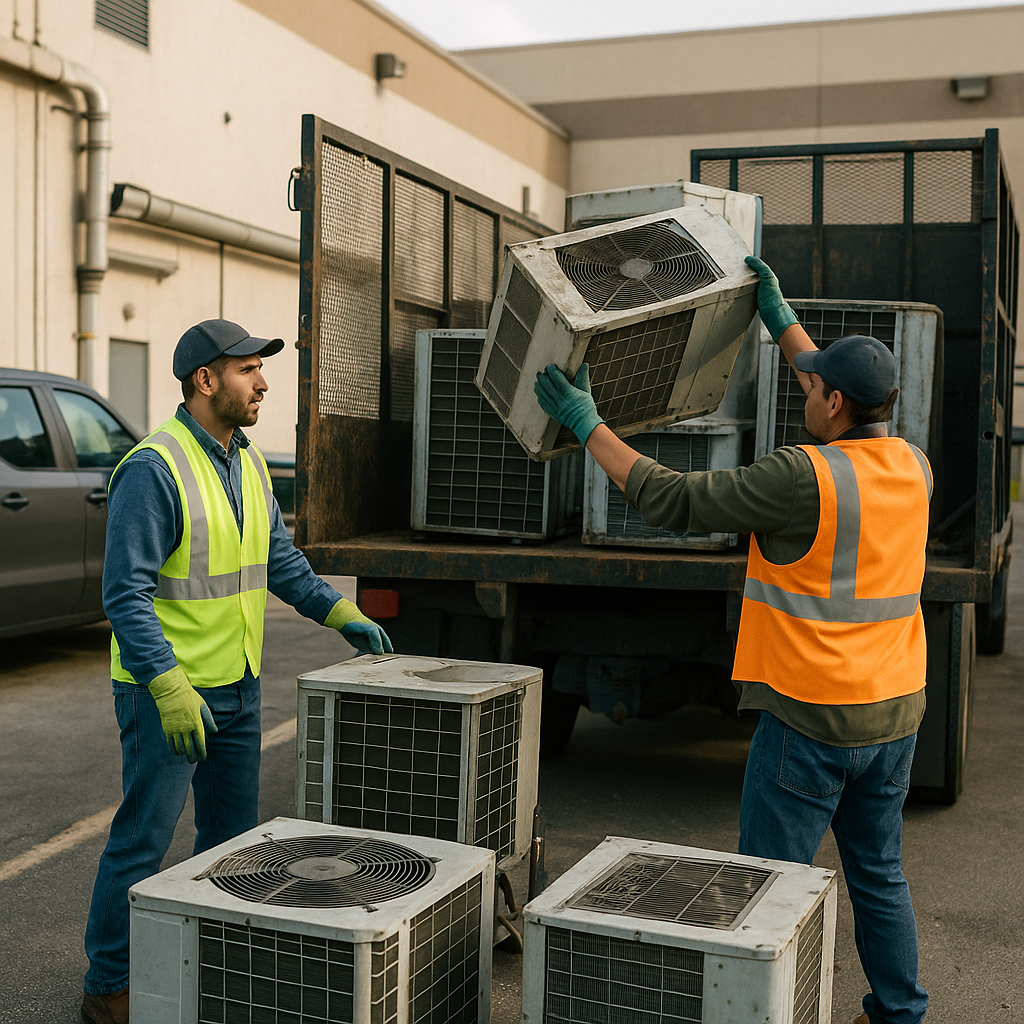
Businesses in Lewisville can streamline their HVAC disposal process by partnering with specialized industrial recycling companies. These partnerships provide comprehensive solutions for removing large-scale HVAC systems across various commercial properties, from retail centers to manufacturing plants.
Commercial recycling services handle the complex logistics of equipment removal while ensuring compliance with environmental regulations. They often work directly with mechanical contractors and project managers to coordinate removal schedules, ensuring minimal disruption to daily business operations. Removals can be scheduled during off-peak hours or planned maintenance windows to maintain operational continuity.
Equipment types and removal capabilities
Professional recycling services handle diverse HVAC equipment types found in commercial settings. Rooftop units (RTUs) are the most common request, but experts also manage industrial chillers, heat exchangers, and cooling towers. Boilers present unique challenges due to their size and installation complexity; specialized removal teams use appropriate rigging equipment and safety protocols for safe extraction. The removal process includes proper disconnection of all utilities and careful handling to prevent damage to the building’s infrastructure.
Environmental compliance and sustainability reporting
Professional HVAC recycling ensures proper handling of refrigerants and other regulated materials. Certified technicians perform compliant recovery from all equipment types, protecting businesses from potential environmental violations. Documentation provided by recycling services supports corporate Environmental, Social, and Governance (ESG) reporting. Many businesses use recycling certificates to demonstrate environmental stewardship to stakeholders, which is particularly valuable for companies pursuing green building certifications.
Navigating the 2026 Refrigerant Transition and New Regulations
As of January 1, 2026, the HVAC industry has entered a new era of regulation. Under the Environmental Protection Agency (EPA) transition rules, the installation of new systems using high-GWP (Global Warming Potential) refrigerants like R-410A is now prohibited. This shift has significant implications for how old units are decommissioned and recycled in Texas.
Phasing out R-410A and the rise of A2L refrigerants
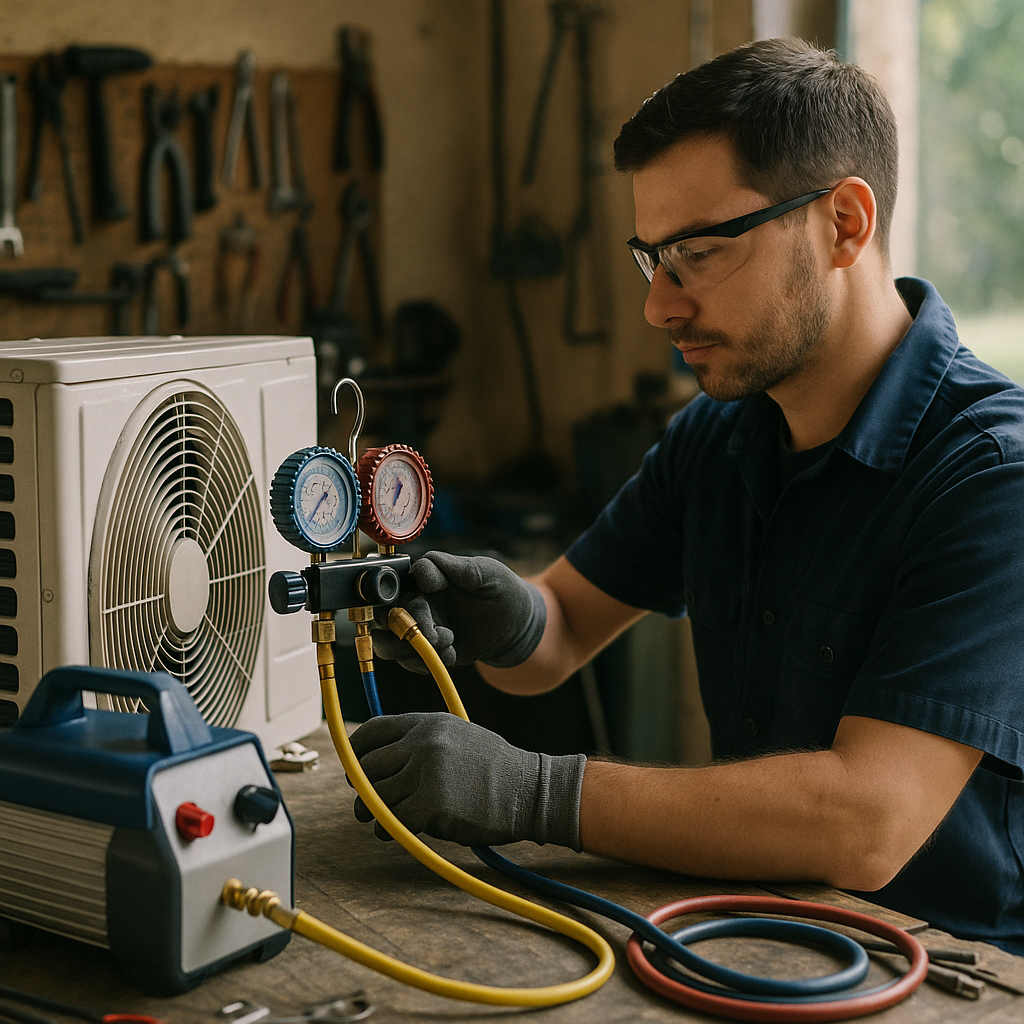
The 2026 mandate requires a transition toward more environmentally friendly refrigerants, such as R-32 and R-454B. While these new “A2L” refrigerants are more sustainable, they are classified as mildly flammable, requiring updated recovery equipment and specialized technician training. For property managers in Lewisville, this means that decommissioning an old R-410A system must be handled by professionals who possess the newest recovery canisters and certifications to prevent accidental atmospheric venting.
Stricter penalties for non-compliant disposal
The EPA and the Texas Commission on Environmental Quality (TCEQ) have increased enforcement of Section 608 of the Clean Air Act. In 2026, failure to provide proof of certified refrigerant recovery during the disposal process can result in severe financial penalties. Professional recycling facilities now provide digital “Cradle-to-Grave” documentation, ensuring that every ounce of refrigerant is tracked from the job site to the reclamation center, shielding the business owner from legal liability.
Maximizing Asset Recovery: The Financial Value of HVAC Scrap
An old HVAC unit is more than just waste; it is a repository of high-value metals. For commercial businesses and industrial facilities, a strategic recycling program can turn a decommissioning project into a material recovery gain.
Reclaiming copper and aluminum heat exchangers
The “coils” within an air conditioner are composed of high-purity copper tubing and aluminum fins. In the early 2026 commodities market, copper has seen sustained high pricing due to increased demand in the energy and tech sectors. By utilizing a professional industrial recycler that performs detailed material grading, businesses can receive the maximum market rate for these non-ferrous metals. Specialized recycling facilities use X-ray fluorescence (XRF) analyzers to identify exactly which alloys are present, ensuring the highest possible payout for the client.
Steel recovery and heavy equipment rebates
The heavy chassis and compressor housings of industrial units are made of high-grade steel. When a facility recycles dozens of rooftop units at once, the cumulative tonnage of steel represents a significant revenue stream. Many professional recyclers offer rebate programs for high-volume commercial projects, where the value of the recovered metal can often cover the entire cost of the removal and transport logistics. This turns a necessary infrastructure upgrade into a more budget-friendly operational move.
What Is Required for Compliant Refrigerant and Freon Recycling?
Federal regulatory framework
The EPA enforces strict regulations under Section 608 of the Clean Air Act. These rules prohibit the release of ozone-depleting substances during maintenance or disposal. All refrigerant handling must follow these federal requirements to prevent environmental damage. Violations can result in fines exceeding $69,000 per day for each offense, making professional compliance an absolute necessity for Lewisville businesses.
Technician certification requirements
Only certified technicians can legally handle refrigerant recovery. The EPA requires technicians to pass tests demonstrating knowledge of proper recovery practices across four categories: Type I (small appliances), Type II (high-pressure systems), Type III (low-pressure equipment), and Universal. Certified professionals must use their credentials when tagging units for disposal, covering refrigerant containment and recycling equipment operation.
Documentation and disposal chain
Proper documentation tracks refrigerant removal throughout the disposal process. For municipal pickup, certified technicians must tag units confirming coolant removal, including their name and the date of recovery. The final processor in the disposal chain bears responsibility for ensuring complete removal. Without proper paperwork, industrial disposal facilities cannot legally process refrigeration equipment, as the manifest acts as the primary record of environmental compliance.
Choosing the Right AC Recycling Service in Lewisville
Whether you are a homeowner or a project manager, choosing a reliable service for AC unit recycling in Lewisville is a critical decision. For residents, professional hauling services offer an easy solution for bulky window units. For businesses, specialized commercial recyclers provide the comprehensive removal and metallurgical verification needed for high-volume projects.
Making the right choice ensures you comply with 2026 regulations while contributing to a cleaner Texas environment. Professional recyclers handle the complexities of refrigerant extraction and materials recovery, giving you peace of mind that your old equipment is processed responsibly.
For your next AC recycling project in Lewisville, contact Okon Recycling at 214-717-4083 to discuss how we can help you achieve your sustainability goals through certified disposal and eco-friendly practices.
Send Us a Message
Questions about what we do? Interested in commercial services? Let us know below and a member of our team will get back to you.