5901 Botham Jean Blvd, Dallas, TX 75215
What is Involved in Demolition Steel Projects in the Fort Worth Area?
January 28, 2026Steel demolition projects in Fort Worth represent a massive opportunity for industrial sustainability. While these operations are among the most complex in the construction industry, their true value lies in the circular economy. By integrating specialized cutting techniques with advanced material recovery, modern demolition transforms what was once considered “waste” into a high-value resource for the global steel market. In 2026, as North Texas continues its industrial expansion, the recovery of structural steel has become a cornerstone of local manufacturing and resource management.
Steel demolition in the Fort Worth area involves systematically dismantling structural building frameworks to harvest ferrous and non-ferrous metals. Industrial-focused contractors in the region focus on commercial projects where concrete and steel must be meticulously separated. This source-separation is the first and most critical step in the recycling chain, ensuring that the steel remains free of contaminants and retains its maximum scrap value for corporate waste management goals.
Environmental stewardship is the driving force behind these projects. Modern contractors are no longer just “clearing sites”; they are managing urban mines. By hauling materials to specialized recycling facilities instead of landfills, Fort Worth projects adhere to strict Texas environmental regulations while significantly reducing the carbon footprint of the construction industry. Understanding these recycling complexities helps property owners maximize their Return on Investment (ROI) through significant scrap metal rebates.
What Are the Required Steps to Maximize Recycling Before Steel Demolition?
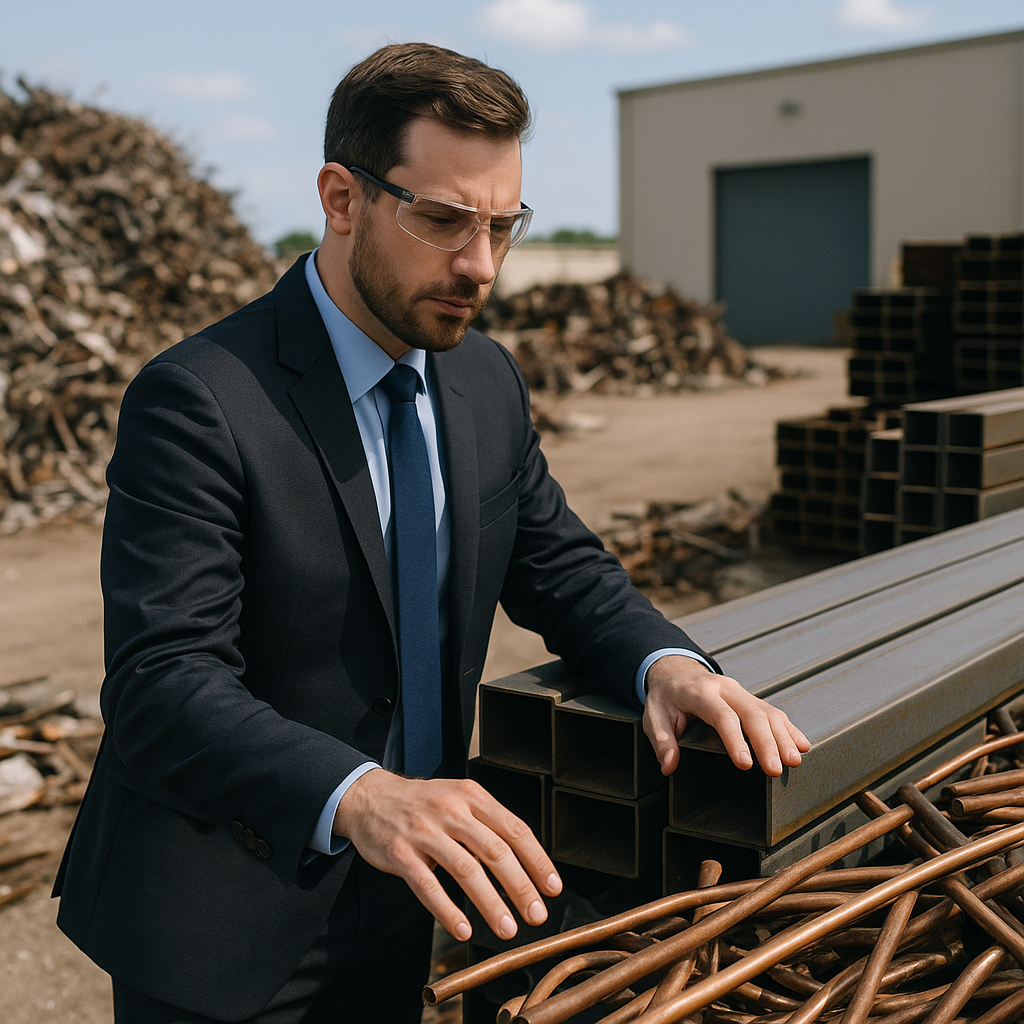
Steel demolition projects require extensive preparation to ensure that the recovery of materials is as efficient as the destruction of the building. These steps prioritize site safety and the purity of the recycled material stream, which directly impacts the final payout for the scrap metal.
Engineering surveys and material recovery planning
Every project begins with a comprehensive engineering survey. Beyond identifying load-bearing elements for safety, this survey serves as a material audit. It identifies the types of steel alloys present and the volume of secondary materials—such as copper wiring, brass fittings, or aluminum siding—that can be recovered. By quantifying these assets early, facility managers can better estimate the total project offset provided by the scrap value.
Permit acquisition and sustainable disposal documentation
Municipal authorities in Fort Worth increasingly require detailed plans showing how materials will be diverted from landfills. We secure permits that account for the logistics of on-site sorting, ensuring that roll-off containers are strategically placed to prevent cross-contamination of metal and masonry. Proper documentation is also essential for projects seeking LEED certification or those following municipal green-building mandates.
Hazardous material identification: protecting the scrap stream
Steel structures built before 1978 often contain lead-based paint or asbestos fireproofing. To maintain the integrity of the recycling stream, these contaminants must be removed by licensed abatement contractors first. Clean steel is far more valuable and easier to process in an electric arc furnace (EAF) than contaminated scrap. Furthermore, identifying these hazards early protects workers and prevents environmental fines that can arise from improper handling of regulated waste.
Pre-demolition checklist for maximum recovery
A structured timeline is essential for ensuring no valuable materials are lost during the high-speed phase of a teardown. The following checklist provides a framework for industrial recovery:
| Phase | Action Item | Recycling Impact |
|---|---|---|
| Week 1-2 | Structural Material Audit | Identifies high-value ferrous and non-ferrous alloys. |
| Week 3-4 | Hazardous Material Abatement | Ensures scrap metal meets “clean” industrial standards. |
| Week 5 | Utility Termination & Asset Recovery | Safely harvests copper piping and electrical components. |
| Week 6 | On-site Sorting Logistics | Sets up dedicated zones for steel, rebar, and concrete. |
Advanced Technologies in Modern Steel Recovery
In 2026, the technology used on demolition sites has evolved to increase the precision of material recovery. These advancements allow Fort Worth contractors to extract more value from a structure than ever before, ensuring that every pound of metal is identified and sorted correctly.
Hydraulic shearing and precision cutting
The use of high-capacity hydraulic shears attached to excavators has revolutionized how steel skeletons are dismantled. These tools allow for “precision sizing” directly on the job site. By cutting structural beams into specific lengths—typically under 3 or 5 feet—contractors can grade the material as “Prepared Plate and Structural” scrap. This grade commands a significant premium over unprepared scrap because it can be fed directly into a furnace without further processing at the recycling facility.
Metallurgical verification with XRF technology
On complex industrial sites, not all steel is the same. Professional recycling partners now utilize handheld X-ray fluorescence (XRF) analyzers to verify the exact chemical composition of alloys on the spot. This is particularly vital when dismantling petrochemical or manufacturing facilities where stainless steel, nickel alloys, or chrome-moly steel may be present. Identifying these high-value alloys ensures the property owner is compensated for the actual metallurgical value of the scrap, rather than receiving a flat “mixed iron” rate.
Safety and Compliance: Navigating Texas Scrap Regulations
Handling thousands of tons of structural steel involves significant physical risk and strict regulatory oversight. Fort Worth businesses must ensure their demolition projects adhere to both OSHA safety standards and the Texas Metals Program.
OSHA standards for structural dismantling
Safety is the primary concern during the dismantling of a steel-frame building. OSHA requires strict adherence to “engineered demolition” plans to prevent premature collapses. Furthermore, workers must be protected from “hot work” hazards, such as lead fumes during torch cutting. Professional recycling partners provide the specialized safety equipment and training necessary to manage these risks, ensuring the project remains on schedule and free from safety-related work stoppages.
Adhering to the Texas Metals Program
The Texas Department of Public Safety (DPS) regulates the sale of scrap metal to prevent theft. For a large-scale demolition project, this means every load leaving the site must be accompanied by proper documentation, including a manifest and photographs of the material. By maintaining an ironclad audit trail, Fort Worth property owners protect themselves from legal liability and ensure that their project remains in full compliance with state law. Professional recyclers manage this documentation as part of their comprehensive service package.
How Is Steel from Demolition Sites Recycled in Fort Worth?
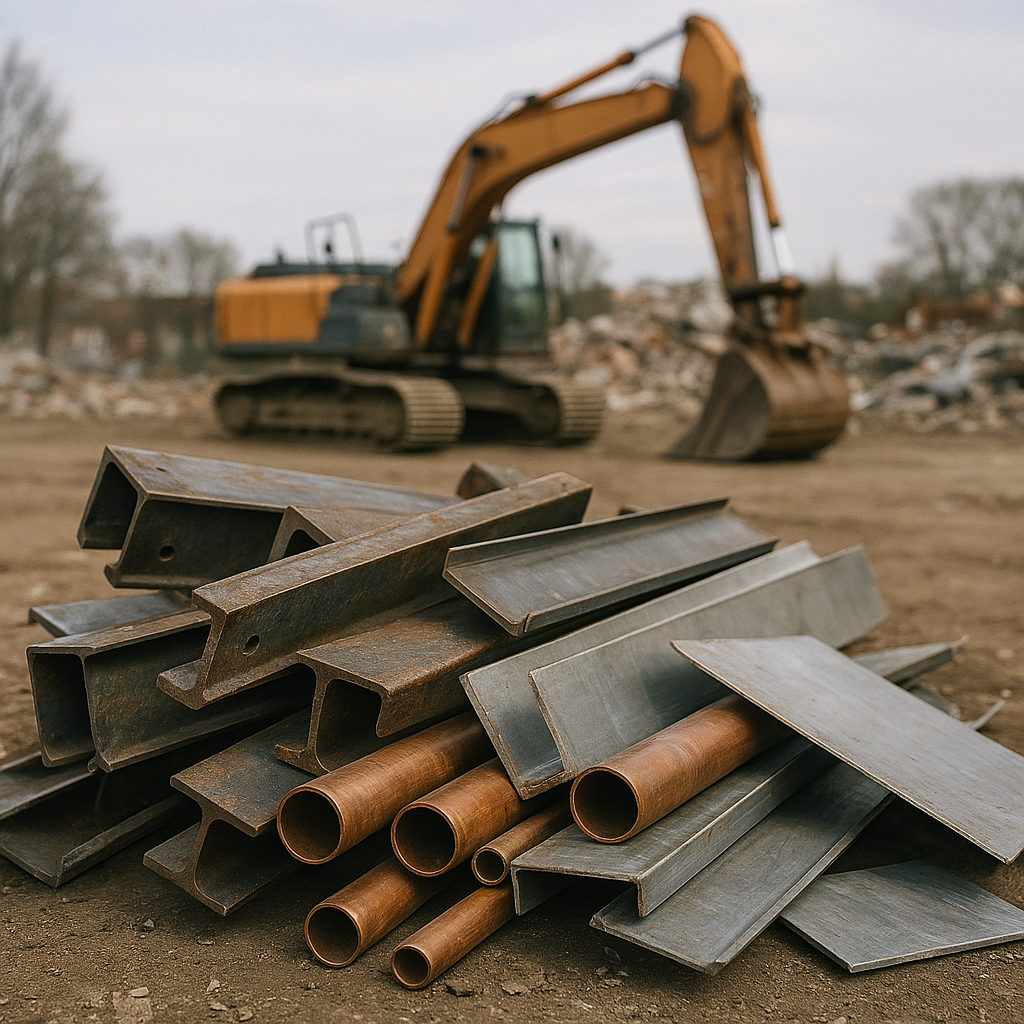
Fort Worth has become a regional hub for systematic material recovery. When major structures are dismantled, industrial partners prioritize source-separation. This approach prevents concrete dust, wood debris, and insulation from devaluing the metal scrap. Steel beams and rebar are processed using heavy machinery equipped with hydraulic shears and high-powered magnetic separators. These tools efficiently pull ferrous metals from the rubble with incredible speed.
Grading and classification of demolition steel
Once separated, the material is graded to match mill specifications. The most common grades recovered from Fort Worth demolition sites include:
- HMS 1 & 2: Heavy melting steel, typically recovered from structural frames and industrial machinery.
- Plate and Structural (P&S): High-quality, thick-gauge steel from beams and columns, often the most valuable ferrous grade.
- Rebar: Reinforcing steel extracted from concrete slabs and pillars, which is almost 100 percent recyclable.
The graded steel is transported to local processing facilities using advanced logistics fleets. From there, it is sent to electric arc furnaces. Unlike traditional blast furnaces, EAFs can be powered by renewable energy and use nearly 100 percent scrap metal to create new structural beams, rebar, and automotive steel.
Environmental Fact: According to data from the steel industry, recycling one ton of steel saves 2,500 pounds of iron ore, 1,400 pounds of coal, and 120 pounds of limestone. This massive reduction in raw material consumption is why steel is considered the most recycled material on the planet.
The Financial Impact of High-Volume Scrap Rebates
For industrial property owners, the scrap metal rebate is often the deciding factor in the feasibility of a demolition project. When handled by experts, the value of the recovered steel can offset a significant portion of the mobilization and labor costs.
Market-based pricing and LME indices
Scrap metal is a global commodity, and its price fluctuates based on international indices like the London Metal Exchange (LME). In 2026, the demand for “Green Steel” has driven the price of clean structural scrap to historic highs. By partnering with a recycler that offers transparent, market-based pricing, Fort Worth businesses ensure they are not leaving money on the table. Detailed weight tickets and grading reports provided by the recycler allow for total financial transparency throughout the project’s duration.
The benefit of volume-based logistics
High-yield demolition projects require high-capacity logistics. Using specialized roll-off containers and end-dump trailers allows for more weight per load, which reduces the number of trips and lowers transportation overhead. These savings are often passed back to the property owner in the form of higher scrap rebates. For multi-phase projects, a dedicated logistics coordinator ensures that bins are swapped out immediately, keeping the demolition crew working at peak efficiency without site congestion.
Conclusion: The Future of Steel Recycling in Fort Worth
Steel demolition in Fort Worth is no longer just about removing old buildings; it is about strategic resource management. By partnering with experts who understand the nuances of scrap grading, magnetic separation, and electric arc furnace processing, property owners can turn a demolition liability into a sustainable asset. Every ton of steel recovered is a ton of raw material saved for the next generation of Texas builders, supporting a stronger and greener economy.
The success of a structural recycling program depends on preparation, technology, and a commitment to purity. As Fort Worth continues to grow, the materials harvested from yesterday’s buildings will provide the foundation for tomorrow’s skyscrapers.
For professional steel demolition and high-yield recycling services in the Fort Worth area, contact Okon Recycling at 214-717-4083 for an expert consultation.
Send Us a Message
Questions about what we do? Interested in commercial services? Let us know below and a member of our team will get back to you.