5901 Botham Jean Blvd, Dallas, TX 75215
Discover How Plano Businesses Can Manage Manufacturing Metal Waste
January 30, 2026Manufacturing metal waste creates a persistent challenge for Plano business owners. Unlike standard commercial waste, scrap metal cannot go into regular disposal bins. This leaves industrial companies searching for proper disposal methods while metal materials accumulate in warehouses and production facilities.
In 2026, as North Texas continues its trajectory as a high-tech manufacturing hub, the strategic management of these materials has evolved from a simple chore into a vital component of a lean, profitable business model.
Professional scrap metal pickup services solve this problem efficiently. Industrial recycling providers handle the entire process from collection to final processing at certified facilities. These waste management solutions eliminate the hassle of transporting heavy materials while ensuring total compliance with 2026 Texas environmental mandates. By partnering with a dedicated service, Plano manufacturers can focus on their core production while maintaining a clean, safe, and efficient facility.
What Are the Key Benefits of Recycling Industrial Metal?
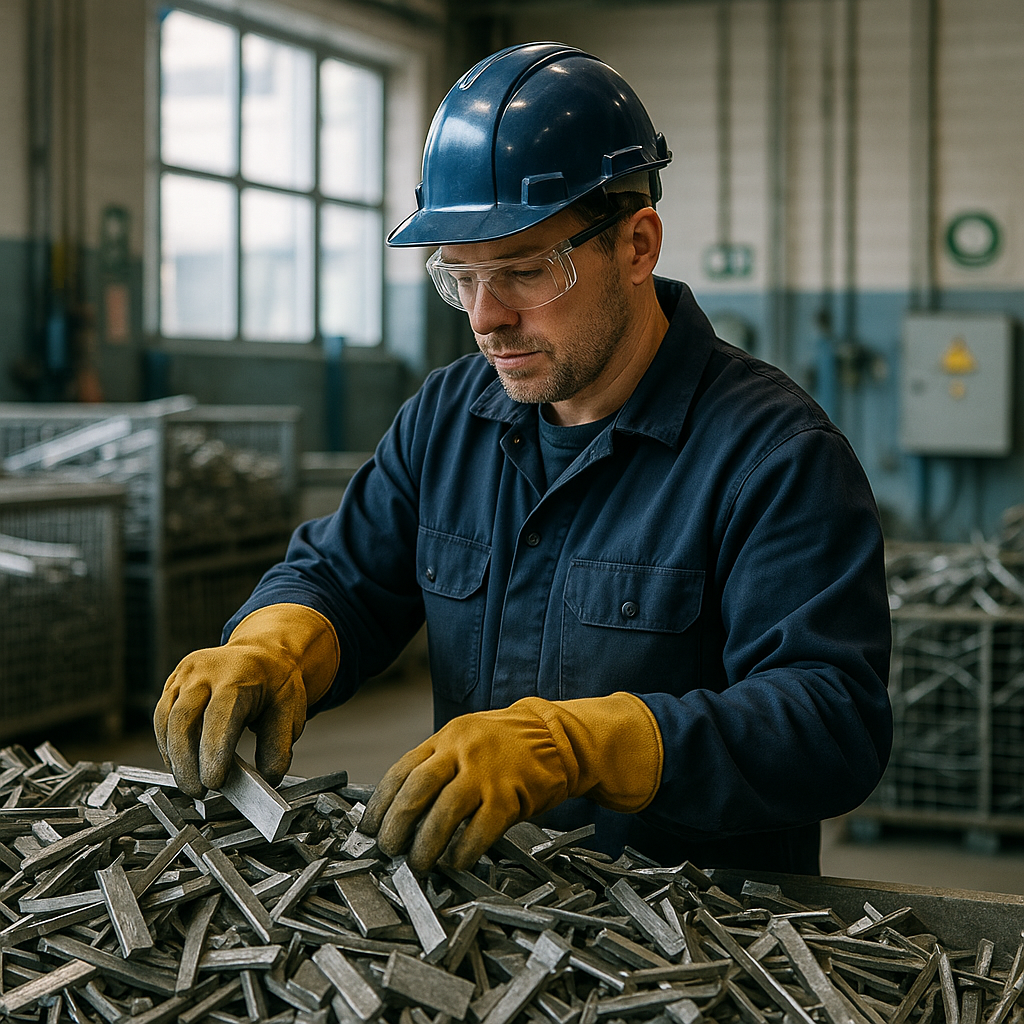
Industrial metal recycling delivers substantial cost reduction advantages for businesses across the manufacturing, construction, and technology sectors. Companies can significantly lower raw material expenses by participating in the recovery loop. The extensive mining, extraction, and refining processes required for virgin metals create much higher costs compared to recycled alternatives. In the early 2026 market, domestic secondary materials are increasingly preferred to avoid the lead times and volatility associated with international supply chains.
Energy conservation and financial returns
Energy conservation represents one of the most compelling financial benefits of industrial recycling. Recycling aluminum conserves about 95 percent of the energy required for virgin production, while steel recycling saves up to 74 percent of energy consumption.
As of 2026, these massive energy savings translate directly into lower manufacturing costs and serve as a protection against the fluctuating energy prices affecting the North Texas grid. Furthermore, high-demand metals like copper—currently driven by the expansion of AI data centers and renewable energy projects—command premium market prices, turning your scrap bin into a genuine profit center.
Carbon footprint reduction and brand value
Carbon footprint reduction provides both environmental and economic advantages for businesses committed to sustainable practices. Recycling one ton of steel reduces greenhouse gas emissions by approximately 2.1 metric tons of carbon dioxide equivalent. In 2026, companies are increasingly leveraging these emission reductions for carbon credit systems and to satisfy Environmental, Social, and Governance (ESG) reporting requirements.
Brand enhancement and market positioning advantages result from demonstrating this stewardship; today’s environmentally conscious investors and clients prioritize businesses that actively reduce their landfill footprint.
Resource conservation and circular economy
Resource conservation benefits extend throughout the supply chain while supporting circular economy principles. Recycling one ton of steel conserves approximately 2,500 pounds of iron ore and 1,400 pounds of coal. This conservation reduces the environmental impact of mining operations while supporting more sustainable manufacturing approaches. By keeping materials in motion locally, Plano businesses help build a more resilient and self-sufficient Texas economy.
Advanced Metallurgical Verification and AI Sorting in 2026
The industrial recycling landscape has undergone a technological revolution to meet the precision requirements of 2026 manufacturing. Professional facilities in Plano now utilize science-driven methods to ensure that every pound of high-performance alloy is identified and priced with absolute accuracy.
XRF and LIBS alloy identification
Modern recycling partners utilize handheld X-ray fluorescence (XRF) and Laser-Induced Breakdown Spectroscopy (LIBS) to provide instant chemical breakdowns of metal samples. For a Plano manufacturer producing aerospace or medical-grade components, this technology is vital. It allows the recycler to distinguish between different series of aluminum or nickel alloys that appear identical to the naked eye. This precision ensures that high-value materials are not “downgraded” to lower-priced scrap categories, directly increasing the manufacturer’s revenue and providing a verifiable audit trail for corporate finance teams.
AI-driven optical sorting
Automation has reached the sorting floor, where AI-powered robotic systems and optical sensors can separate commingled metals with nearly 100 percent accuracy. These systems use deep-learning algorithms to recognize aluminum, copper, and brass at high speeds, removing the risk of human error. For Plano facilities generating mixed metal turnings or complex electronic scrap, this high-throughput technology ensures that every ounce of recoverable material is captured and returned to the supply chain at its highest possible value.
Navigating New 2026 Texas Industrial Recycling Regulations
As of late 2025 and moving into 2026, the Texas Commission on Environmental Quality (TCEQ) has implemented updated mandates that impact how industrial generators must manage their scrap. Staying compliant is essential for avoiding administrative penalties and maintaining a professional reputation.
Compliance with updated TCEQ reporting
Manufacturing facilities in Plano are now subject to enhanced “Notice of Intent” (NOI) reporting if they process certain types of source-separated materials. Under 2026 rules, industrial facilities must be able to demonstrate that their scrap is being diverted to authorized facilities and that at least 50 percent of the material received is being actively recycled within specified timeframes. Professional recycling partners manage this documentation on behalf of their clients, providing “Certificates of Recycling” that serve as a shield against potential environmental audits.
Hazardous material and battery energy storage (BESS) mandates
Recent Texas legislative updates (including HB 3228) have introduced strict new requirements for the decommissioning of industrial batteries and renewable energy hardware.
For Plano companies upgrading their facility’s energy storage or solar arrays, mandatory recycling is now the law. These components contain regulated materials that must be handled by certified professionals. Partnering with a recycler that provides end-of-lifecycle tracking ensures that your organization meets these new statutory obligations while protecting the local North Texas environment from hazardous contamination.
What Types of Metal Waste Can Be Recycled in Plano?
Plano recycling facilities accept both ferrous and non-ferrous metals from commercial and industrial sources. Ferrous metals contain iron and include materials like steel beams, rebar, cast iron, and structural components commonly found in construction projects. These materials make up a significant portion of industrial waste streams and building demolition debris in our rapidly developing city.
Ferrous metals and structural steel
Steel represents the most common ferrous metal we process in Plano operations. Building materials such as I-beams, angle iron, and metal framework from construction sites generate substantial recycling volumes. Wire mesh, metal roofing materials, and discarded machinery parts also fall into this category. Industrial facilities frequently generate steel waste through manufacturing processes and equipment upgrades, all of which can be reclaimed to support new Texas-based steel production.
Non-ferrous metals and high-value alloys
Non-ferrous metals command higher market values and include copper, aluminum, brass, and stainless steel. In early 2026, copper prices have remained strong due to its critical role in AI infrastructure. Materials range from bare bright copper wire to insulated cables and heavy bus bars. Aluminum appears in various forms including extrusions, sheet metal, and industrial radiators. Brass fixtures and stainless steel components (such as 304 and 316 solids) from remodeling or manufacturing projects create another valuable and consistently sought-after waste stream.
Specialized electronic and industrial components
Specialized electronic components require expert handling. Computer towers, motherboards, and server equipment from Plano’s tech corridor contain precious metals that demand advanced recovery techniques. Electric motors, transformers, and industrial equipment often combine multiple metal types requiring mechanical separation. These materials typically originate from office building renovations and technology equipment upgrades, providing a high-yield recovery opportunity when processed through professional channels.
How Does the Metal Waste Pickup and Recycling Process Work?
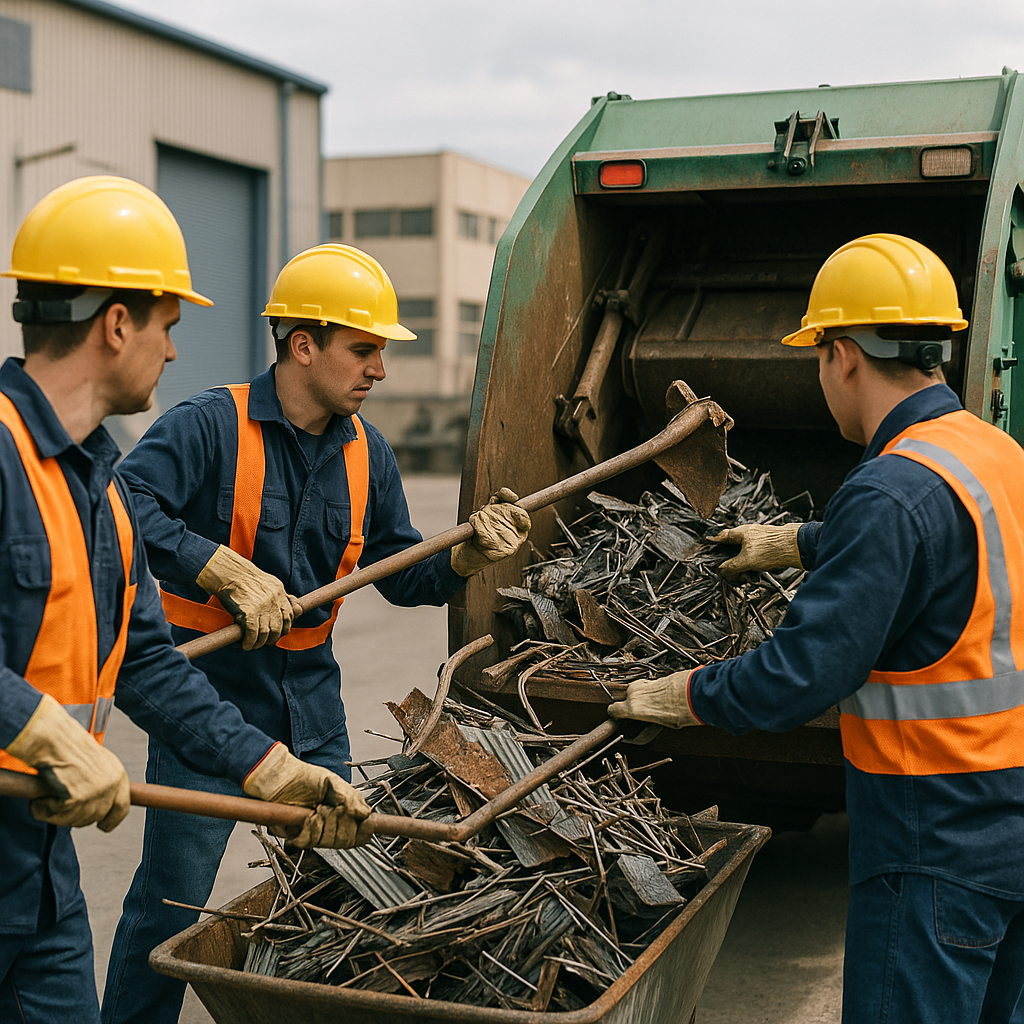
The scrap metal pickup process follows a structured approach that removes complexity for Plano businesses. Most professional recycling companies have streamlined their operations to make waste collection as efficient as possible, ensuring that your production floor stays clear and your team stays focused on their primary tasks.
Step 1: Consultation and estimate
The process begins when businesses reach out for a site assessment. In 2026, many recyclers utilize digital portals where you can upload photos of your material for a rapid estimate. This preliminary step helps determine the scope of the operation, ensuring that the appropriate crew and equipment—such as crane trucks or specialized hoists—are prepared for the specific volume and types of metals involved.
Step 2: Container placement and logistics
For larger quantities, companies deliver specialized containers directly to your facility. These can include roll-off bins, forkliftable units, or lockable storage options. Having a dedicated bin for copper or aluminum prevents “downgrading” at the scale, ensuring that your high-value materials stay separate from standard steel scrap. Professional recyclers offer flexible scheduling that aligns with your specific project timelines or peak production windows.
Step 3: Professional loading and transport
Trained crews handle all aspects of the physical collection. This hassle-free removal means you don’t need to dedicate your own labor resources to heavy loading operations. Once loaded, hauling services transport the scrap directly to certified recycling facilities. Transportation logistics are managed entirely by the recycler, eliminating the need for you to coordinate your own delivery to a processing plant.
Step 4: Precision weighing and processing
At the facility, materials undergo systematic sorting and precision weighing on state-certified scales. In 2026, digital ticketing provides instant transparency, allowing you to see the exact weights and current market values of your alloys. The sorted metals are then shredded, melted, and reformed into new stock materials, completing the circular loop and returning valuable resources to North Texas manufacturing.
Final Thoughts on Managing Manufacturing Metal Waste

For manufacturing and industrial companies in Plano, partnering with a professional recycling service is the most effective approach to 2026 metal waste management. These specialized services eliminate the logistical complexities of disposal while delivering substantial financial and environmental benefits. Companies can reduce traditional waste management costs, generate revenue from high-value scrap, and significantly decrease their carbon footprint to meet modern ESG targets.
Smart metal waste management creates a win-win scenario for Plano businesses seeking high-efficiency industrial solutions. Rather than viewing scrap metal as a disposal problem, forward-thinking manufacturers recognize it as a resource that supports environmental stewardship while improving their bottom line. To explore how professional scrap metal disposal can benefit your North Texas manufacturing operations and maximize your material value, contact Okon Recycling at 214-717-4083.
Send Us a Message
Questions about what we do? Interested in commercial services? Let us know below and a member of our team will get back to you.