5901 Botham Jean Blvd, Dallas, TX 75215
Why Is Neodymium Magnet Recycling in San Antonio a Critical Topic?
January 19, 2026Your smartphone, laptop, and electric vehicle all rely on a powerful technology: neodymium magnets. These permanent magnets drive the motors and hard drives that power modern life. They contain rare earth elements, which are essential for the global digital infrastructure.
Currently, less than 1% of rare earth elements are recycled worldwide. A single international market controls over 70% of global rare earth production and 85% of processing capacity, posing significant supply chain vulnerabilities for American manufacturers and consumers. This concentration of resources makes the development of domestic recycling a matter of both environmental and economic security.
Neodymium magnet recycling in Texas tackles these challenges with sustainable technology solutions. The South Texas and North Texas regions offer unique advantages for rare earth element recovery and processing. By developing domestic supply chains through recycling, we can reduce environmental impact and enhance supply chain security for vital technologies used in defense, healthcare, and transportation.
What Are the Main Benefits of Recycling Neodymium Magnets?
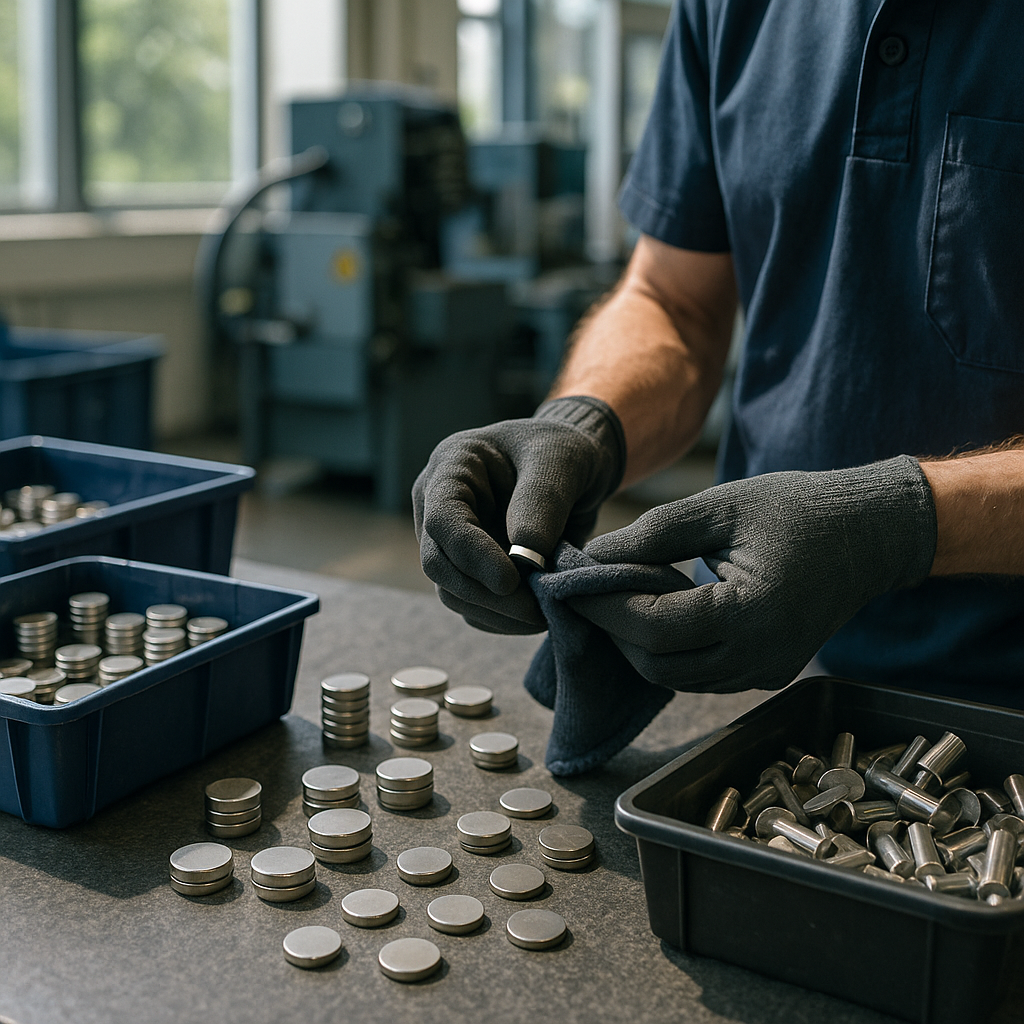
Recycling neodymium magnets delivers substantial advantages across three critical areas. These benefits make recovery an essential strategy for sustainable resource management and long-term supply security for American industry.
Environmental Impact Reduction
Carbon emission reduction is one of the most significant environmental benefits of recycling. Processing neodymium magnets from scrap cuts CO2 emissions by up to 88% compared to primary mining operations. Water consumption also decreases by approximately 95%, addressing critical resource scarcity concerns in regions where mining typically occurs.
Traditional mining for rare earth elements generates toxic waste and radioactive byproducts that can permanently damage ecosystems. The extraction process produces millions of tons of toxic tailings annually, which can contaminate local waterways and farmland. Recycling 1 ton of magnets reduces approximately 12 tons of ore extraction and eliminates 15 tons of wastewater emissions.
Economic Advantages
Electronic waste revenue streams turn disposal costs into profit opportunities for Texas businesses. Companies can monetize end-of-life products containing neodymium magnets instead of paying landfill fees. Proprietary recycling processes now achieve nearly 100% recovery efficiency, ensuring that almost no valuable material is lost during the de-manufacturing stage.
Recycled magnets can cost 20% to 30% less than those produced from newly mined materials. This price advantage helps manufacturers reduce production costs while maintaining strict quality standards. Economic benefits extend beyond direct savings to include reduced waste management expenses and enhanced corporate reputations as environmentally responsible entities.
Strategic Supply Chain Benefits
Domestic supply security reduces dependence on foreign sources of rare earth elements. Currently, a high concentration of global rare earth production is located overseas, creating vulnerabilities in international supply chains. A stable domestic supply from recycled materials provides price stability and planning certainty for businesses requiring these critical materials.
Supply chain security becomes increasingly important as demand for neodymium magnets grows. Electric vehicles, wind turbines, and medical devices all require these powerful magnets. Projections suggest demand could surpass supply by 250% by 2030 without improved recovery systems. Recycling offers a renewable source of materials, independent of mining operations and geopolitical risks.
Which Texas Entities Facilitate Magnet Recycling?
Texas is home to several specialized facilities focused on rare earth magnet manufacturing and recycling. These organizations use patented technologies to convert scrap neodymium magnets into high-performance products. This closed-loop recycling method has helped bring rare earth magnet manufacturing capabilities back to the United States for the first time in decades.
Local industrial recycling centers utilize precise processing operations to ensure recovered magnets can be reused in new equipment without needing complex conversion back to rare earth oxides. This capability arises from decades of experience in magnet recycling, dating back to first-generation magnet-containing equipment from the early 1980s. Today, scrap magnets recovered in Texas are essential in industries ranging from smartphones to renewable energy systems.
Okon Recycling in Dallas is a leading facility for scrap neodymium magnets, specializing in materials recovery from MRI machines and electronic equipment. The company maintains a 20-acre processing facility designed specifically for complex magnetic materials. Their logistics expertise ensures the safe transport of end-of-life magnetic equipment, supported by comprehensive safety protocols and environmental insurance.
Specialized low-waste processes are also emerging in the Texas market, achieving recovery efficiency as high as 99.8%. By employing proprietary systems that safely extract rare earth elements from scrap materials, Texas recyclers are providing materials suitable for advanced technical applications worldwide. This helps address supply chain vulnerabilities by providing a domestic source of rare earth materials, reducing reliance on foreign suppliers.
Where Do Recycled Magnets Come From and How Are They Processed?
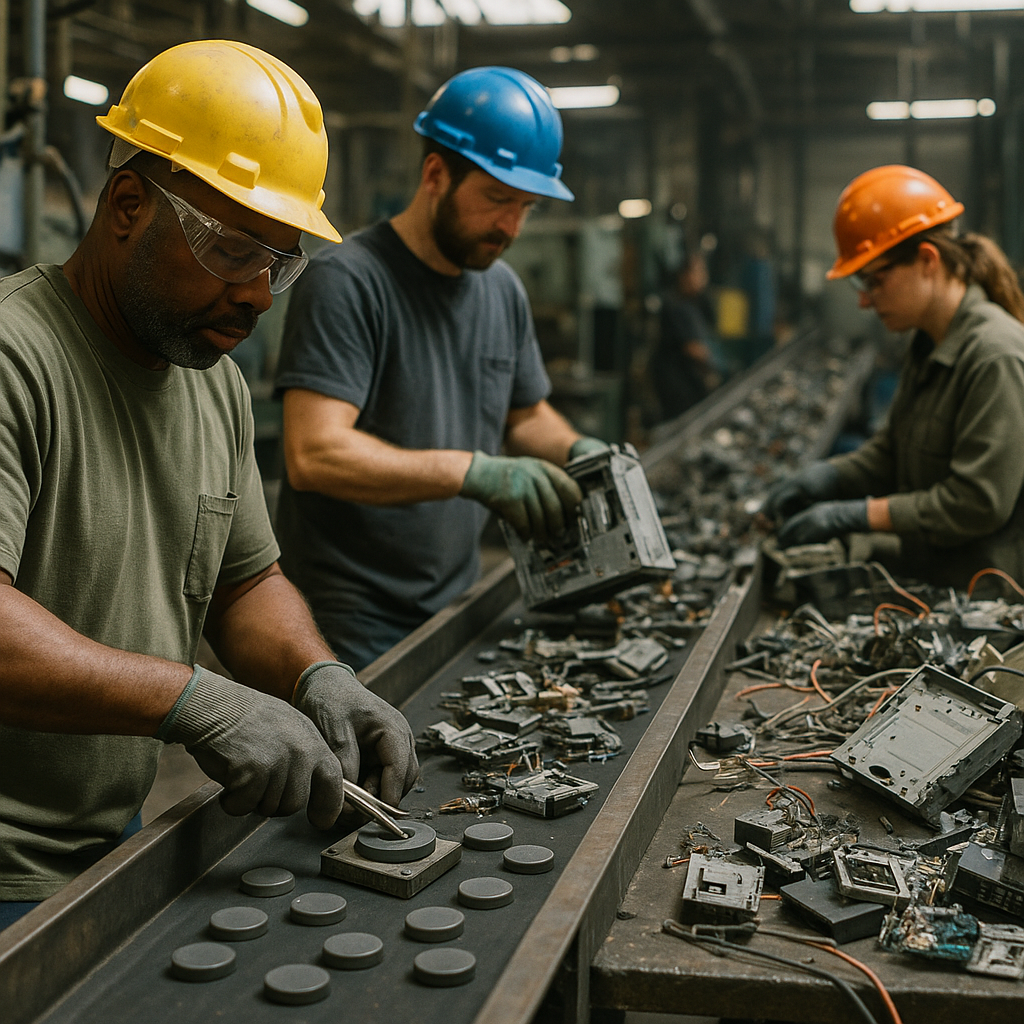
The primary sources for recyclable neodymium magnets are end-of-life machinery across various industries. Hard disk drives from data centers form one of the largest streams for magnet recycling. These storage devices contain easily accessible magnets that can be efficiently extracted through automated processes.
Electric vehicle (EV) motors provide another significant source of recyclables. The automotive industry uses more neodymium than all other electronics industries combined. As the first generation of hybrid and electric vehicles reaches end-of-life, recyclers gain access to substantial quantities of high-grade magnetic material.
Wind turbine generators are increasingly contributing to the recycled magnet supply chain. According to industry analysts, global wind turbine installations increased significantly in recent years. These large generators contain powerful neodymium magnets that retain high value even after years of operation under harsh conditions.
MRI machines from healthcare facilities also serve as valuable sources. These medical devices require exceptionally strong magnets for diagnostic imaging. When hospitals upgrade or replace equipment, the magnets become available for industrial recycling.
Processing methods for recovered magnets fall into two primary categories. Hydrometallurgical techniques use solvents and acid dissolution to separate rare earth elements into pure oxides. This chemical method can achieve high purity levels suitable for advanced applications.
Direct recycling methods, like hydrogen processing, offer an alternative approach. Hydrogen decrepitation exposes magnets to hydrogen gas, causing them to break down into a fine powder while demagnetizing. This process preserves the magnet’s original alloy composition for immediate reuse in new products without extensive chemical treatment.
What Are the Biggest Challenges in the Recycling Industry?
The neodymium magnet recycling industry faces significant obstacles that keep global recycling rates low. These challenges span technical, infrastructural, and economic dimensions, creating barriers that hinder the industry from achieving its full potential.
Technical Extraction and Processing Difficulties
Extracting neodymium magnets from end-of-life products poses substantial technical challenges. These powerful magnets are often embedded deep within electronic equipment and secured with industrial-grade adhesives, complicating removal. Specialized equipment and safety protocols are required, particularly for larger applications like electric vehicle motors, where magnetized components can be hazardous to handle.
Contamination from coatings and surrounding materials adds to processing complications. Neodymium magnets often have protective coatings such as nickel, copper, or epoxy resin to prevent corrosion. Even minor impurities from these materials can reduce the magnetic properties of recycled products by up to 25%, rendering them unsuitable for high-performance applications without further purification.
Collection Infrastructure and Supply Chain Gaps
The absence of established collection systems specifically designed for rare earth magnet recovery creates supply chain disruptions. Unlike conventional recyclables such as aluminum or paper, there is no dedicated municipal infrastructure for capturing end-of-life products containing these valuable materials. Most magnet-containing items end up in general electronic waste streams where they are rarely identified or recovered.
Product design limitations compound collection challenges. Many devices are not designed with recyclability in mind. The lack of standardization in product design increases complexity and reduces economic viability, as recycling processes must adapt to handle a wide array of configurations.
Waste stream unpredictability further undermines collection efforts. The composition and availability of end-of-life products containing magnets vary widely, making it difficult for recyclers to invest confidently in specialized equipment. Without consistent feedstock supplies, establishing scalable recycling operations becomes economically challenging.
How Neodymium Recycling Impacts Modern Industrial Manufacturing
For Texas manufacturers, the integration of recycled neodymium magnets is becoming a cornerstone of lean production. As the state grows as a hub for electric vehicle production and aerospace engineering, the need for a local, reliable source of magnetic materials is paramount.
Supporting High-Tech Manufacturing in Texas
Manufacturing centers in San Antonio and Austin are increasingly looking toward “green steel” and recycled components to satisfy consumer demand for sustainable products. By using magnets recovered from local sources, manufacturers can drastically reduce the “embodied energy” of their finished products. This is particularly relevant for the aerospace industry, where the weight-to-power ratio of neodymium magnets is unmatched by any other material. Using recycled magnets allows these firms to maintain performance while meeting environmental compliance standards.
Stabilizing Production Costs
Because the primary market for rare earth elements is subject to international trade tensions and export quotas, prices can fluctuate by hundreds of percent in a single quarter. This volatility is a nightmare for industrial budgeting. Recycled magnets provide a “price ceiling” that protects local manufacturers. By sourcing materials from a Texas-based recycling partner, companies can secure long-term contracts with fixed pricing, ensuring that their production lines remain profitable regardless of global market shifts.
Safety and Compliance in Magnet Disposal and Transport
Handling industrial-grade magnets is not the same as handling standard scrap metal. Neodymium magnets possess extreme magnetic pull that can cause serious injury or damage sensitive electronic equipment during transit. Professional recycling services are essential for ensuring that these materials are moved and processed safely.
The Dangers of Improper Handling
Large magnets, such as those found in MRI machines or wind turbine generators, can exert thousands of pounds of force. If two such magnets are allowed to snap together unexpectedly, they can crush limbs or shatter into dangerous, razor-sharp shards. Professional recyclers use specialized non-ferrous shielding and dedicated transport containers to ensure that these forces are neutralized during shipping. This protects both the workers and the integrity of the recycling facility.
Regulatory and Environmental Insurance
Proper disposal of magnets also involves managing the coatings and adhesives used in their construction. Some older magnets may be coated in materials that require specific environmental handling. Choosing a recycling partner with comprehensive environmental insurance and a track record of regulatory compliance is vital for property managers and industrial facility owners. This ensures that the liability for the material is properly transferred and that the recycling process adheres to Texas Commission on Environmental Quality (TCEQ) standards.
Conclusion: The Future of Neodymium Magnet Recycling in Texas

The future of neodymium magnet recycling offers Texas critical opportunities to lead in the sustainable energy transition. With demand expected to exceed supply by 250% by 2030, companies in the Dallas-Fort Worth and San Antonio areas are establishing a robust domestic supply chain for these vital materials. Regional facilities are already projecting massive increases in the annual production of recycled sintered NdFeB magnets, using processes that consume up to 88% less energy than traditional mining methods.
These Texas-based initiatives are converting waste into valuable resources and supporting a circular economy, thereby reducing dependence on environmentally damaging mining operations. By advancing closed-loop systems and domestic manufacturing capabilities, the state is positioning itself as a leader in sustainable materials recovery, crucial for national supply chain independence.
For expert guidance on implementing sustainable recycling solutions for rare earth materials and other valuable metals, contact Okon Recycling at 214-717-4083.
Send Us a Message
Questions about what we do? Interested in commercial services? Let us know below and a member of our team will get back to you.