5901 Botham Jean Blvd, Dallas, TX 75215
What Should Your Business Know About Scrap Metal Recycling in Houston?
January 27, 2026Houston businesses generate significant amounts of scrap metal daily. Construction sites produce steel beams and copper wire, while manufacturing facilities accumulate aluminum shavings and brass components. In 2026, as industrial reshoring continues to surge across Southeast Texas, these materials represent untapped revenue streams that many companies overlook. Effective scrap management is no longer just about waste removal; it is a critical component of a lean, profitable industrial operation.
The Houston metropolitan area hosts professional industrial recycling partners serving diverse business clients. Established facilities in the region offer decades of experience serving licensed contractors, commercial businesses, and energy industry clients. These partners provide customized recycling programs tailored to the unique logistical and metallurgical needs of North American manufacturing.
Professional scrap metal recycling transforms waste management costs into profit centers for Houston businesses.
What Recycling Services Are Available for Houston Businesses?
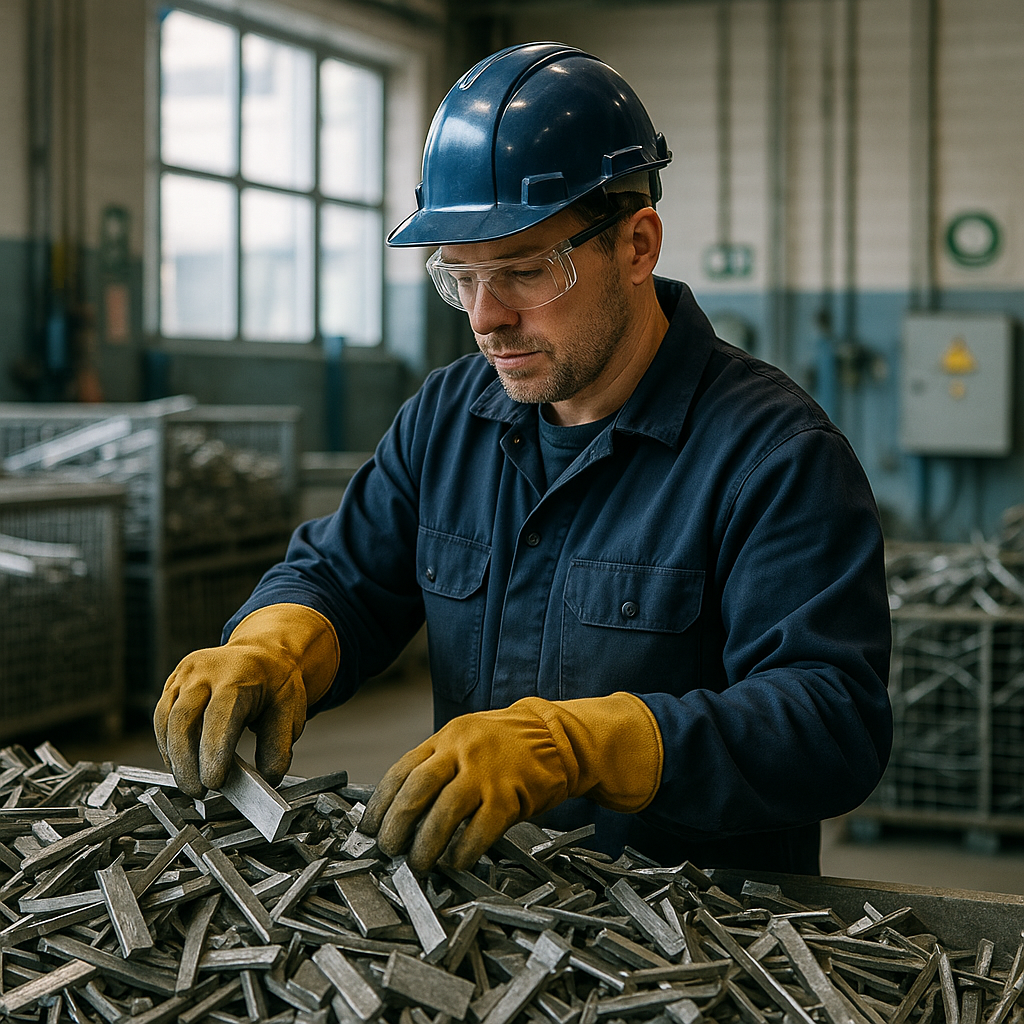
An industrial worker organizes sorted scrap metal pieces in a well-lit recycling facility, ready for processing.
Houston scrap metal yards offer comprehensive recycling services tailored specifically for commercial and industrial operations. These facilities recognize that businesses need reliable and efficient solutions that remain in sync with their operational schedules and waste generation patterns. In the fast-paced 2026 industrial landscape, downtime is costly, making a responsive recycling partner essential.
Most professional recycling centers begin partnerships with a complimentary facility assessment. During this evaluation, recycling specialists examine current waste streams, assess material volumes, and identify optimization opportunities. This thorough approach ensures the resulting program meets specific operational needs while maximizing material recovery rates and financial returns.
Container and collection services
Roll-off containers are among the most popular service offerings for Houston businesses. These containers come in multiple sizes—ranging from 20 to 40 yards—to accommodate varying material volumes and site constraints. Recycling providers typically offer flexible pickup schedules, from weekly collections to on-call services based on real-time container fill levels, which can now be monitored using digital sensors in some industrial applications.
Job site pickup services cater to construction companies, contractors, and demolition firms generating scrap metal at various locations. These services eliminate the need for businesses to transport heavy materials themselves, saving significant labor time and reducing transportation costs. Professional providers often offer 24-hour pickup options for urgent project requirements to keep job sites clear and safe.
Specialized processing and handling
Large-scale operations benefit from advanced processing capabilities available at major recycling facilities. Professional industrial partners provide specialized equipment, including high-capacity baling machines, hydraulic shearing, and precision torch cutting. These processing services allow businesses to maximize the value of their scrap by preparing it directly for mill consumption.
Demolition scrap services meet the unique needs of firms involved in large-scale teardowns and renovations. These services often include dismantling support, where specialized teams assist in the careful removal of valuable materials such as structural steel, copper piping, and aerospace-grade aluminum components. This ensures that high-value alloys are not accidentally commingled with lower-grade scrap.
Transportation and logistics support
Logistics are the backbone of a successful business recycling program. Professional providers maintain fleets of specialized vehicles designed to handle different material types, from flatbeds for oversized machinery to end-dumps for bulk heavy melting steel. Many providers now offer digital tracking systems that allow businesses to monitor their recycling activities, material weights, and Environmental, Social, and Governance (ESG) metrics through a centralized dashboard.
Which Types of Scrap Metal Can Businesses Recycle?
Houston scrap yards categorize recyclable materials into two primary groups: ferrous and non-ferrous metals. This classification system helps businesses understand the market value of their waste and ensures proper sorting before delivery. Understanding these categories is the first step toward maximizing a facility’s recycling revenue.
Ferrous metals contain iron and are the most commonly recycled materials by volume in commercial operations. Steel and iron make up the bulk of ferrous scrap, sourced from structural components, heavy machinery, and industrial racking. These materials are highly magnetic, making them easy to identify and sort at recycling facilities using industrial magnets.
Non-ferrous metals command higher prices due to their unique properties and specialized industrial applications. Copper leads this category with its excellent electrical conductivity, followed by aluminum, which is valued for its lightweight durability. Brass, stainless steel, lead, zinc, and nickel-based superalloys are also commonly accepted and represent high-profit recovery items for industrial manufacturers.
Manufacturing facilities contribute obsolete production equipment, metal office furniture, and specialized tooling to the scrap stream. These sources often contain mixed metal types requiring professional sorting. Businesses benefit from establishing regular pickup schedules to efficiently manage these ongoing material flows without allowing scrap to consume valuable warehouse floor space.
| Type | Acceptable Industrial Items | Prohibited Materials |
|---|---|---|
| Ferrous Metals | Structural steel, rebar, heavy melting steel, iron castings | N/A |
| Non-Ferrous Metals | Copper (bare bright, #1, #2), aluminum extrusions, brass fittings | N/A |
| Conditionally Acceptable | Industrial batteries, oil filters, electronic scrap (e-waste) | Must follow certified disposal protocols |
| Strictly Prohibited | N/A | Explosives, radioactive materials, asbestos, mercury, pressurized containers |
Several categories of materials remain strictly prohibited at professional recycling facilities due to safety and regulatory concerns. Explosives, toxic substances, and radioactive materials require specialized disposal through certified hazardous waste facilities. Asbestos-containing materials pose serious health risks and must be managed through professional abatement services.
Additionally, liquids and pressurized containers, such as unopened gas cylinders, present immediate explosion hazards and are universally rejected.
Advanced Sorting Technology and Purity Standards in 2026
The industrial recycling landscape has undergone a technological revolution to meet the demands of 2026 manufacturing. For Houston businesses, this means that material grading is more accurate and transparent than ever before, ensuring that every pound of high-purity alloy is accounted for.
AI-driven sorting and optical recognition
Modern recycling facilities now utilize sensor-based sorting enhanced by artificial intelligence. These systems use deep-learning algorithms to identify metal types with near-perfect accuracy at high speeds. AI can distinguish between different series of aluminum or stainless steel that appear identical to the human eye. This prevents “downgrading,” where a high-value alloy is accidentally priced as a cheaper mixed metal, ensuring that Houston manufacturers receive the maximum market value for their production scrap.
XRF and LIBS metallurgical verification
Professional recyclers use X-ray Fluorescence (XRF) and Laser-Induced Breakdown Spectroscopy (LIBS) to provide instant chemical breakdowns of metal samples. For a factory decommissioning specialized petrochemical equipment, these tools can identify expensive nickel, titanium, or molybdenum alloys on the spot. This scientific verification removes the guesswork from material grading and provides an ironclad audit trail for corporate financial reporting.
Safety and Compliance: Navigating Texas Scrap Regulations
Operating a business recycling program in Houston requires strict adherence to Texas state laws and safety standards. Staying compliant protects your company from legal liability and ensures the safety of both your employees and the environment.
The Texas Metals Program and ID Requirements
As of 2026, the Texas Department of Public Safety (DPS) continues to strictly enforce the Texas Metals Program under the Texas Occupations Code. For businesses, this means every scrap metal transaction must be documented with high-quality photographs of the material and the seller’s vehicle. Valid government-issued photo identification—such as a driver’s license or passport—is required for every pickup or drop-off. These “cash-for-scrap” laws are designed to deter metal theft and provide transparency in the industrial supply chain.
Cradle-to-grave environmental responsibility
Texas environmental law mandates that industrial generators remain responsible for their waste from “cradle to grave.” If your facility’s scrap is found to be contaminated with hazardous oils or PCBs at an unpermitted site, your business could be held liable for cleanup costs. Partnering with a recycler that provides end-of-lifecycle certification and environmental insurance is vital. This is especially true for projects involving “special wastes” like large-scale HVAC units or backup generator batteries, which require certified refrigerant recovery and hazardous material handling.
How Do Scrap Yards Determine Pricing and Payment?
Scrap metal prices fluctuate daily based on global market supply and demand. Unlike fixed retail pricing, industrial rates are adjusted to reflect current market conditions on major exchanges like the London Metal Exchange (LME). For example, as the demand for copper in the green energy sector surges in 2026, prices for bare bright wire have reached historical highs.
This market-driven approach means the material you recycle today may have a different value than the same material next month. Professional recyclers track these commodity markets in real-time to ensure your business receives fair value. Transparent weighing practices form the foundation of this fairness. Certified scales undergo regular testing and calibration by state authorities, and each scale must display a certification seal showing the last inspection date.
Material grading significantly impacts pricing. Metals are evaluated based on quality, cleanliness, and composition. Clean copper tubing commands higher rates than copper mixed with brass fittings because it requires less processing at the smelter. Bare bright copper wire receives premium pricing compared to insulated wire that requires mechanical stripping. Reputable partners explain these grade classifications to help you understand how material preparation can affect your final payout.
Payment procedures in Texas typically involve non-transferable checks or electronic payments to ensure a transparent audit trail. Detailed receipts document material types, exact weights, and the rates applied, providing the clear records required for your business accounting and tax purposes. This level of documentation is essential for corporate audits and proving that your organization is meeting its sustainability targets.
Conclusion: Partnering for Profit and Sustainability

For Houston businesses generating metal waste, partnering with a professional industrial recycler is a strategic financial and environmental decision. By selecting a partner that offers customized services, fair pricing, and transparent, tech-driven processes, companies can establish a consistent revenue stream while enhancing their sustainable supply chain. The key is to find a reliable partner that understands the high-volume needs of North Texas industry.
Collaborating with experienced metal recycling partners turns waste management costs into profit opportunities and reduces your facility’s environmental footprint. The right scrap metal partner offers comprehensive customer service, including convenient pickup schedules and detailed ESG reporting that supports your corporate responsibility goals.
Contact Okon Recycling at 214-717-4083 to discover how our industrial services can turn your metal waste into a strategic advantage.
Send Us a Message
Questions about what we do? Interested in commercial services? Let us know below and a member of our team will get back to you.