5901 Botham Jean Blvd, Dallas, TX 75215
Where Can I Take Aluminum Scrap in Texas for Recycling?
January 7, 2026Major recycling centers across Texas provide competitive rates for aluminum materials based on global market indices. These centers accept everything from clean aluminum extrusions and siding to everyday beverage cans. Current market conditions in early 2026 show clean aluminum scrap prices in Texas averaging around $0.60 per pound, though rates for premium grades such as aluminum wheels and clean extrusions often command higher payouts.
The recycling process offers dual benefits, making it appealing for Texas residents and businesses. Participants receive immediate payment while contributing to environmental conservation efforts that reduce mining demands and lower carbon emissions associated with primary aluminum production. By choosing a professional recycling partner, Texas organizations ensure their materials are handled according to the strictest environmental and safety standards.
Choosing an Aluminum Scrap Recycling Facility in Texas
Texas hosts numerous scrap yards equipped to handle aluminum recycling for both residential customers and commercial operations. The state’s metal recycling industry provides services ranging from small-scale aluminum can collection to large-volume industrial scrap processing. When selecting a facility, businesses should prioritize those with certified weighing systems and specialized alloy analysis technology.
In the North Texas region, professional recycling centers operate multi-commodity facilities specializing in ferrous and non-ferrous metal recovery. These facilities provide buy-back centers that accept aluminum cans, tin scrap and industrial alloys. Transparent weighing processes and experienced staff trained in aluminum sorting ensure that sellers receive the maximum value for their materials.
For businesses requiring ongoing aluminum recycling services, customized commercial programs are essential. These typically include roll-off container services, scheduled pickups and volume-based pricing. Industrial customers can access specialized equipment like forklift-handled bins and open-top containers to streamline their internal waste management workflows.
The Importance of Certification and Compliance
Texas law requires all regulated metal transactions to be documented with a valid government-issued photo ID. Professional facilities adhere strictly to these state regulations to prevent the trade of stolen materials. Working with a registered Metal Recycling Entity (MRE) protects your business from legal liabilities and ensures that your scrap is contributing to a legitimate and ethical supply chain.
The 95 Percent Rule: Energy and Environmental Impact
The primary driver behind the high value of aluminum scrap is the remarkable energy efficiency of the recycling process. Understanding the environmental economics of aluminum helps businesses quantify their ESG (Environmental, Social and Governance) achievements.
Energy Savings and Secondary Production
Recycling aluminum requires only about 5 percent of the energy needed to produce new aluminum from raw bauxite ore. Primary production is an energy-intensive process involving electrolysis and chemical refining. In contrast, secondary production involves simply remelting the metal, saving roughly 95 percent of the energy and reducing greenhouse gas emissions by an equivalent margin. This makes aluminum one of the most sustainable materials in the industrial world.
Conserving Natural Resources
Each ton of recycled aluminum conserves approximately four tons of bauxite ore and two tons of alumina. It also prevents the generation of caustic “red mud,” a byproduct of the primary refining process that can pose significant environmental risks to soil and groundwater. In 2026, as industries move toward carbon-neutral goals, the role of recycled aluminum as a low-carbon feedstock has never been more critical.
What Types of Aluminum Scrap Are Accepted?
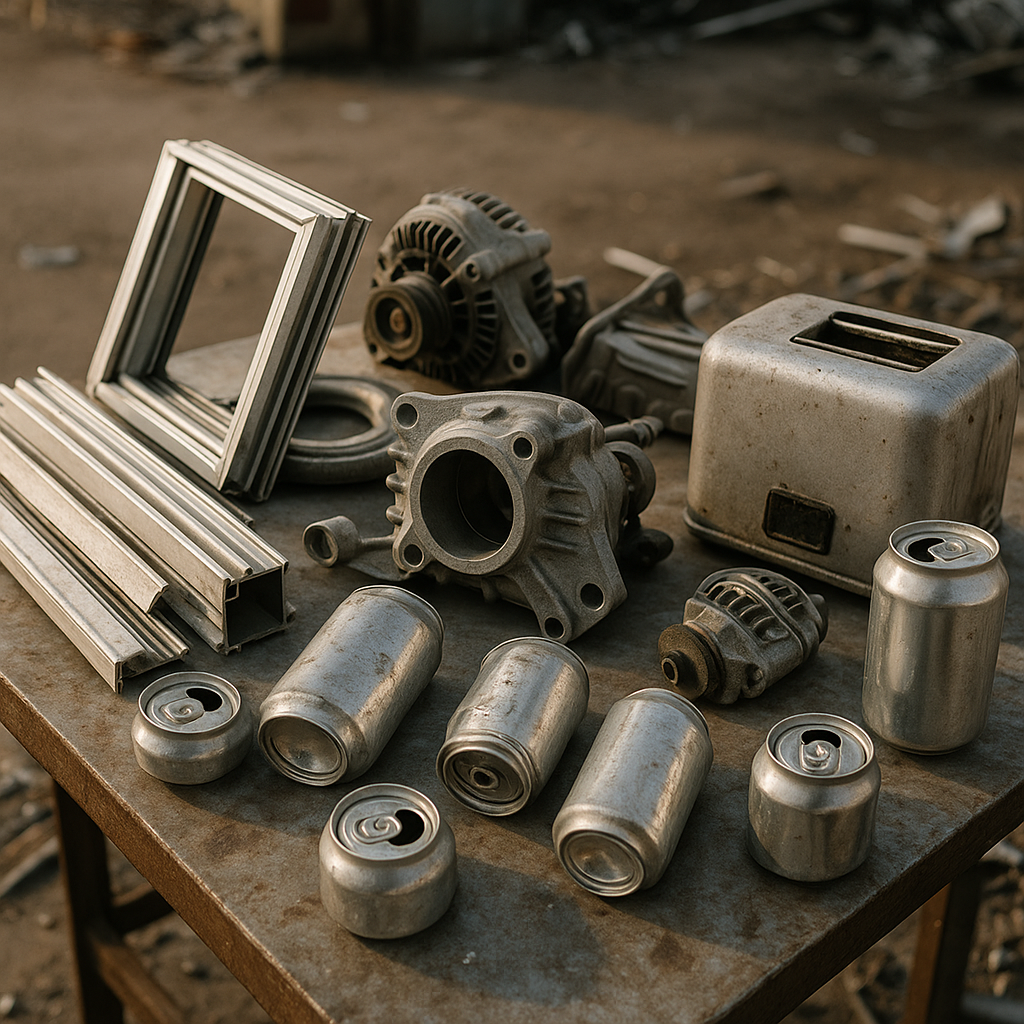
Professional recycling centers accept a wide range of non-ferrous aluminum materials. These materials are prized for their resistance to rust and corrosion, allowing them to be recycled infinitely without losing their fundamental properties.
Aluminum Cans (UBC): Used Beverage Cans are the most recognizable form of recyclable aluminum. They possess high purity and are processed quickly, often returning to store shelves as new cans in as little as 60 days. Clean, dry cans typically command the highest retail price per pound.
Construction and Demolition Materials: Aluminum siding, gutters, downspouts and window frames (6063 extrusions) provide substantial volume for processing facilities. These items are often painted or coated, which requires secondary refining, but they maintain high structural value. Bare, unpainted extrusions are considered a premium grade in the scrap market.
Automotive and Industrial Scrap: Aluminum wheels are highly valuable due to their weight and consistent alloy composition. Cast aluminum from engine blocks, transmission cases and outdoor grill lids also provides a significant source of recyclable metal. Electrical contractors frequently generate aluminum wire and cable, which should be stripped of insulation to achieve the “EC Wire” premium grade.
| Scrap Grade | Common Items | Typical 2026 Price (Est.) |
|---|---|---|
| Aluminum Cans (UBC) | Soda and beer cans | $0.55 – $0.65 / lb |
| Clean Aluminum | Sheet aluminum, pots, pans | $0.58 – $0.62 / lb |
| Aluminum Extrusions | Window frames, door tracks | $0.65 – $0.80 / lb |
| Cast Aluminum | Engine parts, grill lids | $0.45 – $0.55 / lb |
| Aluminum Breakage | Appliances with attachments | $0.10 – $0.15 / lb |
Advanced Sorting Technology in Modern Recycling
The efficiency of an industrial recycling plant depends on its ability to sort materials with high precision. In 2026, manual sorting is increasingly being supplemented or replaced by advanced technological solutions that ensure material purity.
Eddy Current Separation
To separate aluminum from non-metallic waste and magnetic steel, recyclers use an Eddy Current Separator. This machine uses a high-speed rotor with permanent magnets to create a magnetic field that induces a charge in the non-ferrous metals. This charge causes the aluminum to “jump” away from the waste stream, allowing for high-speed, automated sorting of thousands of pounds per hour.
LIBS and XRF Analysis
For high-performance alloys used in aerospace and automotive manufacturing, knowing the exact chemical composition is vital. Laser-Induced Breakdown Spectroscopy (LIBS) and X-Ray Fluorescence (XRF) analyzers allow technicians to identify specific aluminum series (such as 2000, 6000 or 7000) in seconds. This ensures that premium alloys are not undervalued and that the final melt meets the rigid specifications of industrial foundries.
How the Process of Selling Aluminum Scrap Works
The aluminum scrap selling process follows a systematic approach that ensures accurate valuation and prompt payment. Understanding each step helps streamline transactions and maximize returns for both small-scale sellers and commercial operations.
Preparation and Sorting
Proper preparation begins before arriving at the recycling facility. Sort aluminum materials by grade to ensure accurate pricing. Clean aluminum commands higher prices than material with attachments. Use a magnet to ensure no steel or iron is mixed in, as “ferrous contamination” can lead to price deductions. For large industrial items, cutting oversized pieces into manageable sections can facilitate faster processing and better load density.
The Drop-Off and Inspection Process
Most facilities operate on a straightforward drop-off system. Drive to the designated receiving area where personnel will direct you to the appropriate unloading zone. Staff will inspect the materials to verify the grade and check for “breakage” (non-metal attachments). This initial inspection prevents disputes and ensures you are credited for the correct material type.
Weighing and Documentation
Certified scales provide the accurate weight measurements that determine your total payout. Each aluminum grade is weighed separately to ensure proper pricing. The system generates a detailed weigh-in ticket that itemizes materials by type, weight and price. In 2026, many facilities use digital scale systems that sync directly with payment apps for a paperless experience. Review your ticket carefully before proceeding to the payment window.
Industrial Container and Pick-Up Services
Large-scale generators benefit from specialized collection services. Professional recyclers provide on-site containers tailored to your facility’s scrap volume and space constraints. Scheduled pick-up services eliminate transportation costs for businesses, with frequency adjusted based on generation rates. Commercial accounts often enjoy volume-based pricing and locked-in rates to provide stability in volatile markets.
How Aluminum Scrap Prices Are Determined in Texas
Aluminum scrap prices in Texas fluctuate daily based on global and regional market forces. The London Metal Exchange (LME) acts as the primary benchmark for worldwide pricing. When primary aluminum prices shift on global exchanges, local Texas scrap values typically adjust within hours or days.
Industrial demand is a primary driver of local pricing. The automotive and construction sectors in Texas are massive consumers of recycled aluminum. During peak construction seasons, demand often increases, pushing scrap prices higher. Conversely, global economic shifts or changes in international trade policies can create price volatility that recyclers must navigate.
Regional factors unique to Texas, such as transportation and energy costs, also influence valuations. Facilities in major urban hubs like Dallas-Fort Worth often offer slightly different rates than those in rural areas due to proximity to secondary smelters and mills. Finally, material quality remains the most significant local factor; “furnace-ready” scrap that requires no additional cleaning will always fetch the highest market premium.
Conclusion: Maximize Your Payout for Aluminum Scrap in Texas
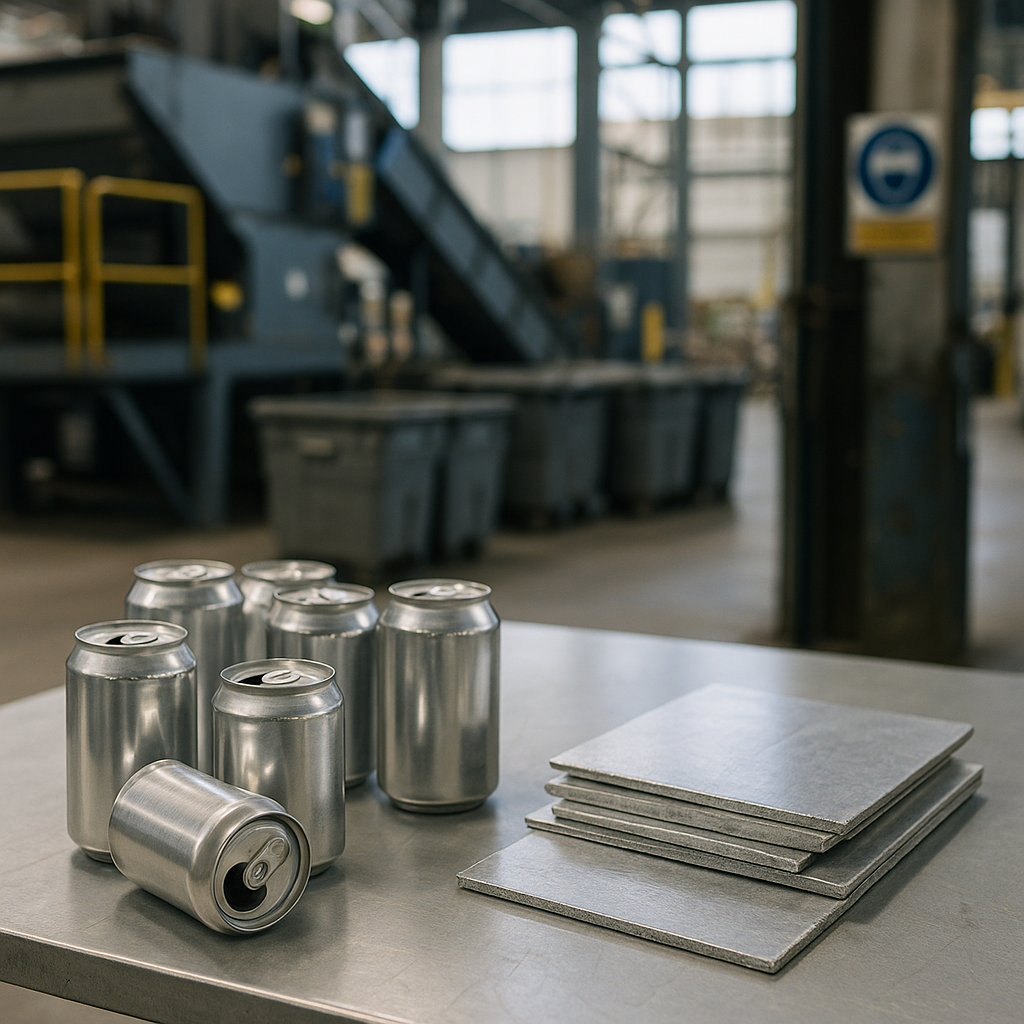
Recycling aluminum scrap in Texas offers an effective opportunity to turn industrial waste into a revenue source while supporting environmentally responsible practices. Success relies on accurate material identification, thorough sorting by grade and selecting a professional partner that offers competitive payouts and transparent weighing processes.
The dual benefits of aluminum recycling extend beyond financial returns to creating a meaningful environmental impact through resource conservation. By maximizing your scrap metal value through strategic preparation and facility selection, you contribute to the regional circular economy and help reduce the carbon footprint of the Texas manufacturing industry.
For professional recycling services and competitive rates on your aluminum scrap, contact Okon Recycling at 214-717-4083.
Send Us a Message
Questions about what we do? Interested in commercial services? Let us know below and a member of our team will get back to you.