5901 Botham Jean Blvd, Dallas, TX 75215
Why Investing in Copper Is Essential for the Next Decade
January 15, 2026As we navigate early 2026, copper has solidified its status as the global economy’s most critical strategic asset. With prices frequently exceeding $13,000 per tonne, the metal is at the heart of a multi-year structural repricing. This shift is driven by a widening supply gap and an unprecedented convergence of demand from digital infrastructure and the global energy transition. For industrial sectors and professional recycling operations, understanding these drivers is essential for long-term materials management and strategic planning.
Global copper demand stems from three key forces reshaping the industrial landscape. These factors represent both established economic patterns and emerging technological shifts that require substantial copper infrastructure to support the next generation of global productivity.
What Is Driving the Surge in Copper Demand in 2026?

The current market inflection is not merely a cyclical trend; it is a fundamental transformation of how copper is consumed across the planet. Three primary vectors are driving this growth, each requiring massive volumes of high-purity non-ferrous metal.
Electrification and Clean Energy Technologies
The transition to electric vehicles (EVs) creates unprecedented copper demand. A single EV requires approximately 80 kilograms of copper—nearly four times the amount found in a conventional internal combustion engine vehicle. As of 2026, the electrification of public transport—including buses and high-speed rail—has further escalated these requirements.
Renewable energy infrastructure significantly amplifies this demand. Offshore wind installations require roughly 11 tonnes of copper per megawatt, while traditional gas-fired generation requires just 2 tonnes. Solar arrays and onshore wind facilities also demand substantially more copper for power collection and transmission. Grid modernization compounds these requirements, as the electrical transmission infrastructure needed to support renewable energy requires extensive high-voltage copper wiring and bus bar components.
Artificial Intelligence and Data Center Expansion
The artificial intelligence revolution has emerged as a primary copper consumption category. Data centers, which accounted for less than 2 percent of U.S. electricity consumption in 2018, are projected to reach as much as 12 percent to 14 percent by 2030. AI-enabled computational power translates directly to copper demand, as these facilities require extensive cabling for power distribution and sophisticated thermal management systems.
Global electricity consumption for data centers is expected to rise from around 2 percent today to 9 percent by 2050. This growth pattern ensures consistent copper demand from the digital infrastructure sector for decades, positioning “urban mining” of decommissioned data hardware as a critical source of secondary supply.
Demographic Trends and Urbanization
Urbanization in emerging economies creates substantial baseline demand. As developing nations pursue higher living standards, their copper requirements multiply for electrical systems, telecommunications and construction. China continues to be a major driver, accounting for roughly 58 percent of global usage, while India presents a compelling growth story with per-capita electricity consumption rising rapidly toward developed-nation levels.
The Critical Role of Copper Recycling in the 2026 Economy
With primary mine production growth projected to be flat or modest in 2026—expanding by just 0.9 percent—the global economy is increasingly reliant on the circular economy to bridge the supply deficit. Professional recycling operations are now the “secondary mines” that keep the industrial engine running.
Recycling as a Supply Buffer
By early 2026, copper recycling is projected to supply over 30 percent of global demand. This is not just a sustainability goal; it is a logistical necessity. Recycled copper acts as a critical supply buffer that mitigates market tightness and price shocks. For industrial facilities, this means that the copper “waste” generated during manufacturing or demolition is a high-value asset that supports national resource security.
The 85 Percent Energy Advantage
The economic argument for recycling is rooted in energy physics. Producing copper from recycled materials saves up to 85 percent of the energy required for mining and primary extraction. In an era of high industrial energy costs, this makes secondary copper far more attractive for smelters and foundries. For every tonne of copper recycled, we avoid the environmental degradation associated with processing 98 tonnes of low-grade ore, significantly reducing the carbon footprint of the entire supply chain.
Advanced Recovery: How Technology Maximizes Copper Purity
To meet the stringent requirements of AI data centers and high-voltage EV components, recycled copper must be processed to 99.9 percent purity. Professional facilities utilize advanced technology to ensure that high-value alloys are correctly graded and recovered.
XRF and LIBS Grading
Professional recycling technicians utilize X-Ray Fluorescence (XRF) and Laser-Induced Breakdown Spectroscopy (LIBS) to conduct instant chemical analyses. This technology is vital for identifying specialized copper alloys and ensuring that Bare Bright Copper—the highest-value scrap grade—is not contaminated with tin-plated or leaded materials. This precision ensures that industrial sellers receive the true market value of their materials.
Automated Wire Granulation
For high-volume electrical scrap, manual stripping is no longer efficient. Modern granulation systems shred insulated wire and use air-density tables to separate the copper “chops” from the plastic “fluff.” This process allows for nearly 100 percent recovery of the copper content in communication cables and wiring harnesses, materials that were historically difficult to process at scale.
What Are the Different Ways to Invest in Copper?
Copper investment opportunities have expanded as the metal’s role in digital infrastructure becomes critical. From our perspective in materials recovery, we see how copper’s recyclability creates diverse pathways for stakeholders looking to capitalize on this commodity supercycle.
Copper Mining Stocks
Mining stocks represent direct equity exposure to copper price movements. Major producers offer leveraged exposure; as copper prices rise, their operational costs remain relatively fixed while revenues increase. However, these carry company-specific risks, including geopolitical instability in mining regions and declining ore grades. Large-scale producers typically offer more stability, while junior explorers present higher risk-reward profiles.
Exchange-Traded Funds (ETFs)
ETFs provide diversified exposure without the single-company risks of individual stocks. These fall into two main categories:
- Mining ETFs: Funds like Global X Copper Miners ETF (COPX) or iShares Copper and Metals Mining ETF (ICOP) aggregate global producers under one ticker.
- Physical ETFs: Funds like the Sprott Physical Copper Trust invest directly in the commodity, providing more direct price exposure without mining-specific operational risks.
Futures and Physical Ownership
Copper futures allow sophisticated investors to gain exposure to price movements without owning the metal. These offer significant leverage but require active management. Direct ownership of physical copper bars or rounds is an option for those seeking a hedge against inflation, though it requires substantial storage space compared to precious metals like gold or silver.
| Method | Exposure Type | Risk Level | Primary Characteristic |
|---|---|---|---|
| Mining Stocks | Equity / Leveraged | High | Benefits from high copper prices and dividends |
| Mining ETFs | Equity / Diversified | Moderate | Broad exposure to global producers |
| Physical Copper | Commodity / Direct | Low | Direct ownership; requires high storage space |
| Futures Contracts | Speculative / Leveraged | Extreme | High liquidity for short-term trading |
Conclusion: Building a Thesis for Copper in the Age of AI
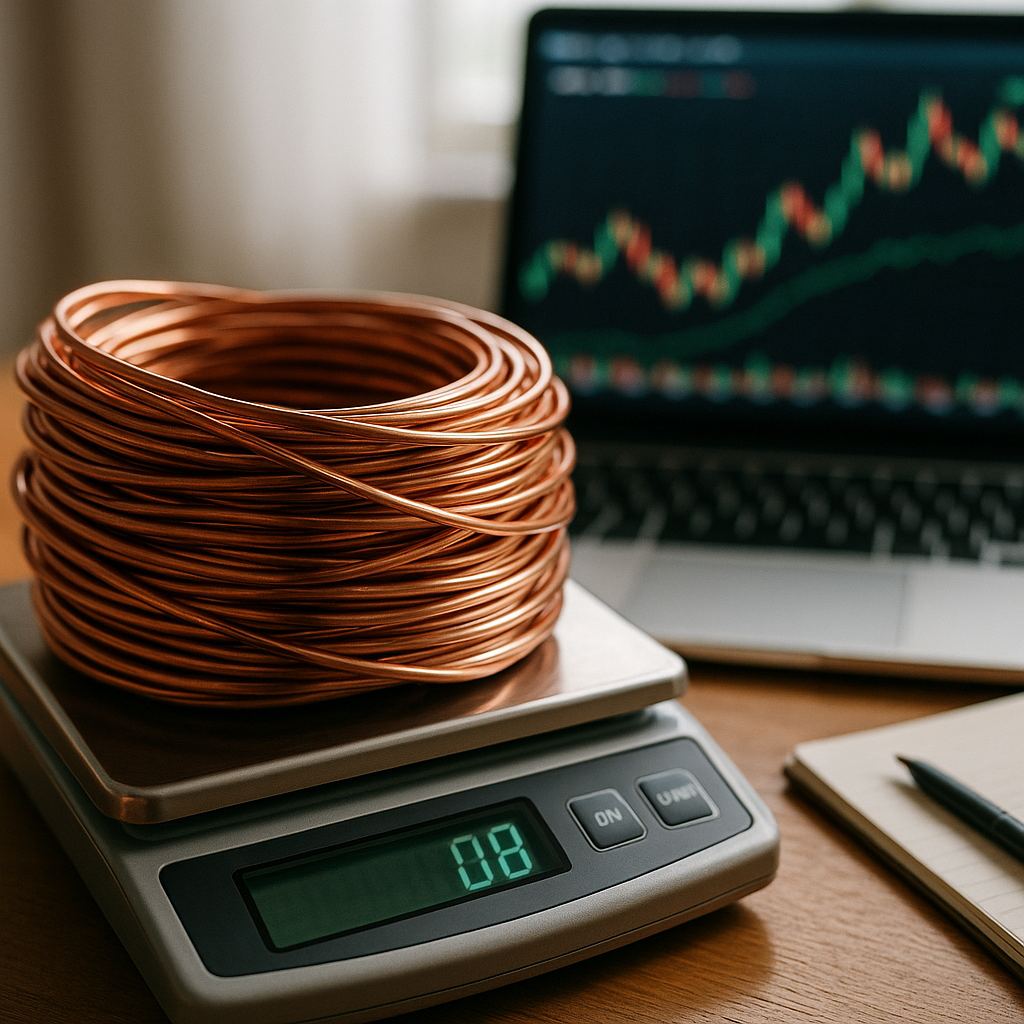
The copper market stands at a pivotal juncture where rising demand from electrification and AI infrastructure clashes with structural supply constraints. In early 2026, the metal has transitioned from a cyclical industrial commodity to a strategic asset of national importance. This fundamental imbalance supports a multi-year investment thesis, as real copper prices must remain elevated to encourage vital new supply additions and support the aggressive expansion of the circular economy.
For businesses in materials recovery and industrial manufacturing, understanding these market dynamics is essential for strategic planning and optimizing waste-to-revenue streams. A professional approach to metal management—focusing on purity, volume and advanced recovery—ensures your organization is positioned to benefit from this global shift.
Contact Okon Recycling at 214-717-4083 to explore how copper recycling and professional recovery solutions can enhance your materials management strategy.
Send Us a Message
Questions about what we do? Interested in commercial services? Let us know below and a member of our team will get back to you.